Found in Translation: K.M. Munshi’s ‘Unfortunate Woman’
In her translation of Gujarati literary giant K.M Munshi’s “Ek Patra,” Rita Kothari uses language to reveal not just the story, but the hidden realities of the lives inhabited by the characters.
Known for his trilogy of the Patan novels, Kanaiyalal Maneklal Munshi is one of Gujarat's notable literary figures. Most of his work focuses on historical and mythological themes; however, the tale “Ek Patra”—published in the short story collection Kanaiyalal Munshini Navalikao—is a deviation. This is an epistolary story narrated by a woman sharing the reasons of her surrender in life. It is unusual for a male author to capture deep nuances, inner dialogues and feelings of a married woman and her life, which Munshi has portrayed exceptionally well in the story.
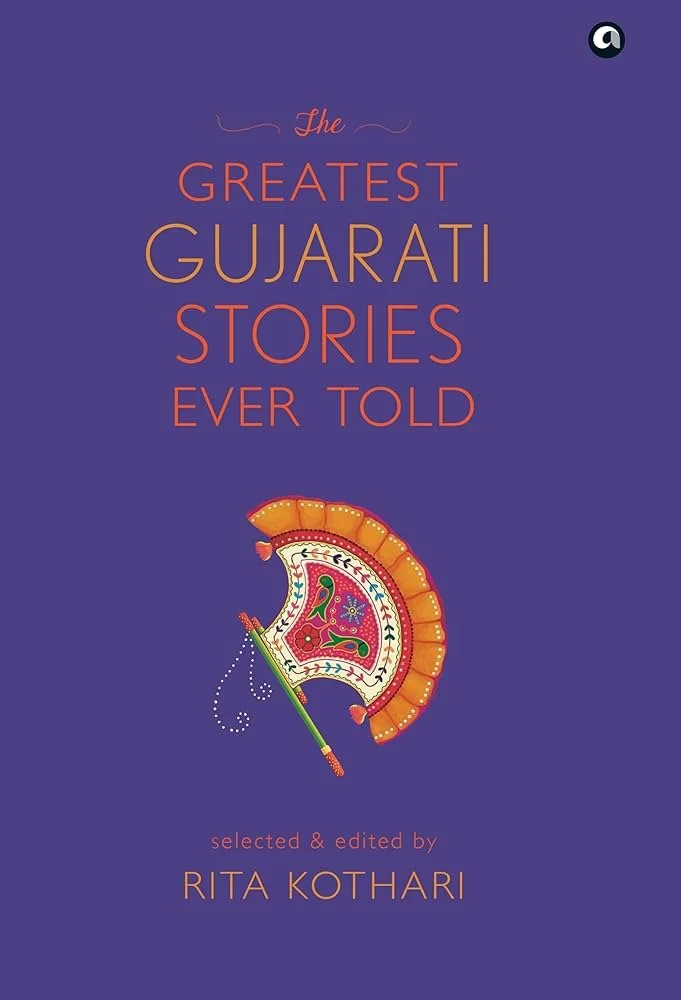
The English translation of the story, “A Letter” by Rita Kothari (The Greatest Gujarati Stories Ever Told, Aleph Book Company, 2022), retains the true essence of the original written in Gujarati. Gujarati is one of the oldest languages associated with Vedic Sanskrit. Gujarat has a vast cultural and linguistic heritage, and this collection contributes its vast cultural and linguistic heritage to the Anglophone landscape. It helps bridge the cross-cultural, ideological and social gaps between two worlds.
Kothari, being a leading scholar in the field of translation and identity studies has authentically captured the language of Munshi’s original, underlying constructs of relationships, marital norms, cultural rituals, and the worldviews of the characters.
A translator’s job is essential because they must think about words and the in-betweenness connecting them to each other, engrossing themselves in a world that they haven’t yet met. A translator thinks of a world deeply to recreate it. In an interview about Indian literature in English translation at Gujarat University, Kothari stated, “translation for me is a way to open up a question. A question that has hitherto not been discussed or has been swept under the carpet.” Through her work, Kothari represents and amplifies the voices of the marginalised in society. She writes to develop an alternative cannon for Gujarati literature, a place to shed light on the voices that are different from others, to question cultural and social norms, prejudices and practices.
I grew up in an English-medium school where we were subtly forced to speak in English. We would get an orange band as a form of recognition for employing the language in all circumstances. Almost all the students flashed those bands in their hands, and those who didn’t made all their efforts to erase their mother-tongue and speak in English in order to gain acceptance and recognition. Thus, Gujarati was silenced from our tongues, much like the narrator who is silenced and helpless in Munshi’s story.
“Ek Patra” throws light on the culture, gender and identity of an unfortunate woman in a married household in the early 20th century Gujarat. In her translation, Kothari challenges the way a married woman’s life is looked at along with the gender stereotypes, marital expectations and norms that continue to prevail in the Gujarati Hindu society at the time—and even now. In the story’s early paragraphs, the author and translator build around the wife’s situation and her relationship with her husband, making her covet freedom from her pain. The husband’s behavior hasn’t been divulged in the story, and yet, the reader is pulled into the tale, yearning to know more. The translated version captures the yearning that arises in the heart, in the lines: “God alone knows who might be responsible for my miseries… abandoning shame… one responsible for my suffering… my master, my lord” (257).
Mushi calls his female protagonist “આભાગિની,” which literally means as “an unlucky woman” and is translated as “an unfortunate woman,” by Kothari. While “unlucky” and “unfortunate” are synonyms, they carry distinct nuances in tone and context with the latter used here to depict the outcome of a society's actions, rather than solely based on luck. The unfortunate woman writes, “this is what happened to me. I am about to lose my life, my very breath is ebbing away from me” (257). With this choice, Kothari has added emphasis on the wife’s mental condition and circumstance as shaped by her husband and mother-in-law’s actions. She has chosen to use words holding on to the structure, poetic quality, and grammatical tense, while retaining the gravitas of the wife’s situation.
Part of the woman’s ‘misfortune’ is the patriarchal nature of Hindu and Indian society, where a husband is considered as someone not equal, but greater than a God, and the duty of a wife is to serve him. The woman in the story reacts to these beliefs with rigour and anger. “Does Hindu culture not teach the mother-in-law and husband to have any sense of fairness?” (258) Although the author here is a man, the voice in the story is that of a woman and Kothari has rendered the same voice in her translation. Her choice of text and use of language accurately depict the cultural, ritualistic, and social milieu in a traditional Indian household. By saying “I have endured all my life, but I shall speak today,” (Kothari 258) she lends an empowering voice to the narrator.
Three years ago, the author Jerry Pinto took a session for us at Ahmedabad University on Material and Sensory Aspects of Translation, where he emphasised on the importance of leaving our egos aside while translating. In her work, Kothari does just that. By immersing herself in the narrator’s voice, she evokes a sense of indifference and isolation that the narrator feels as a married woman in her household. She understands Munshi’s language and inhabits this character to translate her feelings. There are different names referred to the husband in Ek Patra, like “ધાણી,” “વહાલા,” “મર્દ,” “નાથ,” “દેવ,” “સ્વામીનાથ,” and so on. Each of these names carry a significant tone which Kothari has managed to convey, using words like “my master,” “my lord,” or “lord of the lords.” She uses words like “inexperienced, delicate, innocent, foolish, and fragile” for “કોમલ,” “નિર્મલ,” and “નિર્દોષ” to describe the woman.
Through her work, Kothari represents and amplifies the voices of the marginalised in society. She writes to develop an alternative cannon for Gujarati literature, a place to shed light on the voices that are different from others, to question cultural and social norms, prejudices and practices.
Kothari, as Pinto shared in his lecture, “respected the soul of the language without any agenda while translating.” She is not a translator who thinks around peripheries; she has, in fact, plunged into the richness, culture and region of the text, sculpting words with utmost care and patience. Translating a text from Gujarati language involves understanding and responding to a multitude of registers, structures, and emotions. Kothari writes to understand the layers and nuances of her character’s lives to render the story with its heart remaining intact.
In Uneasy Translations: Self, Experience and Indian Literature (2023), Kothari mentions “language is in the alternating shadows of hiding and revealing.” Kothari uses her language to reveal the hidden reality of lives inhabited by the characters she chooses to translate. She is not only translating the story, but the life of a character, most of whom are facing inequalities of varying kinds.
The idea of service as a wife or a woman still exists in our society, in subtle ways, if not openly blatant, making this translation relevant now more than ever. Is this what made Kothari choose this particular text? Does it challenge the way we look at an educated woman in an Indian household? The unfortunate woman says, “Do tell sasuji not to bring an educated daughter-in-law into her home again” (260). Today’s readers would find themselves engrossed in the question: Is the identity of a wife attached to the husband’s identity? If not, what has changed?
There are many silent truths concerning womanhood in this story. In her 2006 text Speech and silence, Literary Journeys by Gujarati Women, Kothari writes, “no one would argue that when women write it takes much more doing, then when men write, especially in a tradition bound country like India.” I would hold the same argument true for translation, as I learn to translate from my silenced language into English. “The question is not about translation from one language to another,” says Kothari. “It is about translation of silence into words.”
***
Rohee Dholakia is a poet, translator and educator from Ahmedabad, India. She was an attendee at the South Asian Literature in Translation workshop 2024 (the SALT project) held by University of Chicago in Colombo and a mentee at 2025 American Literary Translators Association (ALTA) Emerging Translator Mentorship Program. She was recently nominated for the Pushcart Prize 2026 for her translation of a Gujarati short story “Nityakram” written by Panna Naik. She teaches creative writing at Mahatma Gandhi International School and National Institute of Fashion Technology, Gandhinagar. Her writing and translation have appeared in The Hooghly Review, Lakeer Magazine, The g5a Imprint Magazine, Scroll, The EKL Review, The Usawa Literary Review, The Remnant Archive, The Missing Slate and Verse of Silence. You can find her on Instagram: @a_treechild, X: @ShahRohee, or at https://roheedholakia.weebly.com/.