Without Flight
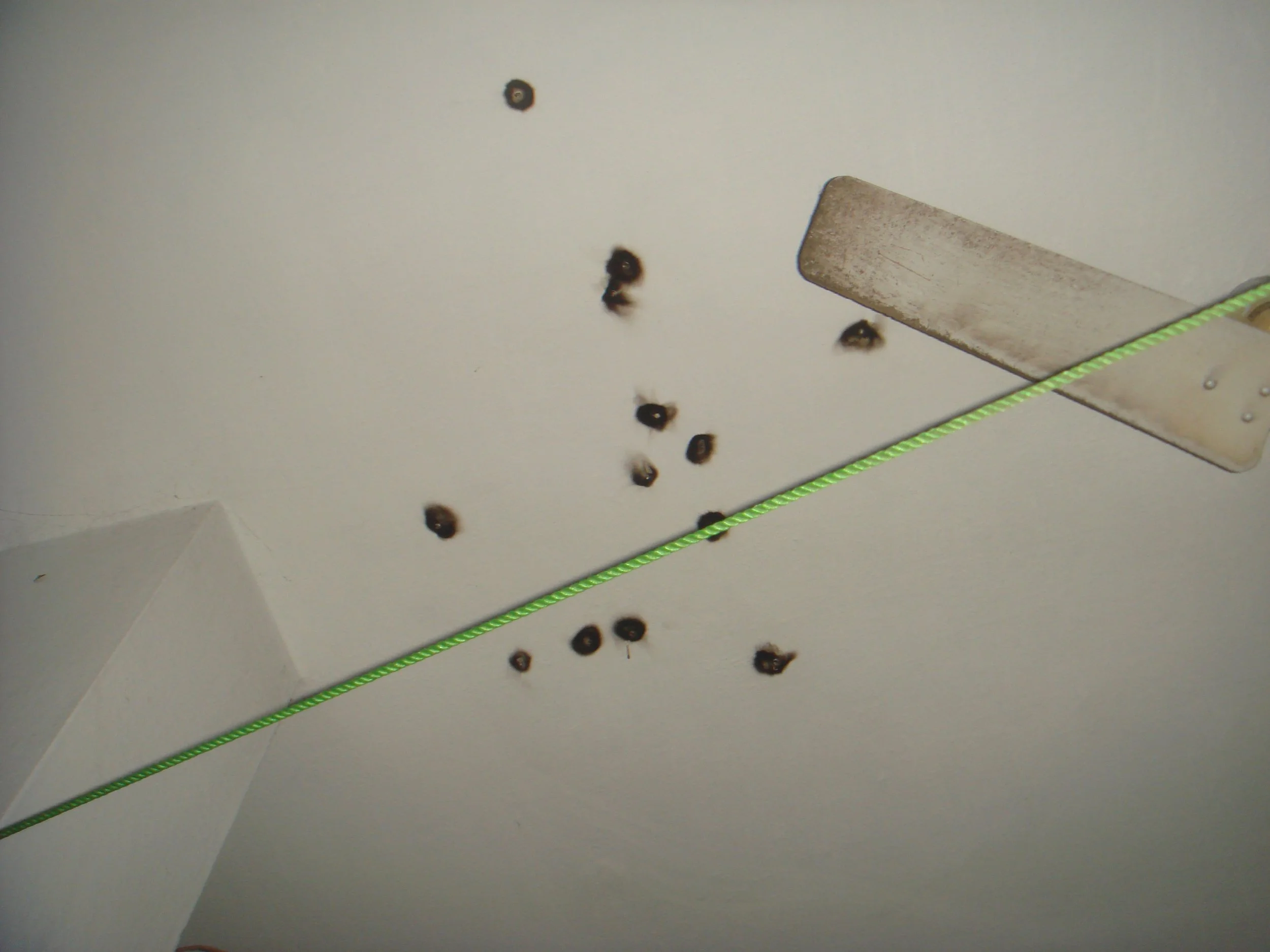
Photo: Karan Madhok
Fiction: ‘Your jersey is all sweaty. And your shorts too. It’s stinking up my room. Take it off. / Dilawar’s eyes turned to the door. He felt like if he ran through it, nobody would find him. All he had to do was run.’
- Armaan
The watchman pulled down hard on the rope, the breakfast bell rang, and the earth shook beneath them.
All the boys entered the dining hall at once, each having set off from his own boarding house, and each having calculated beforehand the exact time it takes to get there. Eight minutes and ten seconds from Azad House. Two minutes and twenty seconds from Gandhi House. Four and thirty-five from Bose. Six and forty from Tilak. Four from Nehru.
Breakfast was usually a solemn affair. Rajma and roti and cold toast. It had been more solemn than usual that past month, and they all knew why. They chewed their butterless toasts without a word let loose between them. Standing by on serving duty, Dilawar watched Himmat Singh struggle with his food, his ribs surely aching from the previous night. After lights-out in the dorm, some of the boys had thrown a blanket over Himmat Singh and pegged it like a tent, before attacking him with a barrage of hockey sticks, digging into him with wooden talons and hooked beaks.
When their toast was finished, they pecked at the crumbs. Dilawar saw the latecomers outside, through the enormous windows, crawling over concrete and brick under the gaze of tall, sinewy prefects. When asked to refill a serving bowl, Dilawar navigated currents of servers from other houses. Serving duty always fell to junior boys—eighters, niners, and tenners. The heat from the rajma warmed Dilawar’s face every time the jaded dining hall staff plopped it into his serving bowl, less red and more watery with each serving.
Nothing worth mentioning happened throughout class time. Lunch time went by quickly, too. Again, Dilawar served before he sat down to eat, and again the latecomers crawled outside.
The lawns were trimmed to perfection. The deep red bricks that lined the campus walkways had been scrubbed of moss after a spell of winter rain. It amazed Dilawar that things went on as usual, like nobody knew, or had ever known.
They were all where they needed to be after class. In rooms across campus, presided over by masters, they sang like birds behind iron. The classrooms in the humanities building were transformed into debate halls, the dorms of all houses into wrestling pits, and the massive auditorium into a steaming jungle populated by fowl whose feathers marked their allegiances: theatre, badminton, film club.
But none for Dilawar, for that day Tilak House was playing Azad. He was on the Playing XI, only because two players had suffered bad injuries. He was good enough to play on any other day, too, but the Tilak hockey captain, Prakash Jain, didn’t like that he didn’t hurl curses at the opposing team during the match. Or that he never hurled curses at anyone at all.
The beds in Dilawar’s dorm were messy with piles of clothes and books. All except one, in the far corner of the dorm, next to the windows. It had been stripped of linen, so only a forgotten mattress sat on the bedframe. The locker next to it had been emptied. Dilawar had about half an hour before the game, and he used it to do a lot of thinking: some about his classes, some about the girls on the small posters taped to the inside of his bedside locker, and some about that empty bed, which once belonged to his dormmate who had hurled himself off the tiled roof of Tilak to die on the deep red bricks that lined the campus walkways.
Himmat Singh came to Dilawar’s dorm to wish him luck. His words were soft, but his expression was grave. Himmat Singh was a chubby boy, prone to excessive smiling. He was in his tenth year just like Dilawar. They were friends, but not dormmates. They were only ever talkative around each other, and even then, not very much. Years later, while running his father’s failing jewellery store, Himmat Singh would pour out a peg after a day of politely declining customers who haggled over bangles they could not afford, and he would drink and miss the boys of Tilak, even though they were cruel to him. Cruelty was always better than the company of customers.
Most of all, he would miss Dilawar. Nice fellow. Decent at sports. Always thinking and hardly talking.
All the boys of Tilak and Azad filed onto the field to cheer for their house until they were hoarse, Himmat Singh among them. Meanwhile, Dilawar jogged onto the field with hockey stick in hand. All of Tilak House had been quiet that past month, but today they would be clamorous. Whether Tilak defeated Azad or Azad defeated Tilak, their voices would be lost to the game.
Whistle blown. Ball flicked. They jousted with wood, gained ground and lost it. The sound of his own heartbeat made Dilawar forget the world. Such was the nature of battle. Easily he slid through the maze of woodwielding, redjerseyed Azad boys, with all the plebs of Azad at the sidelines cheering for his death, and Tilak for his life, and the goal growing closer, just the goalie armoured with padding and he, Dilawar, eyes darting between the ball rolling in the embrace of his stick and the teeth showing through the grille of the goalie’s helm, and the right corner of Dilawar’s right eye then filled by a chest like a barrel, heralded by the sound of thunder from a man’s throat.
Dilawar was in the dirt. His blue jersey had been browned.
Ranveer Rana was enormous. All the twelvers were, but Ranveer Rana especially so. Wildeyed, bearheaded with hair cropped short. The eighters watched with the air stuck in their pipes. The two players flat on the ground and the ball attempting its escape, slowrolling over the grass as two pairs of eyes held each other, stunned, and then the ball, and then the goal, and two sticks lurching forward and the ball flicking this way and that, taking flight, soaring, screaming, spinning, between goalie and goal post, and falling upon the net, exhausted.
Dilawar ran back to his side, with a ringing in his ears that was partly his blood, pumping quick, and partly the hoarse shrieks of Tilak House screaming his name on the sidelines. Himmat Singh screamed the loudest. Dilawar did not turn to see Ranveer Rana, all red from the fall, eyeing his shrinking back and walking backwards to his own position with white knuckles wrapped around his stick.
That was the only goal scored in the whole game.
Dilawar had about half an hour before the game, and he used it to do a lot of thinking: some about his classes, some about the girls on the small posters taped to the inside of his bedside locker, and some about that empty bed, which once belonged to his dormmate who had hurled himself off the tiled roof of Tilak to die on the deep red bricks that lined the campus walkways.
They did not see the sun sinking behind them—the sky was overcast by the time it was all over. With his team sitting in a semicircle around him on the field, Prakash Jain said nothing to Dilawar, except: Good goal. Then he chided his teammates over tactical details they would forget by dinnertime.
Before they dispersed, Prakash Jain stopped Dilawar.
Ay, do me a Favour. Get me iced tea.
Okay.
Dilawar spun on his heels and was about to—
Get me my packet. Jai Yadav has my Nestlé powder.
In Azad?
Where else?
Lawless country, Azad House. Nestled in a far corner of campus. When he entered it, Dilawar dragged his feet through its corridors, eyes locked on the growing mass of boys filling the House quad. They were the junior boys—the eighters, niners, and tenners. Faces hung like old paintings. Voices lost to the game. It was the hockey players who went forth to the field, but regardless of outcome, it was the juniors who always lost.
Blind as a bull, Ranveer Rana came charging into the quad, hockey stick in hand, and they cleared out of his path. He screamed at them for being motherfuckers, for not cheering loud enough, for not motivating the team enough to win. Years later, moments before he died in a car accident with a pile of empty glass bottles shattering in the backseat of his Audi A6, Ranveer Rana would remember how the only house in his life that had ever felt like a home was Azad House. All while fleeing his parents’ tea estate on the national highway as the dying words of his father still rang in his head—You embarrass me.
Dilawar knocked on Jai Yadav’s door, seeing him sprawled on the bed with a copy of Reader’s Digest hiding his face. Jai Yadav was a minding-his-own-business kind of twelver. He didn’t play any sports, didn’t leave his room in the afternoons. He was at heart a gourmand, concerned only with the smell that emanated from his housemaster’s kitchen every evening. His housemaster despised him for his lethargy, but the housemaster’s wife adored him for his heart, which she always said had more rooms in it than a boarding house.
Dilawar told him what Prakash Jain wanted.
At first, Jai Yadav knitted his eyebrows together, recalling, before snapping them back into place.
Oh, yah. Take, take. Tell him thanks from me. He handed him a blue-and-white packet of Nestlé iced tea powder from his locker.
Jai Yadav proceeded to ask him, in a grave tone, about how the boys at Tilak were holding up. It must have been tough, hearing about that boy who killed himself. Dilawar hadn’t thought about it since before the game, and now posed with the question, he couldn’t help but look away, at the floor, at the walls, at the iced tea.
Jai Yadav felt sorry for him running such a long Favour. Dilawar could not have known, but it was because Jai Yadav had himself spent many an exam season making Maggi for twelvers pulling all-nighters. Years later, amidst the heat and hollering of the kitchen in his five-star fusion restaurant, Jai Yadav would always make sure that his regiment of sous chefs left a pot, clean and empty, on the stove. So that, before locking up at closing time, he could make the spicy Maggi that his sons ate in secret, under their blankets and out of sight from their mother.
It had begun to rain when Dilawar left Jai Yadav’s room,. Fairly heavy. Unusual for this time of year. Dilawar thought of the malis, who would once again have to bend over the deep red bricks that lined the campus walkways to scrub off the moss.
The rain dispersed the juniors in the Azad House quad. It was almost 6 PM. Shower time. Dilawar would have to run so that he arrived before they finished up the hot water at Tilak. He knelt to tie his shoelaces, and when he stood up, he felt the large, warm presence of a twelver directly behind him. Barrelchested. Thunderthroated.
When Dilawar turned around, Ranveer Rana ran his eyes over his sweatsoaked blue-and-brown jersey.
You have a lot of balls coming here.
I’m on Prakash Jain’s Favour.
Meet me in my room.
Dilawar followed him. Only twelvers had entire rooms to themselves. Ranveer Rana sat down on his bed. His hockey stick leaned on his leg. Shut the door, he said.
Dilawar did as he was told. Ranveer Rana was quiet for a few moments, until he wasn’t. You pushed me on the field.
No, I didn’t.
You’re calling me a liar?
Dilawar’s throat closed itself and had to be forced open. I didn’t mean to push you.
Ranveer Rana scratched his hairy legs and flakes of mud kept falling onto his floor.
Otherwise, he didn’t move. It was a foul—that’s how you won. You only scored because you fouled me.
I’m sorry. I didn’t mean to, khuda ki qasam.
You’re Muslim?
Yes.
So, you’re cut?
Yes.
I don’t believe you.
Dilawar said nothing.
Your jersey is all sweaty. And your shorts too. It’s stinking up my room. Take it off.
The two players flat on the ground and the ball attempting its escape, slowrolling over the grass as two pairs of eyes held each other, stunned, and then the ball, and then the goal, and two sticks lurching forward and the ball flicking this way and that, taking flight, soaring, screaming, spinning, between goalie and goal post, and falling upon the net, exhausted.
Dilawar’s eyes turned to the door. He felt like if he ran through it, nobody would find him.
All he had to do was run.
Take it off.
I have to do Prakash Jain’s—
You didn’t hear me?
Abruptly, Ranveer Rana stood up and grabbed his hockey stick. He took two steps towards Dilawar and tapped the stick on his left thigh. You want a whack on the ass?
I’m sorry.
You deserve it, for fouling a twelver. On your bare ass.
Dilawar’s eyes darted between Ranveer Rana and the stick, as if he was back on the field. But the twelver was looking only at Dilawar, at all of him. His hockey stick crept up Dilawar’s leg.
Don’t think too much. Take it off.
One of the Azad House prefects rang the brass bell to announce shower time. All the bells in all the houses rang at 6 PM. Dilawar heard them through the closed door—pouring out past Ranveer Rana’s room in naked dozens, running and pushing and clawing at each other’s backs to catch the hot water before it ran out. Like crazed chickens spreading their aching wings, they laughed and snapped towels at each other, the squawks of their excitement drowning out the heavy rain falling outside.
Ranveer Rana’s grip on his stick loosened. He grunted and turned his back to Dilawar. And Dilawar walked backwards to the door, threw it open, and ran. His feet carried him far into the field, half-running and half-wading as the rain fell, relentless.
Tilak House was raucous when Dilawar returned, panting, to hand the iced tea powder to Prakash Jain in his room. He could not distinguish the sound of rain from the sound of water running in the showers, clouded with steam and crammed with boys of all years. Shower time had once again become thrilling, as, for the first time in a month, juniors shrieked and threw shampoo at each other and elevenners and twelvers banged on the walls in rhythm. After a win like that, the twelvers would always carry the team on their shoulders through the corridors with the eighters and niners squealing behind them. It was the first time they had celebrated like this in a whole month.
Dilawar sat on the edge of his bed in his own dorm, on the upper floor of Tilak House, his shoes untied. Chest heaving. Hair dripping. His socks smelled vile. Himmat Singh had entered the dorm searching for him to congratulate him on his goal, but on seeing his friend’s face, he retreated.
If someone from my dorm had done it, I would also be fucked up like you, said Himmat Singh. But we won today, think about that. Things are going back to normal.
Dilawar blinked. They really were.
You think too much, Himmat Singh told him before stepping out the door. Don’t blame yourself.
Alone again, Dilawar turned to properly look at the dead boy’s bed. No doubt waiting to be filled by someone else next year. The metal locker next to it stood empty, open, the stickers of movie stars’ face still plastered on its insides. Dilawar looked away. The dorm was dim in the sunless evening, and when he looked at the stone tiles beneath his feet, usually olive green, they looked dark like a jungle floor.
Dilawar saw him on that empty bed, that boy. Dilawar knew his name but was afraid to say it. Nobody had said that name on campus for so long. It seemed wrong to resurrect it now. They hadn’t been friends, but their paths had crossed often, in biology class, in badminton. He sat four seats away from Dilawar in the dining hall. Two days before he had died, Dilawar had lent him a pen. The boy was in his pyjamas now, the way Dilawar always saw him when they brushed their teeth before lights-out, not the white shirt and dark brown trousers he had jumped in. He spoke in a calm voice, but devoid of warmth.
The boy put his hands on Dilawar’s bare shoulders and looked down at Dilawar’s rainsoaked socks. His palms were black like they had been inked, and they left prints on Dilawar’s body. He laughed and said—You think too much. Just fly.
When I went down, it was headfirst. I made sure my feet were intact. Because my feet always let me run, na. But my head was a burden. Always had to be carried, so it had to go.
Dilawar nodded, pretending to understand.
Your head is a burden also, haina? But your feet are wonderful things—you can use them to run. And you can use them to fly.
The boy put his hands on Dilawar’s bare shoulders and looked down at Dilawar’s rainsoaked socks. His palms were black like they had been inked, and they left prints on Dilawar’s body. He laughed and said—You think too much. Just fly.
The force of his words hurled Dilawar out through the dorm wall, throwing plaster and brick everywhere, and high into the air above the hockey field and it felt more like a river gushing down on his head than a sky. He floated in the torrent. Below him, the field was flooded, and the boys of Tilak and Nehru and all the other houses who hadn’t showered yet were doing bellyslides on the film of water that drowned the grass, and he thought that maybe they could have joined him, if only they looked up. But the truth was that they couldn’t use their feet. Not like he could.
He didn’t stay up there for long. When his feet landed outside his dorm, Dilawar didn’t go to shower. No point—the rain had already washed him. He wiped himself down with a towel and changed into his dinner sweater. Everything scrubbed clean. Only the handprints on his shoulders, they wouldn’t go. Hopefully the prefects at dinner won’t take notice.
The rain was getting through the giant hole in the wall. None of the boys who returned to the dorm from the showers noticed it as they changed into their dinner clothes. Shower time was over, the dinner bell almost rung. The housemaster entered the house for the first time that day, beginning his hunt for latecomers, prefects preceding him like beaters in the bush. He, too, walked past the hole without noticing it.
And they all ran to make it in time for dinner, so that they wouldn’t have to crawl to the dining hall in mud. Dilawar ran with them. He could fly if he wanted to, but he chose to run. His feet carried him far.
***
Armaan is a writer from nowhere in particular, although his stories have an Indian tint to them. His work has appeared in publications like Condé Nast Traveller, The Quint, HIMAL Southasian, and The Skinny. He enjoys bouldering, playing military strategy board games, dancing in his room, listening to psychedelic Latin folk, and having pointless arguments, and he intends to write frantically for the rest of his life. You can find him on Instagram: @armaan_nama.