The Lunar Learning
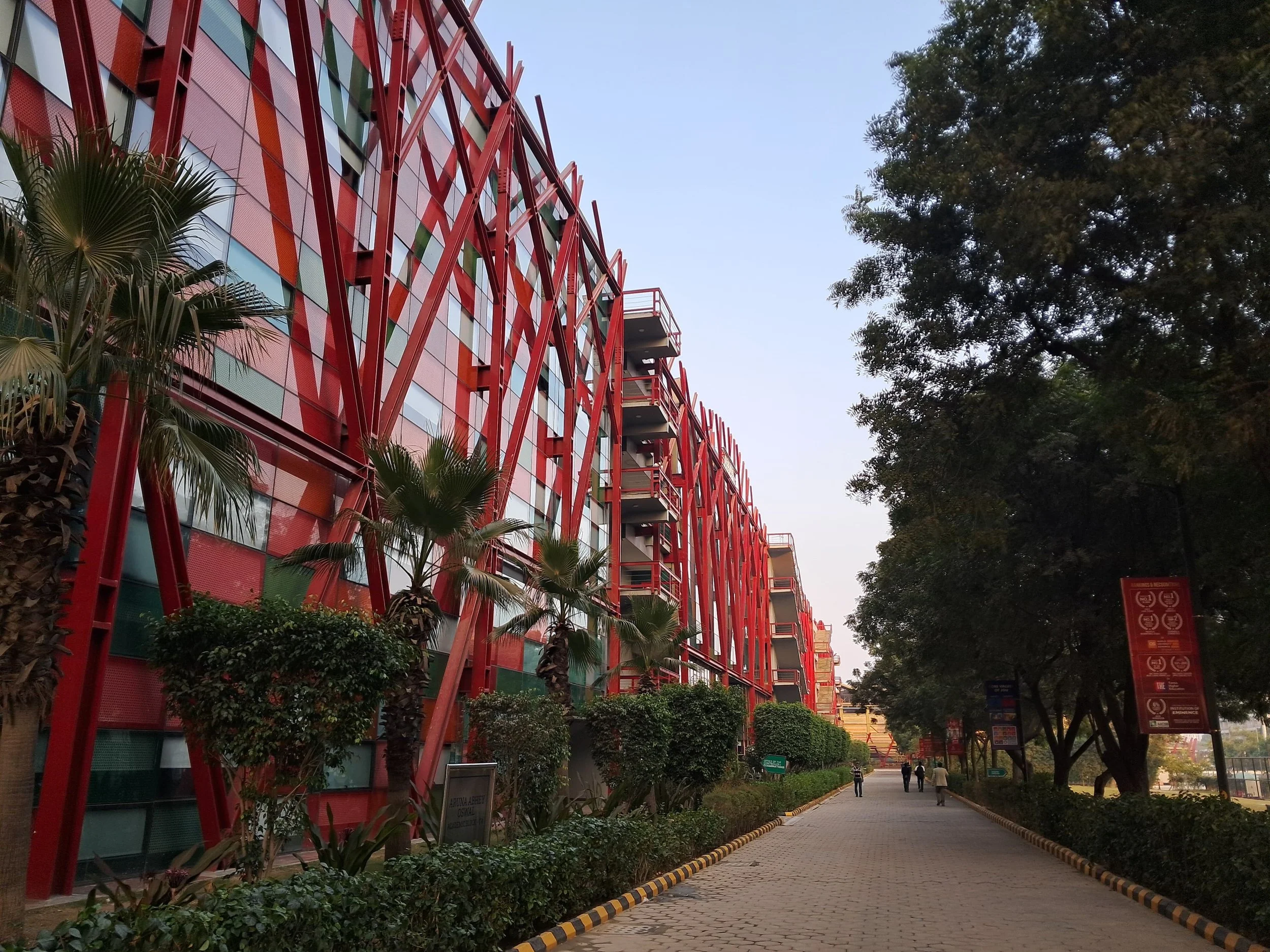
Photo: Apoorva Choudhary
Personal Essay: Who has access to knowledge? Ph.D. scholar Swathi Priya explores how multidisciplinary lenses of caste inclusion, neoliberal market, liberal ideology, mental health imperatives, and literature inform her larger research goals.
If there were a lady with a desire like the full moon to read, and re-read, and unearth, and get crumpled with thoughts, and get lost along the way, and throw herself out from nightmares, and cease the ideas and thoughts that escape in her dreams… then she must be a nascent researcher, like I am. For someone who researches Indian higher education—particularly in liberal arts and sciences—what flies around from dawn to dusk in this dream-like state is the living, breathing, interconnected essence of knowledge. In my case, the elements of this ‘essense’ are sociology, economics, politics, literature, and psychology.
This animating spirit of interconnected learning is an intimate and internal germ, one that connects cultures into a deep vision, solidifying into a mandate to discuss what liberal arts education means in a heterogeneous scape like India—whether enabled by a pedagogy or nurtured by a natural sense. With interest driven by the latter (as I only trained in the single discipline format) my research delves into the skeletons and souls of several disciplines and seeks to discern the multidimensionality when they commingle. The lenses of caste inclusion, neoliberal market, liberal ideology, and mental health imperatives inform my larger research goals, inquiring into liberal arts education informed by smaller yet significant questions.
Amidst these, literature is my own soulmate, one that brings these promiscuous perspectives alive through characters and their voices.
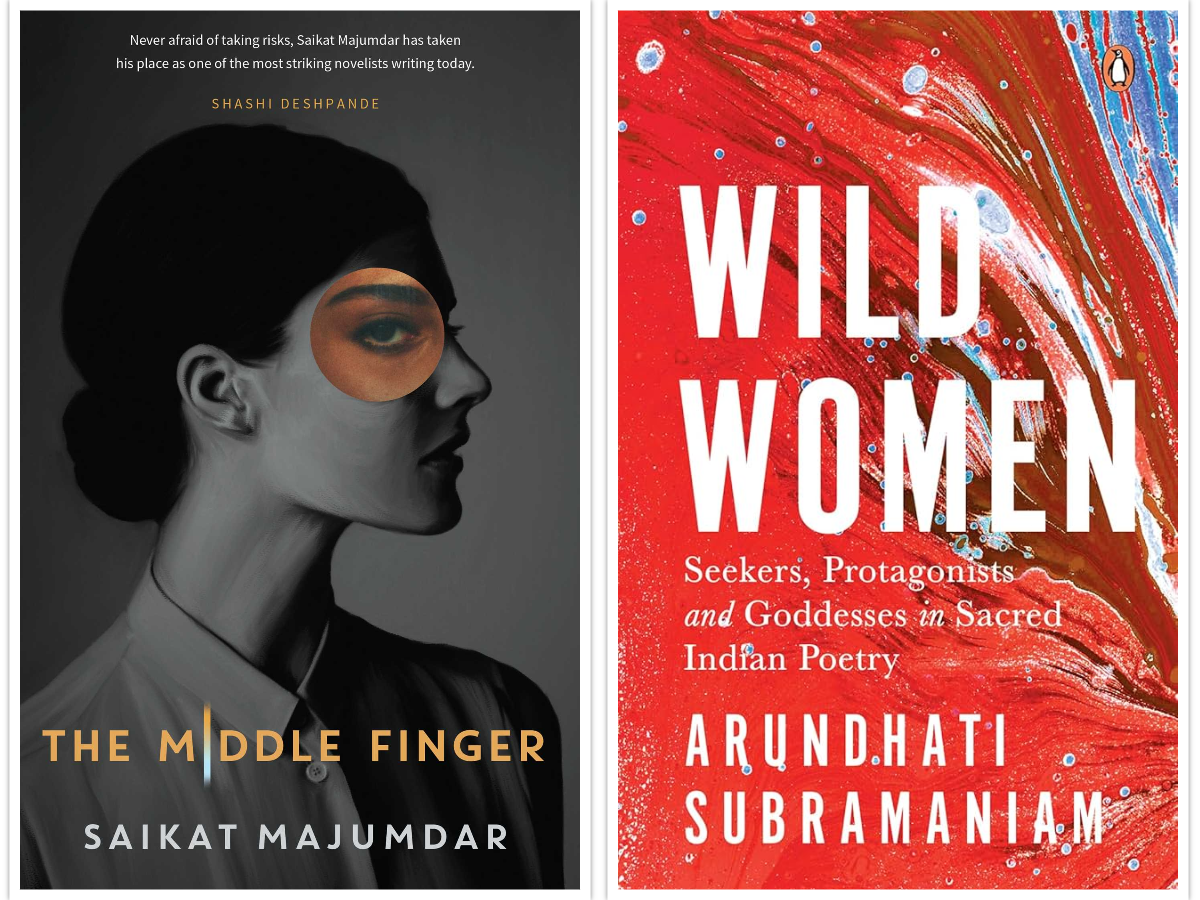
In this unabated journey, the past couple of weeks have been an indulgence into understanding the Indian social structures, particularly the caste system. My reading days become an intriguing black-hole dive, as I tend to hop between books, which effectively means hopping between disciplines. Each discipline presents narratives of the same subject through the worldviews and methodologies native to them. For instance, to understand caste, its positionality in higher education, its historical trajectories, and the questions of equality and access, my current reading list contains the following books: Indian Higher Education: A Perspective from the Margin (2018) by Raosaheb K. Kale, The Caste of Merit: Engineering Education in India (2019) by Ajantha Subramaniam, The Middle Finger (2022) by Saikat Majumdar, and select poems from Wild Women (2024) by Arundhathi Subramaniam.
Upon introspection, this form of interdependent awareness has been an evolutionary and existential method of accumulating and assimilating knowledge for survival and growth—an instinct, so to say. Therefore, deep down, it feels native.
The first two readings primarily belong to the discipline of sociology of education that reports and analyses larger social patterns pertaining to caste hierarchy and its hegemony against Dalits in Indian higher education. These readings help me cognise the historical to contemporary events pertaining to caste, detailed either through impersonal data or personal narratives as received, synthesised, critically evaluated, and presented.
The nature of sociology is to ask research questions that are small, narrow, technical: The scientific characteristics that produce new knowledge on human behaviour and their patterns. In a nutshell, through sociological research grounded in empirical knowledge, the books ask the larger question studied through a social science inquiry: Who has access to knowledge?
The final two readings belong to the discipline of literature: The Middle Finger, fiction and Wild Women, poetry. A contemporary campus novel, The Middle Finger, is a reimaging of the Mahabharata’s Drona-Ekalavya-Arjun, as Megha-Poonam-Jishnu. The author excavates the disruptive learning desire of Poonam, a lower-middle class woman in Delhi, delicate yet parched to learn from Megha, a bourgeois, who had just returned from Rutgers to teach at Harappa, an elite institution in Delhi. The story weaves together the themes of access to knowledge through mentorship and sexuality. It is a poignant, lyrical telling of class-caste hierarchy and its burdens quietly bustling in the air.
Searing the fatal strain of racism and prejudice during her days at Rutgers, Megha is also a deeply aching, righteous, and raging poet, whose verses sting like taunting laughter. But whom did this raging, urbane young mentor belong to? The elite, intellectual, articulate Jishnu, or greasy, prowess, unspoken Poonam? The tension tied my gut to its core. The Middle Finger is a tale of Megha’s coming-of-age through Poonam’s fierce surrender to knowledge. Majumdar writes:
Megha held Poonam’s palm, soft and light with bones too small for her age. She lifted it, softly brought it to her lips. Poonam’s eyes threatened to spill.
“And this is the window through which the chickens screams?” Megha leaned towards the window. “From daybreak till evening,” Poonam made a face. “It’s horribel!”
“It’s horribel,” Megha’s eyes danced. “That sounds like prayer!”
“Shut up,” Poonam laughed, and pinched Megha’s nose. (222)
In a nutshell, this novel, too, asks: Who has access to knowledge? It is the larger question plumbed through a story native to many among us.
The question arises again in Wild Women, a collection described by its author Arundhati Subramaniam as “an anthology of sacred poetry,” which weaves a tapestry of poems by the Indian women poets spanning ancient times. One such 18th century classic that Subramaniam captures is the Tamil poem, “Shenkottai Avudai Akkal,” by Akkal, translated into English by Kanchana Natrajan. In Subramaniam’s prelude to this poem, she describes how Akkal, a child widow, was forced to undergo the austerity of social norms such as rituals of tonsuring the head and leading a life of abstinence and celibacy. Subramaniam further marvels how Akkal subverted and defied these dehumanising ideals with her own perspectives on purity (ecchil or saliva) and pollution (theetu, the act of being polluted by another’s saliva by consuming food or water from the same container).
In “Shenkottai Avudai Akkal,” the ‘theethu’ is a kind of dragon’s fire, which slaughters and dissolves the sacred illogic into ashes.
O men! You lament: ‘Ecchil! Ecchil!..
But there is no place without ecchil, Supreme One!
The forms of god are ecchil,
Honey is the ecchil of the bee,
And is not all nourishing mother’s milk
Also ecchil, Supreme One?
…….
The first sound is ecchil, the first form is ecchil,
The four Vedas of the brahmins are ecchil.
Is not the tongue that chants the Vedas’ ecchil, Supreme One? (147)
And her stings persist into deeper lengths.
What’s unsaid but powerfully felt is the question of access to knowledge in a modern institutional format. Akkal’s agitation presents disturbing and unsettling questions on marginalisation, and brings in the forefront the myriad, masked forms of discrimination that certain sections of the society continue to encounter. It is the irony of an ‘evolved’ civilisation. Poems like these allow a worldview built through affect, blending with cognition, and viscerally infusing a sense of belongingness to history.
This leads to a shocking revelation: I reflect history, and that the present is a consequence of my position in history. This personal epiphany finds its corollary in Kale’s analysis of marginalised students’ low enrolment and high dropout rates.
My attempt to understand the history of caste and its hegemony through frameworks that each of the above discussed disciplines undertake, independently and interdependently, is strikingly exotic yet native. Having trained through a rigid psychological focus, the new perspectives placed next to each other are enthralling. It is the newness of this conscious experience that makes it exotic to me. Upon introspection, this form of interdependent awareness has been an evolutionary and existential method of accumulating and assimilating knowledge for survival and growth—an instinct, so to say. Therefore, deep down, it feels native, too.
Circling this multisensory awareness back to my research, and it nudges me to wonder if this ‘exotic yet native’ way of knowing be directed towards an education of social consciousness, and move forward the current economic imperatives around liberal arts and science in India.
I hope the journey ahead is not too long.
***
Swathi Priya is a Ph.D. scholar at the International Institute of Higher Education Research and Capacity Building, O.P. Jindal Global University. Her personal educational journey, marked by both challenges and triumphs, and her experience as a psychology educator, have cultivated a deep-seated passion to understand and transform the landscape of higher education. You can find her on Instagram @swathi_sivakumar21.