The City That Remains: Guwahati, and the Poetry it Inspires
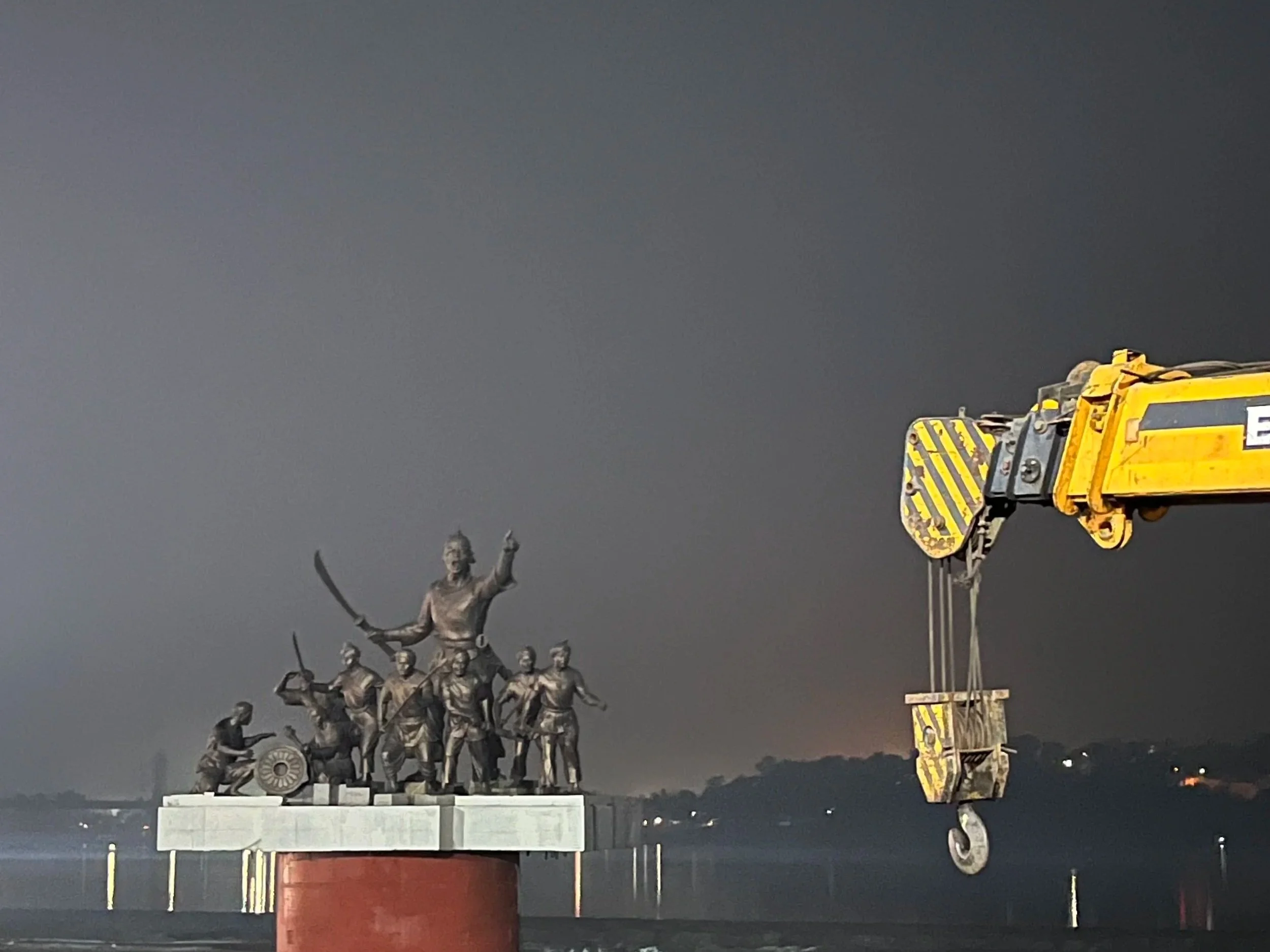
Photo courtesy: Ayaan Halder
Through memories, juxtapositions, and observations of the intricate, the poems about Guwahati in The Penguin Book of Poems on the Indian City (2025) portray a city that no longer exists, having metamorphosed into a new ‘synthetic’ space marred by politics and reckless urbanisation.
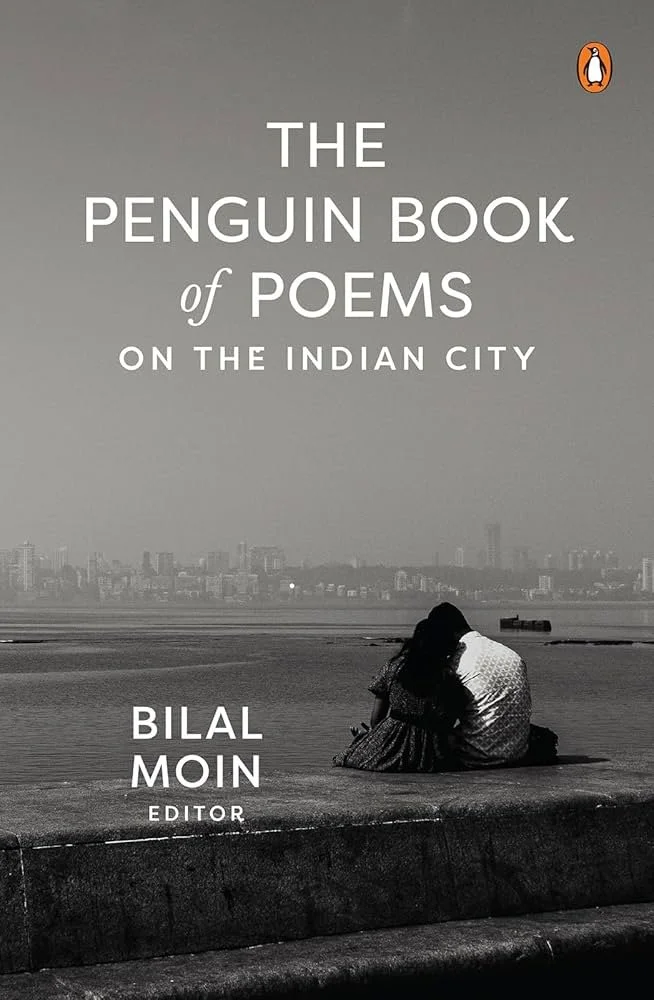
Considering the scarcity of accurate representations of Northeast-Indian urbanities in mainstream English literature, it is with the reasonable suspicion of a Northeasterner that I first picked up the mammoth volume edited by Bilal Moin, bearing the audacious title The Penguin Book of Poems on the Indian City (Penguin Hamish Hamilson, 2025). It was perhaps only natural that my gaze hopped across the contents to track down the sections dedicated to this region—and more specifically, to Guwahati, where I live, and what has been my most longstanding of muses. And it gives me much pleasure to declare that not only do the poems picked depict the city with beauty and purpose, but, when read as a Gestaltic whole, they also serve an essential socio-political role.
Through memories, juxtapositions, and observations of the intricate, the seven poems, perhaps unintentionally—or perhaps because of Moin’s keen eye—paint a portrait of a city that no longer exists. It is a portrait of—and a pining for—a Guwahati that precedes the wholesale saffronisation of its atmosphere, and the rapidity and recklessness of unplanned, egotistical and politically strategic urbanisation that has characterized its past decade, as flyover after flyover marked by grand policy labels like “Smart City” and “Act East” have shot up to the skies, and tree after tree has been slaughtered to make way.
In these poems, unlike in the city in which I find myself currently, the power of determining what Guwahati is remains a product of tangible social relations, interactions, and functionalities that have their roots in the citizenry—instead of being synthetic, sanitised, and oftentimes deceitful impositions upon us by our political overlords.
Take for instance, Amlanjyoti Goswami’s “Bus Routes of My Childhood,” a poem that recollects the names of the myriad ‘bus-stops’ in the city (and sometimes beyond) of the poet’s childhood, and translates them into English in a literal way. So, Machkhowa becomes “Fish Eater” and Ambari becomes “Mango Garden.” I was most stricken when Sharab Bhatti—a locality not too far from where I live—became “Booze Joint.” It’s a comical, even ‘offensive’ name, and yet, as the poem (and the city’s verifiable history) display, localities in Guwahati often drew their names from the ‘literal’ that existed within them. So, while I cannot ascertain the exact history behind Sharab Bhatti’s nomenclature, it is possible that liquor joints, or bhattis of yore might have had something to do with it.
In these poems, the power of determining what Guwahati is remains a product of tangible social relations, interactions, and functionalities that have their roots in the citizenry—instead of being synthetic, sanitised, and oftentimes deceitful impositions upon us by our political overlords.
To me, and perhaps to others who live here, the name jocularly reflected a more ‘realistic’ way of understanding the city, and digesting the idea that the historical and socio-economic unfurling of what we know as Guwahati today was not a linear, magical process that can be forced into perfect consonance with vague, or be morally loaded ideas that the government calls, “culture, tradition & civilization.” And yet, in 2022, a notification published by the Guwahati Municipal Corporation has tried to do exactly that, by officially renaming “Sharab Bhatti” as “Arya Nagar,” an act which was quickly followed by State attempts to re-christen other parts of the city using the time old and malleable Hindutva rhetoric that declares that such names celebrate an “Islamic invasion of India.”
Similarly, when juxtaposed against today’s Guwahati, this contrast in the locus of agency also emerges in “A Rain Tree Falls In Digholipukhuri,” Goswami’s other poem in the collection. The verses traverse the spaces that border the heritage Digholipukhuri watertank in the city, discussing the poverties and senilities that often languish there. Its centrepiece becomes a looming tree that comes crashing after centuries of life. Goswami writes:
When the big tree fell, everyone came
Children from long ago, after school
Saw ants crawl out, birds hatching, a snake slithering
Into the watery dark where every tree became a story (762)
While perhaps brimming with metaphors, my interpretation of this fall shall remain a literal one, for it represents a time in Guwahati, in which nature—and not individualistic political impositions—was what determined the life and death of trees.
Much has changed in the city now. Last year, Digholipukhuri was flooded with protestors, after a string of ancient trees in the vicinity were marked for felling by the city’s administration. Reports show that since 2021, over 3000 trees have been felled across Guwahati for urban “development” projects, leaving its citizens at the mercy of an ever-looming, ever rising heat and air pollution, as the numbers only continue to grow. Recent trends also present an increasingly confrontational attitude of the State in terms of environmental activism in the city, as peaceful protesters are detained, and journalists allege extrajudicial harassment for voicing environmental concerns.
The collection also includes “Guwahati Diaries,” Sheikh Md. Saba Al-Ahmed’s reflection on the COVID-19 crisis, and the absurdities of a city paralyzed by restrictions, managements, and mismanagements, which too, I cannot help but argue, is a longing for this sense of agency of the self over the city.
I now live in a city
Where people stand apart in queues, inside demarcated circles,
Outside grocery shops,
and outside medical stores (755)
In the poem, the word “now” is italicised and reiterated like a prayer through the stanzas; it becomes the poem’s core, and its anxious refrain, and the poet almost prophetically navigates an isolated, pigeonholed life in a Guwahati, which knows not how to traverse a future that shall inevitably be defined by administrative transgressions into personal spheres of the present.
I now live in a city
Where Spring is lonely – for a change,
And who knows,
The long Summer ahead
May be a lonely one too. (755)
In the end, the five stanzas that he puts together render the ‘simpler’ times of its past as the most longed-for element in an immensely contemporary, contextual manner.
The poem does not seem to be as insecure of what the future holds for the city. It is too busy with the surrealities of a bustling Guwahati, with people boarding and getting off buses, having their pockets picked, and encountering heavy rains, all without any fear of the passage of time.
Then of course, you have the late great Nilamani Phukan’s “Cutting In Bundles, The Fingers Of Your Fern,” a poem that precisely captures the ‘value’ of Guwahati’s urbanity for working class migrants, who leave behind their villages and towns across the broader Northeast India to partake in a more generous ‘urban’ economy. Phukan writes of a woman who sells ferns in the streets of Azara—a peripheral part of Guwahati—and interrogates her about her village. “Do you plant akon trees in soil mounds? / Do you rear fish in the ponds?” (757) The reader cannot help but wonder why she has left it all behind. We understand that the answer, again, lies in her agency over the city. It lies in her right to carve her own place within the urban chaos—even if she must settle for its footpaths—instead of being forced into preset roles and vulnerabilities in the region’s socially, politically, and even geographically-organised ruralities and semi-ruralities.
And yet, this too is something that is gradually slipping away from the marginalised—oftentimes diasporic—populations of the city, whose labour significantly feeds vulnerable informal professions such as hawking and street-vending, as the city administration repeatedly destabilises and recalibrates organically developed economic spatiality, citing beautification, documentation and pedestrian inconveniences, and of course, land encroachment, to normalise illusionary and exclusionary ideas of urbanity being sold to us in this political epoch. Despite the Supreme Court having subsumed the Right to Livelihood under Article 21 of the Constitution, extensive eviction drives in Guwahati have marred the last few years, with hundreds of hawkers being removed from organically-developed vending spots, as allegations have surfaced of various technical, administrative and moral fissures in the processes, along with damage caused to belongings such as carts and wares. The result has mostly been a gentrification of such fragments of the city’s economy by its petty bourgeois, oftentimes completely sidelining the original stakeholders.
There is also the synthesis of performative instruments like state approved “vending zones,” most of which notably remain defunct. In fact, these patterns of urban recalibration are being closely reproduced in other cities in the Northeast. The most recent example being the hawker evictions in the Khyndailad market (Police Bazar) in Meghalaya’s capital Shillong.
Shalim M Hussain’s more meditative, inward leaning poem “Udit Narayan” also makes the best of whatever agency the poet secures from the city. It becomes important here to note Hussain’s role as a contributor and organiser of the “Miya Poetry Movement” which pierced into a controversial prominence in Assam in the mid-2010s as a mode of expression of the exasperation of the marginalised and demonised Muslim “Miya” Bengali community in contemporary Assam.
In the poem, there is the cooking of kheer—and meat—and the knocking on doors by security guards for bribes. In it, there is a Guwahati that has a place for the poet, albeit perhaps with a little suspicion, and for a price. If one is to juxtapose it with the present-day city, one sees the former fading quickly, and the latter spiking with a stark abruptness.
For, of course, there is the ‘Miya question.’ As the current political atmosphere of Assam places the community at the mercy of a political superstructure that is selectively flattening home after home with contestable declarations of illegal immigration and land encroachment, perhaps Hussain’s idea of Guwahati becomes one that must be heard, understood, and accounted for, if one wants to understand the relationship the city shares with ethnic and religious marginality. Furthermore, as the Hindutva machine continues its impositions upon food choices in the Northeast—including demonising non-vegetarianism, and specifically, beef, whose consumption is effectively banned across Assam by way of legislation—one cannot help but think what the city has in store in the near future for the personal liberties of its citizens—gastronomic or otherwise.
Finally, Kamal Uddin Ahmed’s “At Sukreshwar” and Saurav Saikia’s “From Beyond a Fossil of Forgetting”—despite their greatly dichotomous themes—become the closest accomplices in the collection, as they collaborate to secure the image of a city in both chaos and stillness. Ahmed’s poem is all about the former, bringing to life the citizenry’s exercise of agency over Guwahati, as it ruminates upon its muse in the backdrop of the Sukreshwar Ghat, and its flower-market. Speaking to his muse, he writes,
That day, it rained heavily
It washed away a lady’s make-up
This I observed from the bus window
The rajanigandha, aglow
With the droplets that fell
The lighting illuminated the flowers
Transforming them into petals of gold. (760)
The poem does not seem to be as insecure of what the future holds for the city. It is—and beautifully so—too busy with the surrealities of a bustling Guwahati, with people boarding and getting off buses, having their pockets picked, and encountering heavy rains, all without any fear of the passage of time.
And then a few pages later, we find Saikia’s poem, as if it has been put there to wholly disrupt this sense of ease the reader finds in Ahmed’s chaos, perhaps to serve as a wakeup call. There is nothing but stillness in this poem. A stillness that looms over its streets and its movie theatres. It is a stillness which may belong to any of the moments in the city’s past, in which it the citizen’s claims, agencies and access over its ‘commons’ has been disrupted by the superstructure—be that the curfewed afternoons during the peak of insurgency, or the more recent days of the COVID-19 lockdown. It is a stillness whose cause the reader knows nothing about, a stillness, perhaps, over which the citizen has control. The poem leaves them utterly discomforted with the uncertainty.
“From Beyond a Fossil of Forgetting” ends with a melancholic warning about the dangers of an impending future for the city: “a horde of dinosaurs is advancing / To raise a storm in the heart of the city” (763). It is a warning, cleaving open the anxieties over the prospects urban recalibrations that completely evade its citizenry.
Peeking out my window, I bear witness to a city that I cannot find in the poems. Instead, I see a Guwahati that has very recently—and yet perhaps permanently—been whisked, roiled and agitated, and ultimately moulded into something uglier and more disappointing. And in this, perhaps lies the merit of these seven poems, and of the collection which has done such a tremendous job in chronicling my city as an asset of its citizen, before it slips away from the hands of the millions who call it their home.
***
Ayaan Halder is a poet, author and Doctoral research scholar at the Department of Law, Gauhati University, Assam (India). His works primarily engage with the contestations and coexistences of social indigenous and diasporic identities in postcolonial/post-partition Northeast India, and draws heavily from his own diasporic life spent wholly in both belonging and not belonging to the region. His works have been published in various regional, national and international platforms such as Sahitya Akademi’s Indian Literature Magazine, The Little Journal of Northeast India, The Wire, Littera Magazine (Bangladesh), Kitaab Magazine, among others. You can find him on Instagram: @_inkslinger__.