Beneath the Golden Dome: Gurpurab in the Capital
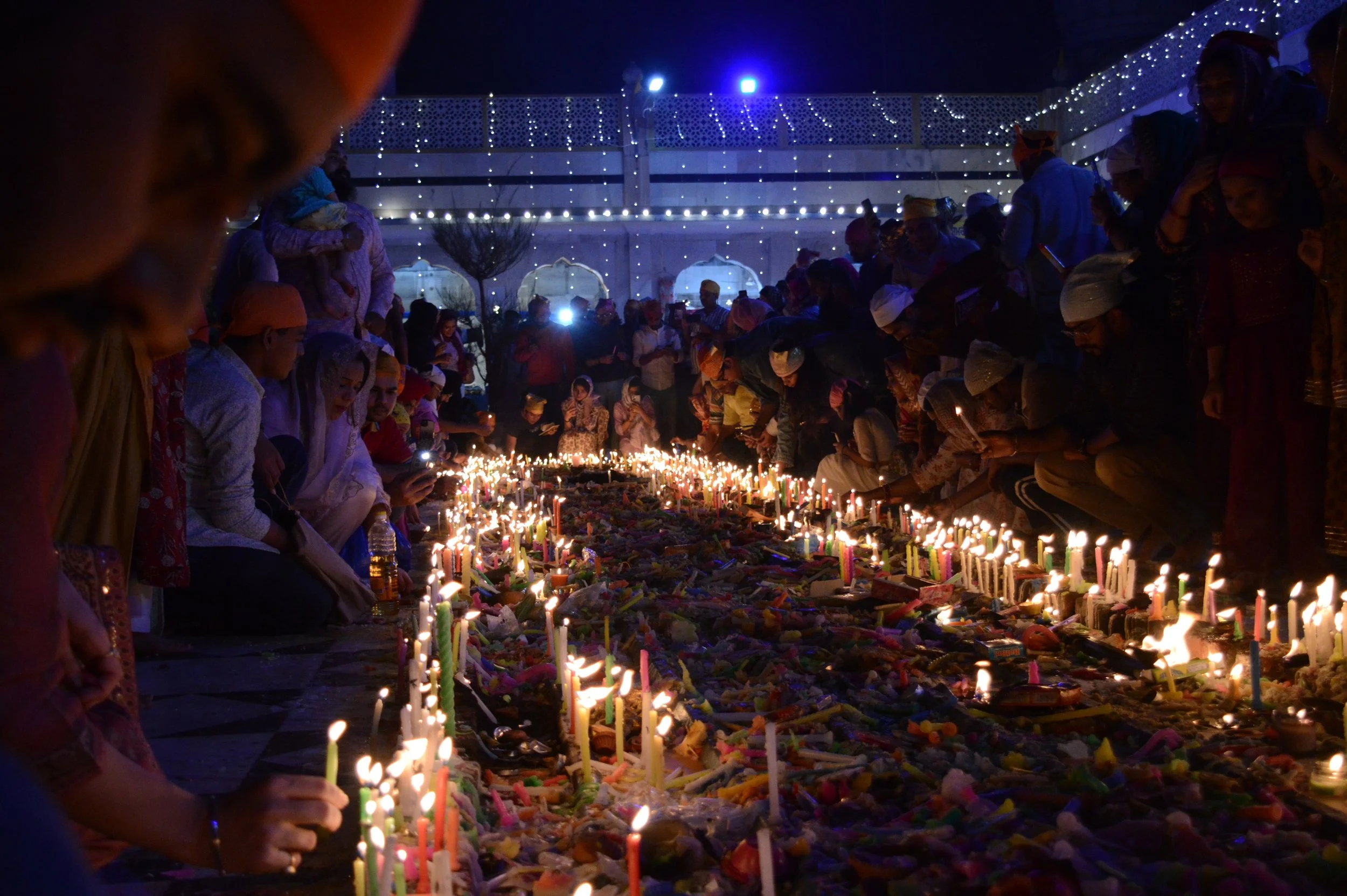
Hundreds of candles light up the gurdwara courtyard on Gurpurab, as devotees bow in prayer, creating a sea of flickering devotion and hope. Photo: Aditya Sharma
Photo Essay: From the historic lanes of Chandni Chowk to the healing sarovar of Bangla Sahib, devotees reaffirmed the timeless message of equality, service, and oneness of humanity on Guru Nanak’s birth anniversary.
- Aditya Sharma and Sana Kauser
On November 5, parts of New Delhi marked Gurpurab, the 556th birth anniversary of Guru Nanak—the founder of Sikhism—turning its oldest lanes into rivers of saffron and blue. From the crowded arteries of Chandni Chowk to the serene sarovar of Gurdwara Bangla Sahib, thousands gathered to celebrate a man born in 1469, whose message still feels urgently new: There is one god, all humans are equal, and true worship lies in honest work and sharing what you have.
Guru Nanak’s birth itself is wrapped in gentle wonder. Tradition says he was born on the third day of the bright half of the lunar month of Katik or Kartik (October–November), though the Nanakshahi calendar now fixes the date as 15 April for most of the world. Delhi, like much of northern India, still celebrates on the full-moon night of Kartik Purnima because that is how the old peasants and traders marked time. On the night Guru Nanak was born, it is said that the midwife found the newborn already smiling, and a strange light filled the room. His father, Mehta Kalu, worried the child might be possessed; astrologers declared the infant bore the marks of both a spiritual master and a worldly king. By the age of seven, Nanak refused the sacred thread of the twice-born, asking why a thread made by human hands could decide who was holy.
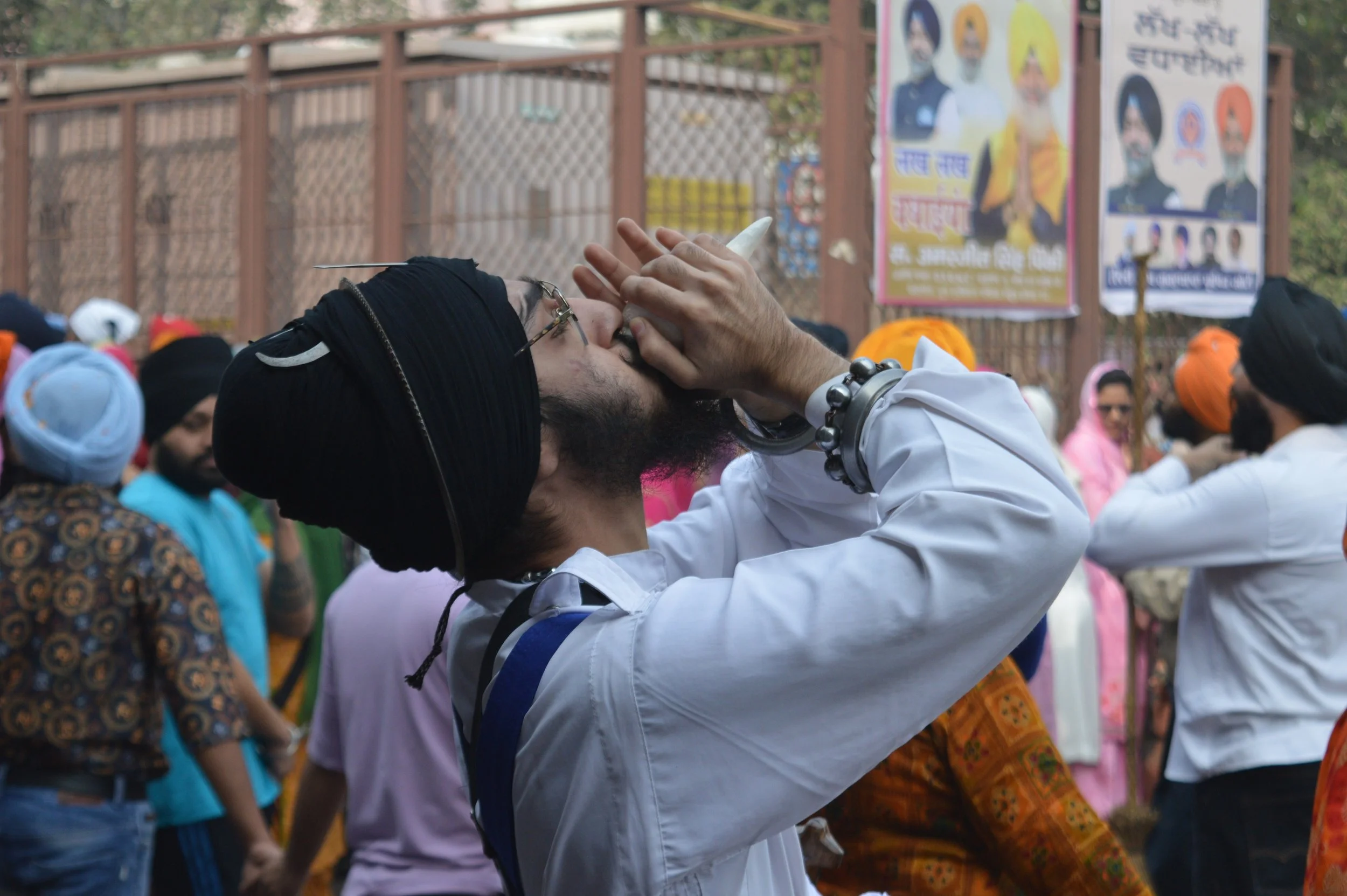
A devotee blows a conch shell outside Gurdwara Sis Ganj Sahib, marking the beginning of Guru Nanak Jayanti or Gurpurab celebrations in Old Delhi. Photo: Aditya Sharma
The celebrations of Gurpurab this year began long before sunrise at Gurdwara Sis Ganj Sahib in Chandni Chowk. This is no ordinary shrine. In November 1675, the ninth Guru, Tegh Bahadur, was brought here in chains by Aurangzeb’s soldiers. Kashmiri Pandits had begged him to save them from forced conversion; the Guru told them a holy man’s sacrifice could shame tyranny. When he refused to perform miracles or embrace Islam, he was beheaded in public view. His severed head (sis) fell where the gurdwara’s inner sanctum now stands; his body was carried away by a devotee and cremated secretly in distant Anandpur. Three days later, the tenth Guru, Gobind Singh, would establish the Khalsa at Anandpur, turning a community of quiet seekers into warrior-saints.
Every brick of the gurdwara remembers sacrifice. Devotees removed their shoes, covered their heads, and walked barefoot across cool marble still wet from overnight washing. Inside, the morning hukamnama (hymn) was read, and the scent of incense drifted over rows of people sitting cross-legged on white sheets.
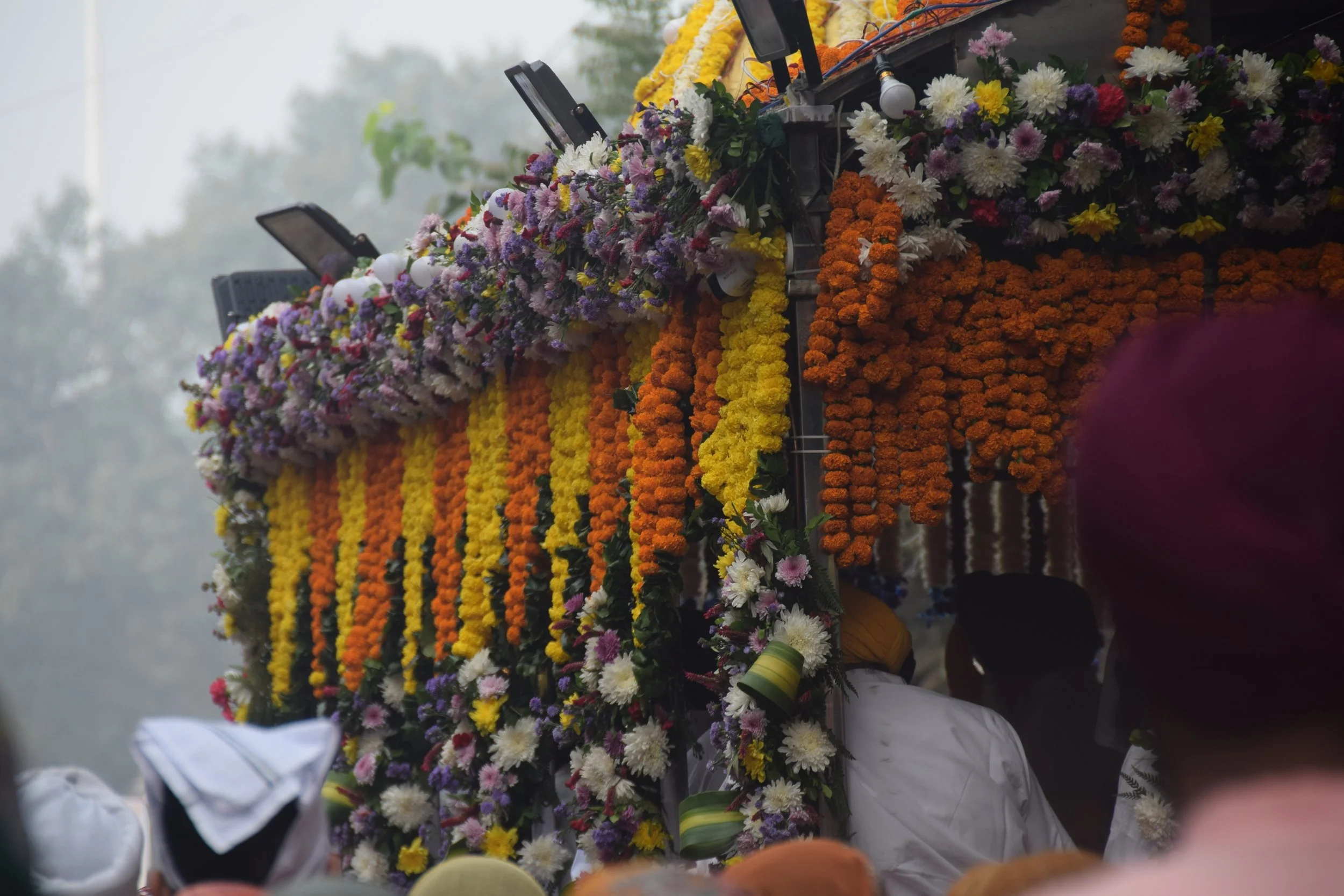
A beautifully decorated float carrying the Guru Granth Sahib makes its way through Chandni Chowk as part of the Nagar Kirtan procession. Photo: Sana Kauser
By nine o’clock in the morning, the narrow lanes outside were filling for the nagar kirtan. Five baptised Sikhs—the Panj Pyare—walked at the front in saffron and yellow robes. As per legend, these five weren’t chosen because they are saints. They were chosen because, like the original five in 1699, they said yes when someone asked, “Who is ready?” Behind them, the Guru Granth Sahib was carried on its flower-laden palanquin; and behind the holy scripture follow thousands of people. Schoolchildren sang shabads, Nihang warriors twirled swords in gatka displays, and dhol players followed, whose beats bounced off 300-year-old haveli walls. Locals paused and sprinkled rose petals on the procession.
When the community was being hunted in the 1700s, it was the Nihang who kept the flame alive, hiding Guru Granth Sahib in jungles, fighting outnumbered, dying laughing. They are the reason the Khalsa survived to celebrate Gurpurab at all.
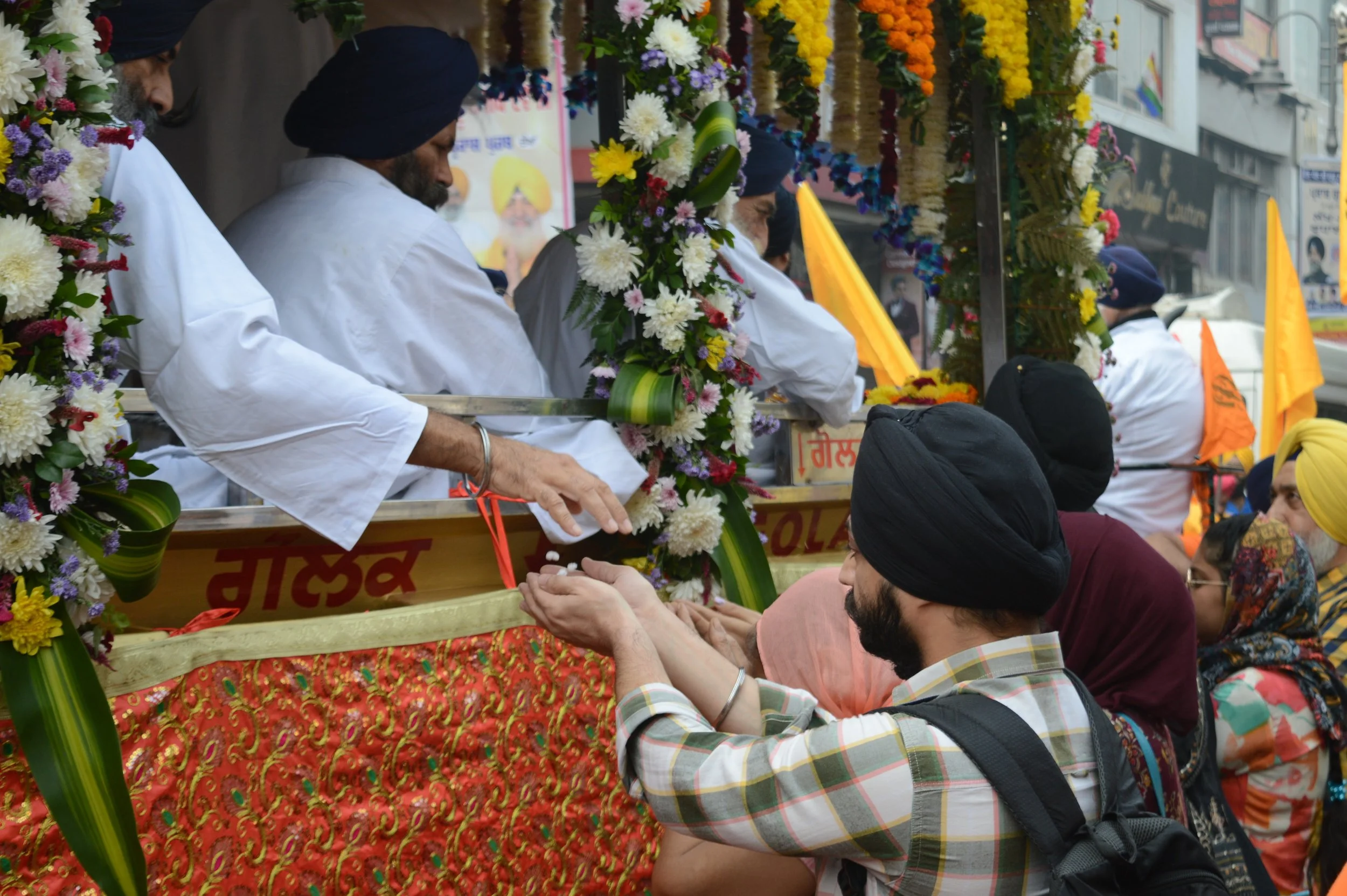
Devotees bow and receive prasad from the sacred float during the Guru Nanak Jayanti procession, embodying the spirit of seva and humility. Photo: Sana Kauser
Harpreet Singh, 48, a textile merchant from Karol Bagh, has walked in this procession every year since he was seven years old. “My father carried me on his shoulders the first time,” he said, adjusting his turban. “Today, my son walks beside me. Nothing in Delhi feels older or newer than this moment.”
In Delhi’s gurdwaras that night, history was not something locked in books or museums. It lived in bare feet on cold marble, in the clang of kadas against steel plates, in the voice of devotees, and in the sewa (service) of people.
A kilometre away, past the smell of ghee-soaked paranthas and the roar of the Lal Quila metro, Gurdwara Bangla Sahib rose like a golden island. Its story belongs to the eighth Guru, Har Krishan, who was only five when he became Guru in 1661 and barely eight when he came to Delhi in 1664. Smallpox and cholera were ravaging the city at the time. The child-Guru stayed in the bungalow of Raja Jai Singh (near present-day Gole Dak-khana), carried water from a small baoli served the sick and consoled the dying. People noticed that whoever drank from the baoli recovered. When the Guru himself caught the disease, he lay on a small bed, feverish, and could only whisper “Baba Bakale”—indicating that the next Guru would be found in the village of Bakala. He died on 30 March 1664. The bungalow became a gurdwara, and the baoli became the vast sarovar whose water millions still regard as amrit, the nectar of immortality.
Every year on Katak Purnima, around the sarovars and in the langar queues, grandmothers and children trade the same beloved stories about Guru Nanak. These are not “myths” to them; they are family memories that happened to the world’s kindest grandfather. These are the janam-sakhi tales, the living folklore that turns Guru Nanak’s birthday into a night of wonder. They share stories of the Baba Nanak’s birth: when his umbilical cord that fell away by itself, astrologers trembled and told his father, “This child will belong to no single faith; kings and beggars will call him theirs.” They share stories of little Nanak resting the shadow of a cobra under the fierce midday son. There are stories of the stone at ‘Panja Sahib,’ where the Guru stopped a boulder mid-air, and his handprint is still believed to be pressed into the stone.
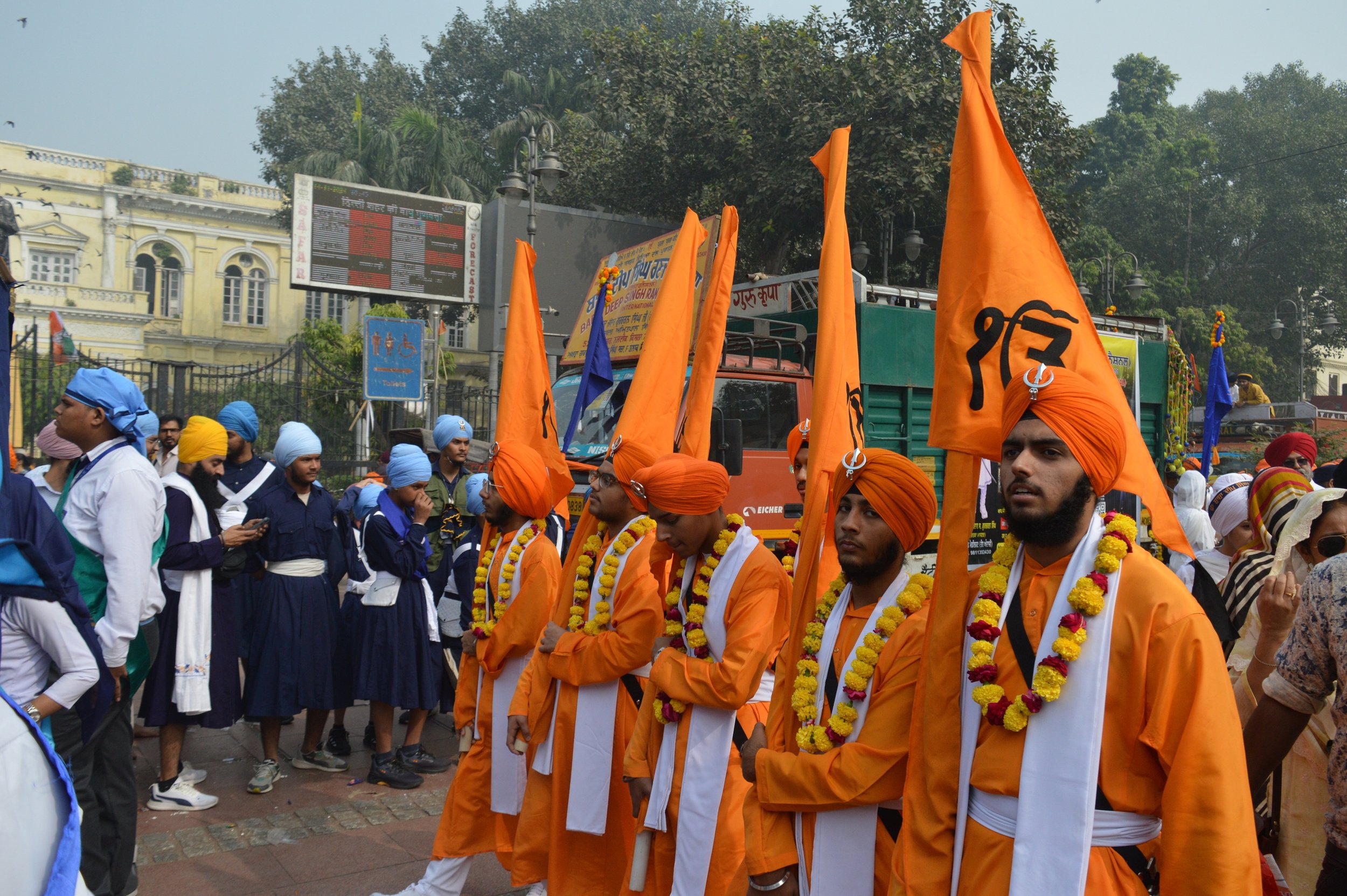
Schoolchildren dressed in saffron robes representing the Panj Pyare march in the Nagar Kirtan, holding Nishan Sahib flags high as chants of “Waheguru” echo through the streets of Delhi. Photo: Aditya Sharma
These stories are told softly, over cups of langar tea, while children dip handkerchiefs in Bangla Sahib’s sarovar. In the glow of fairy lights and the smell of kada prasad, these are simply the miracles that remind everyone that the same power that stopped boulders and turned hearts still walks among us, when we share our roti and sing Waheguru.
On Gurpurab evening in Delhi, the sarovar reflected a full moon and a thousand strings of fairy lights. Families circled the pool slowly, some dipping handkerchiefs into the water for relatives too ill to travel. Ranjit Kaur, 38, a schoolteacher from Gurgaon, held her mother’s hand as the older woman bent to touch the water. “My mother has arthritis in both knees,” she said softly. “Doctors help, but this water helps the heart more. Every year she says the pain is lighter for weeks afterwards.”
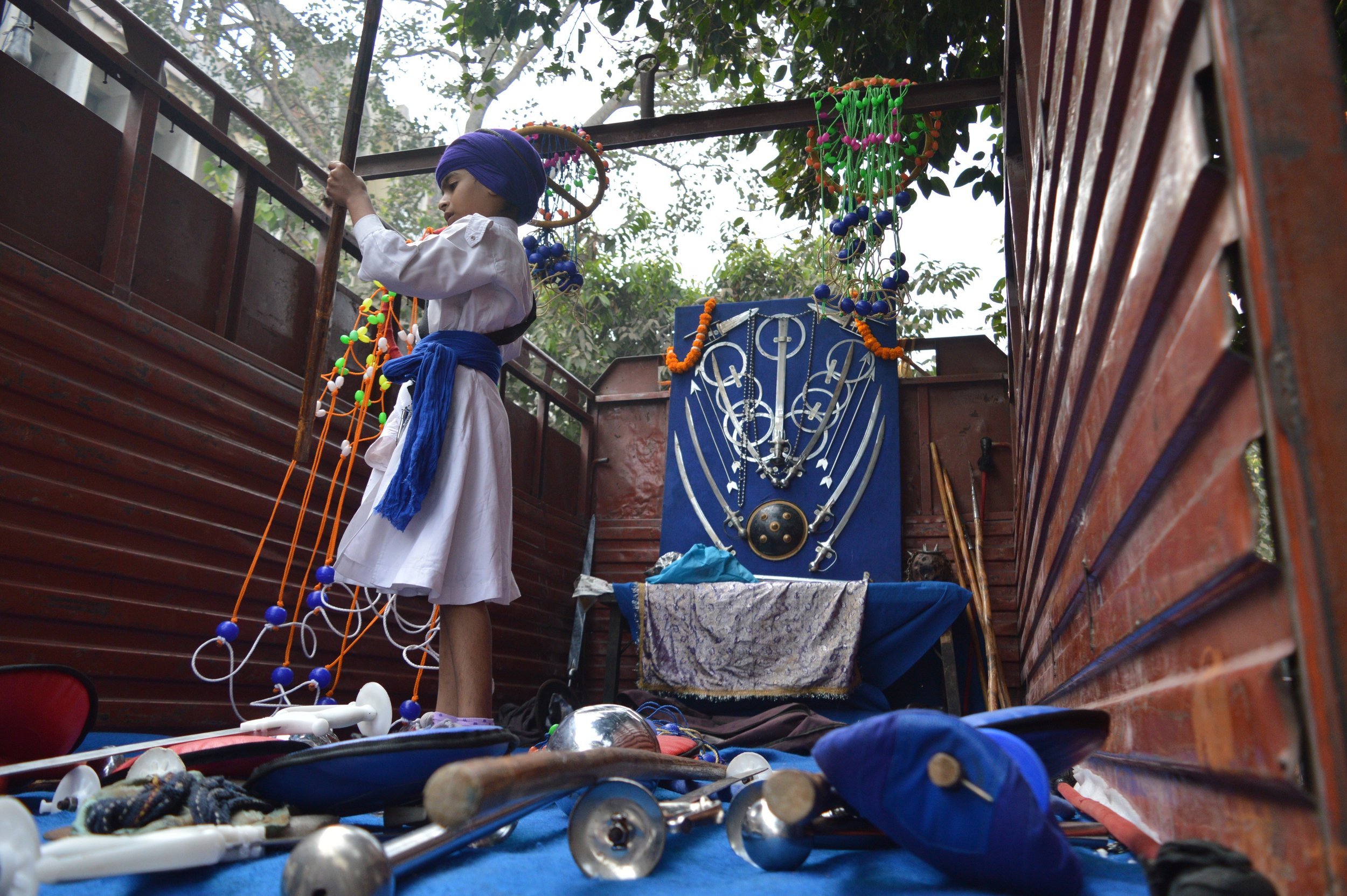
A young Nihang Sikh prepares decorations on a float, symbolising youthful devotion and the martial spirit of Sikh heritage. Photo: Aditya Sharma
Inside the main hall, the kirtan goes on. Ragis sang in raag after raag while volunteers moved through the rows offering water and tea. In the langar hall, one set of volunteers rolled rotis, another stirred giant cauldrons, and a third served endless lines of people who sat on the floor without distinction.
Seventy-two-year-old Surjit Singh from Tilak Nagar says he arrived in Delhi as a child refugee. “We had nothing,” he recalls. “But the gurdwaras opened their langar halls, and that was our hope. Every time I serve langar now, I am paying back a debt I can never fully repay.”
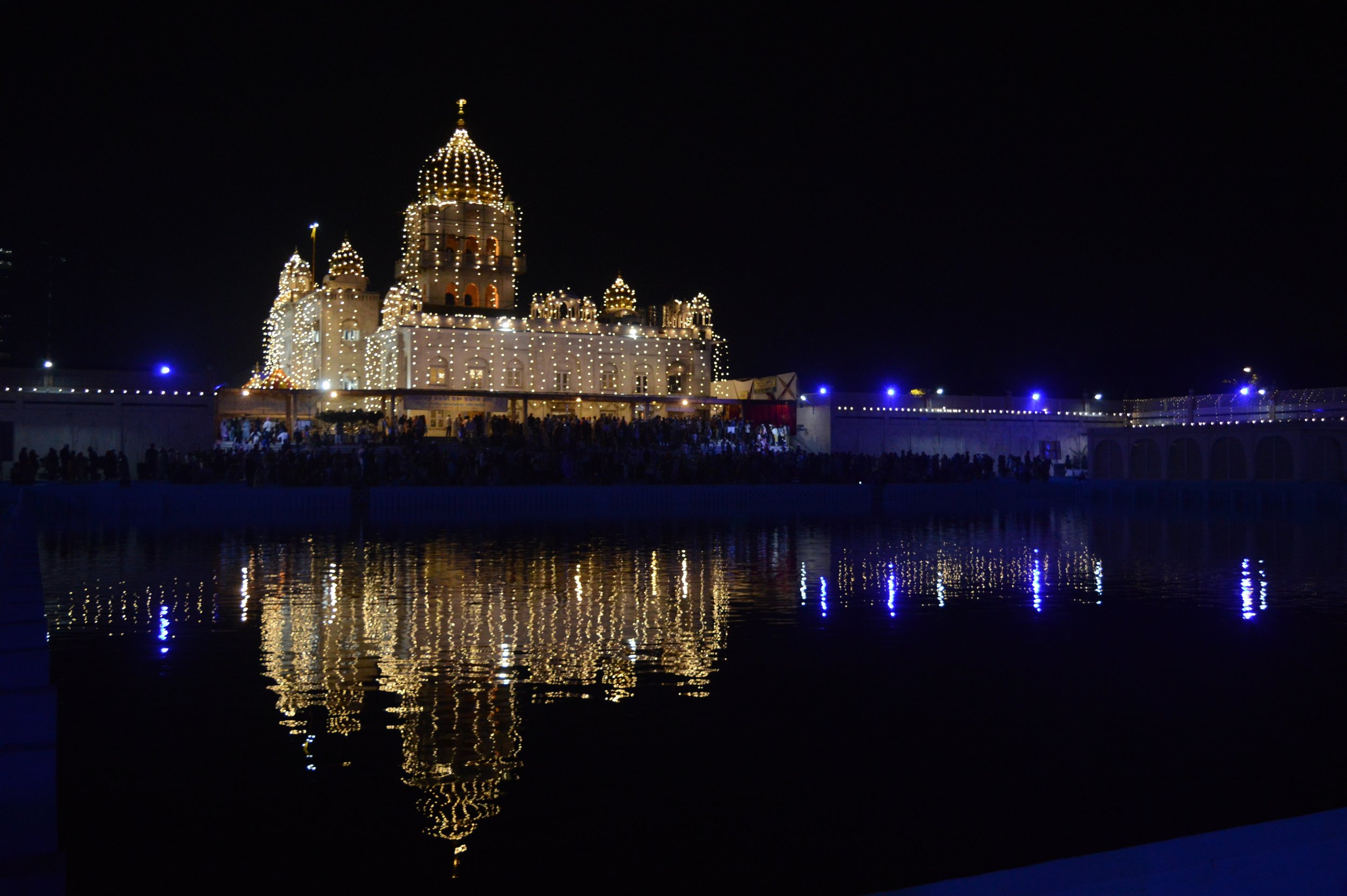
The beautifully lit Gurdwara Bangla Sahib glows in full splendour, its reflection rippling across the sarovar as devotees offer evening prayers. Photo: Aditya Sharma
As midnight approached, the final ardas rose in a single voice from hundreds of devotees. In Delhi’s gurdwaras that night, history was not something locked in books or museums. It lived in bare feet on cold marble, in the clang of kadas against steel plates, in the voice of devotees, and in the sewa (service) of people.
That, after all, is what Guru Nanak asked of the world. And on his 556th birthday, Delhi answered: quietly, deliciously, and with both hands folded.
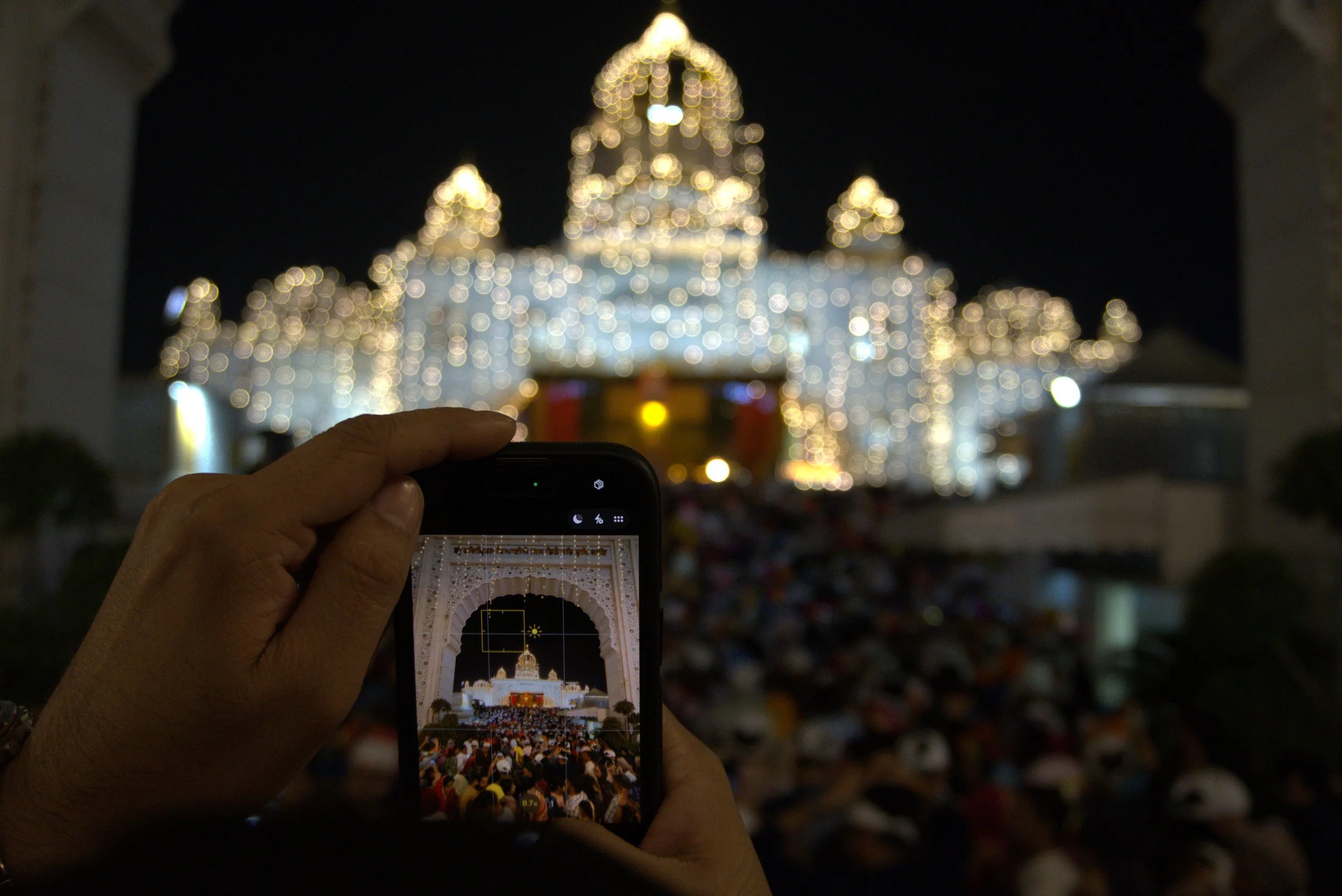
A devotee photographs the illuminated Gurdwara Bangla Sahib, where golden lights shimmer against the night sky. Photo: Sana Kauser
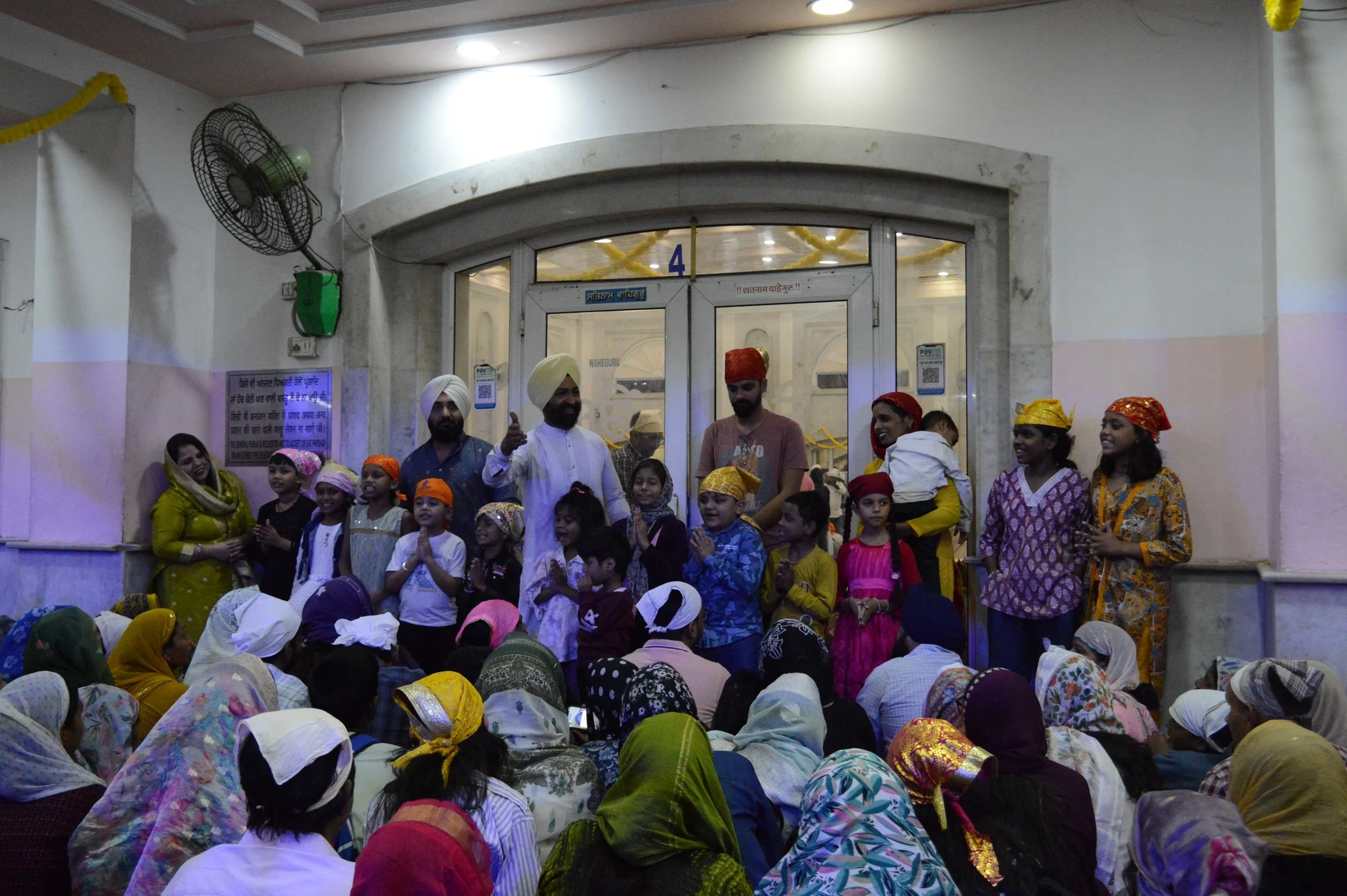
Devotees gather at the langar hall of the Bangla Sahib, where children lead the prayers. Photo: Aditya Sharma
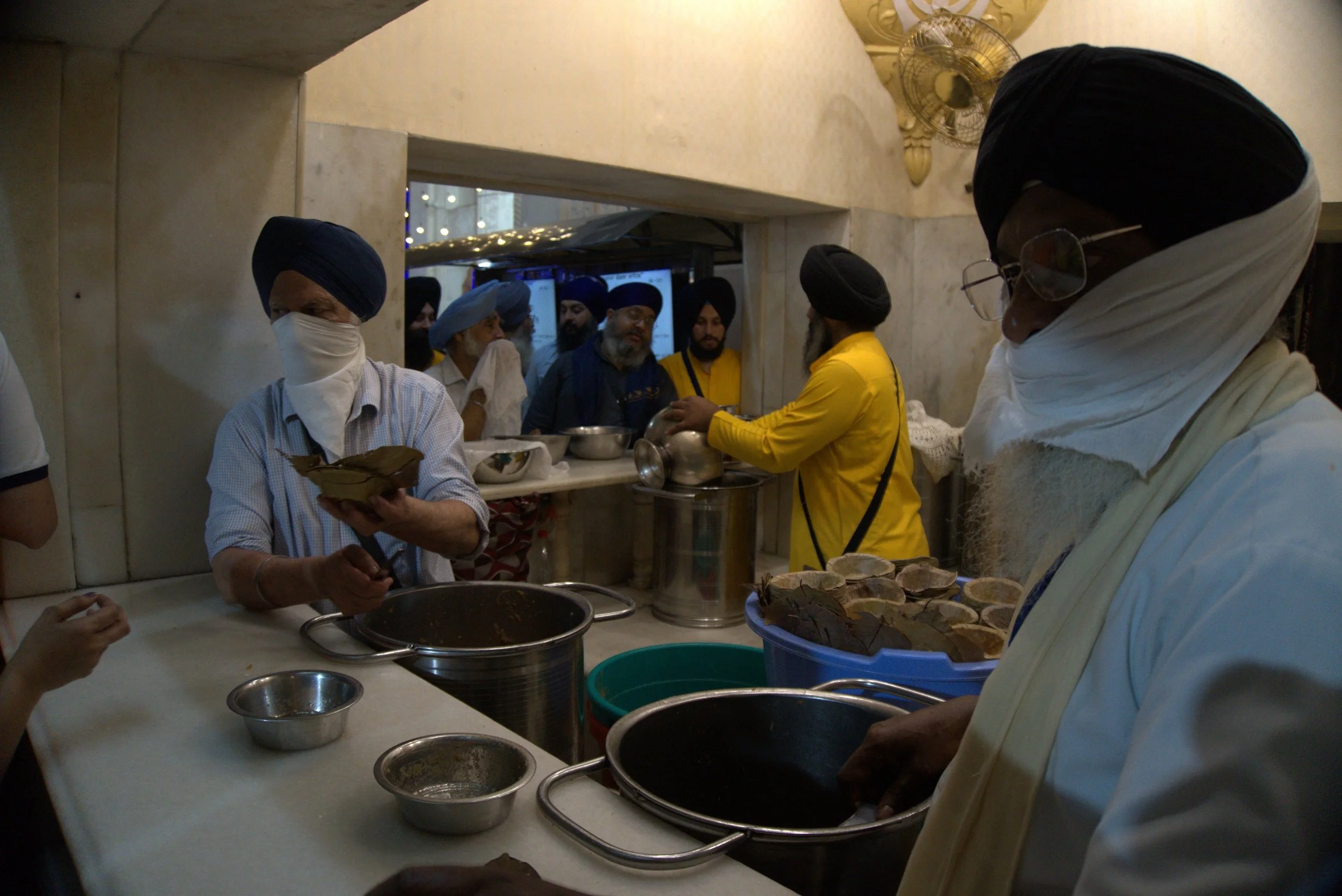
Volunteers serving ‘kadah prasad‘ to devotees. Photo: Sana Kauser
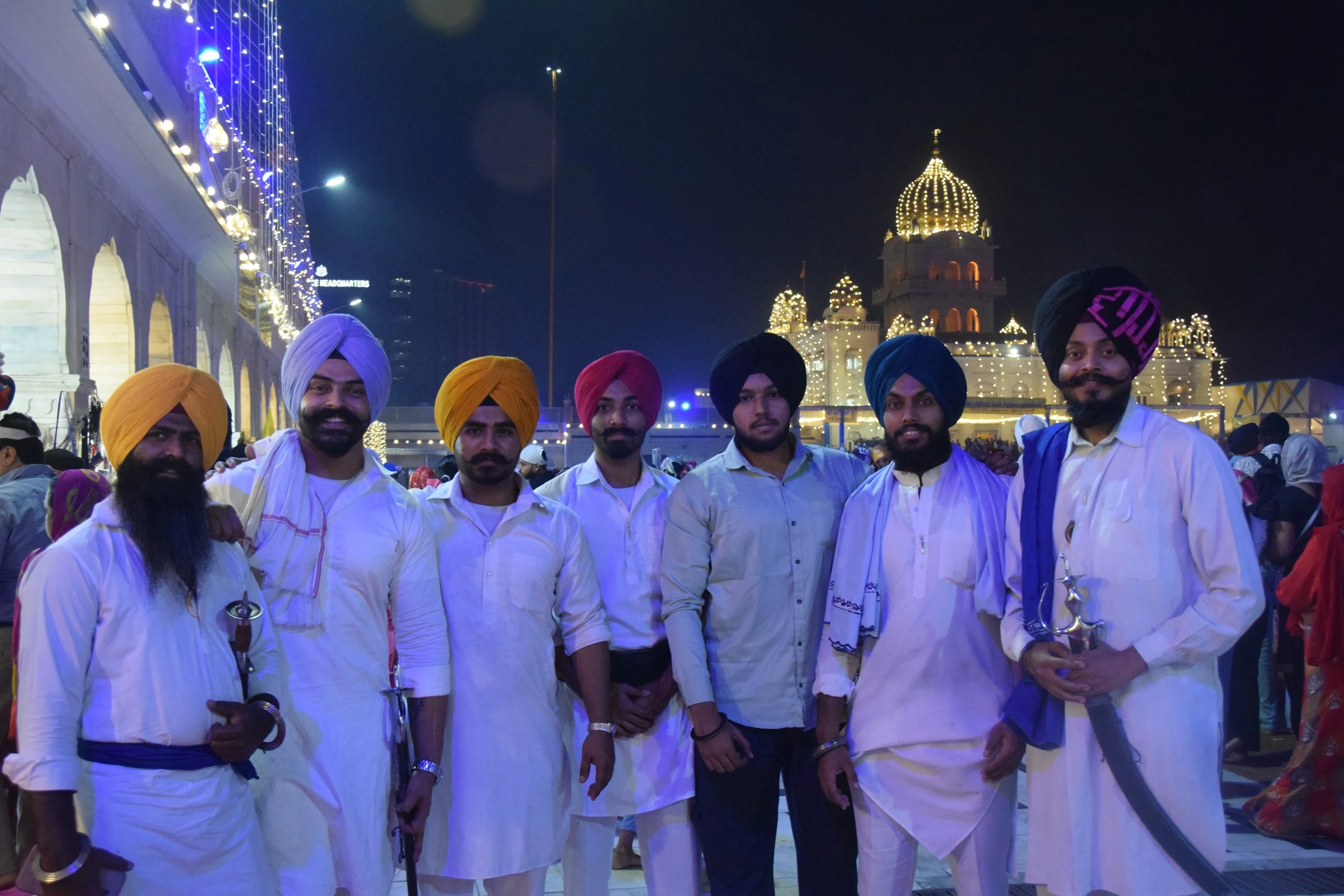
A group of devotees pose for a joyous photo outside the illuminated Bangla Sahib. Photo: Aditya Sharma
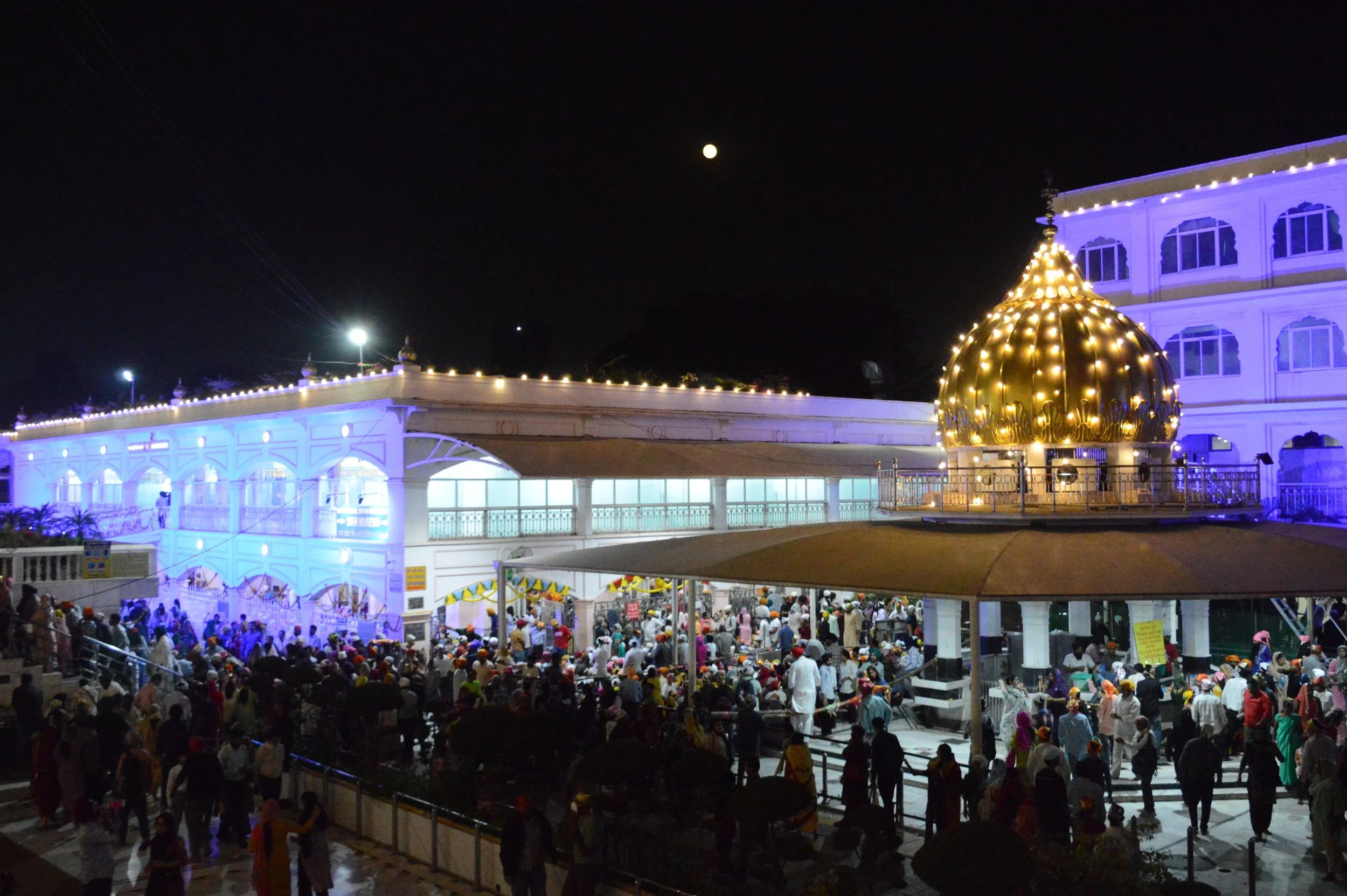
A big crowd gathers outside the langar hall to taste the guru prasad on this auspicious day under the full moon sky. Photo: Aditya Sharma
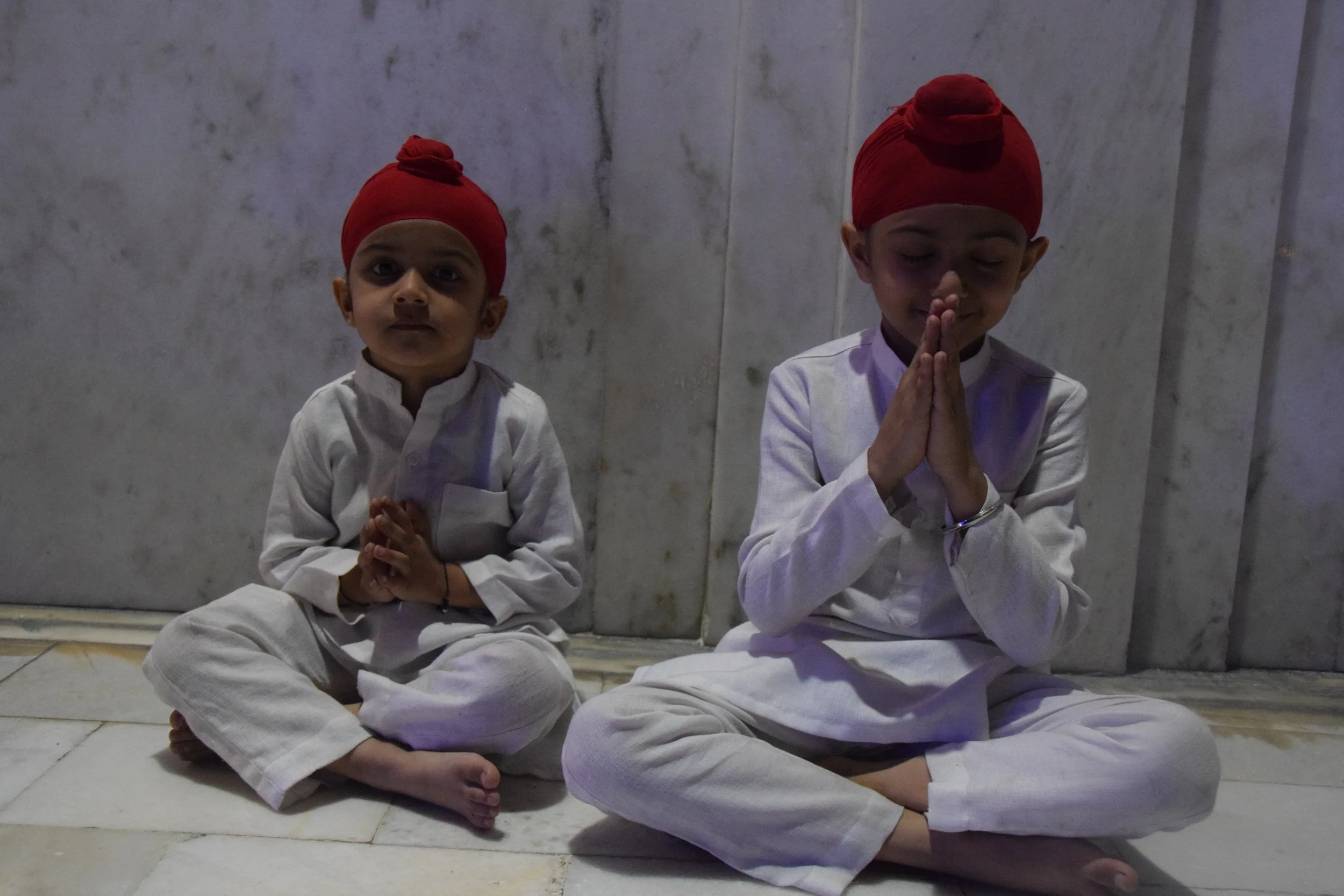
Two young boys fold their hands in prayer. Photo: Sana Kauser
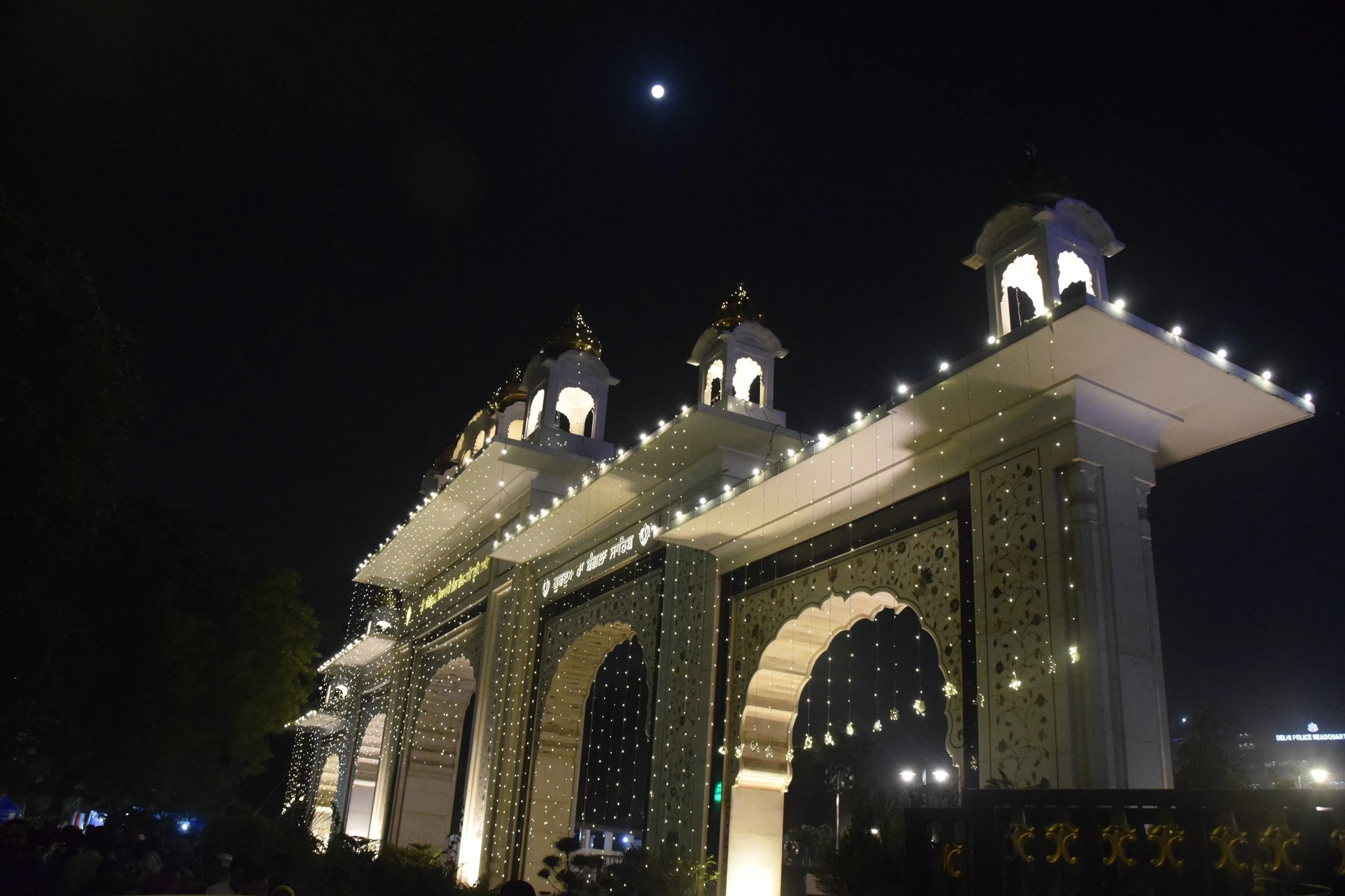
The illuminated entrance of Gurdwara Bangla Sahib stands majestically against the full moon night sky. Photo: Sana Kauser
***
Aditya Sharma is a Delhi-based journalist from Jamia who tells grounded, people-first stories. He has reported for The Wire, Article-14, The Leaflet, Outlook Magazine, and others, focusing on everyday lives, tensions, and moments often missed in mainstream narratives, across both traditional and digital formats. His areas of interest are culture, politics, minority issues, and human rights. You can find him on Instagram: @aditya.on.rec and X: @AdityaShar85272.
Sana Kauser is a journalist who reports on human rights, social justice, and the stories often overlooked. She also covers culture with curiosity and flair, bringing people, places, and moments to life. Her work blends sharp field reporting with creative, multimedia storytelling. You can find her on Instagram: @with.saana.