Mass Market Hate
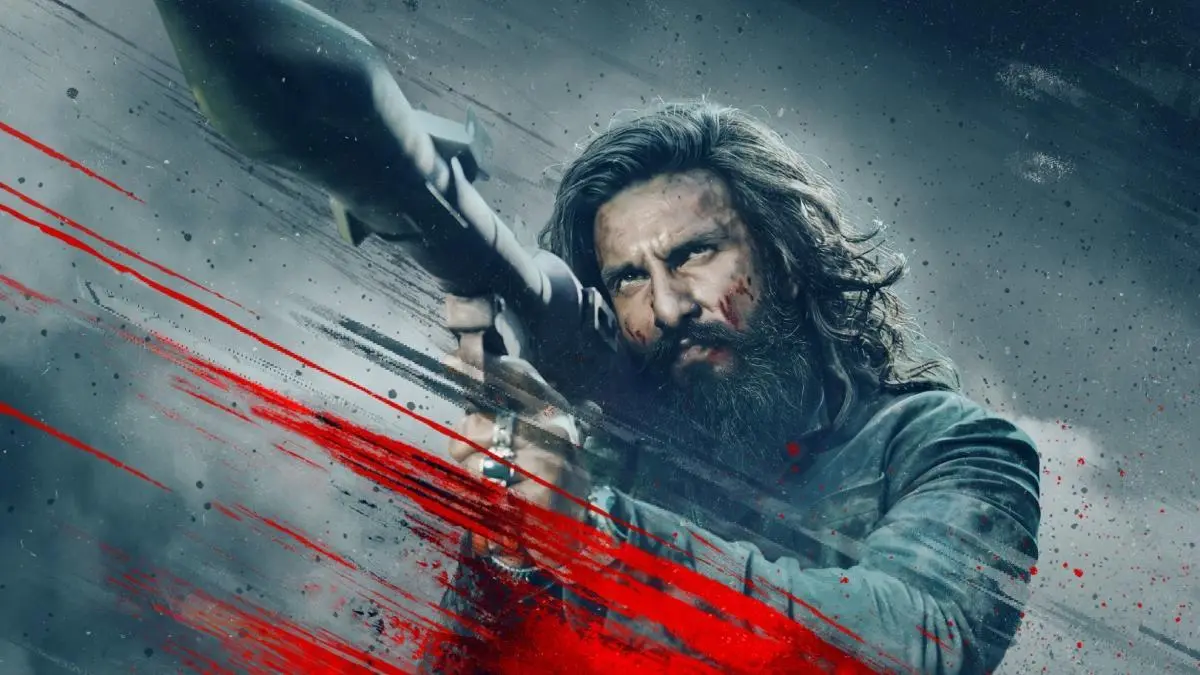
Propaganda films force upon us the grand question, writes Sanjay Basak: Are we loudly applauding the breathtaking production on screen, or are we quietly absorbing the idea that someone, somewhere, deserves to be feared, hated, or erased?
Much has already been written, debated, and dissected about Aditya Dhar’s two Dhurandhar films. Few movies in recent memory have sparked such intense controversy, dividing the sharply polarised public opinion. While one section of the audience has hailed the films as being “bold” and “pathbreaking”, the other has roundly condemned them for legitimising hatred against a particular community.
Many recent propaganda and propaganda-adjacent films like Dhurandhar, The Kerala Story, or The Kashmir Files are not isolated provocations; they form part of a broader pattern that not only stokes division, but also deliberately misinterpret facts and distort history to serve a particular ideological end. They are, in fact, cut from the same ideological cloth that has come to dominate sections of Indian cinema over the past decade.
Much of the positive conversation around Dhurandhar has celebrated the film’s dazzling scope and the its unprecedented commercial success. But, let’s step back for a moment. Consider The Birth of a Nation, the 1915 silent epic directed by D.W. Griffith. Adapted from Thomas Dixon Jr.’s novel and play, The Clansman: A Historical Romance of the Ku Klux Klan (1905), The Birth of a Nation too was regarded as a landmark film at its time and praised for its technical innovation as it broke new ground with its use of cinematography, sharp editing, fade-outs, close-ups and night photography. The film remains one of the highest-grossing films ever made and was also the first film screened inside the White House, watched by the 28th American President Thomas Woodrow Wilson.
These films are dangerous because they weaponise division. They are dangerous because they seek to sanitise and justify certain contentious policies. And they are dangerous because at their core, they deliberately and remorselessly pit human beings against each other.
And yet, despite its “cinematic brilliance” and commercial success, The Birth of a Nation remains tainted for its extreme racism. In an article on the film, the BBC quotes Ellen Scott, author of Cinema Civil Rights, saying, “The film is one of the most racists films ever made... this film actually depicts lynching as a positive thing.” And later, Scott adds, “The politics of the film was essentially to say certain black people are worthy of being lynched.” The film stereotypes black people as rapists leering after white women. Speaking to BBC, Professor Alan Rice, a Birth of a Nation expert at the Institute for Black Atlantic Research at the University of Central Lancashire, discusses the film’s lynching scene involving a black character: “He's the black rapist figure who is the stereotype of the black man whose eyes are only for white women. This played deeply into the pervasive fear of miscegenation.”
History may not repeat, but it echoes itself, across cultures, across stereotypes. A century later, senior BJP leader Parvesh Verma (now a minister in Delhi cabinet) during a 2020 campaign rally in West Delhi, stated that anti-CAA protestors at Shaheen Bagh would “enter your houses, rape your sisters and daughters and kill them.”
The plot and the narrative of The Birth of a Nation strike an unsettling familiar chord. Consider the concept of “Love Jihad” in today’s India, which claims that the Muslim men lure Hindu women into marriage and forcibly convert them to Islam. Over the last decade, a section of Indian media has amplified a series of similarly constructed narratives, including “land jihad” (Muslims are deliberately conspiring to seize land to occupy public spaces in Hindu-majority areas), “Corona jihad” (a section of the media blamed Muslims for deliberately spreading the COVID virus), “UPSC jihad” (some alleged that Muslims are conspiring to infiltrate the Indian bureaucracy), or “corporate jihad” (Muslims are trying to dominate the economy by taking over businesses).
Besides justifying hatred against a particular community, films like The Birth of a Nation, Kerala Story, and others also attempt to glorify a regime that propagates muscular jingoism and militant nationalism. Take for instance, Triumph of the Will, which was filmed at the Nazi’s Nuremberg rally in 1934. The two-hour documentary was directed by German filmmaker Leni Riefenstahl, once known as Adolf Hitler’s “favourite filmmaker”. The film captured military marches and Hitler’s speeches and parades from striking angles. An article in Witness History by the BBC notes: “While to some Riefenstahl was an artistic genius, to many others she glorified a regime that would go on to be responsible for the death of millions. And for portraying a genocidal dictator as a god-like saviour.”
Across the world cinema has repeatedly been weaponised as a tool of ideology. In Nazi Germany films like The Eternal Jew and Junge Adler pushed antisemitic and nationalist narratives while in Italy Vecchia guardia (Old Guard) celebrated fascist loyalty and sacrifice. In Spain a strand of the so-called “crusade cinema” emerged to glorify the Spanish dictator Francisco Franco’s regime. Another 1932 American film, The Mask of Fu Manchu portrayed Asians as sinister threats to white society. The South China Morning Post observed, “With tallon like fingernails and ludicrous yellow face makeup, the character of Dr Fu Manchu embodies a stereotype of Chinese villainy that seems racist.” Even the classic 1939 American film Gone with the Wind is often criticised for its racist portrayal and historical framing. Ignoring the brutal reality of slavery, Gone with the Wind depicts Black characters as content, happy, and loyal. The film also presents a nostalgic, romanticised view of the American South during and after the Civil War. A 2020 article in The Guardian titled, “Gone with the Wind and the damaging effect of Hollywood racism” stated, “Gone with the Wind is a descendent of DW Griffith’s The Birth of a Nation.”
Regardless of their craft and commercial success, the films stated here are not ideologically neutral. They are driven by a clear agenda. For these productions, craft is not the problem—intent is. These slickly produced propaganda films and documentaries were not just stories. They were weapons to dissect the regimes into “us” and “them”. The scripts, backed by brilliant craftsmanship and performances, have been used to normalise hatred, dehumanise a community, and sometimes, even aim to justify genocide.
This is where my discomfort with films like Dhurandhar, Kerala Story, and others lies. Not with how they look, but how they work in their messaging and their symbolism. No doubt, some of these Indian films have been polished to perfection, with violence choreographed like ballet and some performances that a section of viewers considered electric. Yet, hidden behind the slick action and polished craftsmanship is a narrative that thrived on “othering”, on creating suspicion, resentment, and collective hatred towards a particular community. These films are dangerous because they weaponise division. They are dangerous because they seek to sanitise and justify certain contentious policies. And they are dangerous because at their core, they deliberately and remorselessly pit human beings against each other.
The cheering, the clapping, the adrenaline rush in film theatres during such moments aren’t harmless reactions. They are signals. Signals of how easily storytelling can be weaponised and how entertainment can become endorsement. As a holocaust survivor said at the Zekelman Holocaust Center a few years ago, “Education is not knowing that Hitler killed six million Jews. Education is understanding how millions of ordinary Germans were convinced that it was necessary.”
This is the real question that such propaganda films force upon us: Are we loudly applauding the breathtaking production on screen, or are we quietly absorbing the idea that someone, somewhere, deserves to be feared, hated, or erased? One can’t help but ask: Could a Jaane Bhi Do Yaaron even be made today? Or how about a song like Mohammed Rafi’s “Tu Hindu banega na musalman banega, Insaan ki aulad hain Insaan banega” (You will become neither Hindu nor Muslim; you are the child of a human being, you’ll be human)? I wonder if we could still become a country that finds space for an unapologetic insistence on our shared human identity over labels that divide us.
***
Sanjay Basak is the chief of bureau and senior associate editor at The Asian Age/Deccan Chronicle in New Delhi. He grew up between Kolkata and New Delhi. He has spent 30-odd years as a journalist, also working at The Telegraph, ZEE News, Doordarshan, and more. Basak now mainly writes on politics. He is also an amateur photographer and a painter. You can find him on Instagram: @sanjay1704 and X: @basaksanjay23.