Love is a Seasonal Fruit: On Intimacy Under Capitalism
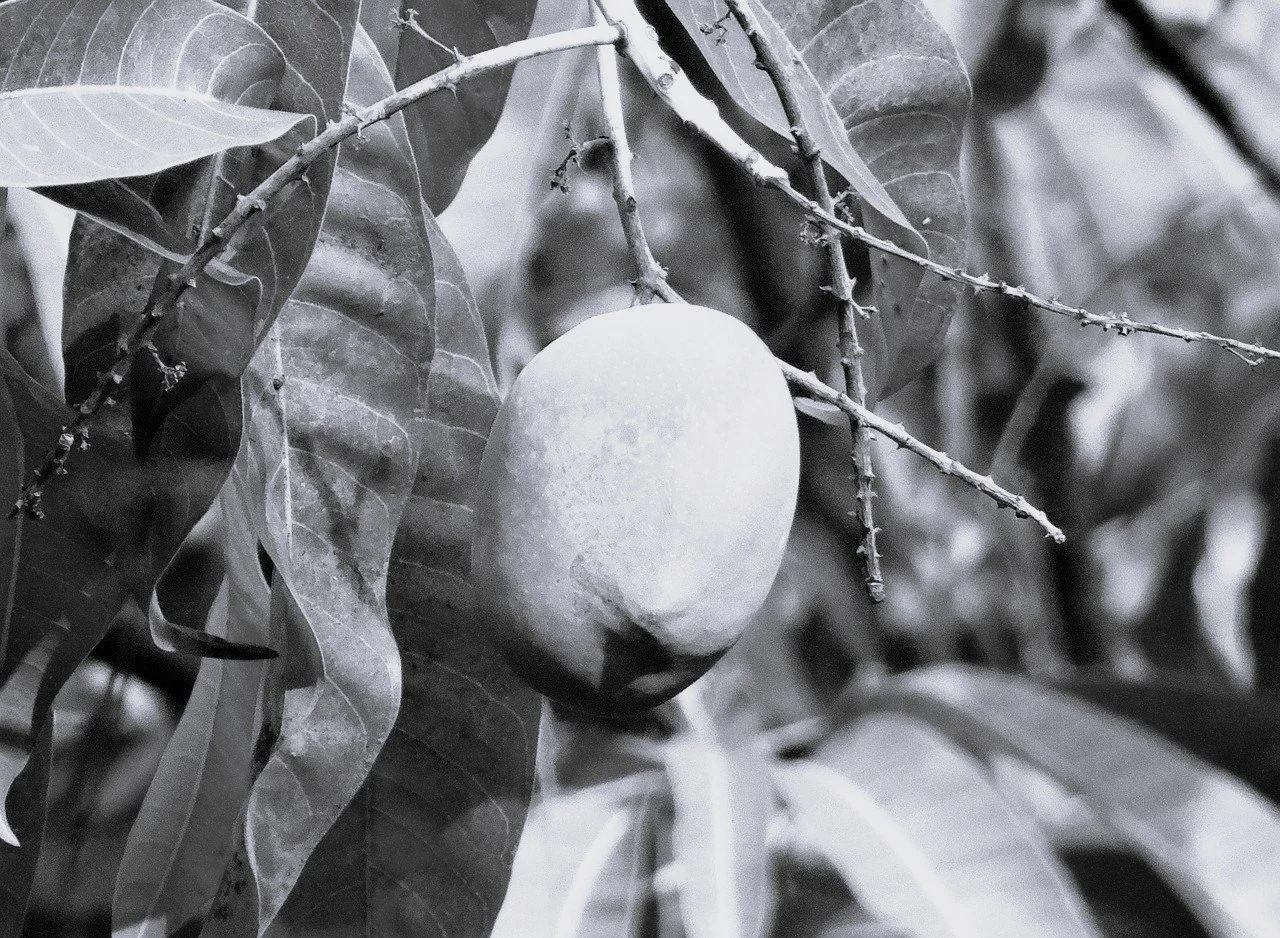
Photo: Bishnu Sarangi
Essay: ‘Love has a stinky feeling… It comes around only once a year. You can try all you like to recreate it, inject it, grow it in laboratories, package it better, sell it faster, but it will still smell and taste odd. It resists standardisation.’
You seek to find love in an Indian city. Let’s call it Pune. You finish work on Tuesday at 7 PM, but by the time you've navigated out of Hinjewadi, it’s already past 9. Your partner lives on the other side of the city, where rent it more affordable. Meeting for dinner means one of you must travel 90 minutes each way. The restaurant costs ₹1,500 for two, nearly a day’s wages at the median urban salary. You must be home by 11 because you both have morning meetings.
This happens twice a month, if you’re lucky. The rest of the time, love exists in WhatsApp messages sent between tasks, video calls that freeze mid-sentence, and the constant rescheduling around project deadlines, family obligations, and the simple, grinding exhaustion of staying afloat in a city that extracts everything and gives back noise. These disparities keep widening as class disparities increase.
Under the capitalism of the modern world, love is not just difficult, it is structurally inconvenient.
Love has a stinky feeling. Like milk that has gone bad. Like a rotten fruit forgotten on a coffee table. For a long time, I thought that if I had to build a clean and safe home for myself, I had to throw away this fruit, drive out all the flies that feast on it. But love is delicate, love rots. Not a sturdy apple or a tough orange, but a sweet and sour mango. It comes around only once a year. You can try all you like to recreate it, inject it, grow it in laboratories, package it better, sell it faster, but it will still smell and taste odd. It resists standardisation.
This mango isn’t for everyone. Those who work to buy it don’t have the time to enjoy its flesh. Those who hoard it in crates let it rot. Somewhere between exhaustion and excess, it disappears.
But I must be precise about what I mean by love. I’m not talking about courtship rituals or dating economies. Those are symptoms, not the disease. I’m talking about love as the psychoanalytical tradition understands it: as the site where desire confronts impossibility, where the self reaches toward another and discovers its own constitutive lack.
Love, in this sense, is always already a problem. What capitalism does is take this fundamental impossibility and sell it back to us as a solvable deficiency. A vitamin D pill for 9-5ers.
Lacan teaches us that desire is born from lack, that we desire precisely because we are incomplete, because there is something missing at the core of subjectivity itself. The objet petit a, the object-cause of desire, is always just beyond reach. We don’t desire objects because they will satisfy us; we desire them because they complement our unfillable void.
You are surrounded by economic anxiety, social performance, and algorithmic desire. Fear of abandonment, fear of poverty, fear of aging. Love is no longer something that simply happens between two people. It must be scheduled, sustained, and financed.
Love operates in this same structure. We love not because the other completes us (capitalism’s great romantic lie), but because the other reveals to us the incompleteness we’ve been trying to deny. Under capitalism, this fundamental structure of desire gets colonised. The lack that drives us is pathologised as a problem to be solved through consumption. Do you feel incomplete? Buy this course, this therapy package, this self-help book. Do you feel the impossibility of true intimacy? Optimise your attachment style, fix your trauma, level up your emotional intelligence. The market doesn’t want you to sit with lack, it wants to sell you the fantasy that your lack can be eliminated.
You are surrounded by economic anxiety, social performance, and algorithmic desire. Fear of abandonment, fear of poverty, fear of aging. Love is no longer something that simply happens between two people. It must be scheduled, sustained, and financed.
But even this framing of ‘two people’ is flawed. The couple form privatizes care, isolates intimacy, and makes them responsible for meeting each other’s emotional, sexual, domestic, and economic needs. This is an impossible task, and when the couple form fails, the self-help industry thrives on teaching us how to do the impossible better.
Marx wrote that material conditions shape consciousness. What he perhaps did not imagine is how deeply they would shape intimacy. Love today is as much a matter of economics as it is of philosophy. Because one cannot just love and love and love and love. One must love and register on matrimonial sites. Love and buy one’s spouse’s death insurance. Love and have children who they will never make memories with. Love and remember that one must love within their class, caste, and community. Love, but even then, not love too much.
The Indian context makes this particularly visible, but not in the way we’re usually told. The nostalgia for joint families obscures their reality: they were structures of surveillance and control, especially for women. They didn't distribute care; they distributed power unevenly and called it tradition. What they did distribute was the expectation that no single relationship would bear the full weight of intimacy. When that structure collapses (as it has in urban India), we’re not mourning the loss of care, we’re mourning the loss of a system where the couple wasn't expected to be everything to each other, even as we acknowledge that system often operated through inequal rights and violence.
Now, we’re left with something worse: the nuclear family model borrowed from the West, but without any of the infrastructure that supports it there, however inadequately. No social safety nets, no affordable childcare, no public systems for care. Just two people in a rented flat, expected to be each other’s therapist, best friend, co-parent, financial partner, and sexual fulfilment, while also working long hours in precarious jobs. The joint family was violent; this is also violent, just more isolated.
The marriage market in India makes this violence particularly legible. Matrimonial sites operate as sorting mechanisms for caste, class, skin colour, and salary brackets which are traditional hierarchies dressed in digital interfaces. The biodata sheet: height, weight, complexion, salary, family background, astrological chart. A person reduced to metrics, desire channelled through checkboxes. “Wheatish complexion.” “Manglik.” “Family-oriented.” “Well-settled.” The arranged marriage hasn't disappeared; it's been optimised. Shaadi.com meets horoscope-matching and parental veto power. You swipe, but your parents approve. You choose, but only from the pre-selected.
The language of matrimonial ads reveals the economics of love, as if the “suitable” boys and girls were merely products with specifications. Dowry persists despite laws. Now renamed as “gifts,” to “help the couple settle.” The wedding becomes a spectacle of consumption, families going into debt to perform prosperity, to signal caste status, to enact class belonging. A marriage is not just between two people: it's a merger of families, a consolidation of property, a mechanism for reproducing social hierarchies.
And after all this (the vetting, the filtering, the astrological matching, the family approval, the economic calculation, the caste compatibility) people still end up in marriages that feel empty. Because Lacan was right: desire doesn't work through compatibility metrics. The objet petit a cannot be specified in a biodata sheet. You can match on salary, caste, education, family background, even horoscopes, and still the lack remains. Still the sense that something essential is missing. The system promises that if you just find the right match (the right combination of variables) desire will resolve itself into satisfaction.
But capitalism cannot tolerate a love that refuses productivity, which makes you less available for work, which questions whether reproduction is mandatory, or imagines time as something other than money, or sits with its own imperfect impossibility.
But desire doesn’t want satisfaction. It wants itself. It wants to keep desiring.
Sophie K Rosa, in Radical Intimacy, argues that the couple form under capitalism “inevitably becomes a site of disappointment because it promises what it structurally cannot deliver: total intimacy, complete understanding, permanent security (198).” She advocates instead for what she calls “radical friendship,” forms of intimacy that are distributed across multiple relationships, that refuse the hierarchy of romantic love over other forms of care, that build networks rather than fortresses.
I believe that the solution isn't simply to expand intimacy beyond the couple, to polyamory, to communes, to chosen family. Because these formations, under current material conditions, often reproduce the same problems in different configurations. Community living doesn’t solve the problem of exhaustion; it just distributes it differently. Polyamory doesn’t escape the logic of optimisation; it often intensifies it (more relationships to manage, more emotional labour to perform, more scheduling to coordinate).
The psychoanalytic insight here is crucial: the problem isn’t the form intimacy takes. The problem is that we keep trying to solve at the level of form what is a problem of structure. We keep rearranging the furniture in a house that’s built on subsiding ground. Romance is subsumed as a modern market force. Dating apps turn affection into a swipe economy. Weddings become debt rituals. Stability becomes erotic. Risk becomes unattractive. We are taught, quietly but relentlessly, that love must justify itself financially, that it must be productive, upward-moving, safe. Even heartbreak must be managed efficiently, preferably with self-care subscriptions and inspirational podcasts.
It’s not that love becomes commodified; it’s that the very structure of our desire gets organised by market logic. We learn to desire what can be quantified, optimised, and displayed. We learn to experience our own feelings as assets to be managed. “Emotional intelligence” becomes a skill to develop. “Attachment styles” become identities to perfect. Even our wounds become currencies in the economy of therapeutic discourse.
Walk into any urban bookstore and notice the self-help section growing, metastasising. Titles like Set Boundaries, Find Peace, and Attached, promise to teach you vulnerability, as if it were a skill to be acquired through steps and exercises rather than a risk you take with your actual body. Therapy has become the language through which we're taught to experience our own feelings: not as immediate, embodied responses, but as problems to be diagnosed and managed. The question is no longer “What do I feel?” but “What does this feeling mean about my attachment style, my trauma, my inner child?” The feeling itself disappears under the weight of its own interpretation.
The violence here is subtle. It’s not that we’re forbidden to love. We’re encouraged to love but only in ways that serve capital accumulation. Love that makes you more productive (a “supportive partner”). Love that reproduces labour (a child, preferably two). Love that drives consumption (weddings, homes, family vacations). Love that doesn’t threaten the workweek, the career trajectory, the class position.
But capitalism cannot tolerate a love that refuses productivity, which makes you less available for work, which questions whether reproduction is mandatory, or imagines time as something other than money, or sits with its own imperfect impossibility.
This is why love smells rotten. Not because it is inherently decaying, but because we keep forcing a living, seasonal fruit into systems designed for permanent availability and profit. We want love to behave like capital: to grow endlessly, to never spoil, to always yield returns. And when it doesn't, we discard it (or discard the person).
Freud understood that civilization requires the repression of instinct. We give up immediate gratification for social order. But what happens when the repression no longer serves collective life, but only capital? When we sacrifice intimacy not for community, but for quarterly earnings? When we defer pleasure not for the social good, but for the mortgage payment?
The depressive position, as Mark Fisher called it, is not sadness. It is realism about the impossibility of the present. To be depressed is to understand, correctly, that the material conditions for human flourishing do not exist. That what you want is structurally unavailable. In Capitalist Realism, Fisher writes, “The ‘realism’ here is capitalist realism: the widespread sense that not only is capitalism the only viable political and economic system, but also that it is now impossible even to imagine a coherent alternative to it (2).”
This realism extends into our intimate lives. We cannot imagine love outside the couple form. We cannot imagine care outside the family. We cannot imagine time that isn’t measured, intimacy that isn’t performed, and desire that isn’t optimised.
In such a framework, depression is not a personal failing; it's a reasonable response to an impossible situation. You’re told that love should make you happy, that the right relationship will complete you, that if you just work on yourself enough, intimacy will become easy. And when it doesn’t, when desire remains unsatisfied, when intimacy keeps failing, you blame yourself. The system works perfectly: it extracts your labour, exhausts your capacity for connection, and then sells you the solution to the problems it created.
Love under capitalism is always an improbability. The failure is not entirely personal. Exhaustion is not a moral flaw. Wanting tenderness in a brutal economy is not naïve, it is radical.
Even this critique can become another form of consumption. We read the theory, we understand the structural analysis, we recognise that our loneliness is political… and then, what? Knowledge doesn't make loneliness hurt less. Understanding that the couple form is a capitalist technology doesn’t give you someone to hold at 3 AM when faced with anxiety. Knowing that your desire is structured by lack doesn’t fill the lack.
Notice how often progressive relationship discourse mirrors the same optimisation logic it claims to critique. Polyamory becomes a practice to be done “correctly,” with proper communication protocols, scheduled processing time, comparison as an achievement to unlock (check out Paromita Vohra and Pragati Singh). The language changes from traditional to radical, but the underlying imperative remains: Perform intimacy better, manage your feelings more efficiently, optimise your relational labour. Reading bell hooks doesn’t prevent the gut-level panic when someone you love looks at someone else. Understanding monogamy as a construct doesn’t stop the body from responding with animal jealousy that predates theory by millennia.
This is where the psychoanalytic perspective becomes necessary. Because psychoanalysis, unlike other critical traditions, doesn’t promise liberation from the unconscious. It doesn’t say that if we just restructure society correctly, desire will become unproblematic. It suggests that desire is always going to be a problem. The unconscious is always going to sabotage our best intentions. We will always want what we cannot have and often destroy what we do have.
The discourse around surviving difficulty in much of today’s media pushes a narrative of overcoming, of growth through adversity, of coming out stronger. As if struggle were only valuable when it produces a better product. But what about the relationships that survive messily, that don’t produce growth, that just persist through their own impossibility? What about the person who can’t leave the bed for weeks, and the person who sits beside them—not to provide a solution, but only as a witness. They perform this togetherness not because it’s “healthy” or because therapy said to, but because turning away feels like a deeper betrayal than staying with the mess. This kind of love doesn’t appear in self-help books. It can’t be replicated through technique.
You cannot adjust the mango’s arrival. You cannot make it last forever. And crucially, it can’t be consumed in a dignified way. It’s messy. Embarrassing, even. Juice everywhere, flies attracted, hands sticky.
This is what capitalism cannot commodify, though it tries. It can sell you the wedding, the house, the date nights, the therapy sessions. But it cannot sell you the experience of sitting in shared silence with someone, nothing being fixed, a presence that asks for nothing except not to be left alone in its wreckage.
The challenge now is not to fix the unfixable, but how to live with it without turning it into a market opportunity. How to sit with the fundamental impossibility of love without either romanticising (the couple as salvation) or commodifying it (the ‘self-help’ solution). How to hold the mango knowing it will rot, without either hoarding it or prematurely throwing it away.
Maybe love today is not about purity or permanence. Maybe it is about choosing to hold the mango carefully, knowing it will bruise. Knowing it will rot. Knowing that you might not get another one next year.
I keep returning to the image of the mango because it captures something that abstract analysis misses. You cannot adjust the mango’s arrival. You cannot make it last forever. And crucially, it can’t be consumed in a dignified way. It’s messy. Embarrassing, even. Juice everywhere, flies attracted, hands sticky.
Love, real love, is like this. Not the performed version on social media. Not the therapeutic version in couples counselling. But the actual experience of allowing another person close enough to see your mess, your lack, your fundamental incompleteness, and having them stay anyway, not because they complete you, but because they’re willing to be incomplete together.
Because for a brief moment, before the spoiling, it tastes like something that existed before markets, before the requirement that every human feeling justify its own existence. It tastes like refusal: A refusal to be productive. Refusal to optimise intimacy. Refusal to turn love into a project with measurable outcomes. It is a refusal to believe that the couple form is natural rather than historical. A refusal to accept that loneliness is a personal failure rather than a political condition. A refusal to forget that there were other ways of organising care, other ways of being together, before capitalism taught us that two people should be everything to each other.
Maybe the problem isn’t that love is temporary, seasonal, impossible to preserve. Maybe the problem is that we’ve been taught to see temporality itself as failure, to see anything that doesn’t last forever as not worth having.
What would it mean to love with the knowledge that it won’t last? To love the mango because it’s brief, not despite it? To build intimacy knowing it will change, end, transform, and to build it anyway, not as an investment that must yield returns, but as something valuable in its very impermanence?
I don’t have an answer, and I’m suspicious of anyone who claims to. But I know that the current arrangement the couple form, the nuclear family, the privatisation of care, and the optimisation of intimacy, is producing mass misery. I know that the progressive alternatives often reproduce the same problems in new forms, because they rarely address the underlying structure: We’re all exhausted, we’re all too busy, we’re all trying to perform intimacy under conditions that make genuine intimacy nearly impossible.
Maybe that’s all we can do right now. Notice what's been lost. Name the systems that took it. Hold the mango while it’s here, even knowing that the rot will soon come: the flies, the decay. Even knowing that it won’t last for long. Even knowing that next year is not guaranteed.
***
Srishti Sharma is a psychologist, teacher, and researcher who is endlessly curious about why we feel, desire, and behave the way we do. Based in Pune, she teaches psychology and works across clinical, corporate, and research spaces.