Stories of Wisdom and Healing: An Interview with Faiqa Mansab
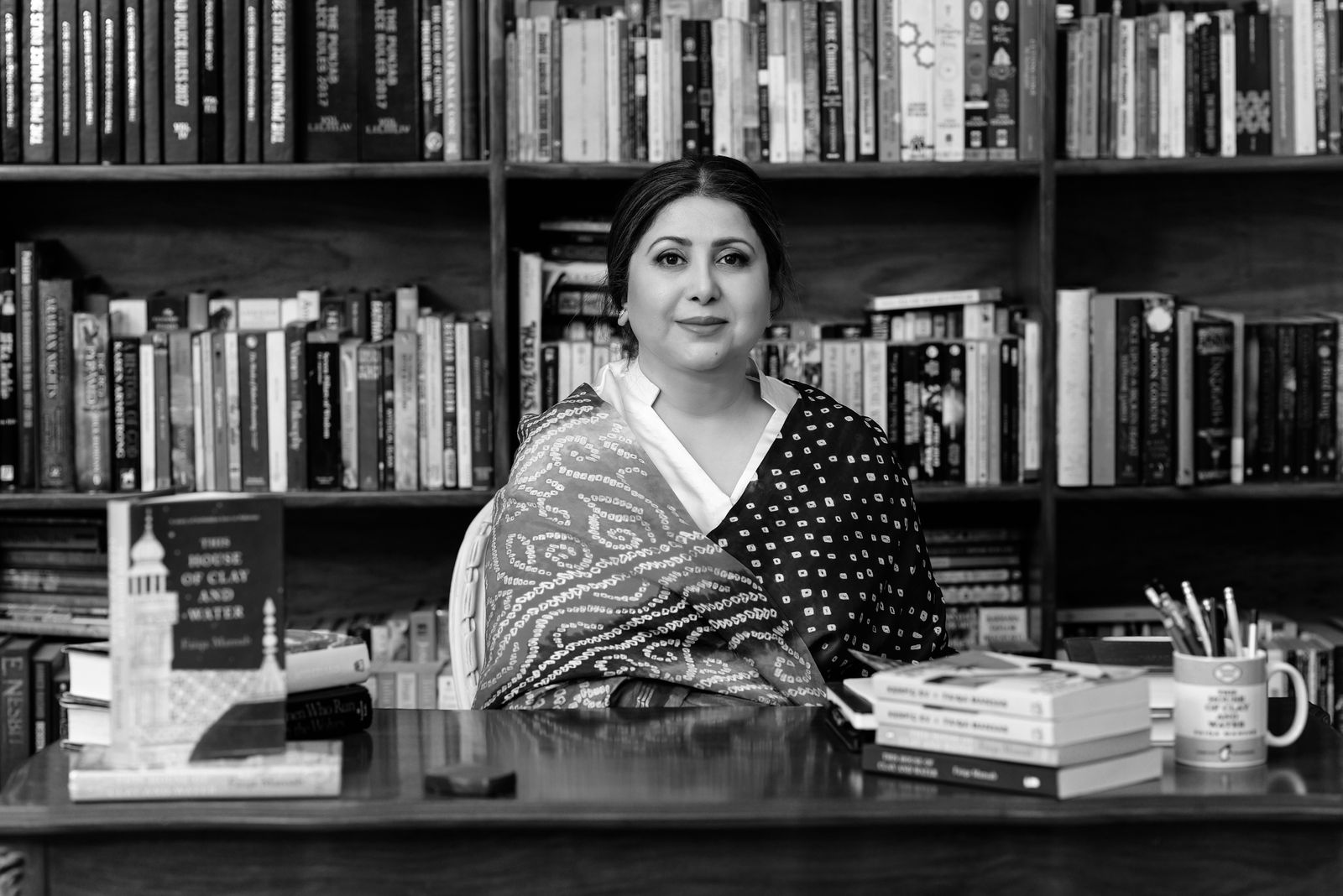
Faiqa Mansab. Photo: Naveed Khan
The Pakistani author Faiqa Mansab of The Sufi Storyteller speaks about women’s lives as messy, constrained, and politically situated, of motherhood as both power and erasure, about abandonment as a recurring human condition, and more.
- Namrata
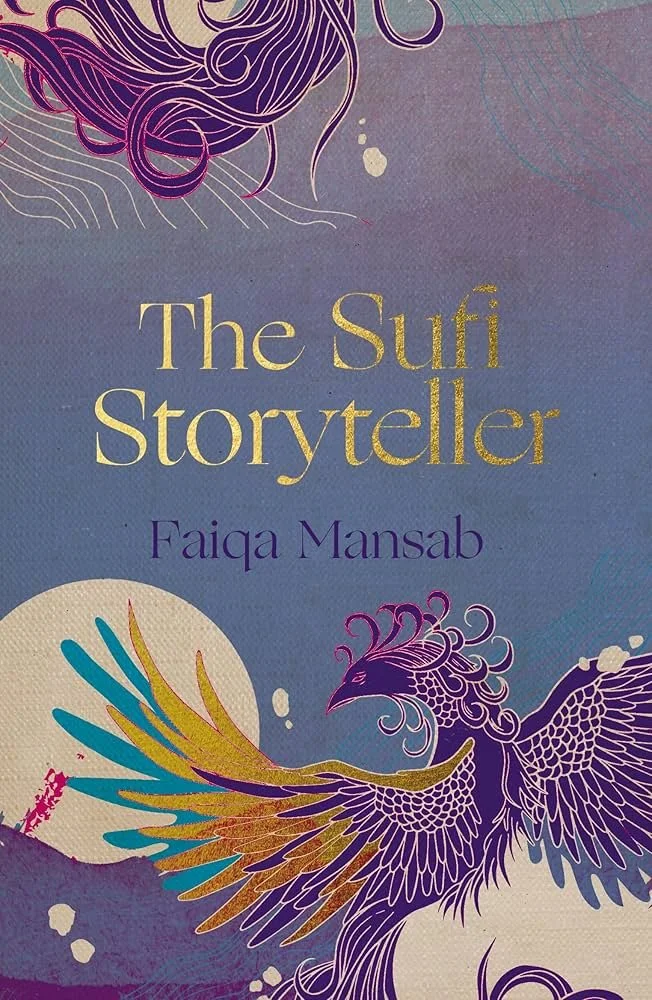
The women at the centre of Pakistani author Faiqa Mansab’s The Sufi Storyteller (Penguin Random House India, 2025) are mothers, daughters, lovers, and friends, formed within structures that demand their silence—even as they are extracted of their labour, care, and belief. Mansab is uninterested in heroic arcs or narrative redemption. Instead, she stays with friction between hope and disbelief, faith and doubt, love and abandonment, inheritance and injury. Sufi thought runs through the novel not as doctrine, but as a lived atmosphere.
When I spoke to Mansab about her novel, our conversation returned often to voice, as we pondered upon who is allowed one, who is denied it, and what it costs women to keep speaking anyway. The Sufi Storyteller, Mansab’s second novel after 2017’s This House of Clay and Water, is shaped by that insistence. It moves slowly and deliberately, attentive to women’s interior lives not as a site of resolution, but as a place where endurance, memory, and resistance quietly accumulate. Writing from and about the subcontinent, Mansab’s work has long been attentive to how faith, gender, and power intersect in everyday life.
In this discussion, Mansab reflects on storytelling as an act of survival rather than self-expression, and on silence as something that can only be chosen meaningfully once one has claimed a voice. She speaks with clarity about women’s lives as messy, constrained, and politically situated, about motherhood as both power and erasure, and about abandonment as a recurring human condition, rather than a narrative endpoint. She also addresses faith as practice rather than performance, and slowness as a radical refusal of urgency in a world that demands explanation and compliance.
What emerges is a writer deeply invested in the ethics of attention, how stories are told, who they are for, and how telling them can become a form of ownership, defiance, and care. Edited excerpts:
The Chakkar: In The Sufi Storyteller, narration itself often feels like an act of survival rather than expression. Story is something your characters cling onto, return to, and sometimes even weaponise against erasure. What does storytelling do in this novel that silence cannot, especially for women whose inner lives are repeatedly interrupted or doubted?
Mansab: It is true that silence can be powerful and healing, but only when you have already claimed your voice and used it. Silence will not win you your rights, or justice. And one of the most powerful ways of using one’s voice is by telling stories, about courage and love and truth. Storytelling is a metaphor for voice, and it is also a way of taking ownership of our own truths. The first stories we tell are about ourselves and our surroundings and how they affect us. We initially tell stories to help ourselves. We often find ourselves by telling stories about us to ourselves.
Stories are especially important for my characters in The Sufi Storyteller. The idea of stories as inheritance, as secret wisdom and healing, especially for women is an old one. I came in contact with the power of stories as a child and have continued to live with them. There are many books which talk about the importance of art as stories, of history as story, and vice versa. Lewis Hyde’s The Gift is one such beautiful book, as are Women who Run with Wolves by Clarissa Pinkola Estes and The Sufis by Idries Shah. I love Angela Carter’s reenvisioned fairytales.
The Chakkar: Both The Sufi Storyteller and This House of Clay and Water are deeply invested in women’s interiority rather than their resolutions. Your protagonists are rarely redeemed in conventional ways. Were you consciously resisting narrative closure, or does incompleteness feel truer to the emotional lives you are writing?
Mansab: No, I don’t think this is conscious or even true across the canvas of my work. I create women of flesh and blood, who are messy and make mistakes and have full hearts and intelligent minds. Women don’t live in a vacuum or in a bubble of reactionary decisions. They live within societies made unpleasant for them, often dangerous, and at times, fatal. So much is allowed in this world that should be even unthinkable let alone doable. Yet we watch injustices and unfairness on a daily basis. Children are so vulnerable in our societies and there is very little done to protect them. While the concept of minorities exists how can there be any justice or human rights?
The Chakkar: The mother–daughter relationship in The Sufi Storyteller is marked by tenderness, distance, and misunderstanding, sometimes all at once. Rather than sentimentality, you allow friction to remain. What interested you in holding that relationship in tension instead of reconciliation?
“I create women of flesh and blood, who are messy and make mistakes and have full hearts and intelligent minds. Women don’t live in a vacuum or in a bubble of reactionary decisions. They live within societies made unpleasant for them, often dangerous, and at times, fatal.”
Mansab: Mothers are such complex beings. They are so powerful and yet so vulnerable. A woman’s body changes forever after she gives birth. The DNA of the child remains inside her forever. Her bones become brittle. Her vision weakens. Her brain chemistry is altered. All of this is apparently invisible to the rest of the family. Just because it happens every day all over the world, women are treated so callously. From there, the relationship with the child begins, gestating, birthing, nursing, upbringing. Is it any surprise it is fraught with intense emotions? No matter how much love there is between a mother and child there is also the burden of expectations unfulfilled.
The Chakkar: Emotional, social, and even narrative abandonment runs like an undercurrent through the book. Your characters are often left behind, yet they continue to speak. How did you think about abandonment not as an ending, but as a condition one learns to live and narrate from?
Mansab: I am not sure I know what you mean by narrative abandonment, but yes, I am very aware that this is one of the most constant states of being as a human. We live in fear of it, and yet often in various phases or stages of our lives we do grind ourselves in that state. The real rub would be if we were aware of how many times we abandon others. But we only think of our own fears.
I think perhaps [the characters] Nida and Bhanggi were more self-aware and perhaps they, especially Nida, would acknowledge their own part in this most cruel and heartbreaking truth of life. We all do it. We all go through it too. The degree may vary but the truth is that abandonment is one of the most common occurrences of the human condition.
The Chakkar: In This House of Clay and Water, your portrayal of a transgender character is notable for its refusal to sensationalise or explain. Instead, the character exists within the emotional economy of the story, rather than as a symbol. What ethical or aesthetic choices guided you while writing this presence into the novel?
Mansab: Honestly, there was only one: Herculine Barbin’s memoir [edited by Michel Foucault]. I am so grateful to that version of me who did not give up looking for the right research material, and who was not afraid to write that character. After This House of Clay and Water came out, there were several plays and movies on similar subjects that won awards. My novel gave permission to reimagine a trans person, the ‘other,’ in ways that were rare or unheard of. I put Bhanggi at the centre of my story as a human being because I saw them like that.
The Chakkar: Across your work, faith appears less as doctrine and more as atmosphere. It is felt, questioned, and reshaped through story. In The Sufi Storyteller, how did you think about belief as something porous and lived rather than declared?
Mansab: Probably because that is what and how it is supposed to be. Declarations should be of love not maslaqs and differences. Religion is practiced. It is a lifestyle. Religion is not supposed to be performative, but we have made it so. We think fitting into a well-known and well-established box will save us. Nothing saves one from fascism, and we live in a fascist world.
Sufism is the softest, most embracing way of life. It is rich with love and music and poetry.
The Chakkar: Being published outside one’s place of origin (India) can subtly alter how a book is read, marketed, and even interpreted. How do you experience this distance? Does it offer freedom, misreading, or a different kind of responsibility toward your work?
Mansab: But it is not outside my place of origin. The similarities in the subcontinent far outweigh the differences. My books have found so much love in India and Sri Lanka, Nepal and Bangladesh and Bhutan and Pakistan and everywhere else they have landed. They have found homes in the hearts of people, and I am so grateful for that.
The Chakkar: Many moments in The Sufi Storyteller feel deliberately unhurried, as though the novel is asking the reader to sit inside uncertainty. In an age of urgency and explanation, what do you hope such slowness allows, both for the reader and for the characters themselves?
Mansab: That is such a great question because slow reading is therapeutic and calming. Stillness is a gift. Slowing down and taking a breath within a story is one of the most beautiful things we have. And this is a gift for the reader.
***
Namrata is an author, editor, and book reviewer. She is a UEA alumnus and has studied travel writing at the University of Sydney. Her writings can be found on Kitaab, Asian Review of Books, Contemporary South Asia Journal of King’s College-London, Mad in Asia, The Friday Times, The Scroll, Feminism in India, The Brown Orient Journal, Inkspire Journal, Moonlight Journal, The Same, Chronic Pain India and Cafe Dissensus. Her short stories have been a part of various anthologies and she has also published two short story collections of her own. She is currently working on her debut novel. You can find her on Twitter @PrivyTrifles.