Death and the Afternoon Siesta
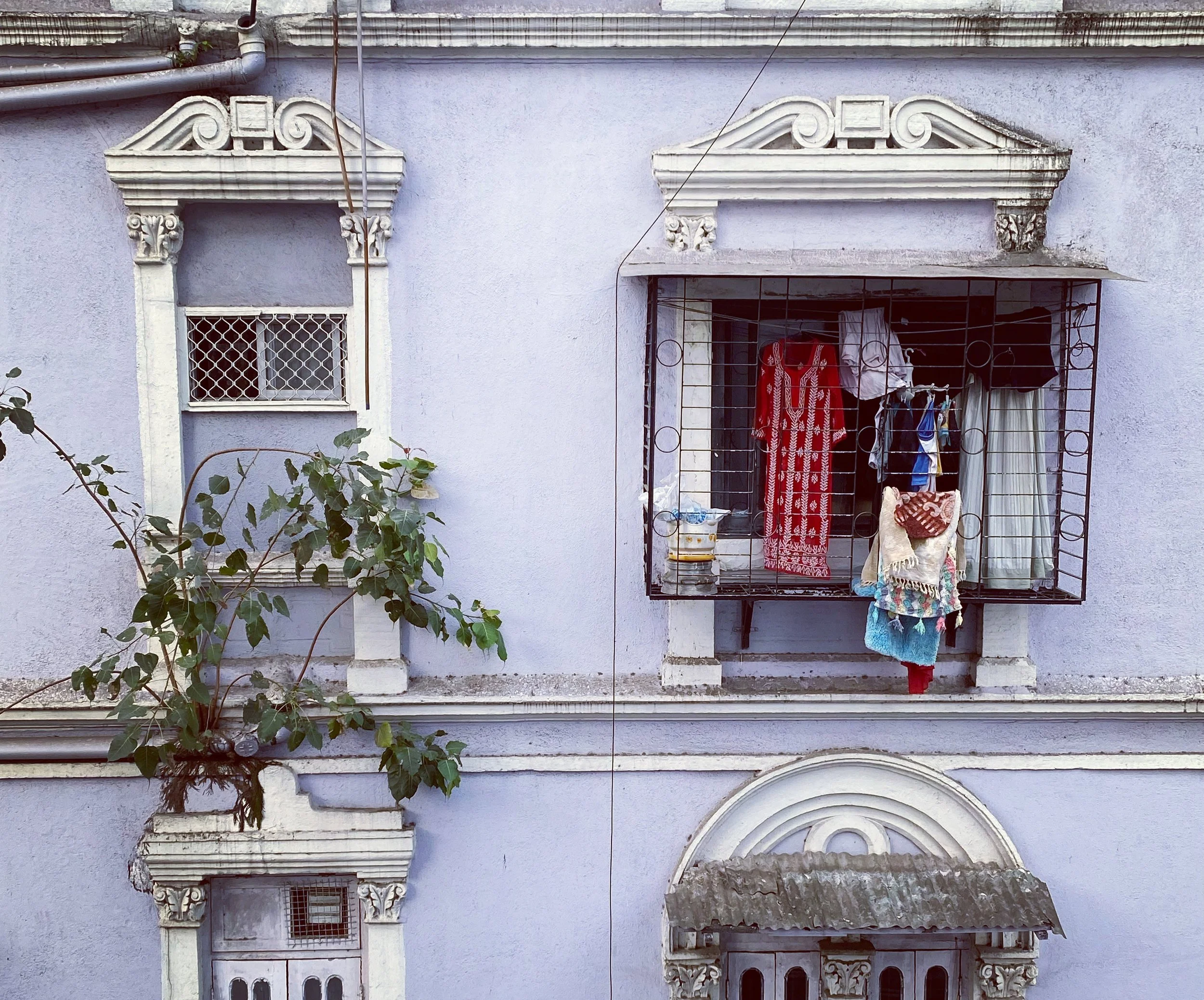
Photo: Karan Madhok
Short story: ‘Sometimes, I would lie in bed waiting for the tears to come. Sometimes, I would wonder how it was strange that we needed to sleep in order to be awake for the rest of our lives. Until the day when, like my grandfather, we fall into an eternal sleep.’
I remember a quiet winter afternoon. The sun’s light shone through our windows. The morning chill still lingered in the apartment. Jaya was in the kitchen, clearing up after lunch, while I sat on the sofa in the living room reading, distracted now and then by the furniture that we had accumulated. Most of these items had been selected by Jaya, steadily, ever since we had moved in together six months ago. There was the bookshelf she’d bought and a teapoy. There was a small table that sat snugly in a corner near the window, with a plush and an expensive swivel chair that had brown upholstery into which one could sink when sitting, on which it was easy to sleep if one was tired. There was a floor lamp that I had especially come to love because of the mood it created in the room at night. My only contribution to the interior design was a poster of a painting I liked, hanging on the wall. I was talentless when it came to decorating. It was almost magical when I saw how the living room—and the apartment entirely—took shape, made into an unlikely home.
When Jaya walked into the living room that day, something came over us. Nothing needed to be said. A touch of hands, fingers interlocking into each other. That was enough. I kept my book aside. Suddenly, an unsuspecting afternoon turned into one of vigorous lovemaking. Unusual for us, because our preferred hour was night. The couch became our field of play—a first for us, and perhaps one of the reasons why the memory of this afternoon is still clear in my head.
Later, we lay spent, asleep in the bedroom. It was already evening when I woke up and lazed around in bed. The sun rays, preparing to drown in the nearby sea for the day, were streaming into our home. Jaya’s hair was shining golden, her mouth just slightly open as it always was when she slept. The rest of her body lay wrapped tightly in a soft and thin red chaddar, her favourite, a gift from my mother when I first moved to Mumbai from Surat.
We capped the night with a visit to our favourite restaurant, ordering bombil fry and prawn curry with neer dosa. I remember thinking that night while lying in bed how perfect everything was, how happy and content I felt. That, considering the state of bliss I was in, it wouldn’t be too bad if I died just then.
At work the next day, away from her, I asked myself if I was in love.
Jaya and I had been together for three years by then. We desired each other, were used to each other, liked spending time with each other, and there was a certain rhythm in place that gave structure to our lives. Was that love? Perhaps. Did I believe in it? I thought so at the time, and I still think so.
*
Love was a small mercy in the face of death. Perhaps, a rare gift. Something that one received gladly, but the departure of which one accepted unequivocally.
Increasingly, I find myself thinking of that afternoon of lovemaking and the thought of death I had that night. Eros and Thanatos. An instinct for life (and perhaps love), and an instinct for death. They were forever entwined with each other.
The first death I ever saw was my grandfather’s. I was only ten. We stood in his room, the rest of our family, watching him lying in bed. It was a day before Christmas, maybe a few hours before Christ was born, almost two thousand years ago. There was a doctor on the side, who had said at one point, “Pati gayu che, it’s over.” It was strange to hear that and look at him dying, as if my grandfather had already ceased to exist as a human being, that he was a mere body now, a complex piece of flesh which was failing rapidly with no possibility of repair. My mother had seen the very last breath he took before life was sucked out of him, a final breath with which his supine body trembled slightly before settling into a stillness. An eternal stillness, which I regarded only a few moments later when others started crying.
Later, I learned that death was a more commonplace phenomenon. I no longer harboured a strangeness in my head like I did when I saw my grandfather’s body. Death was a fact of life, perhaps the only fact that is irrefutable, uncontested by anyone who has had the privilege or the misfortune of living. Human beings, like most things, come to an end. Times change. Time, like death, was relentless.
*
When Jaya suddenly decided to leave for her Master’s to another country, triggering an end to our relationship because we didn’t want to continue long-distance, I accepted it without much fuss. Love was a small mercy in the face of death. Perhaps, a rare gift. Something that one received gladly, but the departure of which one accepted unequivocally.
I stood at the airport with these thoughts in my head on the day she left, facing time, and perhaps death, with no shields on and a constant throbbing somewhere in my body that didn’t tell me anything except that it was pain, a pain that I had held at bay until that moment.
When I was younger, I didn’t think something like this could happen to me. Growing up sheltered from any kind of major upheavals, I thought my entire life would pass without extreme ups and downs. There would be happinesses, but small happinesses. There would be sadnesses, but small sadnesses. Nothing out of the ordinary, nothing so big as to consume me entirely. A foolish thought.
When I went back home after seeing Jaya off, slowly, her absence in the house grew larger. I could distract myself in the office, during my travels, at restaurants with friends, watching films in theatres, during my walks, and all the other places. But when I entered home, I became someone else.
While growing up in Surat, I would take an afternoon siesta whenever possible. But in Mumbai, my karmabhoomi, I only had time for these afternoon naps on the weekends. When Jaya left, however, taking a siesta became almost impossible. Whenever I lay down in bed, I would start remembering that afternoon with her, triggering a strange pain at the back of my throat. Sometimes, I would cry. Sometimes, I would lie in bed waiting for the tears to come. Sometimes, I would wonder how it was strange that we needed to sleep in order to be awake for the rest of our lives. Until the day when, like my grandfather, we fall into an eternal sleep. I would sometimes wish for that, wondering what would come after that. Heaven? Hell? Moksha? Nirvana? Or maybe absolutely nothing at all.
*
I sat on a sofa, facing the sea, with several unopened boxes strewn about me. My mother was in the bedroom, watching Reels on Instagram. From where I was sitting, I could see her body leaning against the backrest, wearing a red salwar-kurta, her legs folded, carefully fingering the phone screen with her right hand while holding it in her left. For a second, she looked at me and asked me what had happened. I shook my head and turned my head toward the sea. After some time, when the Reel music had stopped, I looked at her again. She was lying in bed with her phone next to the pillow. She had covered her eyes with her hands, swiftly falling asleep, as she always did in the afternoon ever since I could remember.
She woke up early every day and didn’t stop working until she fell asleep in the afternoon, an anxious worker who couldn’t rest until all her tasks were finished. Jaya, too, was like that. That is why my mother had filled up the earthen pot with drinking water in the morning, made tea, cooked lunch, even made preparations for dinner, and had cleared the kitchen afterwards before getting to the bed. This was her routine she followed, more and less, even when back in Surat.
I told my mother about the break-up after some time. She seemed sad, but maybe only because she had thought I’d marry Jaya in future. After some conversations, when enough commiserations had been conveyed, she suggested that she start looking for brides for me. I was of marriageable age, and she seemed desperate to hitch me up with someone. Looking to fulfil what she thought was her parental duty. I refused in no uncertain terms. I felt angry toward her for even suggesting it, and made it known to her.
Months later, I still struggled to sleep in the afternoon. Sometimes, I had trouble sleeping even at night. Little things would remind me of her, like the red chaddar, which I had buried deep in the cupboard, but which would sometimes peek out to haunt me as I sifted through my clothes. Or how the lamp threw light on objects in the living room. Or just a memory of the sensation of her touch when I sometimes woke up in the morning before her. I didn’t know how to stop any of that, or if I even wanted it to stop.
When my mother suggested that I should look for another home, I panicked. It seemed an outrageous idea at the time. Maybe, the familiar was comforting even in pain, even if it had outstayed its welcome.
As I pushed the chair against the table, it came in the direct path of a sun ray, its upholstery lit up bright like a source of light, almost blinding when one looked at it for more than a few seconds. In the previous apartment, Jaya always put up curtains over the window in the afternoon, diffracting the light, lighting up all parts of the chair equally.
But after some time, I started seeing the sense in it. Something needed to be done. I began hunting for houses. I went through a dozen before entering this apartment facing the sea. It was an easy decision. The rent was a bit higher, but I could afford it. I paid the token amount on the day I saw it, and gave a leave notice to my old landlord.
I moved within a month.
*
I walked to the window and looked at the waves breaking on the beach. The sea, brilliantly lit at this time of the afternoon, was calm. I could now hear my mother snoring in the other room—she was in Mumbai for a few days to help me move into the new place.
The city, with its hustle and bustle, was unable to reach me at this moment. The only city I could see was a part of a building, covered with a green cloth and bamboo scaffolding. If I didn’t know there was an entire city behind me and considered only what I see as real, I could almost believe that I have been left deserted and am supposed to make my way back to human civilization, comforted by daily habits of people going and coming back from work, making breakfast, lunches and dinners, going for walks and jogs in mornings and evenings, eating in restaurants, going outside for drinks, meeting friends, laughing and crying for different reasons.
But it’s not possible to forget so easily, is it?
I made some decisions. I went for a walk in the neighbourhood. I smoked a cigarette. I ate a nice meal of goan sausage curry with sanna at a restaurant. And I browsed a bit at a nearby second-hand bookshop. When I came back, my mother was still sleeping. I shut the door to the bedroom and began opening the boxes that were lying around. First came the poster of the painting. I put it up on the wall behind the sofa. The kitchen equipment went into the kitchen drawers and shelves. I kept the leftover ration and unopened packages of food on the kitchen platform. Then, I moved the table with the swivel chair next to the window, like it had been in our previous apartment. As I pushed the chair against the table, it came in the direct path of a sun ray, its upholstery lit up bright like a source of light, almost blinding when one looked at it for more than a few seconds. In the previous apartment, Jaya always put up curtains over the window in the afternoon, diffracting the light, lighting up all parts of the chair equally.
At the bottom of a box, I found the red chaddar. I picked it up and kept it on the chair. I arranged my books on the empty bookshelf next to the TV. The floor-lamp was next. I kept it in the corner opposite to the one where the table was, the same position it was in in the previous apartment. As I emptied the boxes, the house filled up, and magically, took shape. Maybe, I had acquired some talent in decorating the apartment. It was nice to see it like that; it made me feel a feeling I remembered from an earlier time.
I sat on the swivel chair once the boxes were empty, looking at the sea out my window again. It was not possible to get bored of it. Soon, I felt tired and my eyes felt heavy. After some time, I moved the chair away from the sun, put my feet up on the sofa, covered myself with the chaddar, and closed my eyes.
***
Vishnu Bagdawala writes poetry and prose. He divides his time between Mumbai and Surat. Some of his poems have been published in magazines like The Bombay Literary Magazine, Nether Quarterly, VAYAVYA, among others. He is in the process of writing his first novel. You can find him on Instagram: @onesixsevenwordsaday and X: @167wordsaday.