Last Night’s Silence – Five Poems by Aardhra Chandran
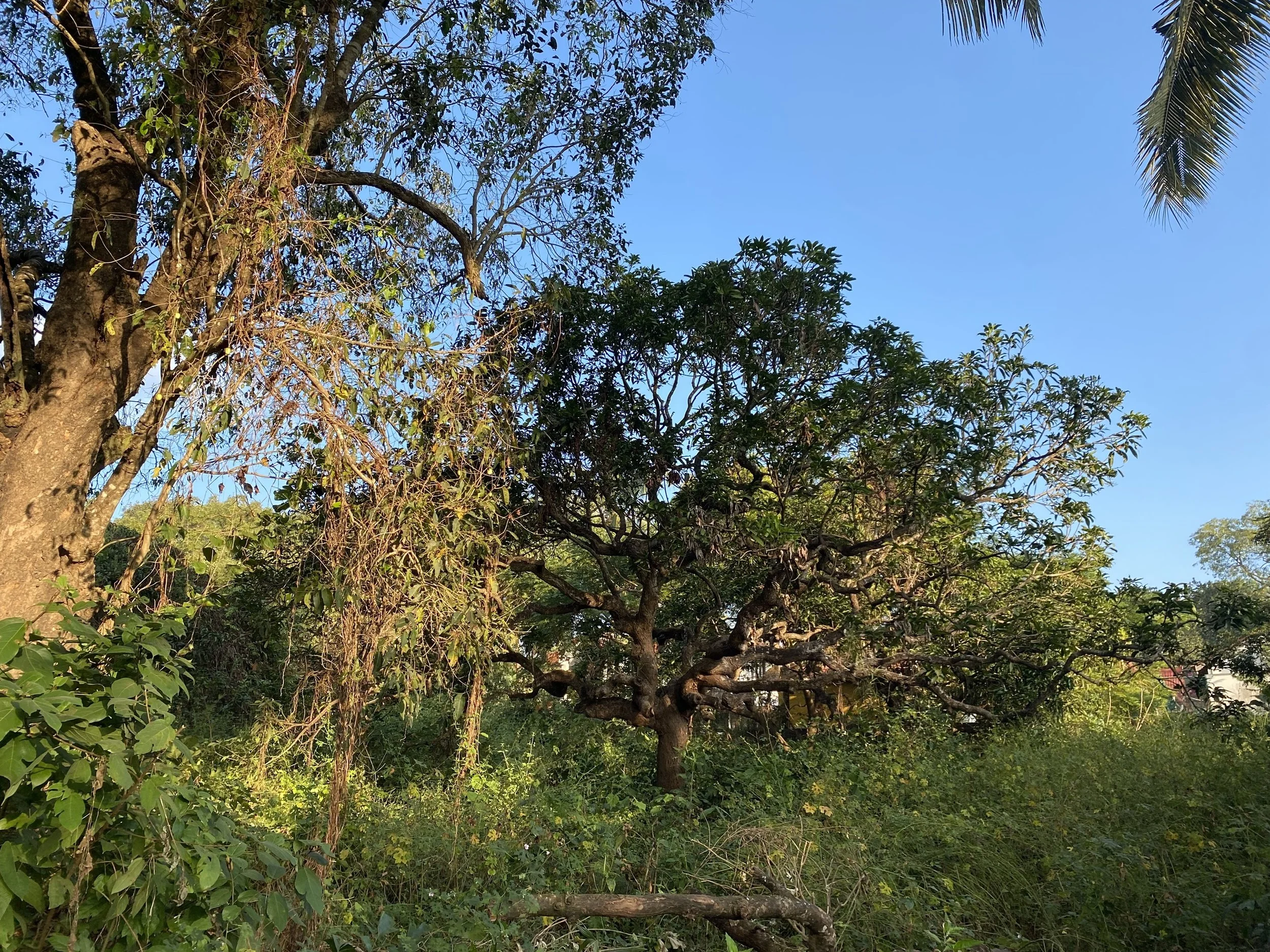
Photo: Karan Madhok
‘Concrete trucks rumble past his fence, shaking the loose teeth / in his jaw, spitting black diesel smoke onto his holy basil plant. // He measures his life not in years, but in missing trees—/The neem chopped for wood, the mango that died of thirst.’
Shaving My Father’s Face
His cheekbones have grown sharp, like broken roof tiles.
The foam is white and thick, smelling of old sandalwood,
hiding the loose skin of eighty-odd years.
My hand must be steadier than the old Leyland bus he used to drive.
I pull the razor down, a clean path across the silver stubble,
revealing the pale geography of his retirement.
He does not look at me; he looks at the peeling plaster,
tracking the damp patch on the wall.
His breath is shallow, smelling of warm milk and cardamom.
The razor catches on a mole, a tiny bead of crimson blooming.
He doesn’t flinch. I dab it away with the corner of a rough towel,
rinsing the steel blade in the white mug,
where the water turns slowly pink between us.
*
Leftovers
The heavy aluminum handi sits in the sink, overnight grease
hardened into a pale, opaque ring against the metal wall.
My mother cleans it with ashes from the morning stove,
with raw knuckles bracing the colour of crushed ginger.
The house smells of stale mustard oil and last night’s silence.
We do not speak of the brother who took his passport and left,
or the way the monsoon has rotted the legs of the teak dining table.
She scrubs until the metal squeals under her palm,
seeking her own reflection in the scratched, grey bottom.
Outside, a crow rips open a garbage bag on the wall,
scattering plastic wrappers like modern, coloured leaves.
She doesn’t look up. She simply rinses the pot,
water slips into the drain.
*
Red Chutney
The stone mortar is cold until the iron pestle strikes.
My aunt crushes dry Kashmiri chillies with a furious, rhythmic thud,
her gold glass bangles clinking against the stone like frozen sparks.
She adds vinegar without measuring,
bleeding the pods until they turn into a thick, sharp paste.
The kitchen air turns shrill, biting the throat
of the uncle who sits in the courtyard reading the morning paper.
He wants his fish fried crisp; he wants silence with his meal.
She wipes her sweaty forehead with the loose end of her cotton saree,
leaving a bright, red smear across her temple like a crooked bindi.
The mortar holds the stains of three generations of angry dinners.
She tastes the paste on her raw pinky finger,
smiles at the burn that blisters her tongue,
and lays the spoon down beside his plate.
*
The Geometry of Bone
My grandfather’s spine is a dry bamboo stick, bent
by the weight of unrecorded droughts and faded land records.
He sits on the jute charpoy, his cough dry as clay,
his skin translucent enough to show the slow crawl of his blood.
The village has shrunk into a highway bypass now.
Concrete trucks rumble past his fence, shaking the loose teeth
in his jaw, spitting black diesel smoke onto his holy basil plant.
He measures his life not in years, but in missing trees—
The neem chopped for wood, the mango that died of thirst.
His fingers, thick and split at the nails like old garlic cloves,
twitch against the coarse wool of his winter shawl.
He is waiting for the ground to give way,
but concrete will not let him sink.
*
Third-Class Sleeper
Sultry heat binds forty bodies pressed shoulder to shoulder.
The blue rexine berth is torn, exposing yellow foam that smells
of sixty years of cheap tobacco and damp, human hair.
Through the iron window bars, fields blur past—stagnant green ditches, brick kilns, and lonely goats.
A child cries in the next bay, his mouth stuffed with cold paratha,
while an old man counts his currency notes under a greasy lungi.
The ceiling fan rattles like a box of loose nails, chopping
the thick, humid air but never cooling the skin.
Every station brings the same rhythmic call of hot tea vendors,
their clay cups breaking on the tracks after a single gulp.
We are all traveling toward something smaller than we expected,
our faces masked in dust and salt,
too tired to look each other in the eye,
rain clings to the rusted latch.
***
Aardhra Chandran is a poet and Postgraduate Student from Kerala, India. She writes poetry grounded in memory, family, and lived experience. Her work has appeared or is forthcoming in Active Muse, Eunoia Review, Borderless Journal, Zhagaram Literary Magazine, and more. You can find her on Instagram: @aardhrachandran and X: @AardhraChandran.