The Sacred and the Starved
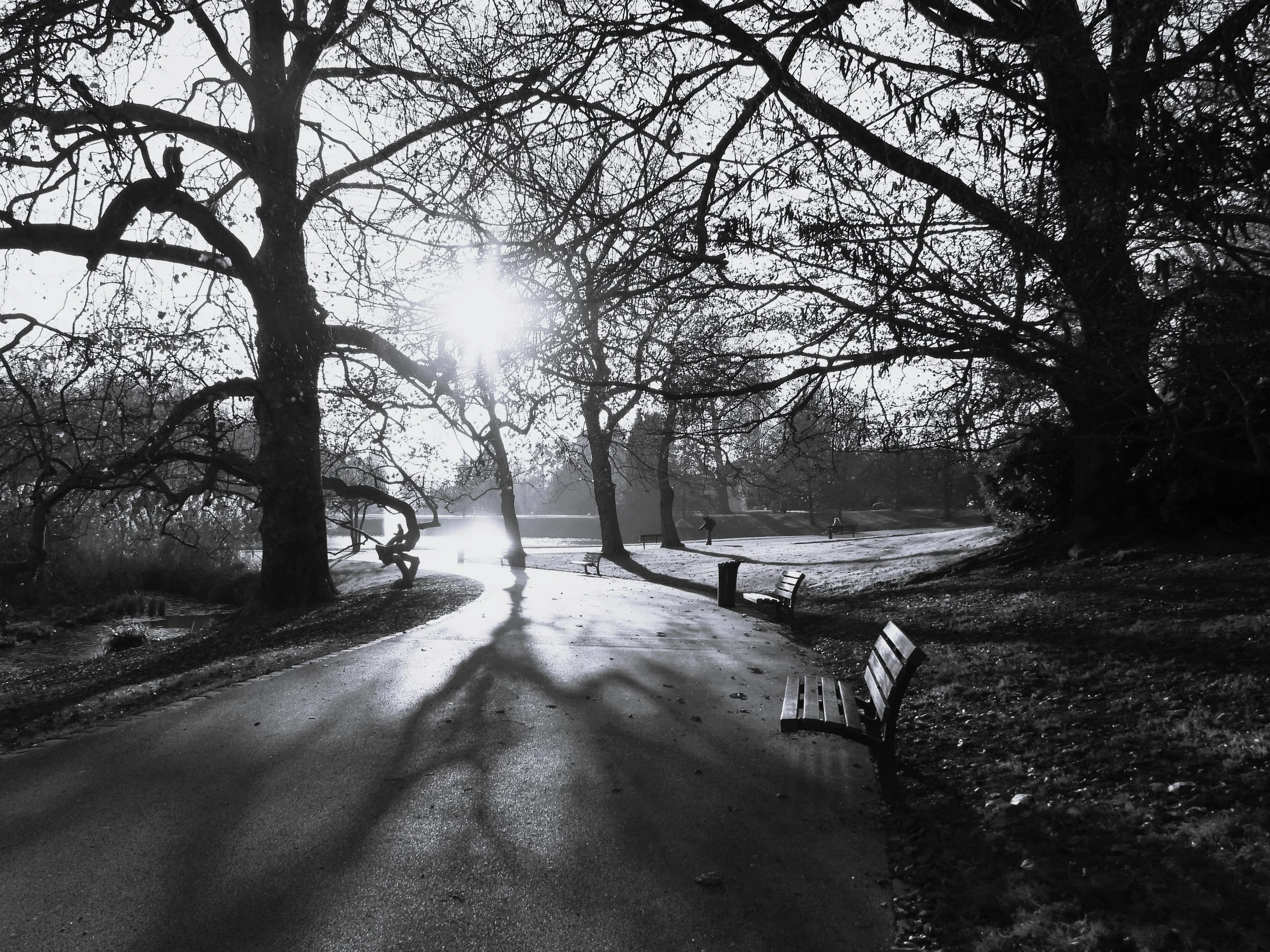
Photo: Isabelle Carin
Short story: ‘How dirty were the hands that designed those temples? Hands that counted the opium profits in the warehouses of Calcutta, honeyed and lethal with dust? Hands that fixed the cables that drained Burmese rice while the Hooghly teemed with corpses.’
I.
The galleries of the British Museum were thick with the scent of beeswax and the heavy, airless weight of forgetfulness. Nirmal Singh stood before a panoramic canvas that offered an idealised vision of the subcontinent in the centuries before the Company’s shadows lengthened across the soil. It was a world rendered in gilded nostalgia, where temple spires pierced clouds as soft as spun sugar, and statuesque women performed in a cadence of haunting, mathematical symmetry.
Besides it hung a jarring, visceral antithesis: a landscape of the modern era, fractured by the rusted arteries of sewer pipes and the iridescent, oily swell of factory bubbles. The accompanying wall label was succinct in its judgment. “India has become impure,” it declared. “The price of self-government.”
Nirmal lingered in the stillness between the two frames—the threshold where the amber-hued myth of the past collided with the acrid, soot-stained reality of the now.
A woman in linen trousers took a breath beside him. “Such a fall from grace. When we left, she—yes, she, as her people see her as a woman—was pure.”
Pure. The word caught in Nirmal’s throat like sour cream. His knuckles whitened on the dirty handle of his cane.
He rounded the corner and stopped.
There, in the deliberate shadow of the niche, Colonial Catastrophes: Necessary Costs?, the photographs were displayed. Bengal, 1943. Belly swollen like a poison dart frog, ribs like a chest crushed beneath the flesh. A woman crouched in the dirt, gnawing on shells with the frantic, scraping desperation of a starving rodent. A British officer high on horseback, his whip poking through railway carriages overflowing with bales of rice. For the war effort. Nirmal’s face floated in the glass. That child was him. It was him, before his mother sold her wedding bangles for a bowl of worm-filled grain.
Damn, I don’t remember. I don’t remember. Bad times. Grandpa had served them. A man who had cleared his Punjabi tongue called Bengalis “cunning lumps” and Punjabis “turbulent oxen.” He strutted around with his Macaulay education like a peacock. And here, look at his legacy: men like scarecrows behind girls with knees bigger than their thighs, holding empty bowls. Not angry. Just confused. Lost sheep. And the officers on their ponies? Sure as Sunday roast.
Try, idiot. You saw the ledgers yourself. Third floor, British Library. African and Asian Studies, a high-sounding title for the stolen documents. They knew the rice was shipped while Calcutta licked the mud from the pavements.
Schoolchildren and visitors with backpacks arrived in larger groups. Glimmer of shame on their faces? None. Why would they? Grandpa never blushed. The loot filled his pockets all too well.
He left the museum, the great doors closing behind him, enclosing the preserved air and the weight of the plundered gods. In his mind, a garden grew out of control, a mixture of thorns and memory.
“He reduced the Indians to animals,” a voice rang out from the next room. Nirmal clenched his jaw. He had never mentioned such nonsense. His wife had dismissed him as mere architecture—sturdy but soulless—before leaving him. He had picked up his bags and left for London in search of a promising scholarship. Oxford, Cambridge, and then this grey labyrinth, only to find colonialism festering at its edges. Four of them in that gloomy King’s Cross studio apartment, with cockroaches scurrying over his thesis scribbles. He’d resisted. He’d been reduced to a fake apartment on Leinster Terrace.
Some rich bloke from that same street had probably signed the orders that destroyed Bengal.
He forced himself to examine the next photograph. A family on the brink. Legs like firewood. Hollowed-out eyes. Exterminated. The word spat into his skull. Not hungry. Wiped out. When the English arrived, they called the half-fed Indians. Now they framed their murder in an embellished frame.
And another: A woman trying to breastfeed. Breasts lost. Reduced to... flaps. Like a butcher’s shop window. It’s a Cubist horror, isn’t it? But Picasso’s circle taught all this, didn’t they?
The Royal Academy classes he attended were like gnawing on a corpse. He was following his grandfather’s example, but while the old man had seen the progress, Nirmal had witnessed the theft. In broad daylight. Is Europe perhaps the kingdom of thinkers? Bullshit. He had told his friends in Hyde Park last Tuesday, while the pigeons pecked at their sandwiches. The story was bitter now.
He skipped two frames. Yellow belly? Maybe. Auschwitz was a good thing. So that’s how it was.
Final photo: Two women. Arms outstretched. Begging. Not for pennies. For food. The only thing that really matters. We’re here to eat. To steal, especially what grew in their own land, stolen by foreign guns, this is the real evil. Done in the name of race. Of the Empire. Of God. Bloody foolishness.
Squinting, he looked around the room. More pale faces than dark ones. As if India had severed its past. Forgotten.
The lady in linen returned, her laughter ringing with the unearned vibrance of someone who had won the football pools. She carried the scent of lavender water and stolen sunlight, an invisible, expensive weight that draped over her shoulders more comfortably than any fur.
He left the museum, the great doors closing behind him, enclosing the preserved air and the weight of the plundered gods. In his mind, a garden grew out of control, a mixture of thorns and memory. Those images were taking hold. Black and white flowers bloomed in a monochrome world. “What life?” he insisted, his eyes burning with rage at the utter indignity of it all. His body was a weary vessel, carrying all this. He moved forward, each step a deliberate adjustment to the cracks in the pavement.
The world beyond him, the double-decker buses fading from red to grey, the confident stride of a man in a suit and tie, was a poorly acted play. He had lost interest in the plot. The photographs were alive. They didn’t ask for pity; they demanded an accounting. It was clear that this was revenge for the hunger they had suffered. Those children, those women reduced to the bare, skeletal structure of suffering, moved inside him. They were not ghosts, but tenants. Their voices were a low hum, a croaking of crows from the garden of his childhood summers. He remembered the jamun tree, its fruit staining their mouths purple, the crows cawing at dawn when the scent of the flowers was a thick, nauseating emanation. The same vibrations existed once again. He had known their language all his life. It was the most ancient language. It demanded a response.
He was walking on the most intimate terrain of all: the terrain of abandonment. When he emerged, London was a river of grey steel and stone. A line of tourists outside a café swayed back and forth, a gentle snake. The traffic lights dripped, a perpetual warning red. Black taxis whizzed by, one after another, a historical accumulation. His fertile, poisoned soil. The museum’s chill had invaded his bones.
The images in his head were silent now. They waited. He knew what they needed. They didn’t need his tears. They needed his eyes. They needed him to keep looking. The light changed. A sea of bodies would advance. He would join them.
It was the surgeon’s scalpel, that icy steel, cutting deep to destroy a pain that was itself the only remaining evidence of a feeling.
Deconsecrated.
The artist’s term mingled with the harsh sound of his cane on the pavement. How dirty were the hands that designed those temples? Hands that counted the opium profits in the warehouses of Calcutta, honeyed and lethal with dust? Hands that fixed the cables that drained Burmese rice while the Hooghly teemed with corpses.
Piccadilly Circus writhed in a spasm of light. The screens screamed of diet pills, luxury watches. Sugar-free! Guilt-free! He knew mathematics and its logic. The same companies sold fortified biscuits to refugee camps. Capital, like water, found its level, pouring toward thirst to commodify it. An electronic billboard flashed: GAZA: COMPLEX HUMANITARIAN SITUATION. Beneath the sanitised slogan, a boy dug through rubble with his bare hands. Nirmal saw Parvati: not the ghost of his sister, but Gaza’s living daughter. This image vanished in a matter of moments.
Two twin appetites, eighty years apart, gnawing on the same bone of indifference.
The cure of darkness wasn’t on a river in the jungle. It was here. On this well-maintained street. In this silent museum. The doctor waiting for the needle. A woman nudged her, apologising without looking around. The gesture was perfectly normal. It meant everything.
He got to his feet, leaning on his cane, the mass of his body a sudden and shocking fact. He felt the pulse of the underworld beneath him. A crow called, a raucous note above. He looked up. Just a crow on a black railing, nothing. But for a moment, the two sounds, the hum of the machine below, the animal voice above, were one.
The true voice of the city.
He continued. The images in his head were silent now. They waited. He knew what they needed. They didn’t need his tears. They needed his eyes. They needed him to keep looking. The light changed. A sea of bodies would advance. He would join them.
II.
“Mr Singh?”
The voice pierced the fog, a thick layer that had covered his thoughts, a trap he couldn’t escape. The woman from the exhibition, Eleanor Thorne—as the label read—was with a takeaway coffee. “You seemed moved by my work,” she said.
Nirmal’s blood glucose metre vibrated in his pocket. 14.2 mmol/L. Rising. He adjusted it slightly, as if he hadn’t heard. But the voice inside him, not his own, but a chorus of others’, urged him to respond. Its voice, when it came, was low, almost drowned out by the buzz of the city.
“Did your Golden Age include famine?”
Eleanor blinked. “It was a wartime necessity. Tragic, but...”
“...But necessary? Like the opium we used to pay for those temples? Like the grain we fed your soldiers?”
Eleanor bristled. “Britain brought the railways. The law. Modernity, and so many other beautiful things. And stole what? Jade, spices, indigo, souls?” Her pulse pounded. The monitor beeped again. 15.1. “You call post-’47 India dirty. I call it wounded. By your surgeons.”
A flash of irritation crossed her face.
“We can’t be blamed forever.”
“Couldn’t we?” The words tasted like metal. “My pancreas remembers. It’s diabetic. Did you know? It starved to death in ‘43. Now it can’t metabolise sugar. It is a strange alchemy, expecting the world to swallow these hollowed-out treasures while it still hasn’t found a way to feed the ghosts who once owned them.”
She didn’t use her own voice, but a voice that seemed borrowed from him: out of place, tense, at odds with the free-spirited Englishness that smoothed everything over. They were words spoken in a cry of anger. Not his. The anger of the people. Yes, of the people in the photographs. They had let him speak. They had provided him with the harsh words that grated against the fine linen of Eleanor’s poise.
She hesitated for a moment. Then her voice softened, almost trembling. “I... I’m a South Asian historian at SOAS. I just wanted to find out something that isn’t often said. I don’t want to justify the Empire... we all know what happened. I just want to warn people. Couldn’t it be interpreted that way? What do you think, Mr. Singh?”
When he looked at her again, he saw not cruelty, but a kind of helpless curation. He was trying to put history in a glass case, to make it safe enough to look at. He couldn’t hate her. That was the horrible thing.
To Nirmal, the sky didn’t look clear. It looked like a huge, tender bruise, the kind that forms on the skin after a long day of work, stretching across the city. He saw the same purple hues and pale yellows that mottled his body, a map of exhaustion etched into his flesh.
He left without a word and strode home. Big Ben rang out with its bells, the rhythm and structure of the city. Demonstrations grew around him. They were now the order of the day. Signs held high, voices hoarse with emotion. Free Gaza. Stop the war. Ceasefire now. The world was in a state of constant collapse. It wasn’t an event, but a condition.
He kept walking, his cane tapping on the pavement like a metronome marking the time between then and now. His blood contained too much sugar. The images in his head wouldn’t subside. And the doctor was waiting for him.
But in the meantime, there was only walking. The bite of the air. The tinkling of the bells. And the inarticulate feeling that some ghosts cannot be held back.
III.
Dr Chaudhary placed his cold fingers on Nirmal’s wrist. It was like ice on a hot piece of iron, melting. In his mind, he imagined every drop melting dipped into the gloomy London streets while the doctor examined him. These London days had become changeable and unstable. One minute it was bitterly cold, the next humid and warm; the air was restless, as if trying to escape itself. Clear skies that opened only to sink back into rain, like an old woman weeping without knowing why. A tired sky. It offered no peace.
Outside the bay window of the Leinster Terrace apartment, a lavender dusk was falling. To Nirmal, the sky didn’t look clear. It looked like a huge, tender bruise, the kind that forms on the skin after a long day of work, stretching across the city. He saw the same purple hues and pale yellows that mottled his body, a map of exhaustion etched into his flesh. Over this bruised body, the world raced relentlessly, striving to earn bread and feed its families. The silent, exhausting work of every human being. “Maybe this race isn’t enough,” thought Nirmal, staring at the pigeons that kept coming and going from their messy nest of twigs where their little ones had been born full of hope. It was a constant, fluttering cycle of departures and returns. They probably thought they were coming to a just world.
He coughed loudly, a dry, hoarse sound that seemed to rattle against the sterile walls. Dr Chaudhary raised his head sharply, a flicker of professional concern giving way to something more primal.
“It’s nothing,” Nirmal reassured him, his voice gravelly. “This city... it can’t decide whether to freeze or boil me. These constant temperature changes are enough to make an old man’s chest tighten.”
Dr Chaudhary’s expression softened into a tired, knowing smile. He gave a slight, almost imperceptible nod. “A common ailment for those of us who weren't grown in this soil,” the doctor murmured.
He moved closer, his stethoscope hanging like a dead bird against Nirmal’s chest. The cold metal was a sudden, jarring tether back to the room. “Stress raises blood sugar,” Chaudhary said, his voice dropping to a rhythmic hum. “And your heart...”
“My heart is merely tired. Like yours.” Nirmal watched the doctor’s hands - steady, but thin. “You carry that specific kind of stillness, don't you? The sort that only comes from knowing the true weight of a grain of rice. Your cells haven’t forgotten how to wait. They have long memories, I think.”
Dr Chaudhary’s eyes darkened—not in offence, but with a weary, professional stillness. He didn’t look up from the syringe. “The heart remembers what the mind tries to tidy away,” he said, his voice a flat rasp. “I see it in men like us every day. The body doesn’t care for metaphors; it just keeps the score.” He tapped the glass, the sound a sharp click in the quiet flat. “I can’t fix your history, Nirmal. I can only keep your blood from thickening. Arm, please. Let’s stick to the plumbing.”
“Really?” Nirmal watched the clear liquid enter his vein, like a small artificial river flowing through the delta of his body. “Or does it simply silence the witness, so the crime can continue undetected?”
After the check-up, the two of them chatted nonstop for hours. Like freight cars, they sped along the tracks without slowing down.
He was no longer a man waiting for an invitation. He was a survivor standing on the edge of a darkening park, finally content to be the only witness to his own existence.
When Dr Chaudhary left, Nirmal felt the four walls of the flat bearing down on him, thick with the scent of antiseptic and the heavy, airless weight of things left unsaid. The doctor hadn’t just measured his pulse—he had calibrated the depth of Nirmal’s exhaustion. In the quiet of the room, the doctor’s eyes had seemed to acknowledge the famine years that both men carried in their marrow—a shared, silent data point that no Western chart could quantify. Chaudhary’s final, lingering look had stripped Nirmal of his academic poise, leaving him feeling translucent, as though his skin were no more than a fragile veil over a hollow history.
He needed fresh air. Every evening, Hyde Park awaited him like a faithful friend, a silent confessor to whom he could entrust the secrets that his voice could not express. He made his way there now, his cane tapping out a familiar rhythm on the pavement, a counter-beat to the city’s fading pulse.
The day was beginning to soften its edges when he arrived there. The air relaxed as the light faded, the world’s harsh outlines blurring into gentle uncertainty. The bruised lavender of the sky deepened above him; he saw this vast, tender discolouration as the world’s own fatigue. Here, under its canopy, the relentless race for survival felt momentarily suspended.
The park did not demand anything of him. It received him, its open paths and quiet spaces offering the promise of peace and a momentary sanctuary where a weary body and its burdens could simply be.
Humidity rose from the grass like a sigh, seeping into the wool of Nirmal’s trousers, but he didn’t move. Before him, the Serpentine lay still, its surface a darkened mirror holding the last light of day: a thin liquid gold spilling along the water’s edge.
He had come to London with a quiet, desperate hope, the belief that by walking these streets and standing amongst these monuments, he could finally stitch his life into a larger, more dignified tapestry. He had spent his days waiting for a nod of recognition from a city that didn't know his name, hoping to find some version of himself that wasn't defined by loss. But his body, in its quiet rebellion, had proven to be the only territory he truly owned. The curator’s hollow politeness and the doctor’s grim charts had not been obstacles; they were mirrors, reflecting the futility of his quest. His limbs felt light, almost empty, as if the weight of trying to belong had finally evaporated. Into that void, a cold, uncontaminated clarity began to seep. He looked at the water and saw neither a Golden Epoch nor a Stain of Freedom; instead, there was just the silent, uncurated truth of the present. He was no longer a man waiting for an invitation. He was a survivor standing on the edge of a darkening park, finally content to be the only witness to his own existence. The resolution was not a gift from the city; it was the quiet, hard-won peace of no longer needing it.
We are not made of memory, he thought. We are made of hunger. Not the raw, clawing hunger of the womb, but a deeper, more primal hunger: the hunger to be remembered. To be noticed. The boy in the photograph, the child among the ruins, his sister Parvati, whose voice resonated only in the wind through the leaves: they weren’t seeking revenge. They were trying to be noticed. That their departure had been noticed, that their story had been told. This was the thread that united them, the silent language of the disappeared.
The wind whistled again, and on it lingered the scent of rain and earth, of the end and the beginning. He remembered Dr Chaudhary’s trembling hands, the darkness that hovered around his cells. He remembered Eleanor arranging her artefacts with such precision, trying to contain the storm of history in a labelled glass room.
He looked at his hands, resting on his knees. They were old hands, marked by time. But in that moment, he felt other hands on them: his mother’s, pouring a bowl of grain into them; his grandfather’s, patting him on the shoulder in a flash of indifference when such a thing was unimaginable; the small, faithful hand of a child who could have helped, had he been born in a different era.
The lined dissolved, the lines between then and now, between here and there, between you and me. There was only the endless, echoing cry in the darkness, and the cry of the living for their return. Not to repair, not to heal, but to see. To speak: I recognise your hunger. It exists within me, too.
He gradually bent down, his joints protesting, and placed his hand on the wet, cold grass. This was the truth, simpler than any doctrine, painting, or medicine: the sacred was not in the pompous or the pure. It was here, in the earth that welcomed everything equally: the fallen leaf, the spilt blood, the seed, the tear. He stood on the earth where another had suffered, not in touch with the darkness of death, but with the stubborn reality of life.
The bell would ring tomorrow. The monitor would beep. The world would continue its horrible, beautiful, interrupted rotation.
But there, now, in the twilight, Nirmal Singh found a silence that demanded nothing more than to be known. He had lived a life fleeing the ghost of his own hunger. Now, finally, he stood and faced it, and in its eyes he saw not a monster, but a friend. A guide.
He rose, the grass leaving him with a groan. He didn’t look back, nor at the water, nor at the sky. He simply walked home, the weight in his heart unshifted, but changed: no longer a weight, but a corrected compass needle.
***
Harjot Banga (he/him/his) is a poet, writer, and PhD candidate in Anglophone Postcolonial Literature, currently based between Punjab, London, and Turin. His work explores memory, displacement, marginalisation, caste, gender, and the sensual body across languages and cultures. His poetry has appeared in Cronica Regia, Scrittori sotto i riflettori, The Red River Book of Poets of Dissent, The Hooghly Review Poetry Special, Majlis Mag, and Usawa Literary Review. He is the author of the Punjabi collection Gaman of Kishti (2019) and the self-published Melodia di un’interiorità infranta (2017), which won the “Ossi di Seppia” award for best foreign author (2018). His monograph on Anita Desai, Anita Desai’s India: The Religious Plague, Holocaust, Decadence and Remembrance (Ibidem Verlag / Columbia University Press), was published in June 2024. His academic articles have appeared in both national and international journals. You can find him on Instagram: @harjy.banga.