Photo-Essay: The Frequencies of History
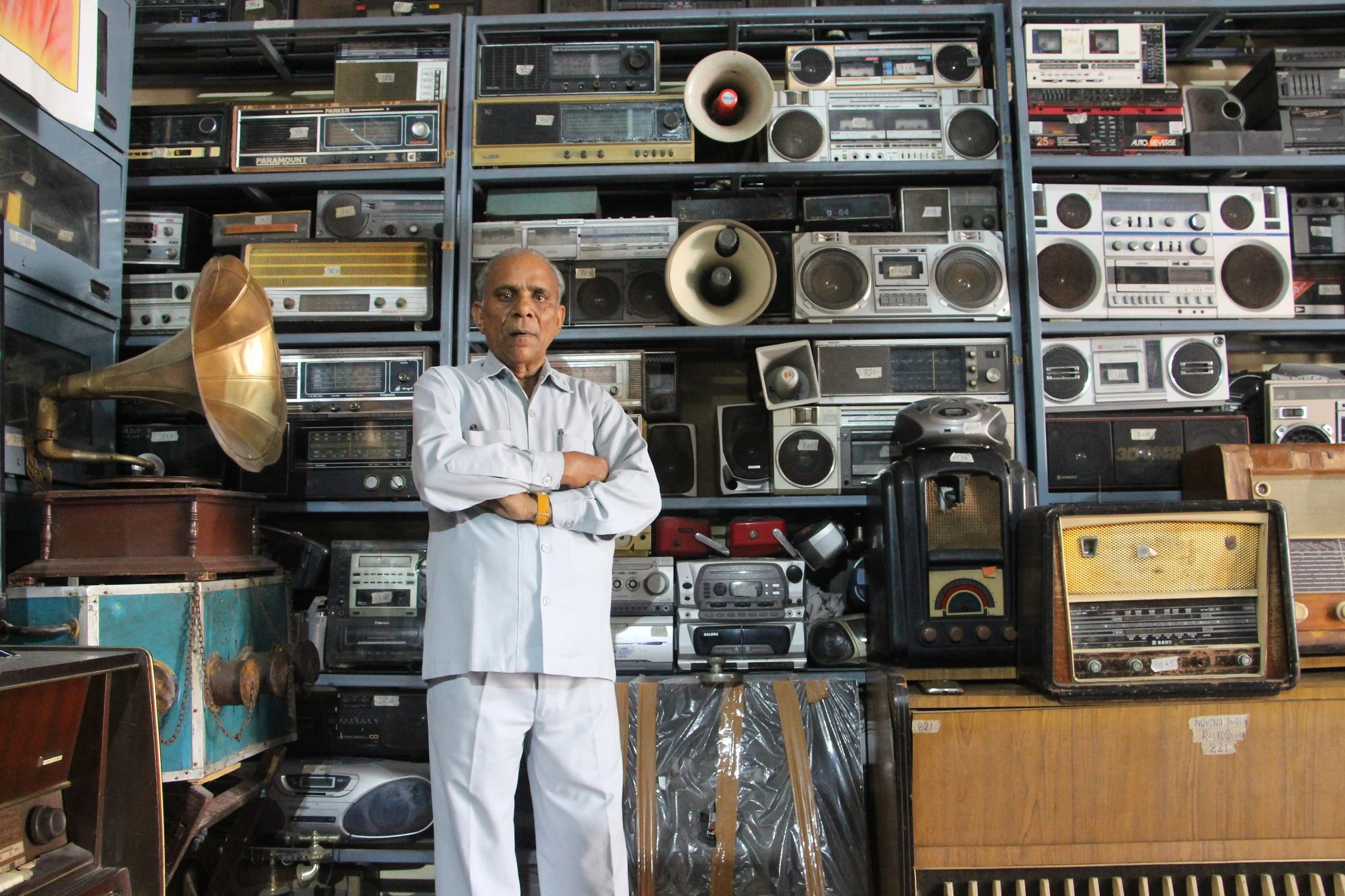
Ram Singh Bouddh at his Mann Ki Baat Radio Museum. Photo: Arsalan Shamsi and Siddharth Sharma
In a quiet corner of Uttar Pradesh, a retired government employee runs the Mann Ki Baat Radio Museum—featuring the world’s largest radio collection—striking a conversation between generations through sound and memory.
- Arsalan Shamsi and Siddharth Sharma
In the quiet by-lanes of a small town in Uttar Pradesh, where the hum of daily life blends with the faint echoes of forgotten melodies, an unassuming building holds a symphony of stories. Tucked away in a corner of a modest school, shelves upon shelves whisper tales of a bygone era, of a time when voices from afar crackled through wooden cabinets, weaving distant worlds into the fabric of Indian homes. Here, time stands still, preserved not in dusty books or faded photographs, but in the warm glow of Bakelite knobs, glowing dials, and the unmistakable scent of aged electronics.
Before the rapid progress of communication networks, it was the humble radio that brought the world into Indian households, through its cracking frequencies and fading signals. It was once a ubiquitous device that was heralded as a symbol of social prestige in the country, bringing people and communities together.
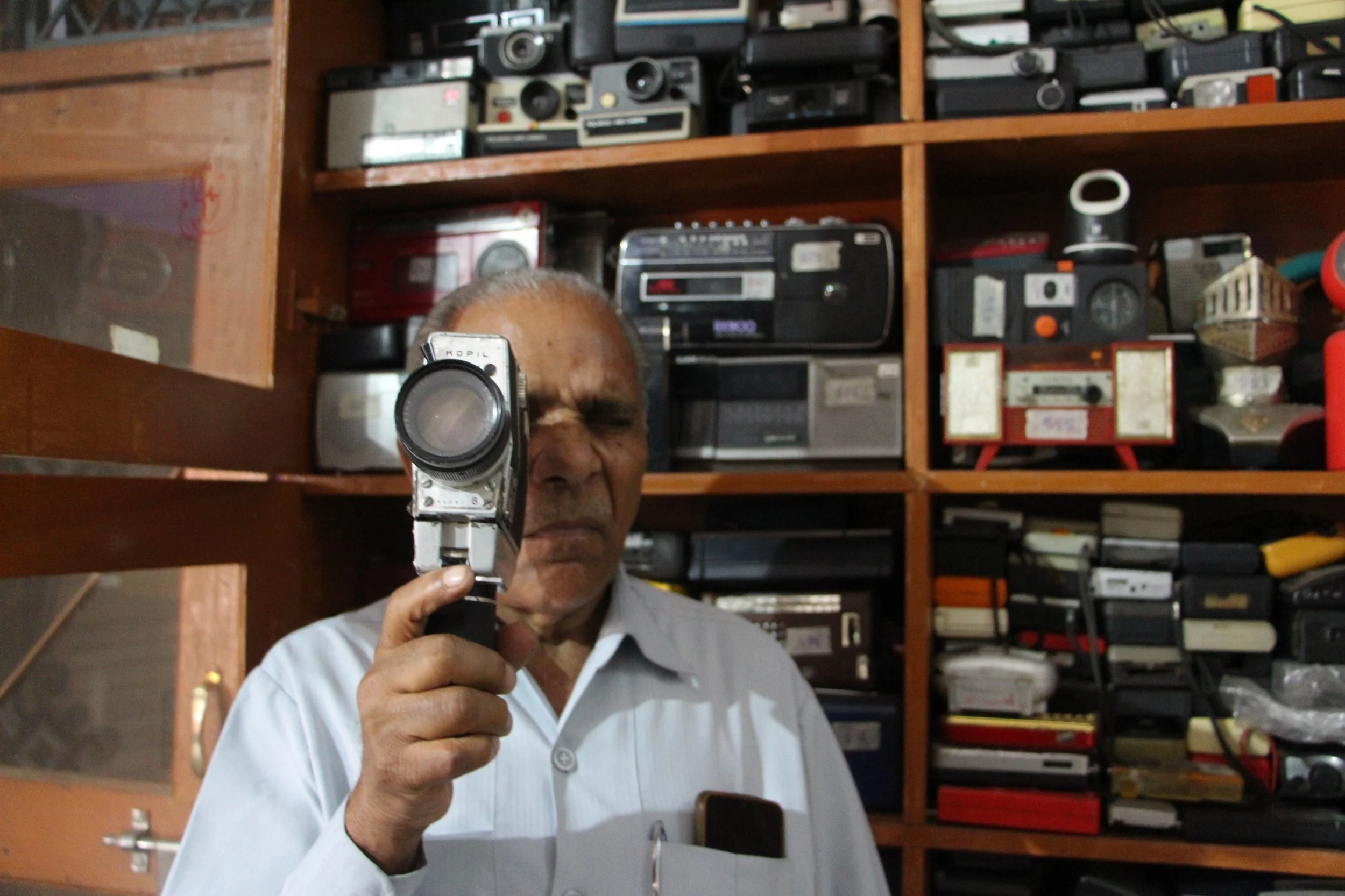
Photo: Arsalan Shamsi and Siddharth Sharma
Meet Ram Singh Bouddh, a retired government employee who runs a small school in the town of Gajraula, in U.P.’s Amroha district, around 100 kilometres away from the national capital. Bouddh holds a Guinness World Record for his radio collection being the largest in the world. “I started collecting radios first, I have such an attachment with the collectibles I have that I can’t explain in words,” he said. He has turned one section of his school to the Mann Ki Baat Radio Museum, where history speaks at one frequency at a time.
The radios in Bouddh’s museum are carefully dusted, catalogued, and maintained personally by the 70-year-old and his son, Gautam Singh. A personal hobby was transformed into a cultural archive, with 1,257 radio sets on display, out of the total 1,500 radios in his possession. The sets range from vintage ones used in the 1910s, and up to those in the 2010s, providing a timeline of the journey of the radio not only in India, but also around the world.
Boudh grew up in a modest household and worked in the Uttar Pradesh Warehousing Corporation and Consumer Court. Now, he lives a retired life after 40 years of his service. Recalling his earlier days, Boudh claimed that the radio was like a window to the outside world for him. “News bulletins, film songs, speeches, cricket commentaries got me completely hooked to the radios,” he said.
His hobby of collecting all kinds of interesting items eventually drew him to the lively flea markets of Meerut, Delhi, and Moradabad, where he would spend hours hunting for old radios. The museum showcases a wonderful mix of models from different eras, early valve or tube radios from the 1920s and 1930s, including rare pieces like a 1920 Marconi design; sturdy military-style sets from the World War periods; classic Indian-made transistor radios such as Philips models from the 1960s and 1970s that once filled homes with film songs and cricket commentary; and later compact solid-state radios from the 1980s through the 2010s. Each piece tells its own quiet story of how technology and listening habits changed over the decades.
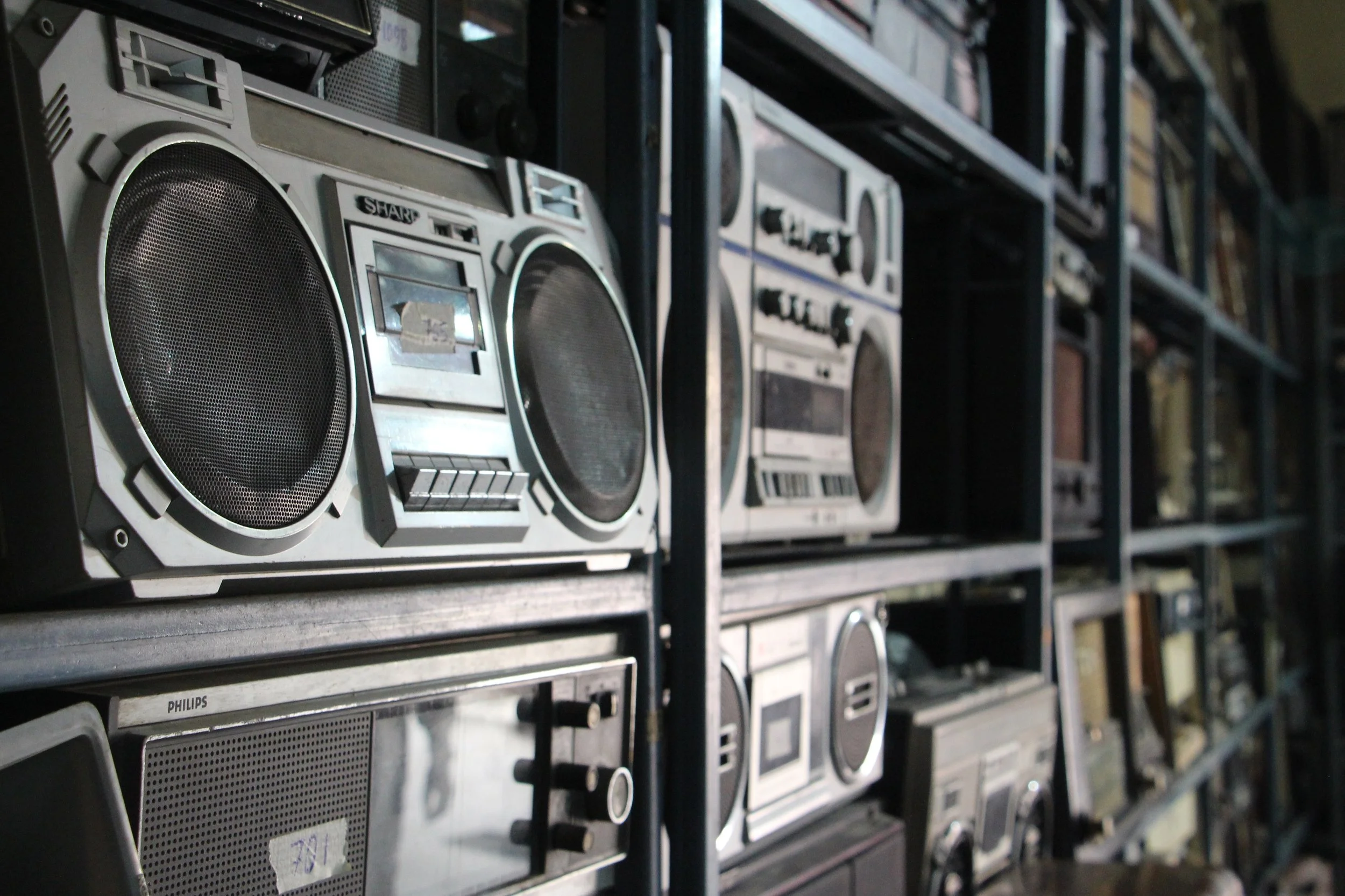
Photo: Arsalan Shamsi and Siddharth Sharma
As years passed and technology evolved, radios began disappearing from daily life. For Bouddh, this disappearance felt personal. Instead of letting radios fade into scrap markets and forgotten storerooms, he began collecting them. “I visited many flea markets in Moradabad, Delhi, and Meerut and collected each piece. My initial plan was to follow my passion for collectibles, but it resulted in the setting up of the Mann Ki Baat Radio Museum,” he said.
A personal hobby transformed into a cultural archive, with 1,257 radio sets on display, out of the total 1,500 radios in his possession. The sets range from vintage ones used in the 1910s, and up to those in the 2010s, providing a timeline of the journey of the radio not only in India, but also around the world.
Apart from his knack for collectibles, Bouddh was inspired to name his museum after Prime Minister Narendra Modi’s radio programme. “Nowadays, people are getting distant from radios, the Mann Ki Baat programme by PM Modi has brought back the relevance of radio and increased its outreach among the masses.”
Mann Ki Baat is a monthly radio programme hosted by Modi and broadcast by All India Radio. Launched on 3 October 2014, it is usually aired on the last Sunday of every month. Through this show, the Prime Minister addresses citizens directly, speaking on topics such as cleanliness, education, innovation, environment, women empowerment, youth initiatives, and national unity. Over time, it has expanded beyond radio and is also available on television, digital platforms, and social media, reaching audiences in multiple Indian languages.
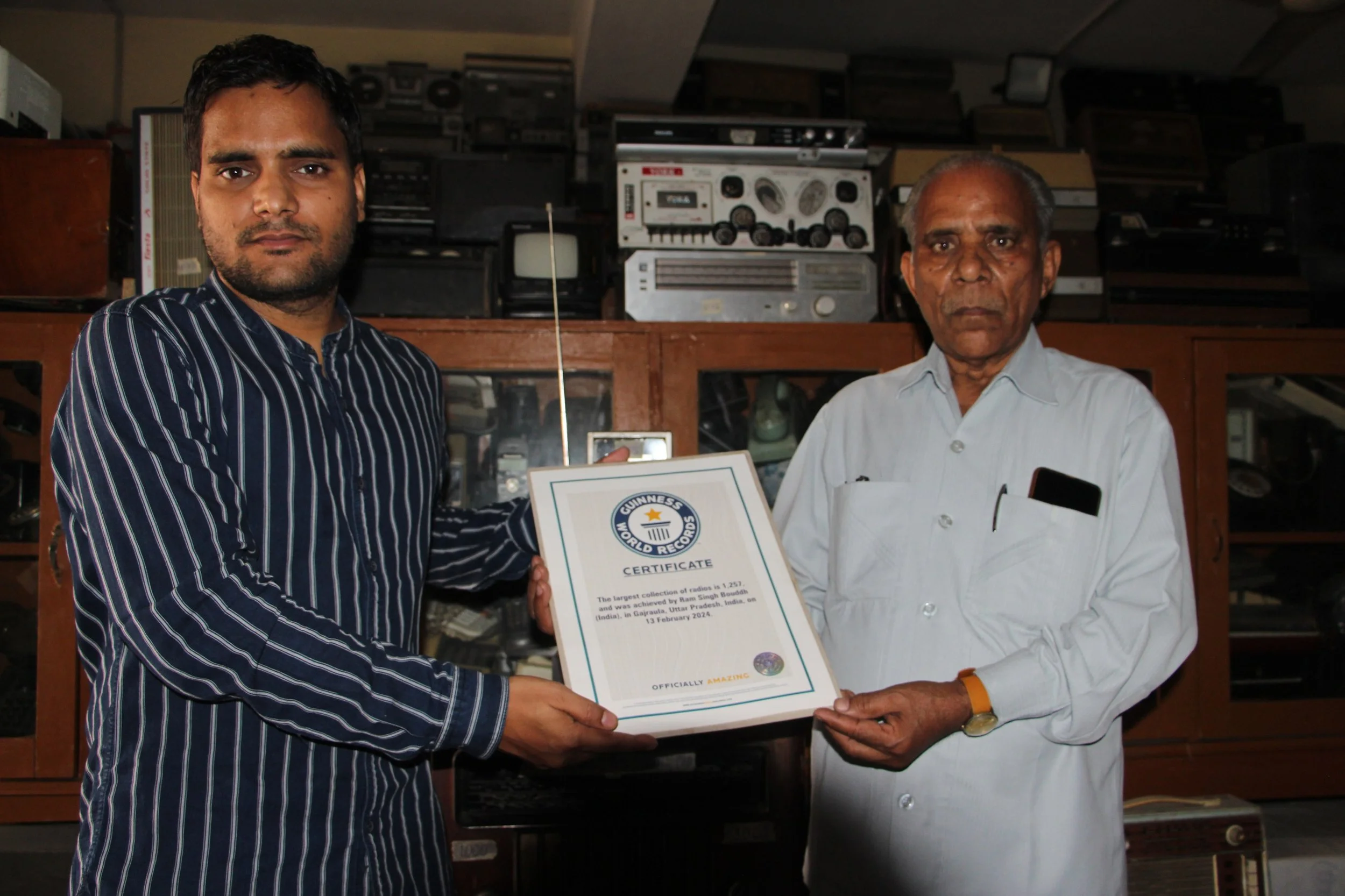
Ram Singh Bouddh (R) and his son Gautam Singh with a certificate for a Guinness World Record. Photo: Arsalan Shamsi and Siddharth Sharma.
In 2023, Modi gave a special mention to Bouddh’s museum in his monthly radio address. Bouddh has also received praise from Uttar Pradesh Chief Minister Yogi Adityanath, and Union Minister of Culture and Tourism Gajendra Singh Shekhawat for his museum.
Now, what Bouddh really seeks is aids and partnerships to upscale his museum. “I have received many praises from the government, they have lauded my efforts but did not provide me with any kind of financial assistance,” he said. “I want to build a proper museum of the collection I have, here in Amroha. The government should either provide me with the resources or help me financially to set up the museum. My entire savings got spent in collecting these radio sets and other collectibles.”
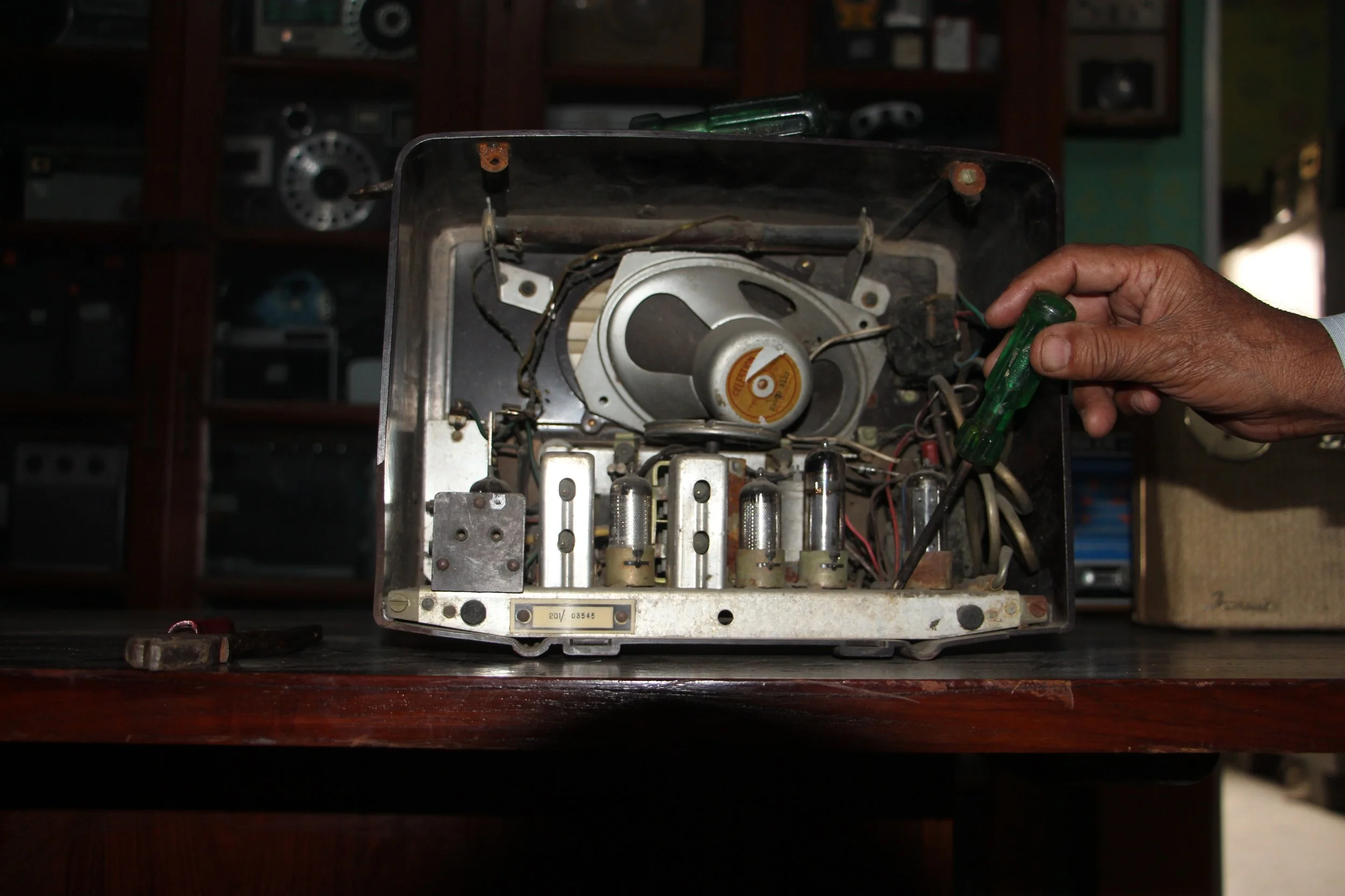
Photo: Arsalan Shamsi and Siddharth Sharma
“I have this one-of-a-kind collection in the whole country.” added Boudhh, “Among the oldest radio sets, I have a piece which was used by the United States military during the Second World War…That's why I want to scale up my museum, so that the upcoming generations visit the place and get to know how life was before the era of 5G internet and smartphones.”
Bouddh’s son, Gautam, helps him in running the place, but Bouddh claims, “Since I am the one who has collected these things, so I have a different attachment to these collectibles.” Among these other collectibles, he holds old coins, rare books, and other items that are no longer available for sale in the market. “I like to preserve them,” Bouddh said, “I like what the Prime Minister said on this. He has requested everyone to preserve such things used by the previous generations in the family, which gave a reflection of how things have changed over time.”
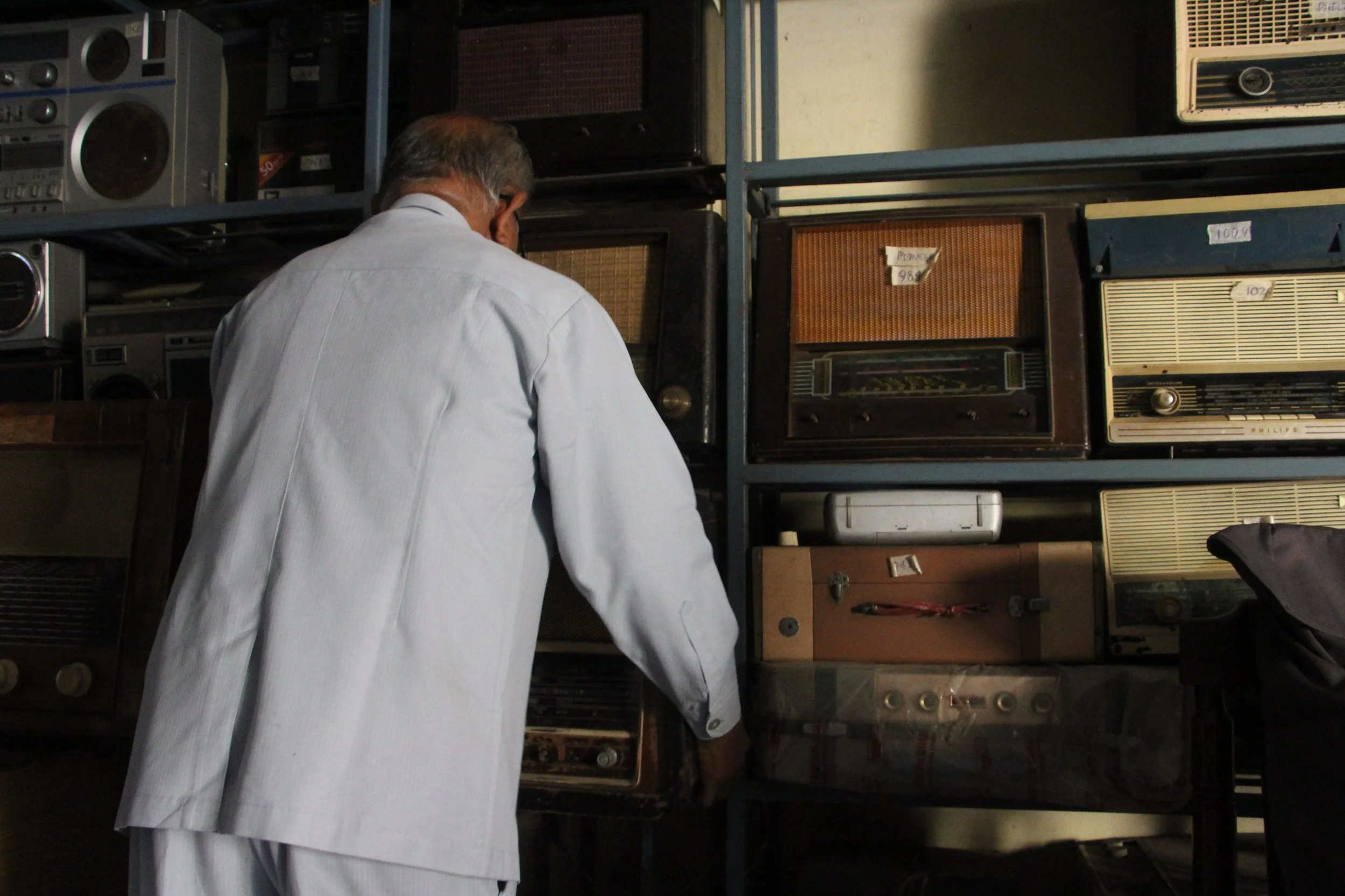
Bouddh is proud of his collections and is hopeful that the government will provide him with financial support. Photo: Arsalan Shamsi and Siddharth Sharma.
Bouddh believes that the radio’s relevance has stood the test of time, because it is the most economical and easily available option for entertainment as well as education. His museum does not compete with modern technology; instead, it complements it by reminding us how communication using radios took place in the earlier era.
As the evening light fades over Gajraula and the museum falls silent once more, the radios stand quietly on their shelves, like old friends patiently waiting for the next listener. In Bouddh’s caring hands, they continue to do what they have always done best: bridging distances, not just across continents, but across time itself. In a world racing ahead, this little corner in Uttar Pradesh gently reminds us that sometimes the most meaningful connections are the ones that arrive on waves of sound, carried softly through the air. Even as it look to showcase the past, Bouddh’s museum also aims to strike a conversation between generations. It invites visitors not just to see history, but to hear it.
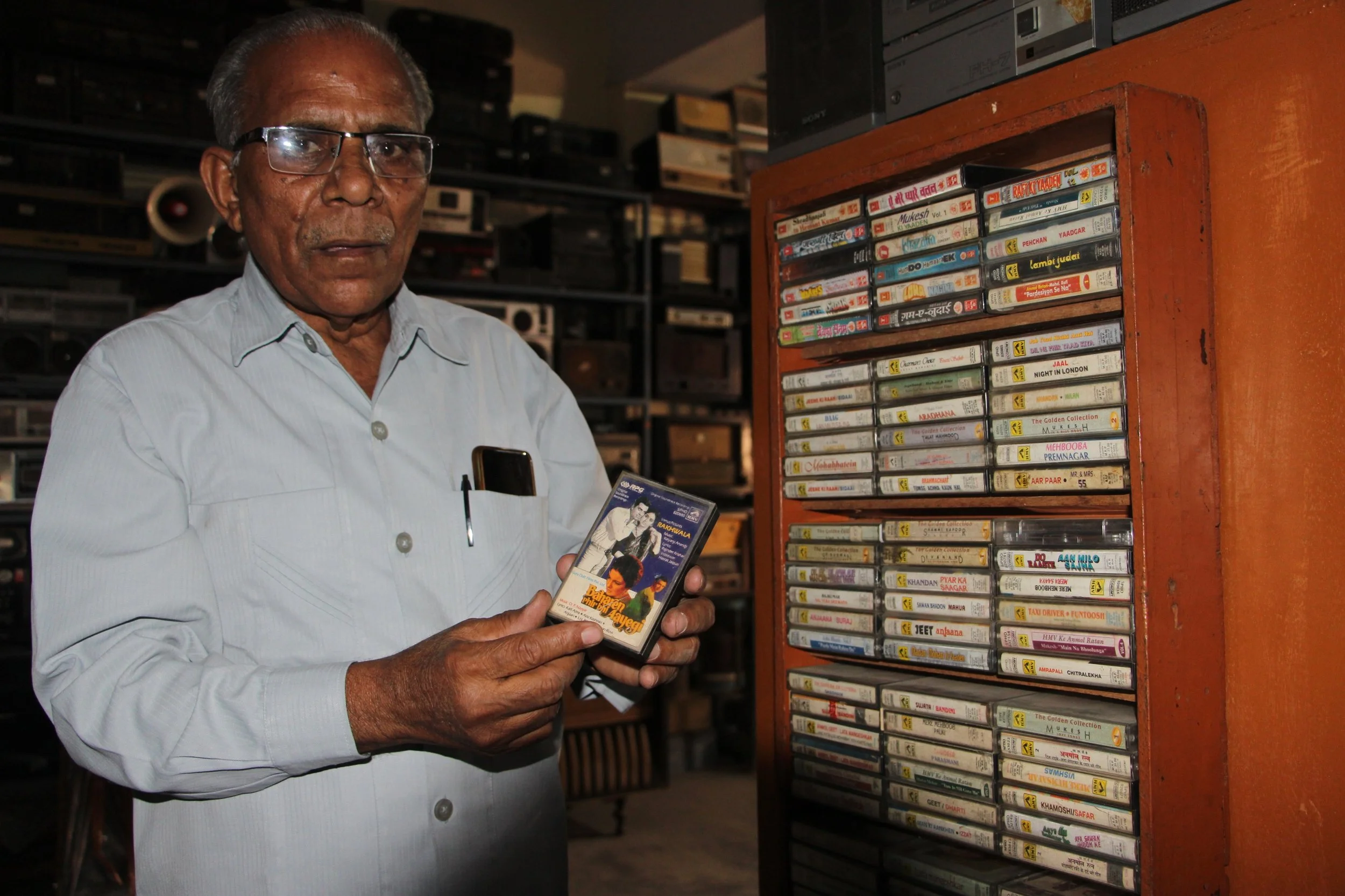
Photo: Arsalan Shamsi and Siddharth Sharma.
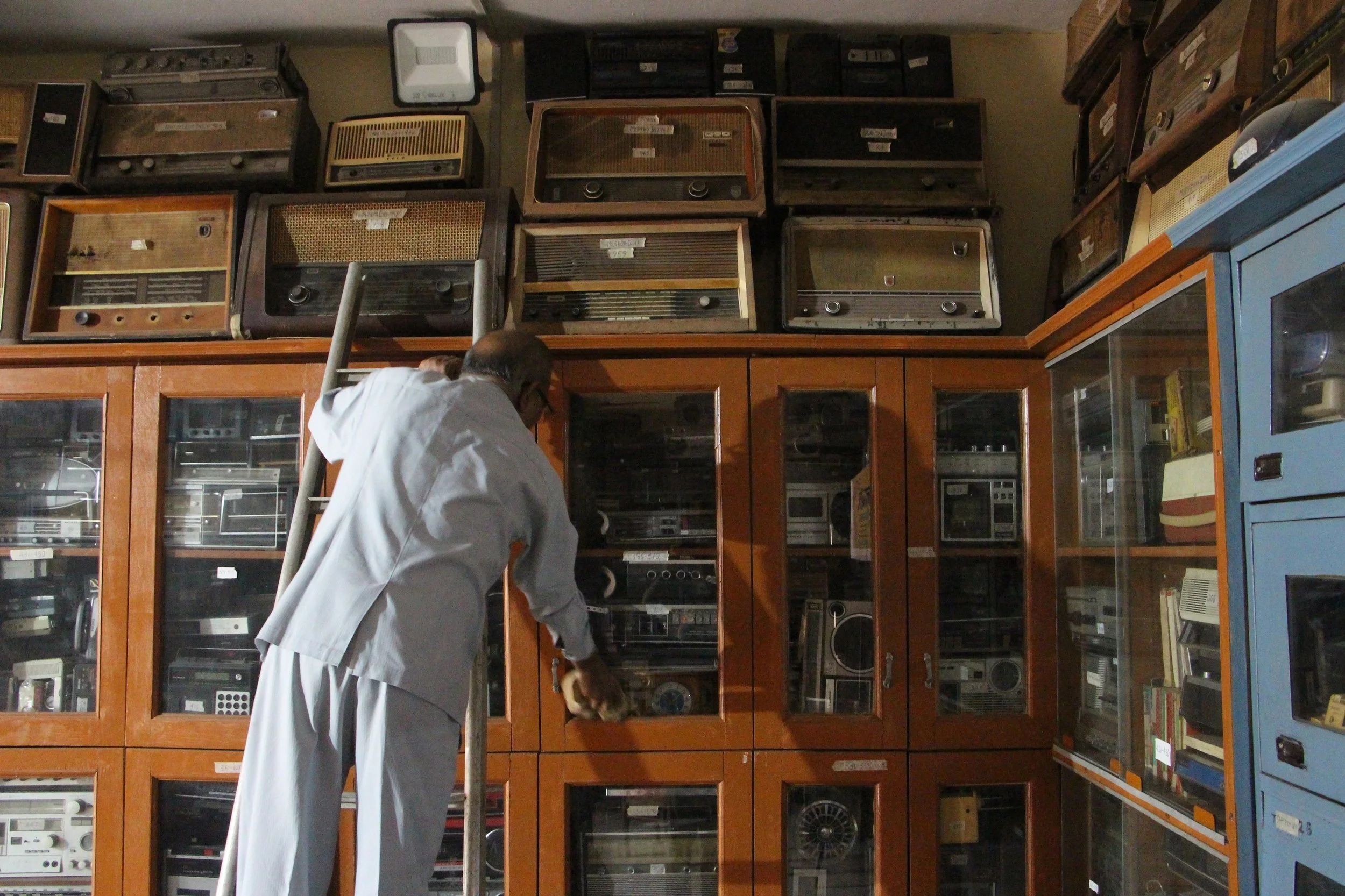
Photo: Arsalan Shamsi and Siddharth Sharma.
***
Arsalan Shamsi is an Independent Journalist Based in New Delhi. You can find him on Instagram: @arsalanshamsi_ and Twitter/X : @arsalanshamsi45.
Siddharth Sharma is a freelance journalist based in Delhi. He has a deep passion for cricket and interest in pursuing sports journalism and more. You can find him on LinkedIn.