The Flycatcher
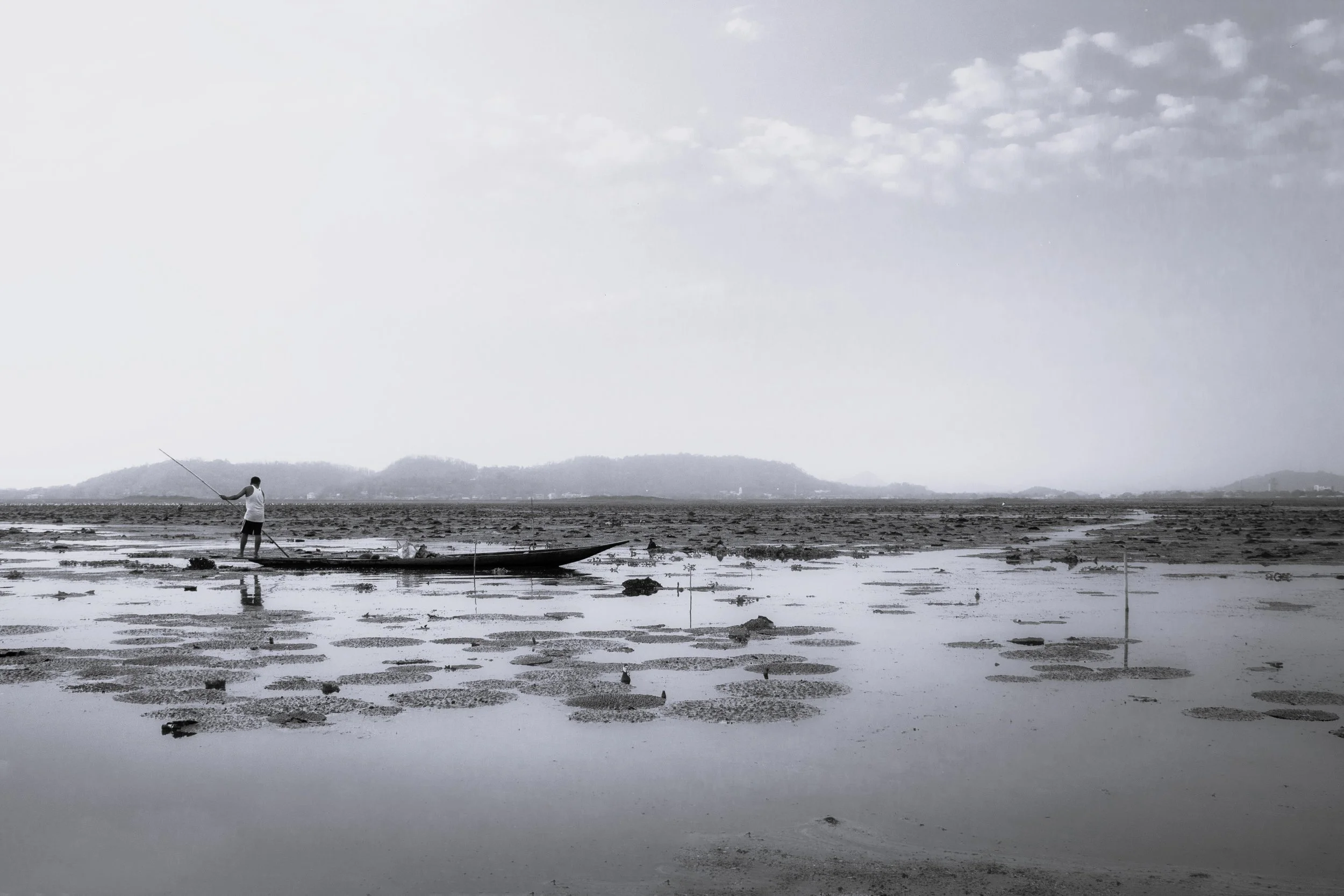
Photo: Rohit Dey
Personal Essay: ‘It was obvious that the word “Militant” was not etched on anyone’s face. My mother kept saying it, late into the night, as if to convince herself that Lohit now had blood on his hands.’
Even during Assam’s most tumultuous years, our father, a retired army colonel, always found a way to hoist the tiranga flag on August 15th and January 26th. On those special days, a rare smile lit up his otherwise stern visage. It was my Deuta’s quiet rebellion against the separatist elements calling for a “Swadhin Axom” (Independent Assam).
But by the nineties, people had grown distinctly unsympathetic to the cause. On my way to school, I often surreptitiously glanced at the Shaktiman trucks on the streets. Counter-insurgency operations were in full force. A few years ago, my sister and I had enjoyed all the privileges as daughters of an army officer. We joined other children and traveled to cities and towns near the military cantonments to attend schools in a 4-ton truck. Sometimes we took a day trip in a Jonga. Now that we were suddenly civilians, a feeling of dread would pass down my spine at the sight of an olive-green uniform.
My terror had a logical justification. Every morning the newspaper was filled with reports of military atrocities, of women being sexually assaulted by jawans, men dying in custody, the continuous harassment of innocent folks. Girls would subtly adjust their clothing at checkpoints. Decades later, I still find myself clenching my fists in the presence of military personnel from these memories.
On the other hand, the state was also rocked by blasts and explosions caused by the rebels, claiming innumerable lives. There was no way out. We were caught between the devil and the deep blue sea.
The red earth of Assam grew more pigmented as the days flew by. Yet, despite it all, life miraculously went on. As youngsters, we slowly became desensitized to all the bloodshed. It was the only way to survive. I distinctly remember a summer in 1990, when the movie Aashiqui was a major hit. Cinema, books, and music were our refuge from both inner and outer turmoil. The girls in my class had found a way to acquire the ribbons that the heroine had adorned her tresses with. Humming a song or two from the movie, I made my way to the house across from us.
The couple who lived there were Mr. and Mrs. Hazarika (All names have been changed to protect privacy), who had married a few years earlier and now were parents to a baby girl. I loved playing with the little one. My mother had grown increasingly fond of Mrs. Hazarika as she was from a village near my mother’s ancestral home in Sivasagar, a city in Upper Assam. The Assamese spoken in this part of the world has a distinct lilt and pronunciation and is regarded as the foundation of the language spoken today. Ma had never before felt quite at home in Gauhati, but was soon able to regard the Hazarikas as long-lost cousins. They reciprocated with equal enthusiasm. Times were simpler then.
A few years ago, my sister and I had enjoyed all the privileges as daughters of an army officer. We joined other children and traveled to cities and towns near the military cantonments to attend schools in a 4-ton truck. Now that we were suddenly civilians, a feeling of dread would pass down my spine at the sight of an olive-green uniform.
The neighbourhood was a small one. We were at a subtle elevation cut off from the main alley by a left turn, which kept us slightly hidden and at an advantage during floods. The area was a cul de sac with six houses. Our house was flanked by two tall buildings while the Hazarikas lived in a tiny, rustic, cabin-like structure opposite ours. On the left side of their house lived a college professor with his family and on their right, a police inspector in a joint family setup. The Hazarikas had rented the house from two brothers who did not live in Gauhati, but visited from time to time just to keep an eye on the property. It was a one-bedroom dwelling with a lot of land, and highly inconvenient with bathrooms located in the backyard and a well for drawing water in buckets. It was a miracle that they had access to electricity.
Technology had not yet reached some of our homes, and we did not have access to satellite television or cable. Good old Doordarshan was the only source of entertainment. Children knocked on neighbour’s doors and invited their friends to play outside. Mr. and Mrs. Hazarika—whom we affectionately called ‘Dada’ (older brother) and Bou (sister-in-law)—loved me as if I were one of their own. They offered the same love to any relative who was stayed with them, and they always had a lot of visitors.
One of the visitors was Lohit, a relative of Mrs. Hazarika’s who had enrolled in a BSc. program in a reputed college in Gauhati. Mrs. Hazarika always introduced him as her nephew. My sister too revered him, calling him Lohit da. He was a bright-eyed intelligent boy who read voraciously and could hold his own on any subject. I liked him because he gifted me bars of chocolate, a rare treat that found its way into our household. I also had a soft spot for him, because on my 9th birthday, he had gifted me two beautifully illustrated books about ships. I immersed myself into learning about reefers, submarines, ocean liners, frigates, icebreakers, trudgers and trawlers. It must have cost him a pretty penny, but I was thrilled.
On this particularly muggy day, I ran to the Hazarikas house. Their doors were always open. I was accompanied by a cousin. The latter along with her mother and sister was staying with us for a few weeks as her father was undergoing a surgery in a city hospital. I found Lohit in the kitchen slicing watermelon. Beads of sweat had gathered on his brow like raindrops. That June day was particularly memorable because I was forced to entertain my whimsical guest (my cousin) who was prone to tantrums if she did not get her way.
Lohit gave us both slices of watermelon to sample. I took a bite and grimaced. It was not sweet at all. My companion ate her portion without noticing anything. Taking one look at my face, Lohit teasingly asked me if I had swallowed the watermelon seeds, while my cousin laughed and retorted that I wanted to grow a vine in my stomach. I pretended to laugh along, even as I grew increasingly annoyed. Ma often told me that I had inherited my father’s short fuse. Later, after we came back home, I privately told my mother that I was not going to take my cousin to meet our neighbours anymore. Ma sighed and told me to be more accommodating.
Truth be told the memories of that uneventful summer have become hazy over the years. However, whenever I eat watermelon now, I can taste the insipidity of the one that Lohit cut open for us decades ago. And I cannot bring myself to relish it.
*
Mrs. Hazarika and Mr. Hazarika were often at odds because of the latter’s involvement with many shady associates, who openly discussed driving out aliens from Assam. My father would remark wryly that his extreme views should not affect their impressionable nephew. His observations were always spot on. My mother would tut-tut in disapproval as Mrs. Hazarika worked extra hard with her sewing machine, taking on more embroidery orders than she could manage. Her husband ran a small business, but it was not profitable. To supplement the family income, she used to make cushion covers and tablecloths. Ma’s constant refrain was that “Hazarika needs to get his act together.” The house ran on a meagre income, and the head of the family, Mr. Hazarika was forever attending political rallies.
At this point there were three adults in that house and a baby whose needs were barely met. Mrs. Hazarika often lamented to Ma that she regretted falling in love with her husband when they were in college, and marrying him without a thought about the future. They were barely getting by and now, and with Lohit at home, they had an extra mouth to feed.
Mr. Hazarika’s activism perhaps was rooted in the intense demands by many political parties at that time to enforce the conditions of “The Assam Accord” and to uphold the Assamese identity. Lohit who had just arrived in Gauhati from a rural area was a silent witness to Mr. Hazarika’s absence from home, and his total disregard for his wife and daughter as he hobnobbed with radical activists. Ma and Deuta—as neighbours and well-wishers—grew increasingly worried about their domestic life.
To keep the grocery bill in check, Lohit helped his hosts grow a tiny vegetable garden. I had seen Mrs. Hazarika trying to fry pieces of bitter gourd on a tawa with as little oil as possible. To avoid such frugal meals, they started to grow some varieties of pumpkin, string beans, sugarcane, and tomatoes. The nephew would dig around the patch of greens and talk to me.
I was a curious child, hungry to learn. My sister and I were massive book nerds and had managed to create a mini library of sorts. A recent study found that kids who always had their nose in a book were trying to escape their reality, but we were happy that we found a way to disassociate when the world seemed to be falling apart all around us.
Like my father, Lohit too had an extensive knowledge of birds. He took immense pleasure in pointing out the cacophonous parrots and glamorous sunbirds that frequented the guava trees or the flowering hibiscus. Occasionally, a flycatcher appeared. It sang its heart out near the clump of bamboo, serenading us with its trilling. What was it trying to tell us? Was it warning us about something? Lohit grew excited whenever he spotted this specific bird, telling me that it was a rare sight amid a busy metropolis. Gauhati did not move at such a frenetic pace in those days. It was still lush with ancient trees, and we led slower lives. At dusk, an owl would perch on the bamboo fence of the Hazarika’s residence. The sight filling me with a sense of foreboding about the future.
*
Around the year 1993, violence associated with the demolition of the Babri Masjid erupted in Hojai along with severe ethno-religious conflict in many parts of Assam. The monsoon too had once again brought forth devastation. Seemed like all the essays we had written about “Flood in Assam” had not helped the government one bit in solving this perennial problem. Lohit, now in his third year of graduation, went back to his village to be with family. He left without a goodbye. I waited for him to return, impatiently, so we could resume our conversations.
Lohit who had just arrived in Gauhati from a rural area was a silent witness to Mr. Hazarika’s absence from home, and his total disregard for his wife and daughter as he hobnobbed with radical activists. Ma and Deuta—as neighbours and well-wishers—grew increasingly worried about their domestic life.
But Lohit did not make an appearance. Instead, Mrs. Hazarika came over one day and had a hushed conversation with our mother in the drawing room. Sipping a cup of black tea with trembling hands, she informed us that Lohit had vanished into the night. Ma was rendered mute on learning this. Late in the evening when it became a dinnertime topic, Deuta sighed deeply. My sister and I ate our food, silently chewing on our thoughts. The only question that ran through my mind was “What was making these intelligent, well-educated young men join the revolutionaries?” I could not believe that the sprightly, kind-hearted Lohit had been so easily brainwashed.
The police officer living next door to the Hazarikas said that it was the lack of employment opportunities in the state that made young people easy targets. Many whispered that pamphlets were distributed openly in colleges citing the mainland’s apathy towards the region. The speculation continued months after he went missing. Lohit’s aunt and uncle did their best to not add anything to the narrative. I kept hoping that he would magically show up and make these malicious gossips take back every careless thing that they were saying.
Sometime around the year 1995, we came home from school and university to find Ma in an agitated state. My eye darted across the living area and spotted a white cardboard box on the coffee table. It contained sandesh. I was about to eat one when my mother slapped my hand away and emptied the sweets into the dustbin. She told us with a quiver in her voice that Lohit had dropped by. We sisters were stunned into silence. We came to know that he had been asking about us, and that our father remained inside the bedroom, leaving Ma to deal with the persona non grata.
Our mother looked like she had had a paranormal experience. According to her, Lohit now had a beard and a paunch. I was slowly forgetting what he looked like. How did he slip past unnoticed and wander the heavily patrolled city? It was obvious that the word Militant was not etched on anyone’s face. My mother kept saying it, late into the night, as if to convince herself that Lohit now had blood on his hands. He was not the same boy who had arrived in Gauhati with aspirations and a bright spark in his eyes. We never let it slip that he had ever set foot in our house and prayed that nobody saw him enter the premises. We would have been social pariahs if we did.
The matter did not end there. A year later, Mr. Hazarika rang our doorbell in the wee hours. Anticipating a medical emergency my father who was a doctor quickly opened the door. By then the Hazarikas had another child, a son who followed their daughter.
As time went by, Mr. Hazarika had mellowed down and become slowly disillusioned with politics. The man who used to mock our English-medium education now sent his children to missionary run schools and had even named them after Christian saints. This morning, he looked fearful as he took Deuta aside. From my father’s startled interjections, I concluded that it was something serious. Soon, the two men left the house without much ado. All that Deuta carried was a flashlight.
I plastered my face into the window facing the Hazarika’s residence to see what was going on. It was still dark, as only a lone streetlight on the eastern part of our lane struggled to illuminate the gloom. About twenty minutes later, I saw a figure covered from head to toe in a Mirijim blanket slink into the shadows. I heard the raspy sound of someone’s cough gradually fade away into the distance. Being a holiday, I simply went back to sleep that night.
In the morning, the house was eerily silent. There were no cheerful Hindi songs playing on the transistor. I overheard a conversation between my parents behind the closed doors of their bedroom. The person I had seen was Lohit. He had been shuttling around training camps for the last six months moving from Bhutan to Myanmar and then back into India. He was ill with malaria, and his body was covered in sores with pus oozing out of various infected wounds. Deuta had asked him to leave at once before his aunt and uncle were arrested for harbouring a criminal. In this case, a terrorist. I flinched at the word.
He was ill with malaria, and his body was covered in sores with pus oozing out of various infected wounds. Deuta had asked him to leave at once before his aunt and uncle were arrested for harbouring a criminal. In this case, a terrorist. I flinched at the word.
We did not have to wait long to learn about Lohit’s fate. On an ordinary day full of sunshine, Mrs. Hazarika gave us the expected news. She wailed aloud, holding on to Ma. Lohit had lost his life in a military ambush.
Something in me rejected the news of his death. This wonderful, brilliant, idealistic boy could not just become a statistic or a cautionary tale. I watched them weep without a tear in my eye. For years, I refused to speak of him or acknowledge that I had ever seen a promising life disintegrate in such devastating fashion.
*
Years later, I met a friend from my past in Assam, one among many from our state who were collateral damage when military operations were intensified. I held this friend’s hand, and we both wept openly at a restaurant as she spoke about losing a family member in army custody, and about the years of harassment and humiliation that followed.
We, the people of Assam are bound by our sorrow.
In a recent conversation, my mother recalled the fear that followed this encounter. How we were among the fortunate ones who were not questioned by the police. We have never quite let go of the pain and loss that we witnessed.
After becoming a mother myself, I think of the boundless grief and suffering that Lohit’s parents had to endure. I imagine his father being summoned to identify the body. Somehow it is a forest, and Lohit is lying under hollong and teetachap trees. He looks like he is in deep sleep. Even as the father breaks down, a flycatcher begins to sing its high-pitched song. I hear the song as a reassurance from Lohit to his loved ones, that he is now in a tranquil haven, where nothing can touch him anymore.
It took almost forty-four years for the movement by the ULFA [United Liberation Front of Assam] to dissolve. There is no actual data to determine the number of young men and women who were killed or simply vanished, the people of Assam have endured a collective trauma. Our search for identity cost us dearly, leaving us more lost than ever. It took something from all of us. There are certain things that we have now gathered the courage to share and the rest we wish to erase from our consciousness, but often, miserably fail to do so.
The Hazarikas left their house eventually. The children grew up not knowing Lohit. He became a footnote in our state’s turbulent history. The new generation of Assamese do not remember the ones who did not make it home.
The house across from us is still uninhabited. Whenever I visit my Gauhati address, I sip a cup of tea watching the squirrels and birds clamber up and down the Xonaru that Lohit had nurtured. At times, a flycatcher settles on one of the branches. As soon as I blink, it disappears.
***
Jahnavi Gogoi is a poet who grew up amidst insurgency in Assam and lived to tell the tale. She is a writer of children’s fiction and a mother to an assertive seven-year-old daughter. Her debut book of poetry is titled Things I Told Myself. Her poetry has been published in Inssaei International, Academy of the Heart And Mind, Spillwords, Soul Connection by Guwahati Grand Poetry Festival, Mystic Aura, Indian Periodical and more. She can be found on Twitter: @jahnavigogoi2 and Instagram: @add_a_dash_of_words.