Q&A: Fiction writer Salini Vineeth discusses the experiences and inspirations that shaped her journey
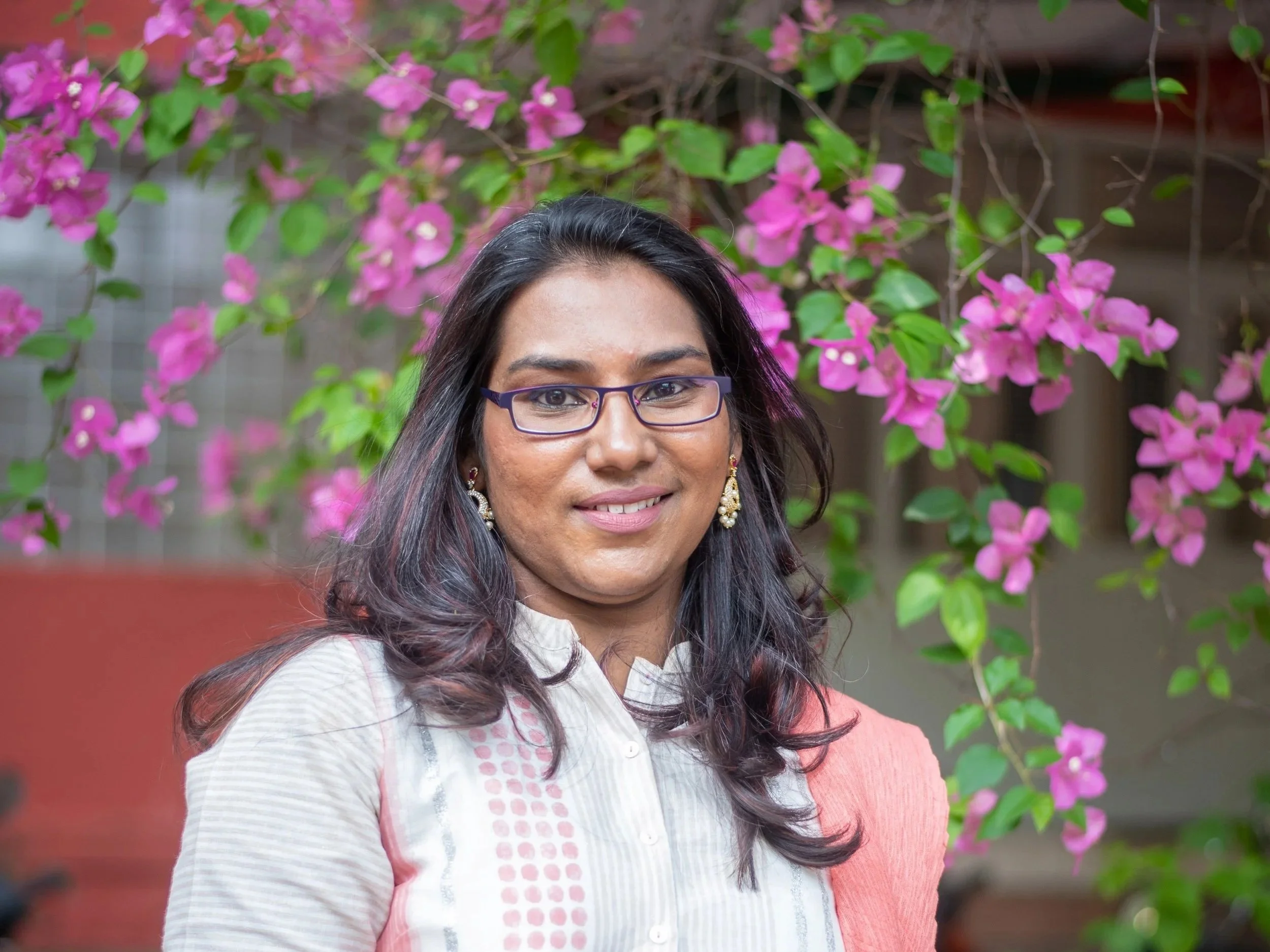
In a wide-ranging interview, Salini Vineeth spoke about profound questions of identity in her work, switching to literature after an engineering background, writing in multiple languages, and more.
In Salini Vineeth’s stories, the reader meets characters in search of purpose and belongingness. In the short story, “Nest,” a young woman searches for a place to stay in Bangalore and is faced with patriarchy and bigotry. In the novel Lost Edges (2023), a couple in a troubled marriage has to take an excruciating journey to overcome their childhood trauma and find purpose and meaning as adults.
Her most recent novella, The Tree, the Well, & the Drag Queen (Red River, 2026) is about a non-binary, gender non-conforming drag queen’s search for freedom and authenticity. Salini deviates from her usual realistic, urban narratives for fantasy and magical realism to make the protagonist’s story compelling.
The latest book is Salini’s sixth since she left an engineering background to focus on writing full-time. These publications also include Everyday People (short story collection, 2019), Magic Square (Notion Press, 2018), and travel guides for Hampi and Badami. She has translated four books from English to Malayalam and is the fiction editor of MeanPepperVine, a quarterly literary magazine. Salini’s stories have won several contests, awards, and earned special mentions, including the MyStory contest by Literature Live, the BWW RK Anand Prize, the Orange Flower Award for Humour, and more. Her stories have appeared in magazines like Out of Print, Flash Fiction Magazine, The Bangalore Review, Kitaab International, and The Bombay Review, among others.
In an interview with The Chakkar, Salini spoke about profound questions of identity in her work, switching to literature after an engineering background, writing in multiple languages, and more. Edited excerpts:
The Chakkar: Your latest novella, The Tree, the Well & the Drag Queen, is peppered with mystical elements and profound questions of identity. Which places, events, or people inspired you to write this book?
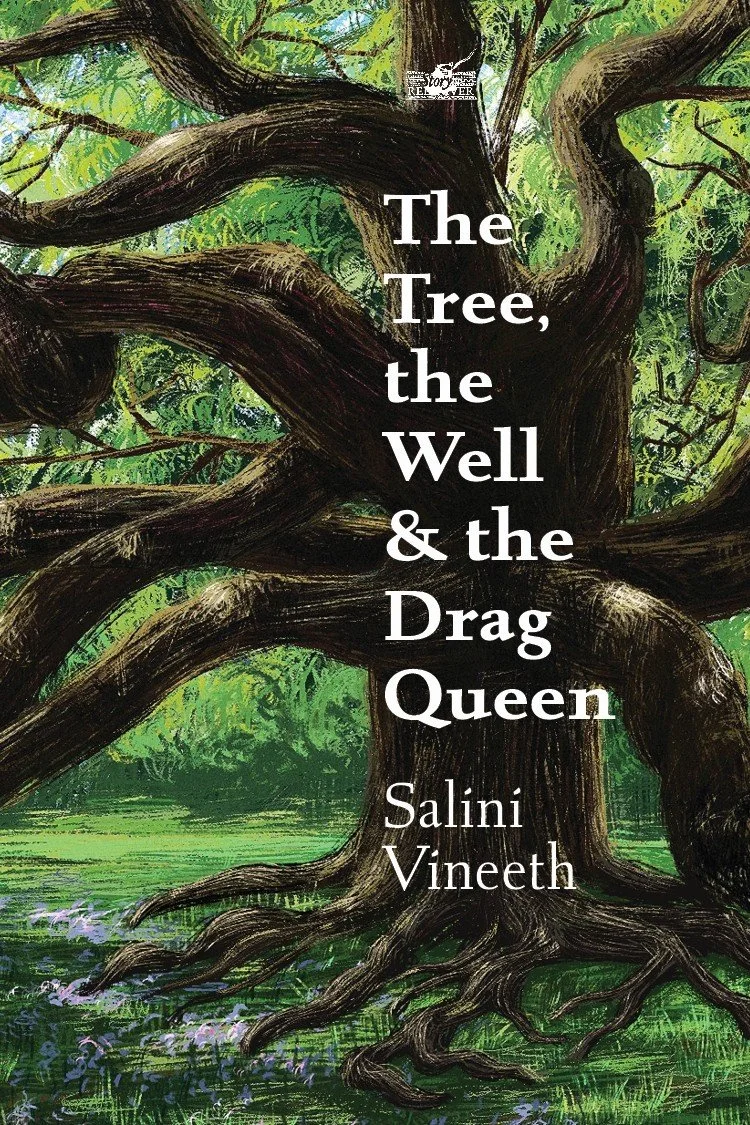
Salini: The Tree, the Well & the Drag Queen started as a short story in 2020, during the second COVID Lockdown. Being confined to my home in Bangalore, I constantly thought about freedom: Is our sense of freedom just an illusion? I started thinking about a character stuck in a place, yearning for freedom. In the beginning, it was a very realistic story of an artist stuck in their parents’ home during the lockdown. But this premise lacked something and couldn’t excite me. During Lockdown, I missed my home in Wayanad, Kerala. It’s a beautiful place, and my parents’ house stands in a lush farmland, with a small jungle and a stream at its boundary. I started writing about our farmland: the canopy of jackfruit trees, the scent of wild flowers, the mysterious charm of the jungle. Soon, my descriptions began to lean towards fantasy, and an enormous jackfruit tree came to my mind. I had my premise: A person stuck in their ancestral house in an enchanted forest controlled by a wicked jackfruit tree.
At the same time, I was attending a Masterclass by RuPaul, a world-renowned drag queen. Drag is a vibrant, colourful, free-form performance art, and it is liberating. Even though I didn’t have queer protagonist in my mind, I found myself thinking: Does freedom also mean the freedom to choose one’s gender identity and expression? Through that question, I found my protagonist, a gender-nonconforming, non-binary person, who loves singing, dancing, makeup, and costumes. Suddenly, the story came together: the queer protagonist, the enchanted farmland, the folklore, and the human and animal characters.
In 2022 September, the story caught the eye of Sucharita Dutta-Asane, the editor of Red River Story. With her help and support, I expanded the tale into a novella.
The Chakkar: What were your initial struggles in the field of writing, coming from a non-literature background? Also, do you think your previous life as an engineer has given you exposure that, in turn, helps you write?
Salini: I published my first English novella, Magic Square, in 2018 through Kindle Direct Publishing (KDP). At that time, I wasn’t aware how complex and competitive the publishing industry was. Now, I am thankful for my ignorance. If I had known how difficult it is to finish a story or book and publish it, I would’ve been intimidated, and maybe even given up on my dream of becoming a writer. Being from a non-literary background, I blissfully overlooked these discouraging aspects and focused on my writing. As an engineer, I found it easy to work with technology, especially publishing through KDP. My training as an engineer and as a corporate employee helped me (it still does) stay disciplined and have realistic expectations.
That being said, things weren’t easy in the beginning (or now). When I quit my job to write full-time in 2018, I had no clue what I was getting into. After the publication of my first book, I had no idea how to find readers or reviewers. So, I went on Quora and asked, “How do I get my book reviewed?”
“Drag is a vibrant, colourful, free-form performance art, and it is liberating. Even though I didn’t have queer protagonist in my mind, I found myself thinking: Does freedom also mean the freedom to choose one’s gender identity and expression?”
From then on, it had been such a steep learning curve. In the first few years of my writing career, I spent many hours online researching literary magazines and publishers. This research opened up new avenues: writing workshops, contests, resources, and other opportunities. This also connected me with the right people. I met many fellow writers through writers’ groups on WhatsApp and Facebook, who are my biggest strength and inspiration. Sometimes I wonder how different things would’ve been if I had pursued literature in college or done an MFA; maybe I would’ve started earlier, written better, and networked more. But it doesn’t matter, because I found my way back to writing.
The Chakkar: Are you more into classics or contemporary literature, and does it really matter what you are reading while writing?
Salini: I read mostly contemporary literature by Indian writers. I used to read classics a few years ago, but then I realized I enjoy and relate to modern Indian writers most. The translated fiction has also opened up a new world of Indian writers. In the past few years, I discovered many of my favourite writers, including Anuradha Roy, Perumal Murugan, Janice Pariat, Anees Salim, Jahnavi Barua, Amrita Mahale, Kuzhali Manickavel, and Jane Borges, to name a few.
What you read will influence your writing, at least in the early stages of your writing career. I was reading Geetanjali Shree’s Tomb of Sand while I was doing a draft of my novella. I suddenly found myself writing beautiful and magical lines; I realized I was subconsciously imitating Shree. But I am not ashamed or worried about it. I believe that it’s through imitation of the great writers that a writer arrives at their own style.
I also have a pull toward Murakami’s writing, maybe because of its philosophical, unhurried, and dreamlike quality. In Murakami’s stories, anything can happen, and I love that kind of freedom to imagine and accept improbable things. As a writer, reading him gives me the courage to experiment. Reading great writers is my education and inspiration.
The Chakkar: You have received a number of awards and recognitions in your writing career. Has this recognition and your appearances at literature festivals boosted the sales of your books?
Salini: In my experience, winning awards or speaking at literature festivals brings you a bit closer to readers, but I doubt it will translate into a boost in sales. In the case of a major award like The Booker Prize, yes, there will be a significant jump in sales. Heart Lamp has been topping the Amazon bestseller list ever since it won The Booker. But in more probable terms, for an emerging writer, winning an award or talking at a lit fest might not bring immediate readership. It takes readers some time to warm up to a new writer’s style and themes. As a writer, it takes consistent work: writing high-quality stories and books, getting published in reputable literary magazines, engaging with your readers on social media (debatable), and staying up to date with publishing industry news and opportunities. One could create buzz on social media through influencers and reviewers, but that isn’t sustainable.
In my opinion, sustainable sales come through word-of-mouth marketing, through quality reviews in good media outlets, and literary magazines. It may also take multiple books for a writer to become a bestselling author.
The Chakkar: You’re also the fiction editor of MeanPepperVine. Has your editing experience helped improve your own writing?
Salini: Being the fiction editor of MeanPepperVine is a rewarding experience. My association with Ruati Tetei, the chief editor of MPV, is one of the best things that has happened to me as a writer. Evaluating the large volume of short story submissions has been a big learning experience. It helped me understand what draws a reader in and engages them. Editing the selected short stories has helped me sharpen my self-editing skills. There’s also a downside; it’s a bit difficult to keep my internal editor off when I write the first draft of a short story. When you write your first few drafts, you need to step out of the editor’s role and just be a raw and messy writer.
[The experience] has helped me understand how lit mags work. So, nowadays, I don’t feel so dejected when I get a rejection from a magazine. I know the rejection isn’t purely based on my writing skills, but it depends on the competition and the magazine’s preferences.
“I feel more comfortable expressing emotions and vulnerabilities in English [than Malayalam]. This may sound counterintuitive, but it’s like your inability to express your deep emotions to a close one, whereas you can rant your life story to a stranger in a café.”
The Chakkar: How has the experience of writing in Malayalam been different from your work in English?
Salini: For me, writing in Malayalam is a very different experience from writing in English. Malayalam is very close to my heart; I think in Malayalam and feel in Malayalam. Maybe because of this closeness, I am always very critical of my Malayalam writing. Whenever I write something deep and emotional in Malayalam, I feel cringe. But with English, I have a safe yet comfortable distance. So, I feel more comfortable expressing emotions and vulnerabilities in English. This may sound counterintuitive, but it’s like your inability to express your deep emotions to a close one, whereas you can rant your life story to a stranger in a café.
I love writing in Malayalam and want to stay close to the language. So, I translate from English to Malayalam. I have translated three books so far: Tom Sawyer, Alice in Wonderland, and Chuk and Gek. I find the act of translation challenging yet very pleasurable.
The Chakkar: As someone with your experience and accomplishments in fiction, do you have any tips for aspiring writers?
Salini: The most important thing for a writer is to get words on the page. We writers tend to ask a lot of questions ourselves. What if my writing isn’t good enough? What if no one publishes my works? What if my family and friends read it and judge me? I think it’s important to keep all these questions away and focus on getting words on the page. Writing is a very personal thing; it’s like meditation. You don’t need to bring third parties like a publisher, a reader, or your family into your relationship with your writing, at least when you write the first few drafts. During these initial drafts, strive for completion, not perfection.
Also, don’t allow the questions in your head block your creativity. Give yourself the freedom to write whatever you want, and write to your heart’s content. And then, when you think your story/book is in good shape, bring people in. This is also important. Show your writing to your friends, beta readers, or even editors. Don’t hesitate to reach out for feedback. You’ll be surprised by how much value beta readers and editors can add to your work. Be open to constructive feedback.
Another crucial aspect is research and networking. Like it or not, a lot of opportunities in the literature field come through people you know. Networking needn’t always be for finding opportunities, it can also help you find friends and build a support system. Being a writer is a hard and often lonely journey, and you need your people, friends, fellow writers, readers, and editors to support and sustain you.
***
Mitra Samal is a poet, writer, and former IT consultant currently residing in Bhubaneswar. Her short stories have been published in The Hooghly Review, Kitaab, Borderless, and The Bare Bones Book of Humour, among others. Her poems have appeared in Muse India, Madras Courier, The Punch Magazine, and more. One of her poems was shortlisted for the All India Poetry Contest by the Poetry Society (India). Her poetry collection, Silence Has a Sound. was published by Om Books in 2026. You can find her on Instagram: @am_mitrasmal and Twitter: @MitraSamal.