The Twilight Zone Between Page and Life
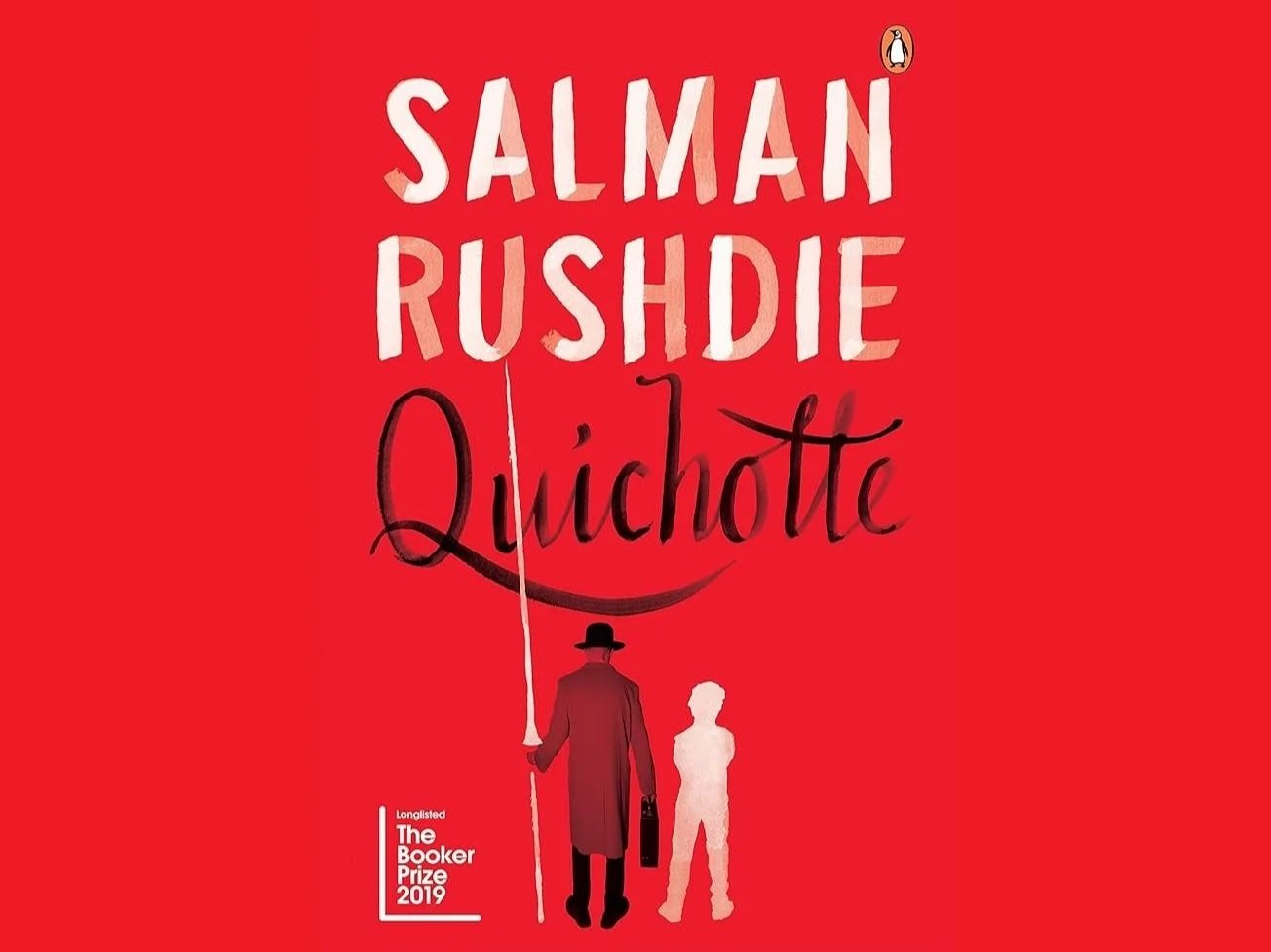
In Quichotte (2019) Salman Rushdie deconstructs the motif of the quest while creating a darkly humorous, grotesque, and irreverent anti-heroic saga of a modern day mock medieval knight.
In Joe Talbot’s 2019 Sundance winning film The Last Black Man in San Francisco, a young black man has an enamoured obsession with a grand Victorian house, located in one of San Francisco’s upper-class predominantly white neighbourhoods. This obsession becomes the navigational compass through which Talbot explores the contemporary social topography of America, while also raising significant questions about class, gentrification, friendship, racial and gendered violence, and most tellingly, the figure of the outsider—its cultural production and use. The film exposes the outsider’s desire for an object that engenders a passionate attachment and compels a journey towards securing it at all costs. It becomes the young man’s the projection of a subliminal wish to claim through the narrative of material and territorial possession, as an identity in belonging.
Published the same year, Salman Rushdie’s Quichotte (Jonathan Cape)—inspired by Miguel de Cervantes’s Don Quixote—adopts a similar approach to the question of individual and collective desire, the fictions that sustain it, and its association with questions of personal identity and cultural assimilation. In the process, Rushdie deconstructs the motif of the quest while creating a darkly humorous, grotesque, and irreverent anti-heroic saga of a modern day mock medieval knight, and his sidekick, bumbling through a landscape where the terrors of weaponized technology, capitalist media induced cognitive dissonances, apocalyptic dangers to ecological autonomy, and racist violence are significantly more real and monstrous than Quixote’s giant windmills.
“We are scary as shit” (348) Sancho, the novel’s posthuman, parthenogenetically produced character discovers in a memorable journey aboard a ghost bus through an eerily gothic American Midwest landscape. Around him, the Regular Joes begin revealing their vampire, zombie, and werewolf avatars. Sancho’s discovery is made more tragically urgent by the nature of his journey, a quest not dissimilar to his father’s, in search for answers to the politically and ethically resounding question: “Is there a place for us in this America?” (149).
The “us” in this query is the first world’s immigrant population (but also other marginal communities victimised in WASP America: queer, black, indigenous, disabled, geriatric, unemployed), whose, minor forgotten counter-histories the novel also chronicles. Sancho is a figment of the protagonist Quichotte’s imagination, literalized as an image and further embodied through Jiminy Cricket’s fairy-tale intervention, and who is ironically more pragmatic and analytical than his head-in-the-clouds flesh and blood father. In Quichotte, Sancho disintegrates before he can find his answer, leaving this monumentally pertinent question about the status of diversity in a “racially charged and confrontational” (282) western world, to the anachronistic, non-rational, non-utilitarian resources of Quichotte’s (and Brother’s) quirky magical thinking, an eccentric eclecticism of high cultural encyclopaedic knowledge sitting cheek by jowl with Hollywood trivia and Reality TV information, and a mystically informed romantic ‘quest’ across the country to actualize an imagined, idealized love.
What is the status of fiction in the ‘post-truth’ age? How do emotion and lived experiences, as complex and singular entities, entwine with their commoditized, digitized, hyper-normalized, and globalized variations in popular culture, mass media, and cyberspace?
However, as the novel demonstrates through its occasionally tedious but largely delightful narrative, the enchanted, superfluous, and numinous as modes of engagement, interpretation, and meaning-making are not necessarily obsolete or socially irrelevant. Rather, the quixotic might prove to be a timely intervention that highlights contemporary capitalist society’s commoditization and instrumentalization of the imagination: “culture was already beginning to be a thing without memory, lobotomized”. (297) Such intervention offers alternative, idiosyncratic uses of memory and imagination as sites for critique and resistance.
What is the status of fiction in the ‘post-truth’ age? How do we ascertain the authenticity of narratives in a world saturated with manufactured information and mediated knowledge? What are the figurative strategies through which the novel in our current epoch of competing realities engages with, and positions itself, in relation to literary history? How do emotion and lived experiences, as complex and singular entities, entwine with their commoditized, digitized, hyper-normalized, and globalized variations in popular culture, mass media, and cyberspace?
These are some of Quichotte’s many riddles. Set in present-day America, with brief interludes in London in the pale of Brexit, Quichotte is a postcolonial picaresque chronicling the ‘adventures’ of Ismail Smile, an Indian immigrant and pharmaceutical salesman, whose recollected fortuitous childhood encounter with Cervantes’ Don Quixote (via Jules Massenet’s 1919 opera) becomes the source of a pseudonymous identity and paradigm for his cross-country road trip, in a soon to be outmoded Chevy Cruze. Quichotte is in fact a character occupying the twilight zone between page and life, who arrives as an answer to the dwindling mid-career writer Sam DuChamp aka Brother’s creative search.
Almost at the same juncture, this story within a story produces another ‘character,’ Sancho, Quichotte’s wished-for child traced over Brother’s alienated teenage son, who materializes next to his father as a physical manifestation of a black and white television image, and goes on to dramatize through his bodily metamorphosis from flat and grainy CinemaScope to hyperreal, three-dimensional CGI graphics, the evolution of image-making technology.
Into this infinite regress of narrative splicing and reduplication enters Salma R., a clever diminution of the author’s name, and the idolized object of Quichotte’s ‘quest,’ a television icon and scion to Oprah’s legacy, and Brother’s estranged Sister, a wealthy human rights lawyer based in London whose presence—true to the reflective circularity of the tale—is mirrored by Ismail’s own philanthropic sister, the Human Trampoline, her legacy of thankless upliftment of the downtrodden poignantly encapsulated in her sobriquet.
Rushdie’s Matryoshka doll narrative—with its contrapuntal see-sawing between the real and the imaginary, its dizzying parallelisms, and its ambitious embrace of the multiple, mutually resonating registers in which life is lived—is not merely a demonstration of literary virtuosity: It is simultaneously a nod to Cervantes’ own use of the mise-en-abyme to highlight Don Quixote’s immersion in the fictional worlds of Medieval chivalric romances. Quichotte also plays as Rushdie’s prescient comment on the uneven texture of experience and the contingent nature of truth in an age of media explosion and technological simulation, an “Age of Anything-Can-Happen,” (373) where “treachery was everywhere, identities were slippery and mutable, democracy was corruptible.” (27) If Ismail Smile lives within the constructed universe of a textual chronotope, Rushdie understands the apparently ‘real’ world outside this literary space as no different.
In an era of Artificial Intelligence and the Anthropocene, we could all very well be inhabitants of a hybrid and unstable zone of porous entanglement between fact and fiction, empirical data and consumerist spectacle, rational thought and hallucinatory experience, geological phenomena and algorithmic simulation, the crises of private subjectivity and planetary catastrophes. Quichotte’s “plural, sprawling kind of” narrative is also part of Rushdie’s commentary on the fraught, fragmented, contradictory, and divisive character of contemporary sociopolitical and national landscapes, and a meditation thus on the ethical imperatives of reflexive storytelling as a cultural mirror for the times.
As Quichotte maps it, the post-Cold War era is predominantly defined by the simultaneous and paradoxical opening of borders, accompanied by their rampant securitisation through the institution of sophisticated policing, incarceration, profiling, and surveillance technologies. There are large scale migrations to First World countries, coexisting with organized racism and xenophobia; materially and technologically enhanced modes of living coinciding with increasing corporatization of healthcare; aggrandizing capitalist norms of productivity and entrepreneurial expansion bordering on psychological breakdown and bodily abuse; and idioms and possibilities of professional success hinging on breakdown of communal cohesion and the production of social alienation. For Rushdie, the frictional texture of this postcolonial, postmodern present—where a “nuclear fission has taken place in human lives and relations” (59) —can be adequately embodied by a narrative form that is similarly hybrid, routed through multiple and eclectic borrowings, and employing such techniques of structural unevenness and assemblage as pastiche, parody, allegory, and bricolage.
From the rise of fascist politics to Brexit, everyday racism to gun violence, capitalist healthcare and the flourishing of the opioid industry, to a nationwide mental health crisis, Big Data to mass extinction and the colonization of space, reality television and The Beatles to the Ku Klux Klan and pulp fiction, The Rhinoceros and Moby Dick to Alice in Wonderland and Pinocchio. In Quichotte, what constitutes the gamut of “Anything-Can-Happen” is a vast and variegated, time and space defying, intertextual, postmodern, post-human compendium of current events, as well as cultural and literary allusions. However, despite this dizzying proliferation of references, Rushdie’s focus in each of the parallel narratives in Quichotte is deeply rooted in an attempt at calibrating with keen sensitivity the nuances of emotion and subjectivity, in order to set up a provocative dialectic between empathy, compassion, grief, wonder, love, imagination, camaraderie, and friendship on the one hand, and the attenuated existence of these social and personal affects in a world where bodies, identities, and human capacities are measured and reframed as biopolitical ciphers of pixels, codes, and numbers.
The transition from Ismail to Quichotte becomes a marker of self-estrangement, the formation of a split subjectivity along the fault-lines of a repressed and disavowed past, his “lead-lined casket of forgetting,” ruptured memory, and withdrawal from social roles and relations into the phantasmagoria of fictional universes.
Each character in Quichotte is beset by a psychological crisis born of racial and gendered trauma, loss, estrangement, grief, and sexual abuse. Through the stories of Salma, Trampoline, and Sister, and the unspoken traumas suffered by them in the hands of predatory older men, Rushdie provides an excoriating portrait of the middle-class Indian family and its well-guarded secrets of misogyny and sexual violence. Families in the book are depicted as tragically flawed and fractured institutions, and thus appropriate allegorical sites for engaging with large scale national, global, and even cosmic fissures. For Brother, estrangement acquires the form of a wound, a vital lack in the substance of the self, and familial and intimate relationships revolve around shared burdens of “Unforgivable” injuries and impending tasks of healing and reconciliation: “Unforgivable acts, unforgivable words, unforgivable bits of behavior.” (207)
Quichotte opens by introducing its eponymous protagonist as a person “detached from his skin” (10) deeply “devoted” (9) to the television screen and suspended in an ambivalent space between the contingencies of material and historical circumstances on the one hand, and an escapist fantasy of an incorporeal, timeless, and seemingly ahistorical non-identity that the excessive consumption of popular media provides. This exchange of one’s immediate reality for one based in fictionalized content is not a purely idiosyncratic gesture, and is instead motivated by an “Internal Event” (261) —a stroke that leads to partial amnesia and dramatic behavioural and psychological change.
And thus, Ismail Smile—a former investigative journalist and globe trotter whose implacable scepticism and unsentimental rationality culminate in a rift with his sister—somersaults on the heels of this neurotic collapse into a diametrically opposed worldview of mystical faith and magical thinking. The transition from Ismail to Quichotte becomes a marker of self-estrangement, the formation of a split subjectivity along the fault-lines of a repressed and disavowed past, his “lead-lined casket of forgetting,” (20) ruptured memory, and withdrawal from social roles and relations into the phantasmagoria of fictional universes. Similarly, Brother—Quichotte’s creator—has spent a lifetime trying to evade racial stereotypes and fixed identities “surrounded by the bars of white attitudes,” (30) by deploying the anonymity and ambiguity offered by a literary pseudonym: Sam DuChamp/Sam the Sham, itself derived from an artist of avant garde repurposing and ready-made, and that in a comic twist becomes further bowdlerized to indicate duplicity and deception.
Smile is thus created as a foil through which Author intends to confront the repressed dimensions of his personal life, including unresolved family secrets and questions of ethnicity and immigrant cultural history, just as Sancho becomes a conduit for ventriloquising Quichotte’s rich but inaccessible subconscious life.
In the figure of Quichotte, Rushdie offers a challenge to the grammar of liberal personhood with its insistence on psychological coherence and a conception of stable, unified, and consistent self as integral to the normative individual, the subject of rights and liberties. The self as the novel demonstrates is not a transparent and readily available entity with an even temporal graph; rather subjectivity much like the novel’s atrophying cataclysmic earth is unreliable, unstable, and punctuated by aporias, absences, and inconsistencies that remain outside the limits of linguistic and cognitive translation. Selves in the novel are constantly accompanied and addressed by shadow-selves, doppelgängers, and counterparts, a device that allows Rushdie to further foreground the role of fiction in teasing out, amplifying, and providing alternative means of self-articulation.
Rushdie re-examines the quest as a quintessential cultural paradigm informing multiple forms of boundary crossings: The religious pilgrimage, colonial and missionary expansion, scientific expeditions, and immigration, that are central to the production of the modern geopolitical condition.
There are three primary modes in which the concept of fictionality appears in the novel: The ubiquity of fictions in structuring reality, the fictions that characters consume or produce as mechanisms of coping, denial, or gratification, and the fictions that offer therapeutic channels through which various psychic, familial, and cultural wounds are exteriorized, transformed, and addressed as aesthetic concepts. Salma’s discovery of her grandfather’s lasciviousness is described as a collapse of a stable universe built on fictions of security and nurture: “The whole story of her family... had to be torn up and rewritten. To lose one’s picture of the world, to feel its gilded frame snap and crumble... another term for this experience is going insane.” (174) This disenchantment constitutes a traumatic disjunction between ideas sublimated to the status of inviolable truths sustaining the integrity of the family, and the reality that these conceal.
Similarly, in a moment of delayed intimacy between Brother and his dying sister, a series of recollected dream narratives becomes a talisman of reconciliation: “He understood that she was asking him to describe her dreams, rather than anything that had really happened, and so instead he told her about his own imaginings, or in other words, about his book.” (302)
Early in the narrative, Brother describes paranoia and entropy as the two dominant semantic modes through which human society organises meaning. Paranoia in Rushdie’s novel transcends its conventionally designated status as a mere psychological response, to become in an expanded sense a liberation of surplus meaning that challenges narrow, one-dimensional constructions of reality, while entropy in the book goes beyond the laws of physics to indicate a collapse of existing orders as a phenomenon closely associated with the loss of pluralism and the impoverishment of existential and social diversity. Quichotte is set against the backdrop of an eschatological crisis. Brother’s narrative of Ismail, his picaresque road trip, and Rushdie’s larger narrative frame are implicated in a steadily collapsing order, an emphatic statement on the current age of the sixth mass extinction. By drawing a parallel between perspectival errors (literalized in Ismail Smile’s quixotic world as an epidemic of retinal disorders combined with the final apocalyptic event of quantum destruction) and Brother’s gradually failing body accompanied by his consciousness of mortality, Rushdie points towards the interconnectedness between the domains of the personal and the political, private, and cosmic, and the need to rethink ethical norms and moral action in relation to this paradigm of continuous and overlapping fields of being.
A paranoic episteme becomes a radical alternative in Rushdie’s novel, providing the site for multiple, heteroglossic meaning-formation, whether it is Sancho’s visionary ability to see inherent biases materialized as physical traits, or Quichotte’s reconfiguration of the act of travelling across the contemporary physical and cultural topography of America through the optic of premodern conceptions of itineracy. One of the most endearing instances of this in the book is Quichotte and Sancho’s act of renaming, and thus linguistically reclaiming the American topography by using a patois of English mixed with local Bombay dialects.
In Quichotte, Rushdie re-examines the quest as a quintessential cultural paradigm informing multiple forms of boundary crossings: The religious pilgrimage, colonial and missionary expansion, scientific expeditions, and immigration, that are central to the production of the modern geopolitical condition. The quest as a trope is embedded in a set of values, assumptions, and ideologically-motivated models of cultural purity, expansion, and colonization that have historically sustained imperialist, patriarchal, and fascist formations. It also brings into the foreground of critical reflection the contentious question of the frontier, which, for Rushdie serves as the paradigmatic figure of modernity.
Under such conditions of ambivalence, where thresholds are both heavily policed, rigidly enforced, yet consistently eroded by forces and entanglements at once human and planetary, insanity becomes the reality-bending burden of confronting the fragility of truths revealed as fictions. In Quichotte, Brother finds himself implicated in a fictional universe that seems to emerge spontaneously and solicit transcription. Fiction begins to acquire an authenticity that seems to be missing from Brother’s own life, and in the final chapters of the novel serves as roadmap for his recreation through the actual American landscape, the fictional journey that he sets his characters on. It is by first addressing racist violence in his work in progress that Brother can deal with it in real life. “Maybe this was the human condition, to live inside fictions... Maybe human life was truly fictional,” (304) becomes a refrain as the novel closes, an increasing realization of the permeable boundaries between life and art.
***
Paromita Patranobish teaches at Mount Carmel College, Bangalore. She has a PhD on Virginia Woolf, and has taught in SNU, Daulat Ram College and Ambedkar University Delhi. When not teaching or writing, she loves to spend time with her camera and telescope doing amateur photography and stargazing. You can find her on Twitter: @paromita33.