Name Game
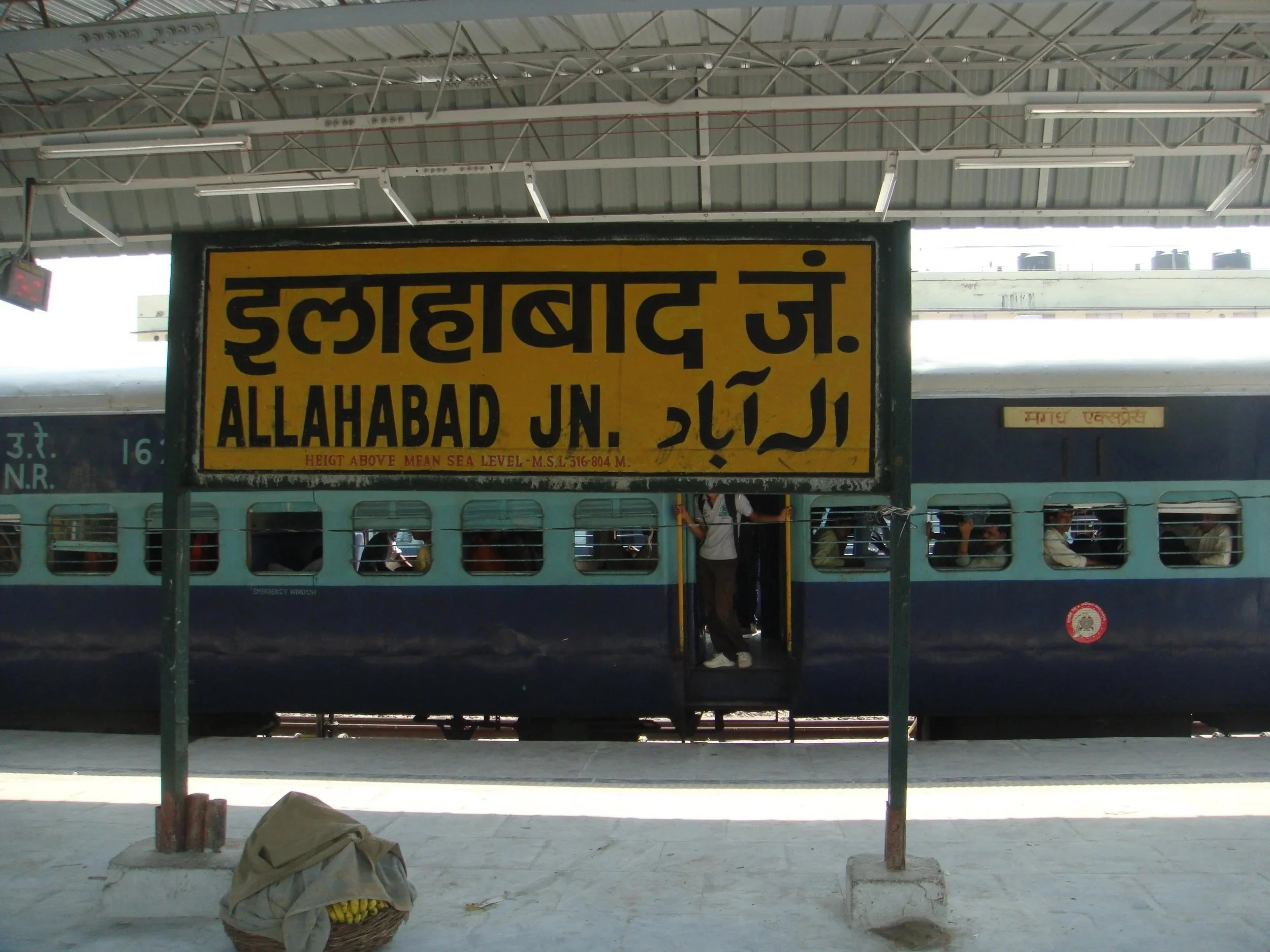
What’s in a name? India has a long history of rebranding cities, streets, and buildings to reflect the political influence of the time. Instead of this empty tokenism, Vipin Labroo argues for the country to shift priorities towards its more pressing concerns.
In the mid-1990s, New Delhi’s British-built city centre known as Connaught Place, was officially “renamed” as Rajiv Chowk, as a tribute to the late prime minister, and perhaps as an attempt to erase the central marketplace’s colonial connotation. A few decades later, a different government with a different agenda renamed the Mughal-founded city Allahabad—home to many doyens of the independence movement—to its more Vedic-inspired name, Prayagraj.
Such changes, however, made little impact to the colloquial names for these places. Rajiv Chowk is still largely known as Connaught Place, or CP. Prayagraj, outside of official government communications, is still largely Allahabad. That these places continue to be largely referred to by their original names is a testament to the fact that people will call places by the names they have always associated with them in their popular imagination. To all intents and purposes, renaming places is largely symbolic and often unpopular.
India has a long history of naming and renaming towns, streets, roads and institutions. Indeed, the nation itself has three names—Bharat, Hindustan, and India—each bearing civilisational undertones, denoting how the country is perceived by its citizens and namers. Often, if not always, politicians in power institute these name changes to promote revisionist agendas and garner the support of their political constituency. This is something that afflicts all political parties across the ideological spectrum.
That these places continue to be largely referred to by their original names is a testament to the fact that people will call places by the names they have always associated with them in their popular imagination. To all intents and purposes, renaming places is largely symbolic and often unpopular.
Till about the 13th century, the cultural landscape of the entire South Asian region was largely dominated by Sanskritised names, derived from the influence of Hindu and Buddhist lifestyle and scriptures. Examples of towns, cities and settlements bearing these names can be found across the length and breadth of India. These include places like Mathura, Kashi/Varanasi, Haridwar, Ujjain/Ujjaini, Bodh Gaya, Patna-Patliputra and many more.
Before the advent of Islamic dynasties that introduced Persian and Arabic names into the region, the sway of the Hindu-Buddhist way of life was dominant in India and exerted considerable cultural and linguistic influence across vast swathes of the South East Asian region—which is still reflected in the names of the people and places of even those nations (like Malaysia and Indonesia) that later swayed towards an Islamic cultural majority. According to acclaimed historian and write, William Dalrymple, the Mekong River—which is of grave significance to the Southeast region—was given its name to honour the scared river of Hinduism, the Ganga.
The succeeding centuries of Muslim rule in large parts of India gradually influenced Indian languages, and this was reflected in the names of towns and villages across the nation—even as the overriding essence of a Sanskritised base remains largely dominant to this day. Examples of Persian-Muslim influenced names abound across the subcontinent, including cities like Ahmedabad, Hyderabad, Muzaffarpur, Firozabad, Ghaziabad, Saharanpur, and more. The colonial era saw European powers like the French, Portuguese, and the British exercise political and cultural power across India, which resulted in European names being used for many Indian towns, especially the many hill stations that the British helped establish. There is, in fact a long list of places in India bearing colonial influenced names. This encompasses places spread across the Indian landmass. From Bombay, Calcutta and Madras to Simla, Kanpur (formerly Cawnpore), Trichinopoly (now Tiruchirappalli), Cochin, Goa and Pondicherry, places with European-origin names are much more common than one would imagine.
Names of places are often decided by those in power, and this is best exemplified by the fact that no less than twenty cities in Alexander the Great’s global empire bore his name, all called Alexandria. This has been the practice around the world where conquering nations have sought to impose their systems, practices and in many cases faith upon the local nations. In the case of the European colonial empires, there was a one-way street of domination that drew from their sense of superiority over the natives in countries like India. This ensured that the latter never organically absorbed such foreign influences into their daily lives the way they did in the past with regard to other invaders who chose to permanently settle here.
India was the first major British colony to gain independence from two centuries of brutal domination and exploitation, and, not surprisingly, went about renaming all the major roads and buildings in the former imperial capital of New Delhi and giving them more appropriate Indian names. The Viceroy’s House became Rashtrapati Bhawan. The Kingsway became Rajpath, further rechristened to Kartavaya Path, and the Queensway became Janpath. Curzon Road was renamed Kasturba Gandhi Marg, while Hardinge Avenue was given the name Tilak Marg.
The flurry of these changes was understandable when India was a nation reborn, and did not wish to be defined by a colonial legacy which stared one in the face on every street corner of the capital city. The turning over of colonial nomenclature isn’t something unique just to India, of course. In the United States, for example, many monuments from the time of the American Civil War have either been removed or renamed. For example, a statue of Robert E Lee in Charlottesville, which was installed in 1917, was removed in 2021. Moreover, the city renamed Lee Park, changing it to Market Street Park. There are even reports of Christopher Columbus’s statues being removed by those who consider him a vile colonialist, responsible for exterminating many of land’s native population.
Likewise, the country of Zimbabwe was once called Rhodesia, named after the British colonist Cecil Rhodes. Its capital Harare, was Salisbury in colonial times. Turkey renamed its capital Istanbul to distance it from its old Byzantine past associated with the old Constantinople. In Vietnam, Saigon was renamed Ho Chi Minh City after the former’s nemesis, the indomitable South Vietnamese general of the same name. Likewise, when the Soviets took power in Russia, they renamed St. Petersburg Leningrad after their founding father. It was back to St. Petersburg once the Soviet Union collapsed. Post-Second World War Germany, on their part, renamed any street and monument associated with Hitler to walk away from their tainted Nazi past. China renamed Peking to Beijing and Canton to Guangzhou to bring these in line with how these cities are pronounced in modern-day Mandarin.
It is in the light of the above that the renaming of iconic Indian cities like Mumbai, Calcutta, and Chennai has to be viewed, even though most people had no problem with these names and seemed to like them. Even today, there are large numbers of people who either use the old names or use them interchangeably with the new ones.
Already, the move to change the name of Landour (in Mussoorie) to Ramgir and Clement Town (in Dehradun) to Shaurya Naga is bizarre and almost quixotic in its conception. It has the locals and many other well-acquainted with the parts scratching their heads in amazement.
The India of today, however, is not the India of 1947. There has been a rapid growth of urbanisation, and there are some 35 million Indians living abroad. The English-speaking population of India has done very well for itself both within the country and abroad. Most Indian families are willing to pay the higher fees for providing their children with an English medium education, as they know it will stand them in good stead. So, there is no inherent hostility to the language associated with a former imperial power that ruled over one’s country for long years. They see the West in a new, aspirational, and successful light, and would like to emulate that success for themselves.
Most Indians alive have no direct experience of colonial rule, and bear little malice towards the cultural legacy of the British times. But they have heard nostalgic tales of those times from their elders and watched movies and television series that present the British Raj and its grand legacy, and what better way to experience that than to head to a hill station with a colonial legacy. The popularity of the many hill-stations among domestic Indian tourists, from the Himalayas and the Western Ghats to the Nilgiris and Eastern Ghats, bears testimony to this fact. They throng places like Shimla, Mussoorie, Nainital, Darjeeling, Matheran, Ooty, and Coonoor, often pleased to take in not only the natural views but also the beauty of colonial bungalows, the cuisine from those times served in quaint restaurants, the sprawling tea gardens planted by the British, and the fairy tale-like mountain railways that one finds in these parts of the country.
The Indian youth of today hardly complain about resort towns with names like ‘Dalhousie’ and ‘Wellington’, and wouldn’t want those towns to be renamed if such a proposal were to come up. Already, the move to change the name of Landour (in Mussoorie) to Ramgir and Clement Town (in Dehradun) to Shaurya Naga is bizarre and almost quixotic in its conception. It has the locals and many other well-acquainted with the parts scratching their heads in amazement. What will they rename next, the Corbett National Park?
What does the renaming of a place truly achieve? Calcutta, the former capital of British India had a distinct colonial ethos, which the government of the day sought to get rid of by renaming it Kolkata in 2001. But did the changing of the names on sign boards and government documents make any difference to the quality of life of the people? Did that help with the problems of crumbling infrastructure and a lack of economic opportunity which beset the city? The city was once the cultural capital of the nation, and the hub of commerce and industry, and its afflictions cannot be healed by a mere renaming.
What is true of Calcutta/Kolkata is easily true of the other renamed places of the country. The various centres of leadership in the country should instead focusing on ensuring better governance and improving the quality of lives for citizens. India, despite the large size of its economy, still ranks low on the Human Development Index, and grapples with innumerable troubles, from income and gender inequality to quality of education and income disparity. These need to be fixed long before we worry about ‘fixing’ the names of places.
***
Vipin Labroo is a content creator, author and PR consultant. A member of the Nonfiction Authors Association, he has years of corporate experience working with an eclectic range of clients, writing press releases, articles, blogs, white papers, research reports, website content, eBooks and so on across segments like technology, business & marketing, internet marketing, healthcare, fashion, real estate, travel and so on. You can find him on Twitter: @labroovipin and Instagram: @vipin_labroo.