‘Main Waapas Aaunga’ and the Cruelty of Returning Too Late
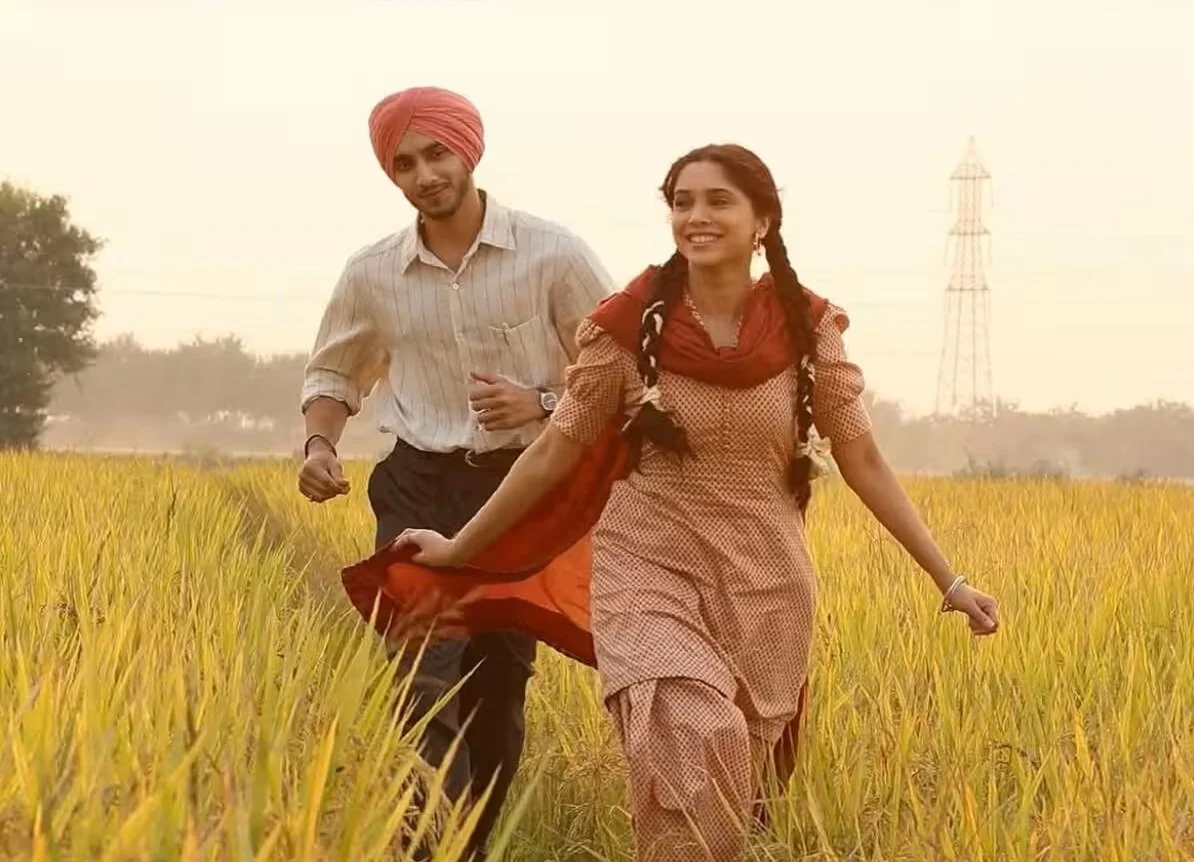
Partition is not so much a mere plot device in Imtiaz Ali’s Main Waapas Aaunga, but a ghost that continues to haunt the people who survived it—in memories and regrets.
For the countries torn apart by the Partition, the proverbial Radcliffe Line is not a border dividing the two nations which were once whole. It is the communal hatred that continues to haunt us years after the violent events of 1947, often weaponised by the government for political gain.
The heavy legacy of ’47 has spilled into the arts, and Partition narratives are not entirely new to Indian cinema. What, then, makes Imtiaz Ali’s Main Waapas Aaunga (2026) different? Perhaps, it is the fact that a man having been separated from his beloved in 1947 returns to Pakistan in 1953, hoping to reconnect with his lover, only to find out that she is now married to someone else. It is this tyranny of time, the grief of realising that borders can be crossed but the years stolen by them can never be reclaimed.
Set in the aftermath of Partition, Main Waapas Aaunga follows Keenu, a man who returns to Sargodha after years away, carrying the memory of Jiya, his first love. His return forces him to confront the life she has built in his absence, as well as the emotional ties and losses that have survived the passage of time.
Yet, all his courage and longing prove powerless against the passage of time. Ali seems to ask: What is the point of overcoming borders when you cannot overcome the years that they stole from you?
The central ache in Main Waapas Aaunga is therefore not a lover being separated by Partition. Keenu, played earnestly by Vedang Raina doesn’t lose Jiya, essayed by Sharvari, to geography. He loses her to history itself. It is almost as if Ali forces the audience to stare directly at history’s cruelty. Here is a man who risks everything to return to Pakistan and reunite with the woman he loves. Yet, all his courage and longing prove powerless against the passage of time. Ali seems to ask: What is the point of overcoming borders when you cannot overcome the years that they stole from you?
In many ways, the staircase inside Jiya’s house becomes a chronicler of time. It has seen the women of the Ahmedzai family engage in dancing and merrymaking during Aftab’s (a dear friend to both Jiya and Keenu) wedding, and it bears witness to the cruellest of heartbreaks: Keenu choosing to leave Sargodha without meeting Jiya, realising she has built a life with another man. As he walks away, Jiya stands shattered upon the very same staircase, now transformed into a monument to everything time has taken away.
Isn’t it ironic that Keenu and Jiya’s love story began at the same moment when partition riots first ignite in 1947? The first time Keenu and Jiya lock eyes at a gathering of the Progressive Writers’ Association at Kinnaird College, history intrudes upon the intimacy of the moment. Barely seconds after their paths cross, news of the Partition of India and Pakistan breaks—a nation is cleaved into two, just as two souls begin to find each other.
In all their rendezvous that follow—sometimes in the old ruins, sometimes in the field of Sargodha—their love is marked by the anxiety of a separation that seems imminent. Their love is forbidden not just by the respective families, but by the religions into which they were born, and the borders those identities would soon come to define. Each time Keenu reaffirms Jiya, by saying “Main kahi nahi jaunga” (I’m not going anywhere), the viewer knows that even he isn’t entirely convinced of this confident assertion. The duo continue meeting in the confines of their homes, until one night, the riots reach their doorstep and they can no longer pretend that history will spare them.
Years later, an old, dementia-hit Keenu (Naseeruddin Shah) is mentally stuck in the pre-Partition era. His dementia becomes a metaphor for memory’s refusal to surrender to the passage of time, even when the body has long moved on. He lays there on the hospital bed replaying the events that led to his separation from the lover. His software engineer-turned-stand-up comic grandson Nirvair (Diljit Dosanjh) not only helps his old man find closure but also gathers new material for his act. In this interesting intersection, of the pre-Partition time where news would take days to disseminate, with a hyper-connected 2026 where AI and machines are rapidly taking over the world, the narrative underscores a painful fact: While modernity has found ways to compress space and time, it has yet to invent a cure for regret.
Strange, then, that on his deathbed, the man chooses to remember not his wife or the children who so desperately want him to sign the property papers, but the teenage love who got away and somehow never really left him. Closure rarely arrives the way one expects it to. Nirvair defies all odds and uses his British citizenship to cross over to Pakistan and revisit Jiya’s house, aided by his grandfather’s memory which appears in sudden bursts which appear and disappear much like old radio frequencies struggling to break through static, When he learns that Jiya has already passed away, he glances upon her portrait through the pixels of a video call, realising that even until she died, she left the chaand-bali (earring) in the old ruins where she and Keenu would often meet in secrecy. It is testament that Jiya remembered Keenu in her final moments, even if she could not hold out against death as long as he did, leaving this world before fate could grant them their long-awaited reunion.
Seeing her portrait is closure for 95-year-old Keenu. A closure that grants him the freedom to finally embrace death knowing that his beloved did not forget him in her final moments. Partition therefore is not so much a mere plot device in Imtiaz Ali’s film as it is a ghost that continues to haunt the people who survived it, in memories and regrets.
In many ways, the film’s soundtrack, composed by A.R. Rahman with lyrics by Irshad Kamil, accentuates the tension around memory, grief and love of this film. The playful coquettishness of “Maskara”—which features vocals by Vedang Raina and Nilanjana Ghosh, penned by Irshad Kamil—is oddly reminiscent of Rockstar’s (2011) “Katiya Karu”, both songs sharing a buoyant folk-inspired composition, energetic dhol-driven percussion, and a teasing melodic interplay between the male and female voices. Then, there’s “Ishq Mastana”—vocals by Mohit Chauhan, Nargis Teji and Pooja Tiwari—which, in many ways, embodies the pre-Partition merry-making with rollicking dhol beats and celebratory chorus sections. “Ishq Mastana” symbolises communal revelry like no other, similar to other tracks from Ali’s filmography like “Aahun Aahun” from Love Aaj Kal (2009) and “Nagaada” from Jab We Met (2007).
The most political of these songs is “Kya Kamaal Hai”—vocals by Diljit Dosanjh, composition by AR Rahman, lyrics by Irshad Kamil—the music video of which, features real life footage from Gaza and the multiple refugee crises unfolding across the world, including the 1947 India-Pakistan riots which displaced many. The song compels viewers to reflect on just how dangerous the world has become with the Russia-Ukraine crisis, the Iran-US conflict and Israel’s occupation and genocide upon Gaza.
This isn’t to say that Main Waapas Aaunga gets everything right. A considerable part of the film’s emotional dynamics remains underdeveloped. It does, at times, seem to instruct the audience exactly how to feel rather than trusting the story to earn those emotions on its own. Neither is the film Ali’s best, simply because it lacks the emotional sweep and raw intensity of Rockstar (2011), the effortless charm and romantic warmth of Jab We Met (2007), and the introspective complexity of Tamasha (2015).
Despite its flaws, Main Waapas Aaunga enjoyed box-office success, surprising most industry analysts. For a film that isn’t the best even if compared by the same director’s filmography, its collections gives one hope that audiences are still willing to embrace stories driven by tenderness and emotional sincerity, rather than the chest-thumping jingoism and manufactured outrage, which have come to define recent Hindi cinema blockbusters like Dhurandhar.
Main Waapas Aaunga works well because Ali understands that history is not merely experienced in the moment of catastrophe, but in the decades that follow: in the lovers who never reunite, the homes that become memories, and the old men who spend a lifetime searching for closure.
Keenu and Jiya’s story is heartbreaking but because they never get the chance to discover what that love might have become. That, perhaps, is the film’s most devastating insight: History does not always destroy love. Sometimes, it simply leaves it unfinished.
***
Deepansh Duggal is an art and culture writer based in New Delhi. He has a keen interest in analysing artworks and folk songs which lie at the intersection of socio-political and gender issues. He also writes on films and pop-culture. You can find him on Twitter: @Deepansh75 and Instagram: @deepanshduggal.