Ghazals for Homes and Dreams: Poetry by Kartikay Agarwal
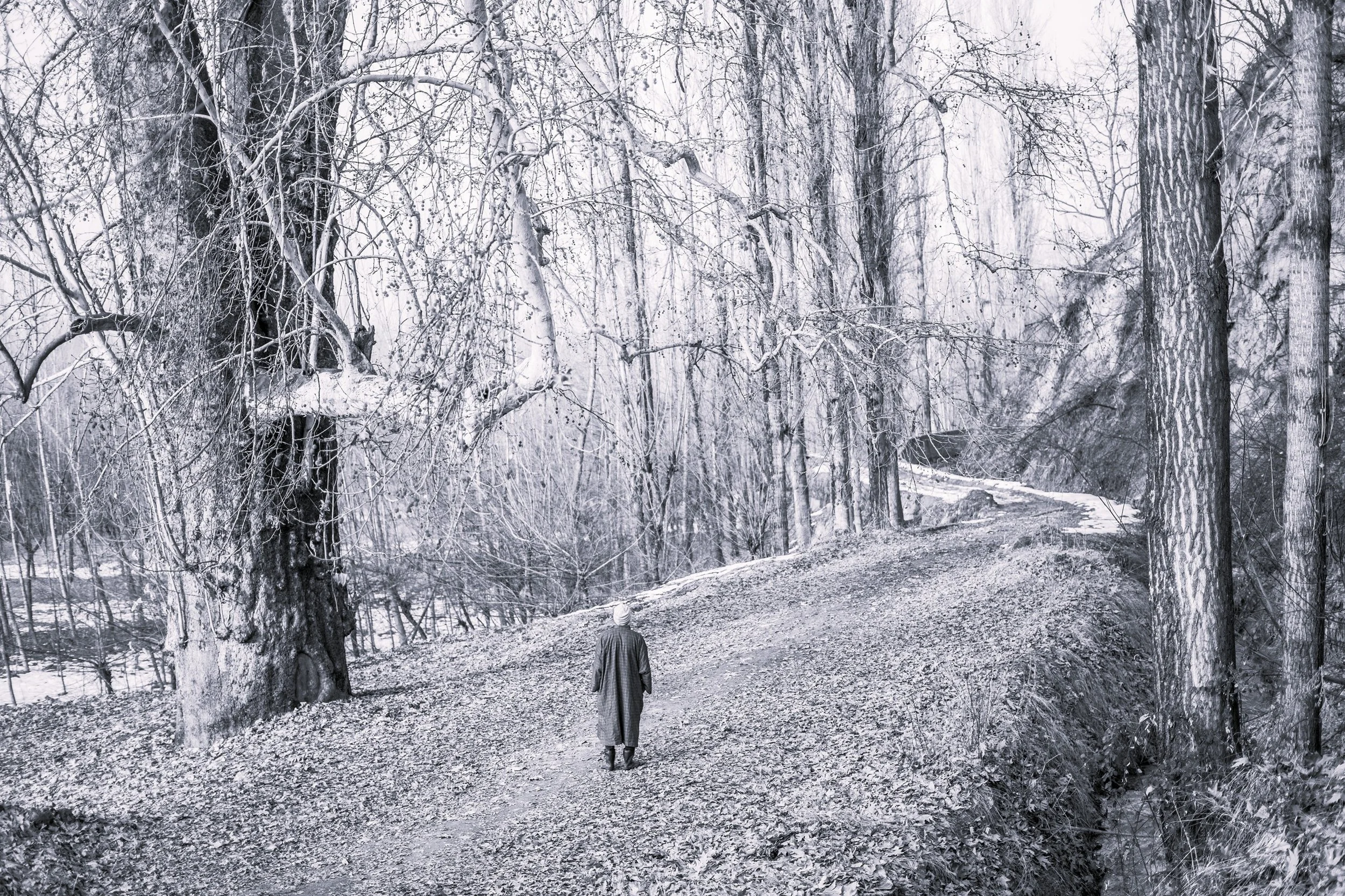
Photo: Iqbal Farooz
‘Will the last book of the last people to write books / (when all else is said) at the end just say ‘write to me’? // The wheel spins the pot to life, yet leaves no trace, / You be potter, mould life into my clay—write to me.’
Write me a Ghazal
(for Agha Shahid Ali)
It seemed so hauntingly easy to say—write to me
My mind fractals thought every day. Write/To/Me.
Will the last book of the last people to write books
(when all else is said) at the end just say ‘write to me’?
The wheel spins the pot to life, yet leaves no trace,
You be potter, mould life into my clay—write to me.
I am nothing, come from nothing, into nothing
Is all wisdom lost at frenzy’s bay? Write to me.
Here I am, thinking of that witness of Kashmir, fires
in Paradise must burn the letters they write to me?
The world is full of paper; it burns too easily.
I must ask what will my today write. To me.
Yes, love—is rest—is revolution, I trust you.
It’s dusk. The sun spills its ombre right to me.
My castaway letters lie eons from Shahid’s land,
Will Jhelum not wonder—doesn’t Kay write to me?
*
A Ghazal to be Quiet
I'm learning so many different ways to be quiet.1
Poetry is where my mind strays to be quiet.
To be is to think, if so, are we not being killed
when the world teaches how it pays to be quiet?
I want to scream at genocide dripping on my phone,
look how stories of horror they erase to be quiet.
You don’t say Gaza, I don’t hear Kashmir, anymore.
Can someone tell the wolf that bays too—be quiet!
Children cry when they are born, as a sign of life.
Robots with a task list families raise, to be quiet.
There have to be other ways of singing life — this
Karwaahn can’t just be accounting days to be quiet.
1. From “The Quiet Machine” by Ada Limon
*
The Good Fight
Why do people choose to fight the good fight,
this struggle against the night—the good fight.
I wonder if dark fears fuel the hunt for light.
Do hopes and dreams ignite the good fight?
Families, friends, loves, lives, worlds—all of it
and more—lost in that blight, the good fight.
Thoughts of freedom warrant nights in jail—
Prisoned sleep—in dreamy sight, the good fight?
Do they dream a comrade in the moon? Bruised
rebel shining that ancient light—the good fight.
There will be a dawn to this night… Karwaahn,
Stop idling! Lives, not pens, write the good fight.
*
A Ghazal for Home
The thing that is away, you call a home.
Shade in scorching May, you call a home.
Just a game of hide and seek, all of it—
Escape from life’s foray you call a home.
The clock sirened tick-tock, did not alarm
mother, dead. Where she lay, you call a home.
The poets claimed You are pot, mud, potter
—this broken body of clay, You call a home.
That house, a stack of sighs, thick walls.
Memory bluffs. Its play you call. A home.
We magnet each other like two lost poles
unwound in this soiree you call a home.
No place, no person, seems to ever be it.
A pinch of ether’s ray you call a home?
To what oasis do you steer this caravan?
What new mirage Kay you call a home?
*
Singing a Ghazal in August
Every year since the last ten, my life strings onto a new song in August.
Yet another circle the sun drags on; I mourn shadows oblong in August.
Caesarean scar on the calendar year, destined to be forever bloodied—
cities atomized; nations torn into being at the midnight gong in August.
In words the oppressor taught your grandfather, you pen life and find love;
with Swadeshi jumlaas, deshbhakts are at it hammer and tong, in August.
Our songs were in that language sieved off tongues into exile, unsentenced.
Credit to toiling sloganeers, Hindustan became Bharat mid-song in August!
Mine is not some trending protest number (those were banned last summer).
A love song. Shot in Kashmir; freedom’s hope there decreed wrong, in August.
No, I will not rub my eyes to brighten up this kohled room, thank you.
Let me be, I lived another July, each new day is far too long in August.
Some rain bug drowning the blues of the outside world—my earworm is
dead every doldrums. Monsoon pushes this Karwaahn along in August.
*
Poetry alarms my dreams
In these nights of wresting peace from poetic clutches,
I do not trust words to vessel a safe passage of thoughts
through this hazy stream of pen-strokes on paper.
(once)
मेरे ज़हन में जैसे इक बाड़ आई है 1
مرے دل پہ سیاہ رات چھائی ہے2
That thoughts travel at speed of light is mere fact bereft of poetry.
But that the light-force undoes me and every speck of my body unwinds
then weaves itself back in a moment—every moment—just to maintain
(twice)
ہر پل قطرہ دو قطرہ کر بکھرتا رہتا ہوں3
खुद को स्याही के धागे में सिलता रहता हूँ 4
this masquerade of self and will, is a matter of cellular poetics.
But what if all this is not of the mind at all. This planet is, and on it we
all are, moving a hundred times thousand times thousand meters through
space every sixty times sixty seconds of time, all the time. Maybe a million
(thrice)
ये गीली स्याही की डोर अक्सर टूटती जाती है 5
سیاہ کائنات مرا وجود نگلتی جاتی ہے6
odd pieces of me every second are just suffering myriad inertias as they are
pulled along existence maintaining this façade of my wholeness.
(awake)
1 There is a deluge of me in me
2 Kohled night blots my heart
3 Each moment I tatter bit by bit
4 With ink I stitch me, some of it
5 This ink-thread, wet, snaps apart
6 All of existence black-holes me
***
Kartikay Agarwal is a bilingual Indian poet and translator who finds his voice switching between English and Hindustani. He likes to think of his poems as a means to document fragmented realities. His original works & translations have featured in literary magazines such as TBLM, Jaggery, Alipore Post, EKL Review, Narrow Road, imprint, Gulmohar Quarterly, Usawa, deCenter, and others. You can find him on Instagram: @kaarwaahn.