A Uniting Ritual for the Republic
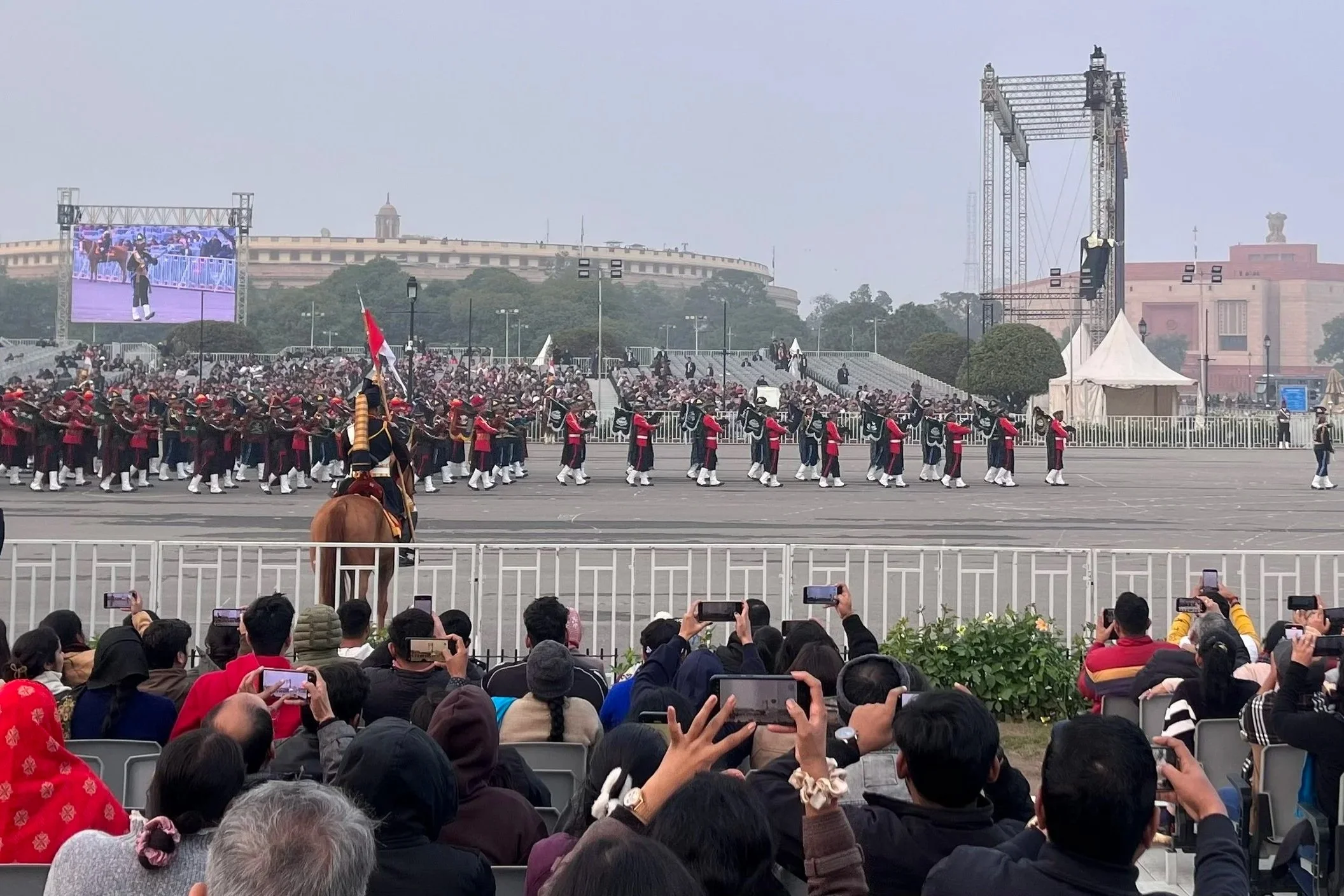
Beating Retreat ceremony in full swing at Vijay Chowk, New Delhi. Photo: Sumit Singh
Photography: The message at this year’s Beating Retreat ceremony felt sharper than ever, telling us that a nation’s power can be shown through ordered silence as much as through force.
- Aditya Sharma and Sumit Singh
As the sun dipped behind the Rashtrapati Bhavan, Vijay Chowk transformed into a living symphony of discipline and national pride. We had waited months for this moment, refreshing the Aamantran portal, battling crashing pages, finally securing one of the limited tickets. Then came the real journey of fighting Delhi traffic during Republic Day week, weaving through diversions, standing in long security queues, surrendering a few belongings at the check-post, and waiting nearly an hour in the winter chill before the ceremony began.
Held on January 29, the Beating Retreat is the formal concluding ceremony of Republic Day programmes. It is a ritual that has often united generations in silent admiration. While the ceremony has British military roots, its evolution into an Indian tradition represents a civilizational reclamation. By filling a colonial structure with Indian melodies and souls, the event moves beyond performance and into a poignant idea of national continuity.
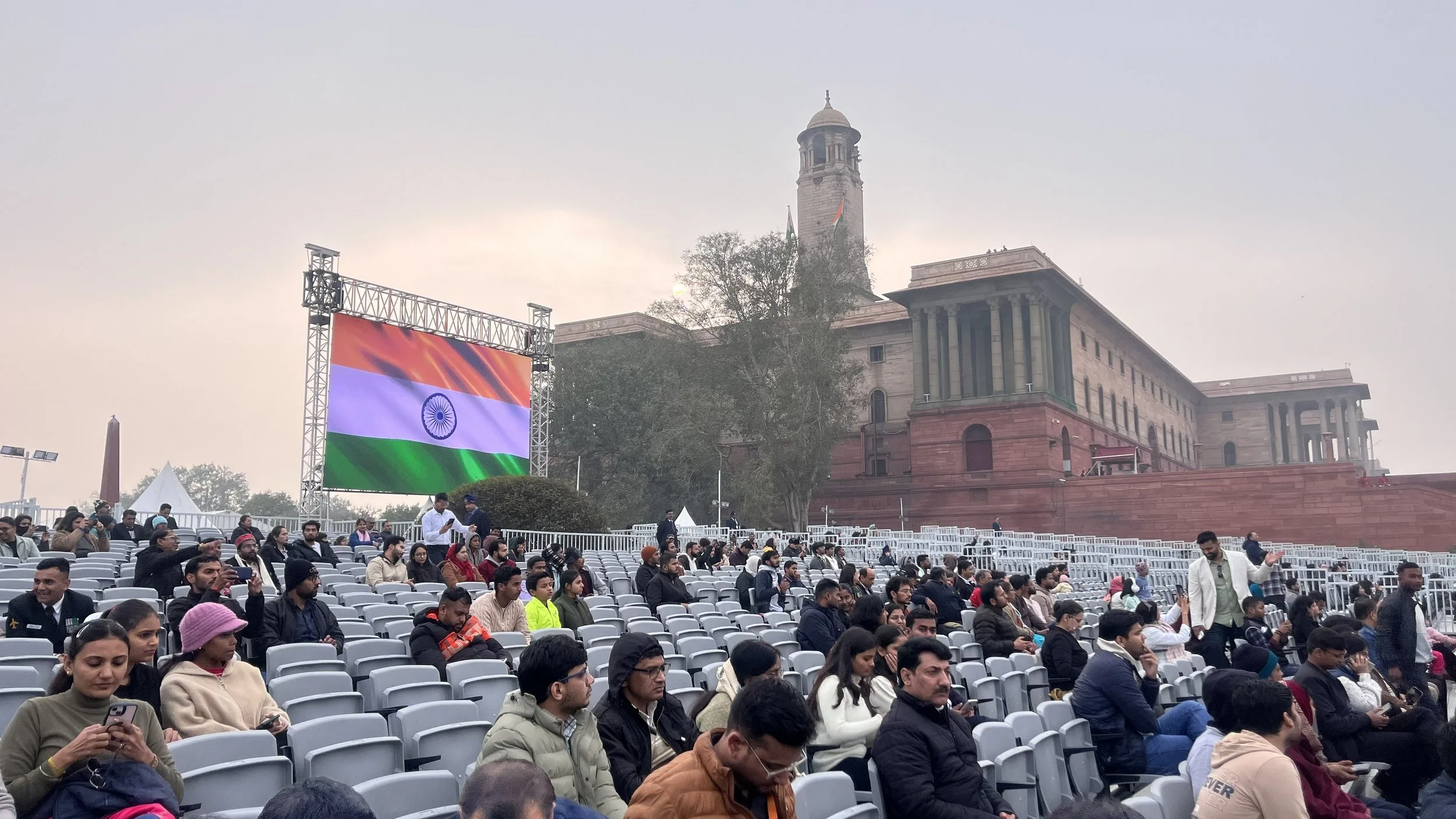
The seating enclosures now carry names of Indian instruments like Veena, Bansuri and, Mridangam. Photo: Aditya Sharma
The moment the massed bands started marching down Raisina Hill, all other distractions faded away. It was a sight to behold when hundreds of military personnel, armed with musical instruments, marched down the Raisina Hill, all in perfect sync. Floodlights bathed North and South Blocks across the Kartavya Path in golden hues, energetic massed bands performed, forming different geometric shapes, drum rolls thundered across a wintry sky, and the tricolour descended slowly to the call of bugles.
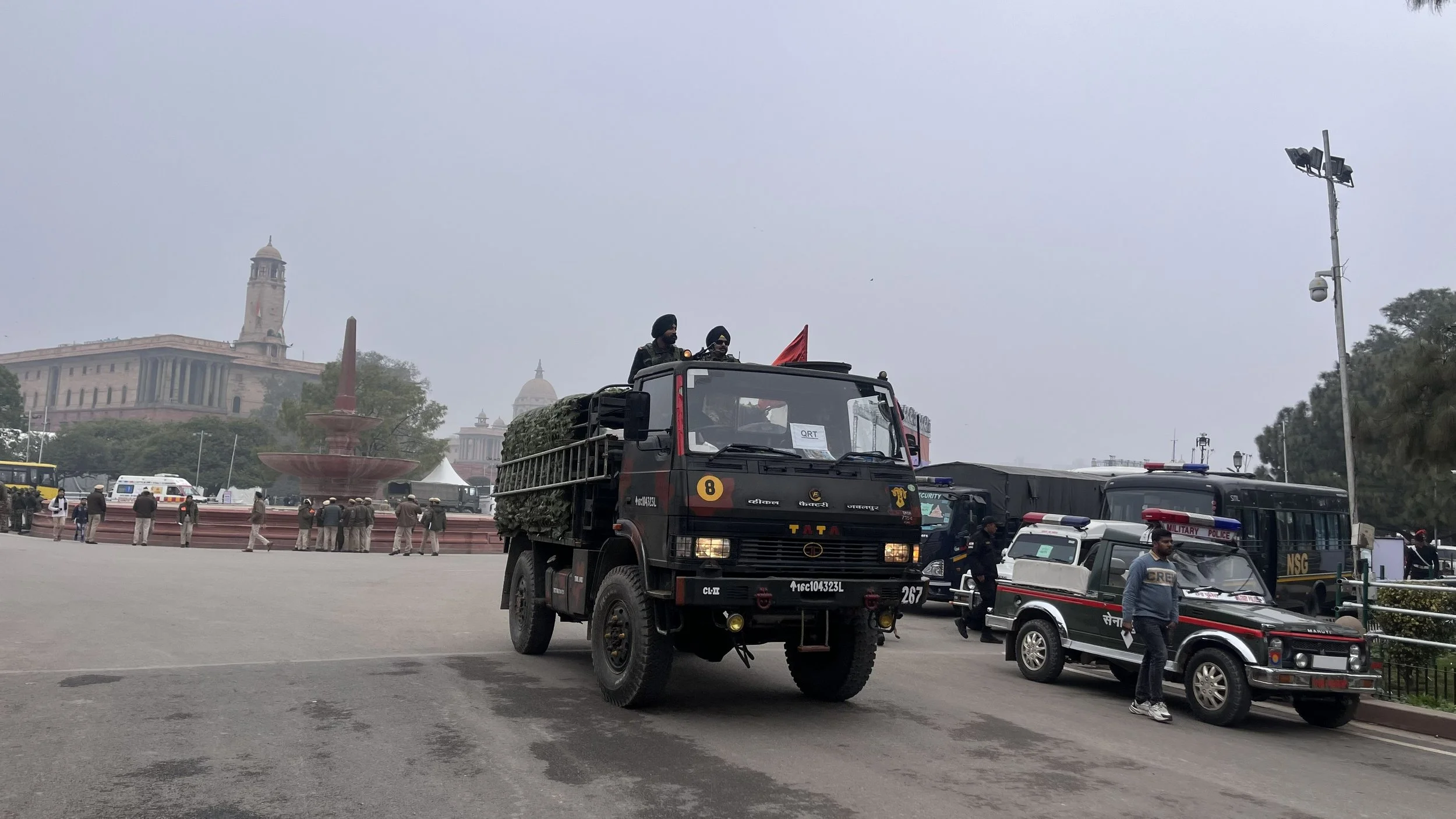
Security forces guard the area around Vijay Chowk. Photo: Sumit Singh
For an hour and a half, people in the audience took a pause. There was no scrolling, no Instagram reels, no YouTube shorts and no notifications. There was just the sound of retreat, the soulful rendition of “Vande Mataram,” “Sare Jahan Se Achha.” and the final echo of “Drummers Call,” fading into dusk.
The goosebumps arrived exactly when the bugles sounded the retreat. In that stillness, one realises that strength is not only in loud displays. It’s also in restraint, and in dignified closure. The ceremony’s message felt sharper than ever, telling us that a nation’s power can be shown through ordered silence as much as through force.
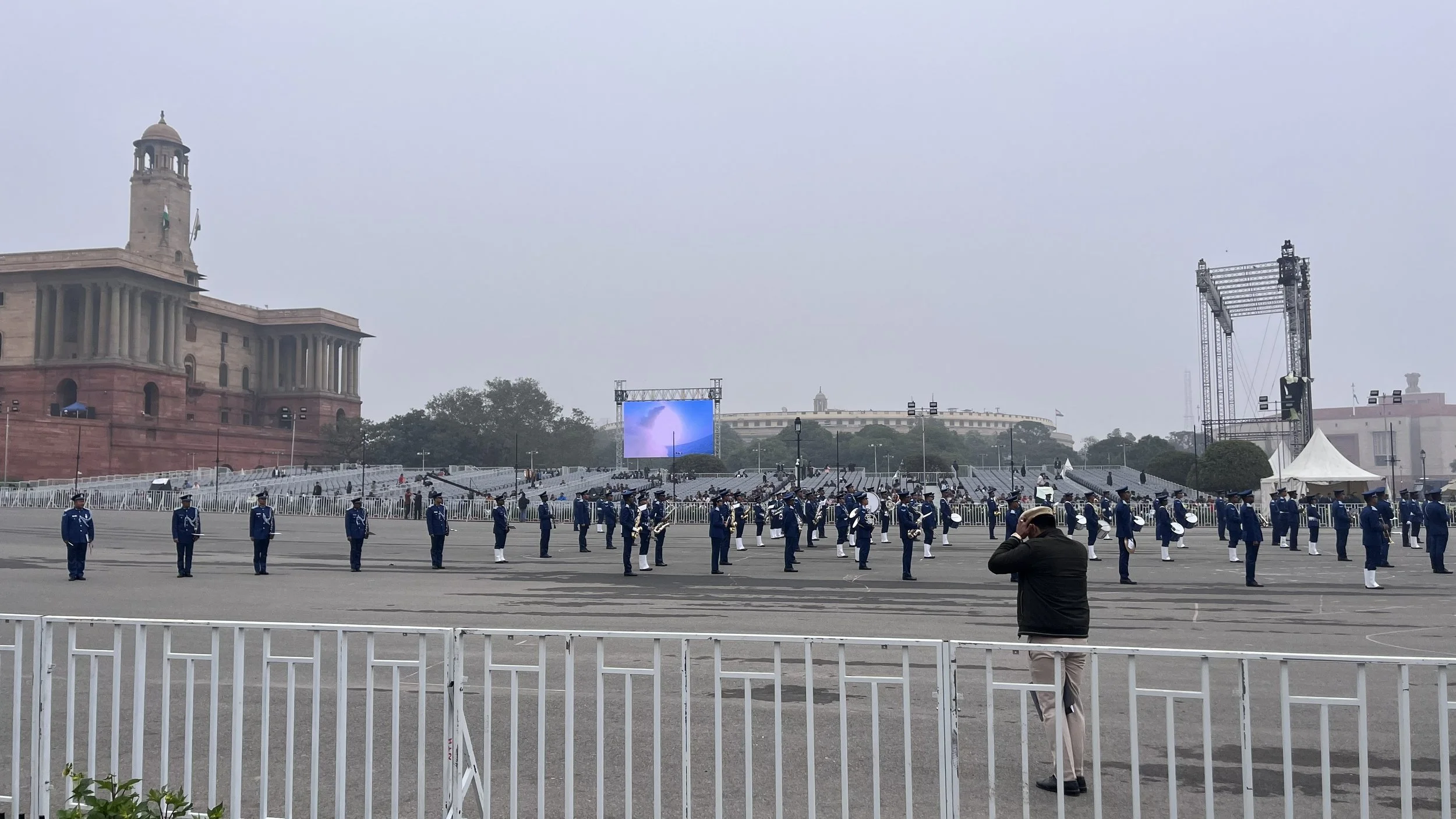
Military personnel, armed with musical instruments, march down the Raisina Hill, all in perfect sync Photo: Aditya Sharma
We were specifically moved by how thoroughly Indian this ritual has become. Famously, the British-era hymn “Abide With Me” was dropped from the Retreat ceremony four years ago. In its place came indigenous compositions like “Aarambh Hai Prachand Hai,” “Jai Ho,” “Kadam Kadam Badhaye Ja,” the Air Force’s “Brave Warrior,” and the Navy’s “Matribhumi.”

Security forces take stock of the situation before the commencement of Beating Retreat ceremony. Photo: Sumit Singh
Now, the seating enclosures carry names of indigenous instruments like Veena, Bansuri, and Mridangam. The tunes are no longer borrowed; they carry the rhythm of our own soil. This isn’t just pageantry, but civilizational reclamation. The once-colonial frame has been filled with Indian melodies and Indian soul.
Witnessing the ceremony, we couldn’t help thinking how easily this could all slip away, as daily life often trains us for the opposite with a world of endless scrolling, consumption of short-form content, and constant distraction. The ceremony demands sustained attention: the very thing our screens have quietly stolen. Yet that is precisely its gift. The Beating Retreat turns patriotism from a fleeting emoji or hashtag into a lived and shared experience.
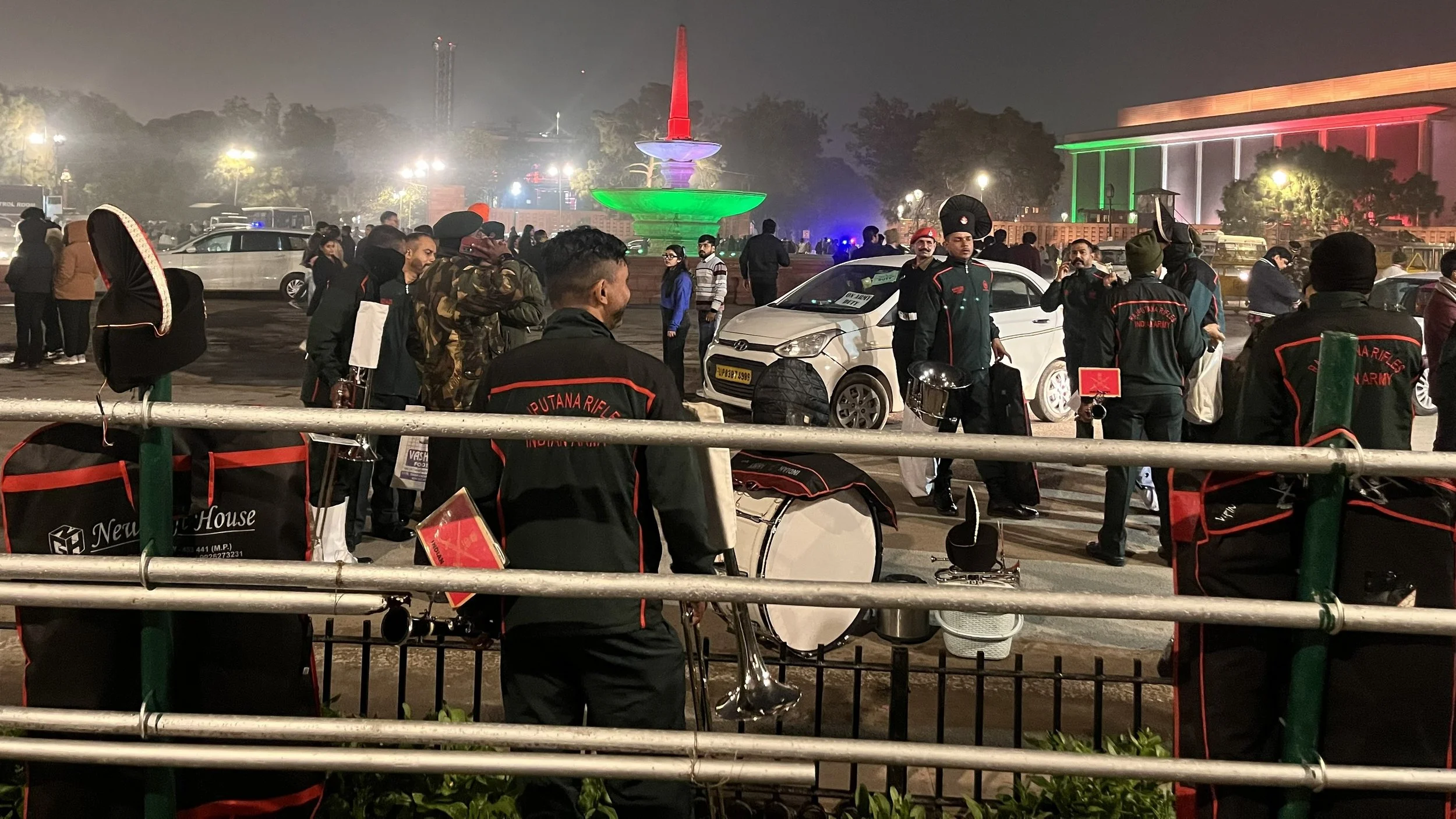
Soldiers of Rajputana Rifles after the conclusion of Beating Retreat ceremony. Photo: Sumit Singh
On January 29, Vijay Chowk echoed India’s voice which is strong, diverse, and unapologetic. For Zoomers, today’s India is often experienced as a battlefield of polarising social media acts and performative outrage, where patriotism is diluted into a competitive digital sport. But the ceremony reminds us of our modern imperfections: our dwindling patience and our struggle to find common ground. It reveals that while rituals are annual, the discipline and quiet unity they represent are the very things missing from our everyday, hyper-distracted lives.
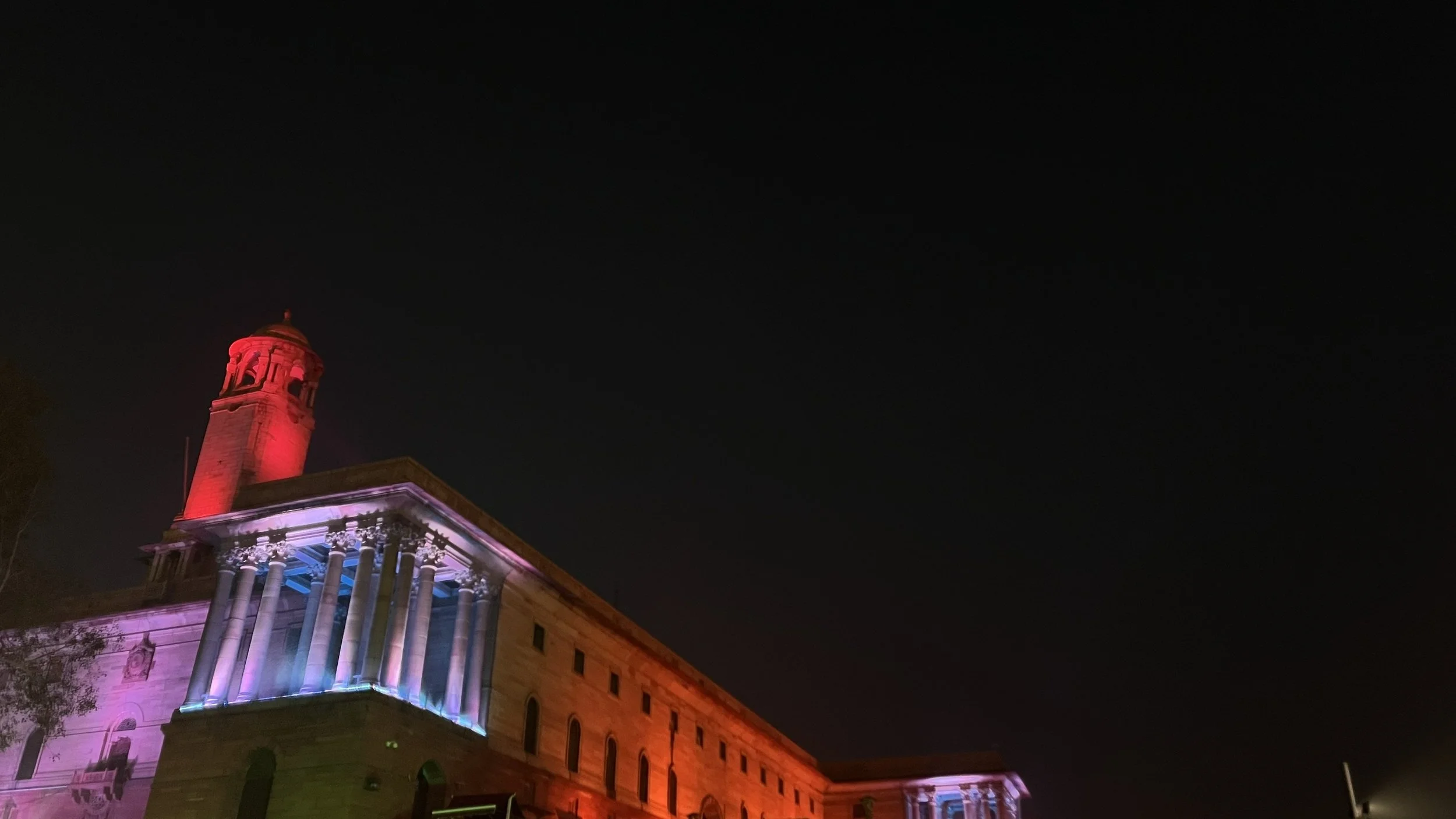
Dimmed floodlights as the last drum fell silent, marking the formal conclusion of India’s Republic Day celebrations. Photo: Aditya Sharma
In geopolitically tense times, its quiet wisdom of controlled power, dignified retreat, and collective discipline feels more relevant than ever. When the last drum fell silent and the floodlights dimmed, we walked out of Vijay Chowk with the same thought echoing in our head. That Beating Retreat is not a ritual of the past, but fiercely of the present, one that reminds us who we are when we choose to listen.
***
Aditya Sharma is a Delhi-based journalist from Jamia who tells grounded, people-first stories. He has reported for The Wire, Article-14, The Leaflet, Outlook Magazine, and others, focusing on everyday lives, tensions, and moments often missed in mainstream narratives, across both traditional and digital formats. His areas of interest are culture, politics, minority issues, and human rights. You can find him on Instagram: @aditya.on.rec and X: @AdityaShar85272.
Sumit Singh is a freelance journalist based in Delhi. You can find him on X: @sumitsinghAT and Instagram: @sumitsingh.at.