
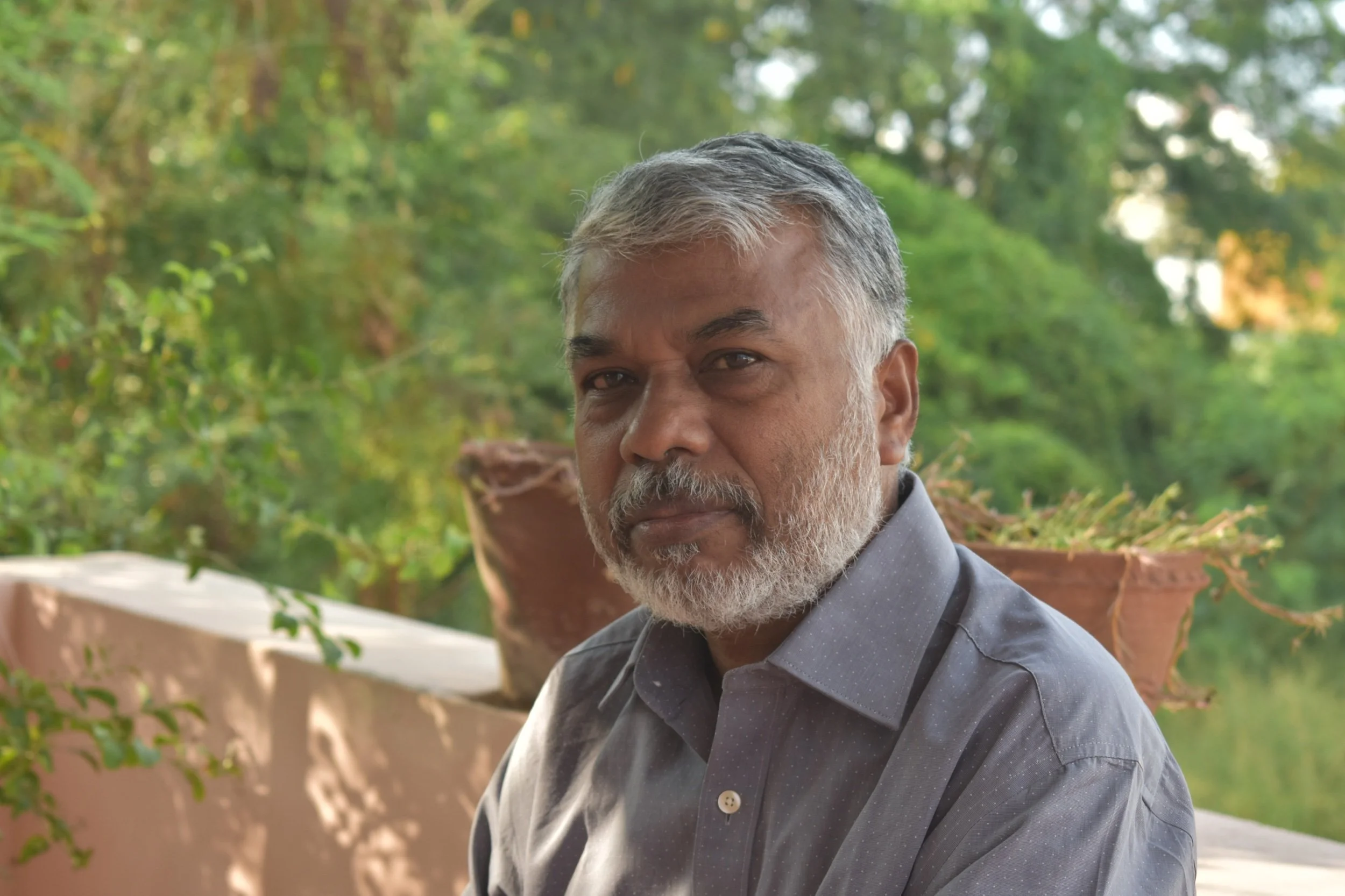
Perumal Murugan Q&A: ‘It has always been my nature to go against the grain’
Acclaimed Tamil author (most-recently of Resolve) Perumal Murugan spoke about satire and literature, about men and women, and about being ‘controversy’s favourite child’. By Medha Dutta Yadav

On the refractive indices of words: The poetry of Sridala Swami
In his review of Sridala Swami’s collection Run for the Shadows (2021), Saurabh Sharma celebrates a poet whose ‘craft is like a prism, from which white light disperses into colourful bands’

Golchakkar: Dispatches from Australia
Golchakkar Series - The October panel of our virtual literary talk featured Christopher Raja and Roanna Gonsalves: Dispatches from Australia.

Golchakkar: The Evolving Pathways of Publishing
Golchakkar Series - The September panel of our virtual literary talk features Akshat Gupta and Kiriti Sengupta: The Evolving Pathways of Publishing.

Golchakkar: Indian Literature from a Queer Lens
Golchakkar Series - The August panel of our virtual literary talk featured Ruth Vanita and Aditya Tiwari.: Indian Literature from a Queer Lens.

Golchakkar: Dispatches from Latin America
Golchakkar Series - The July panel of our virtual literary talk features Shelly Bhoil and Abhay K.: Dispatches from Latin America.

Golchakkar: Graphic Narratives from India
Golchakkar Series - The June panel of our virtual literary talk features Sharanya Manivannan, Varud Gupta, and Devapriya Roy: Graphic Narratives from India.

Golchakkar: Poetry and the Pandemic
Golchakkar Series - The May panel of our virtual literary talk features Sonnet Mondal, Anju Makhija, Aakriti Kuntal, and Ashwani Kumar: Poetry and the Pandemic.

Excerpt: THE AWASTHIS OF AAMNAGRI by Shubha Sarma
‘Or perhaps, Pandit Dinanath Awasthi was exhausted. Tired of a large, brabbling family in a small, rented house, he was convinced that it was time to create memories in a home of his own.’ An excerpt from Shubha Sarma’s novel, The Awasthis of Aamnagri (2020).
In the solo play Adhura, Vivek Vijayakumaran explores how, even as we idolise historical and mythological figures, life tests the ideals they embody. Do these tests still liberate us, or do they become burdens that make it harder to make choices? By Sravasti Datta