Photo-Gallery: The Infrastructure of Dissent
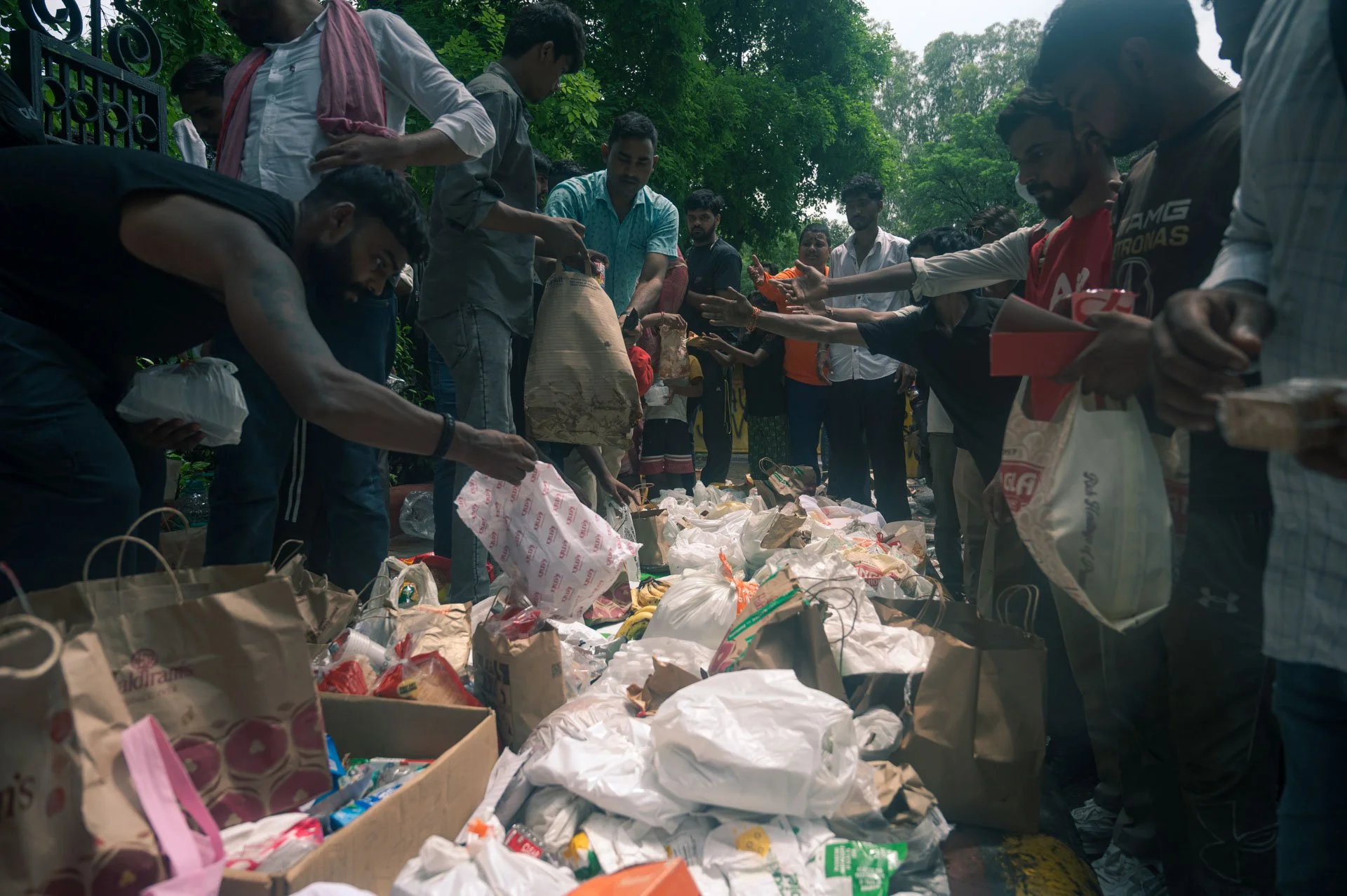
Photo: Dikshit Sharma
At the Student Protests in Jantar Mantar, Dikshit Sharma turns his lens to the moments of collective solidarity—the trash collectors, the food delivery workers, the volunteers, the living community—to reveal the architecture which quietly carries history forward.
Protests have a tendency to be viewed through the lens of their loudest moments: the confrontations, speeches, the slogans, and the headlines they produce. Images tend to cycle around the news which could be understood within fractions of seconds.
Yet, as I moved around Jantar Mantar last month, at the site of the students’ protest, my gaze was drawn towards another side: The slower, quieter and perhaps more revealing aspects of solidarity.
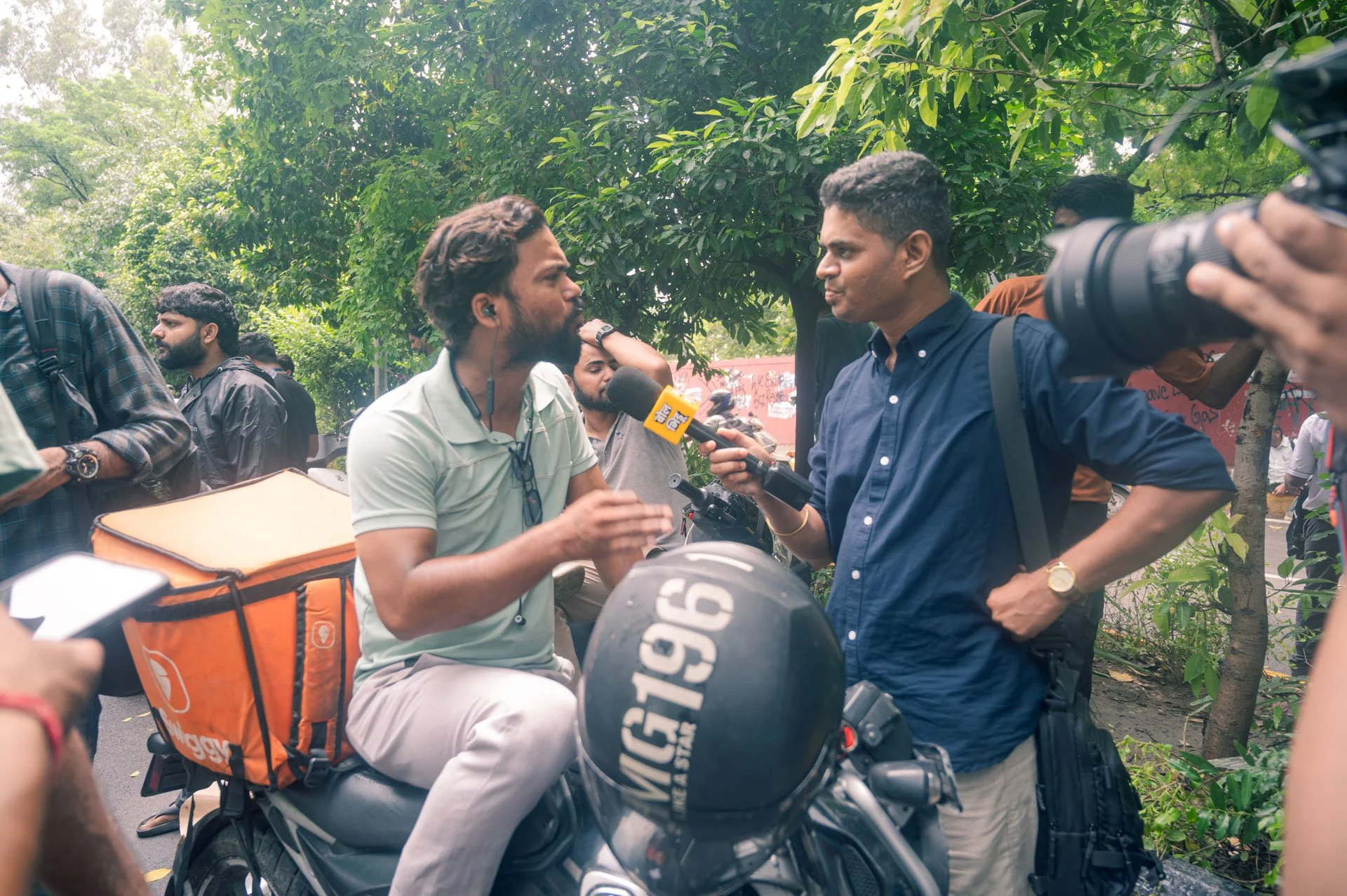
Photo: Dikshit Sharma
Dissent is an act of resistance, but resistance is also often sustained by its quieter moments. The immediate things that struck me was the rhythm of everyday life unfolding within these extraordinary circumstances. Volunteers moved in big groups, carrying and distributing food and water, or fanning pankhasfor protestors who sat peacefully in the intense heat and humidity. A young man who spent the whole day shouting slogans later found himself helping an elderly protester find a place to rest. Another young protestor, who suffers from immobility, rolled up to the site on his skateboard for yet another day of dissent. None of these moments demanded attention; yet as a whole, they formed the invisible infrastructure which held the protest together.
Observing these exchanges unfold shifted my understanding of a protest. The story was not only about paper leaks or disagreement with power, but also about the coming together of people and constructing an alternative system of care—however temporary it might seem.
Solidarity, it seemed, is rarely dramatic. More often, it’s logistical.
Protestors were being fed with meals arriving from across the city, donated by individuals who perhaps would never stand on stage or appear in any newspaper photograph. Delivery workers unloaded boxes, navigating through a crowd that had transformed a public space into a living community. Food formed a process of participation and reciprocation, rather than just nourishment. Every parcel sent remotely represented another individual who—despite their absence—became a part of the movement.
Observing these exchanges unfold shifted my understanding of a protest. The story was not only about paper leaks or disagreement with power, but also about the coming together of people and constructing an alternative system of care—however temporary it might seem.
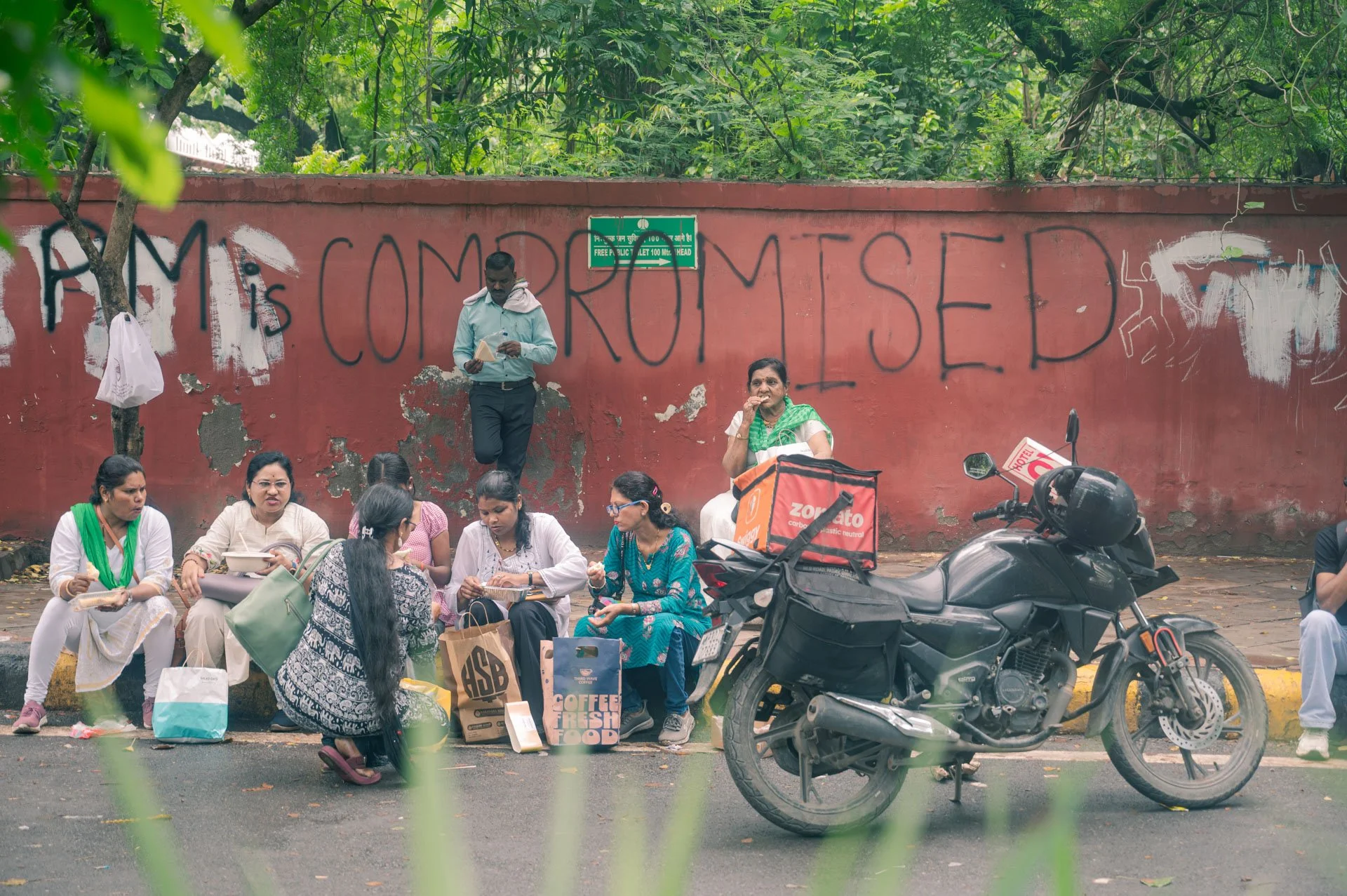
Photo: Dikshit Sharma
The makeshift signs, banners, and walls formed another layer of collective expression. Slogans written in frenzy with a marker sat beside carefully painted posters and collages. These surfaces became an archive of emotions: anger, humour, hope, resilience and grief, all compressed into words and images that invited passersby to pause, look, and reflect. This was a living archive, evolving the street into a citizen-curated museum of expression, history, and art. Some addressed the government, others spoke directly to the fellow citizens, while many simply demonstrated the emotional state of a whole wide generation. Collectively, they transformed Jantar Mantar from a protest site to a public notebook.
For me, perhaps the most striking moments occurred when very little seemed to be happening. People waited. They looked for shade under a tree, shared cups of tea, folded banners, adjusted sleeping mats, and watched the afternoon pass. Such intervals rarely make into the visual language of a protests—yet, waiting is a political act as well. It demands patience, persistence and a belief that showing up day after day matters.
Photography often favours decisive moments. But in such spaces, meaning is accumulated through repetitions rather than climax. It exists in these simple gestures that reveal how people inhabit a shared purpose over time. As a photographer, I often found myself lowering the camera after noticing how easily we get pulled towards moments of conflict, conflict that attracts more likes and thumbs-ups than gentle moments of care.
Yet, care is what remained with me when I left. Someone making sure to keep the protestors hydrated. A volunteer piling up the trash without being asked. A delivery worker smiling before disappearing back into the city traffic. Such gestures rarely become the memorable symbols of dissent. But together, they can say something fundamental about collective expressions. Such movements are held together not just by ideologies but by thousands of little acts of generosity, asking for no expectation of recognition.
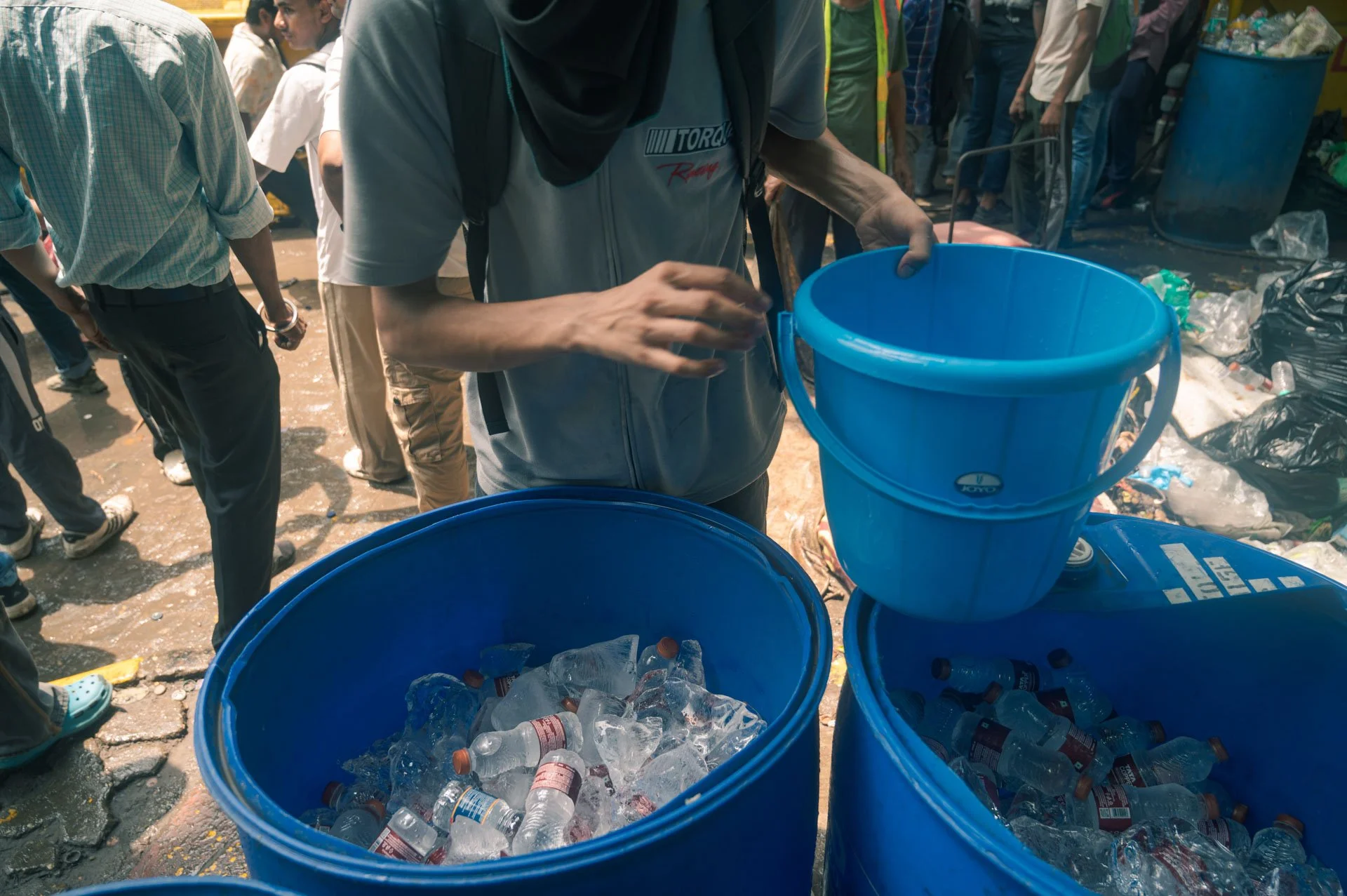
Photo: Dikshit Sharma
The photographs in this essay do not seek to summarise the politics of the protest; instead, they offer us an opportunity to understand what happens when we shift our gaze from the stage or moments of confrontation to the space surrounding it. It is an attempt to make visible that very invisible architecture which quietly carries history forward.
Soon, the protest dissolves, the banners are folded, walls are painted over, barricades moved away, tarpaulins stripped off, and the space gets back to its familiar rhythm. The infrastructure of dissent rarely leaves rarely leaves any colossal structure behind. It lies in the borrowed tarpaulins, in the shared meals, in the moments where relationships forged when strangers, for a moment, begin to care for one another. It is found in volunteers who show up before dawn and the ones who stay after everyone has left. It is not built out of steel and concrete, but in the feeling of collective power and the conviction that no one is left behind or standing alone.
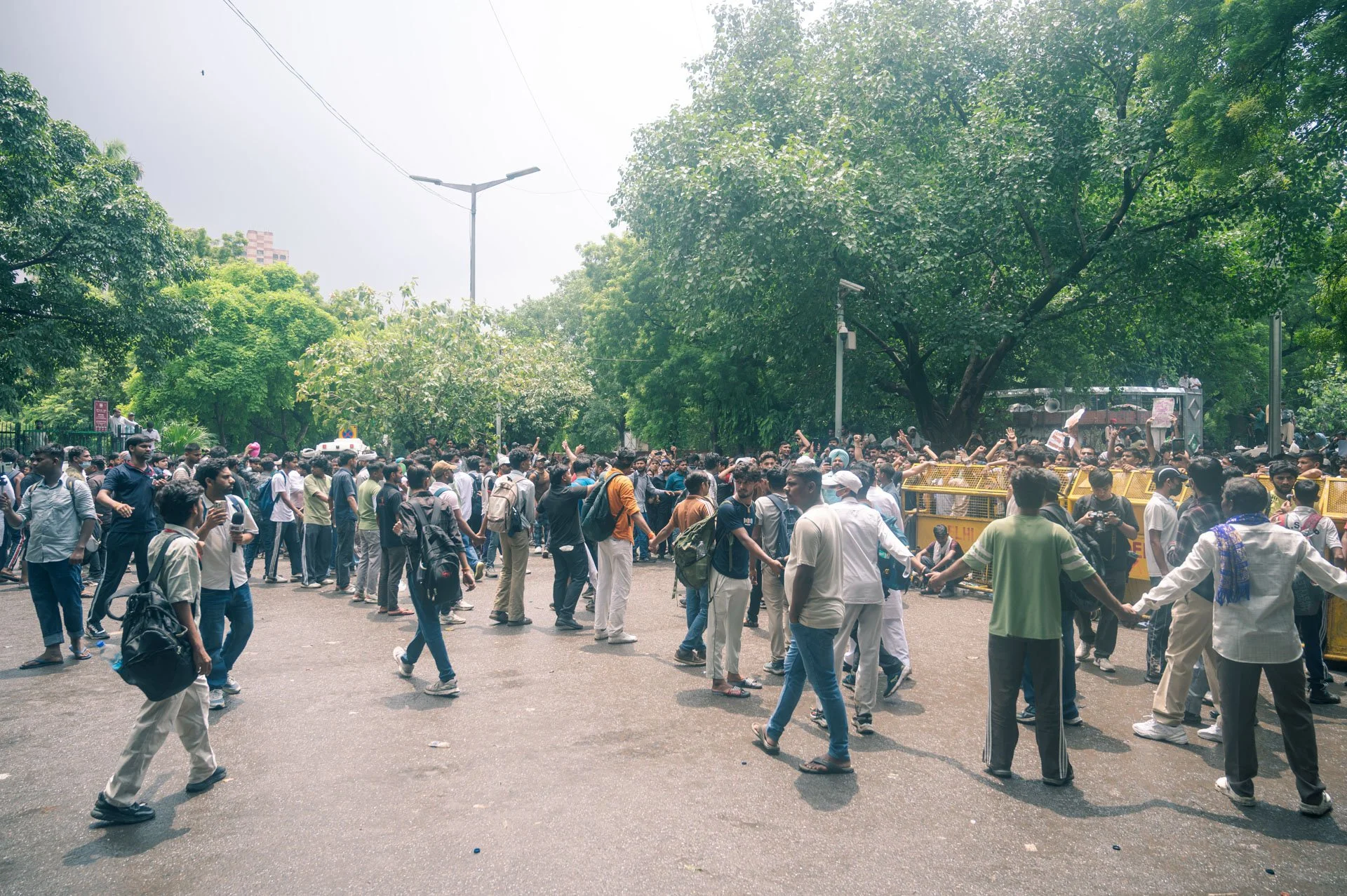
Photo: Dikshit Sharma
Perhaps the true infrastructure of dissent is in the fragile networks that emerge when people realise that true democracy is something that comes into existence when practiced as a collective. A movement cannot demand change without first learning how to sustain itself.
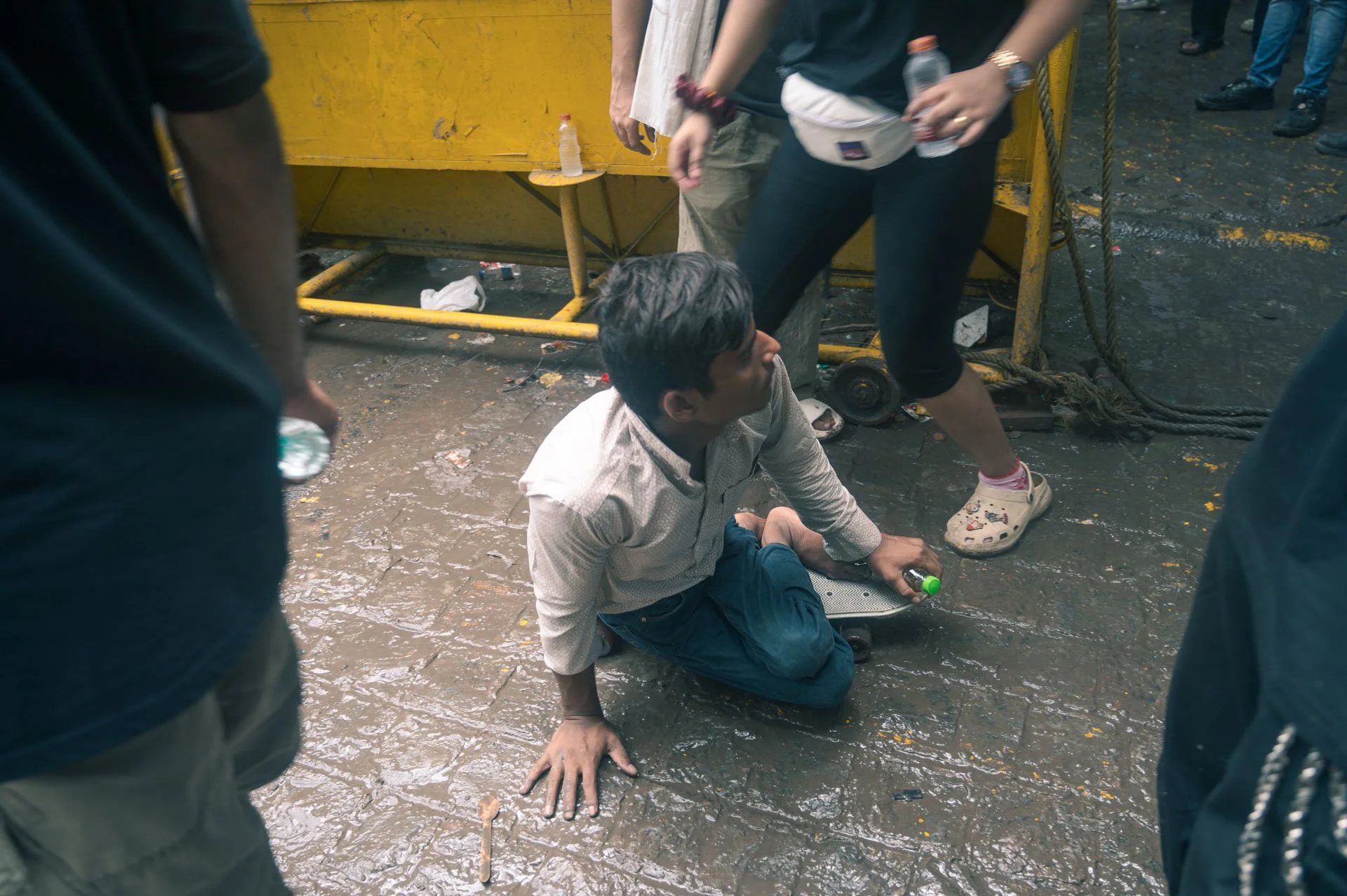
Photo: Dikshit Sharma
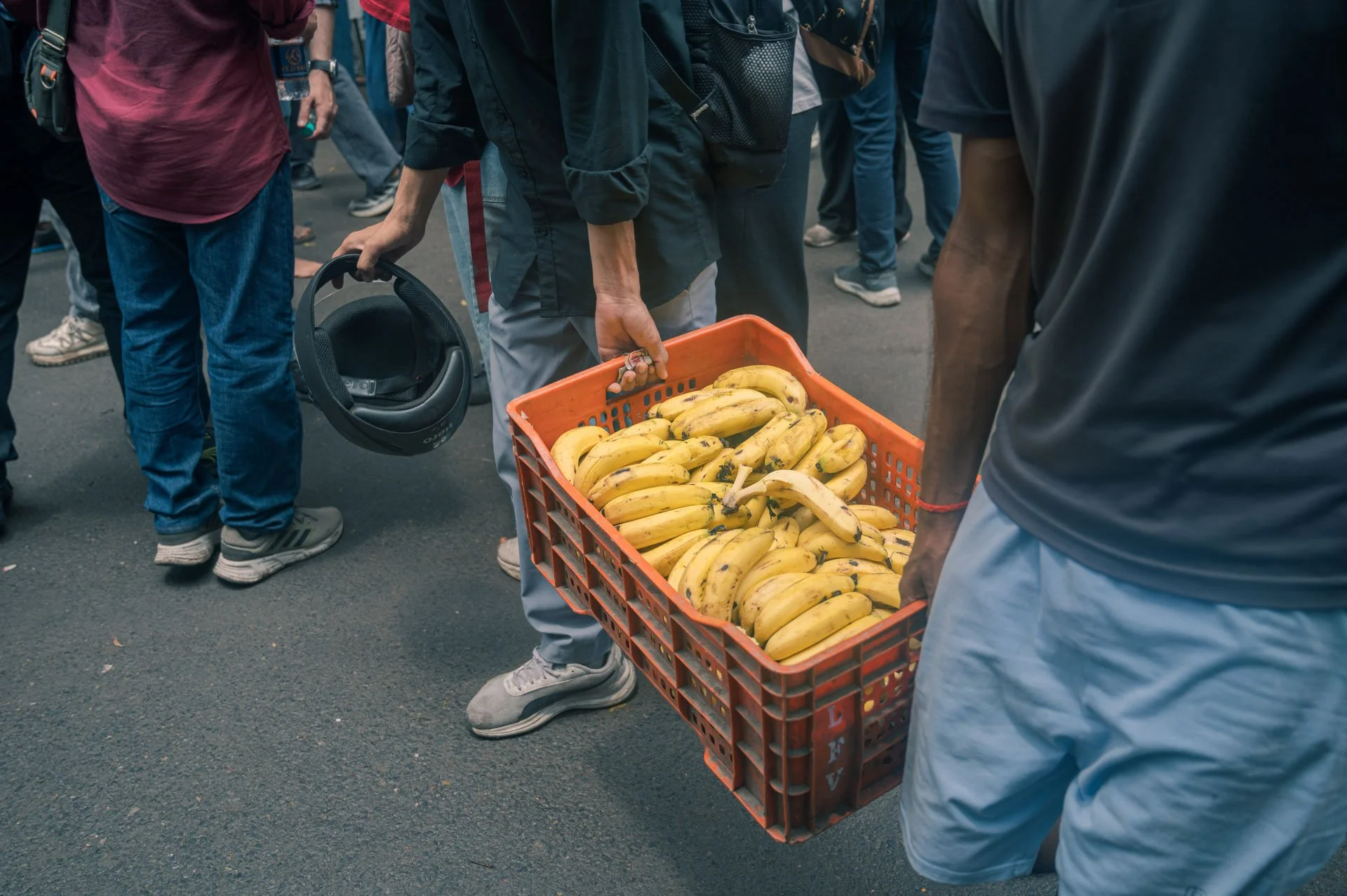
Photo: Dikshit Sharma
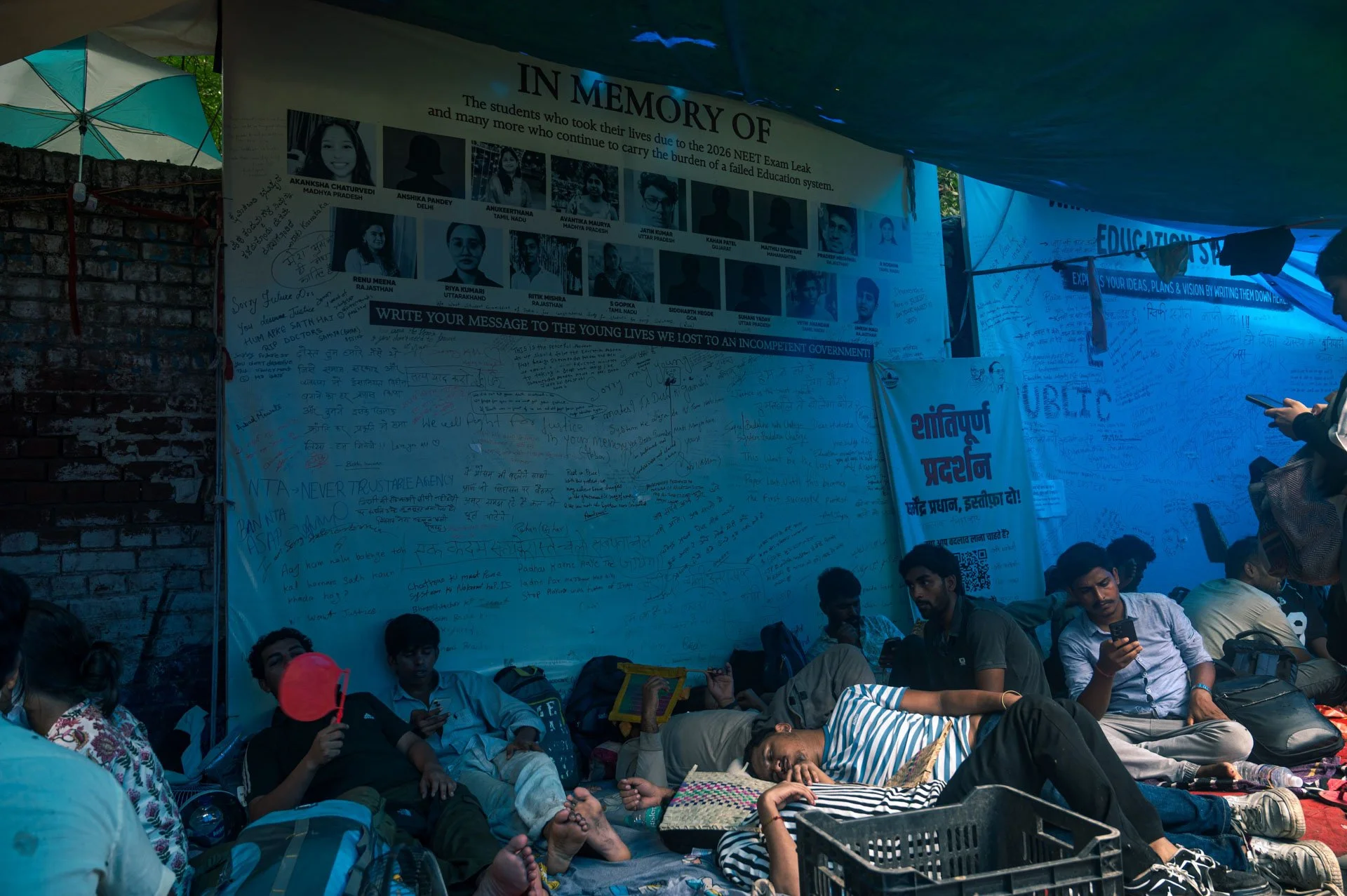
Photo: Dikshit Sharma
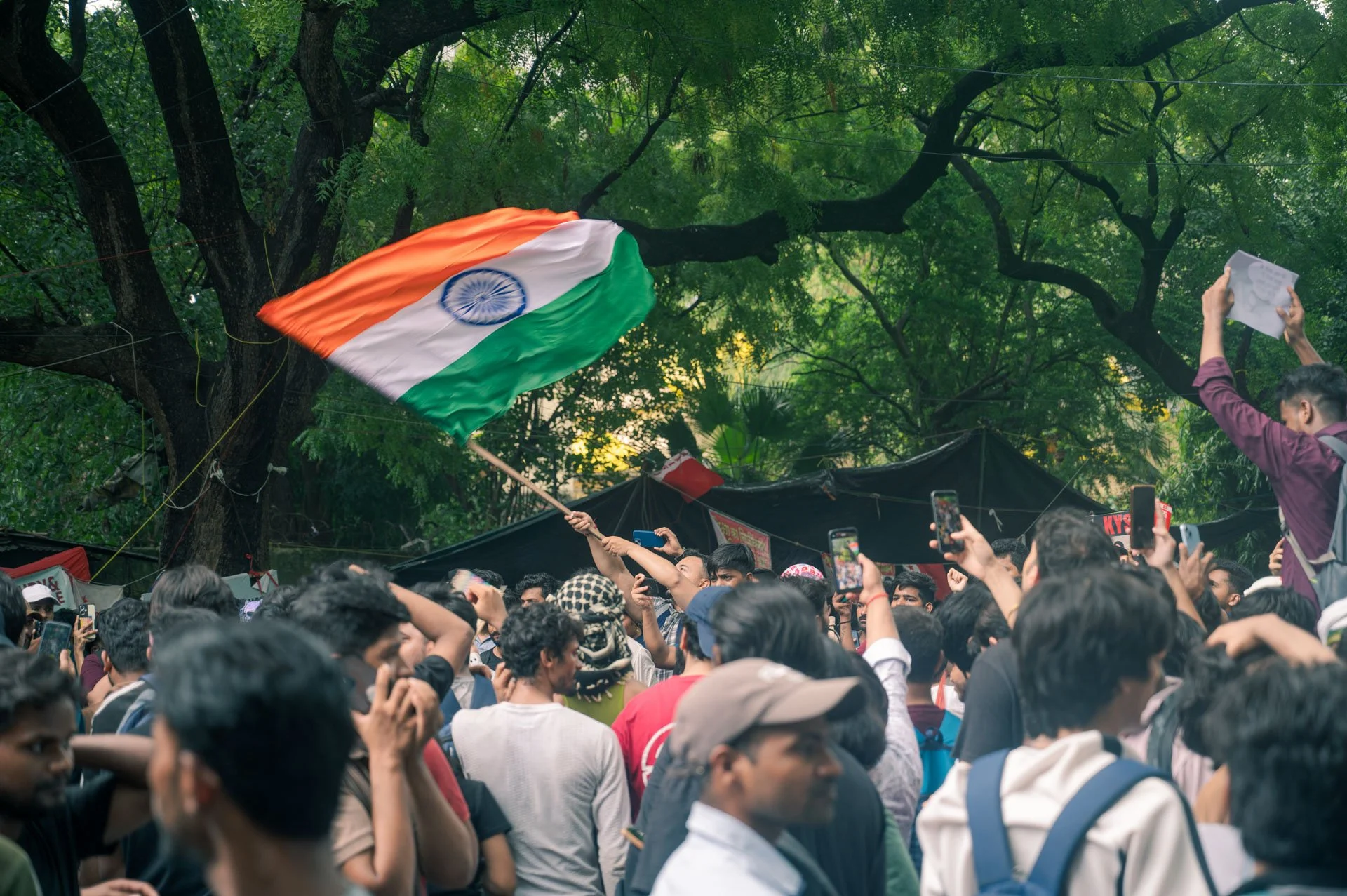
Photo: Dikshit Sharma
***
Born and raised in Assam, Dikshit Sharma, a dedicated practitioner of visual storytelling, combines his design knowledge with a passion for photography. His dedication to the craft was acknowledged with the exhibition of his photobook, Jonbeel, at the Indian Photo Festival in 2019. You can find him on Instagram: @the.livsnjutare.