Student’s Corner: The Heaviest Backpack
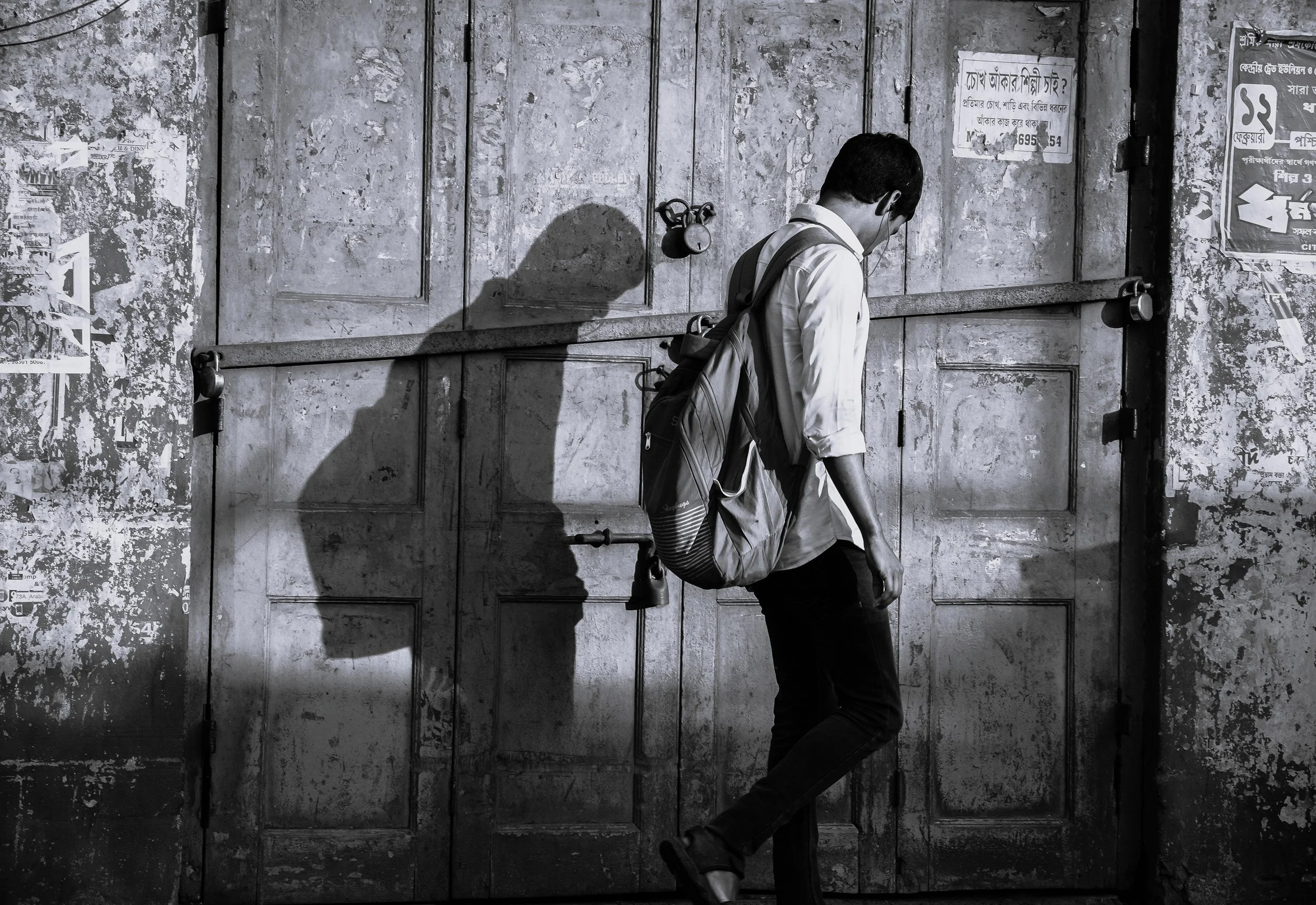
Photo: Soumalya Halder
‘Student’s Corner’ will be an ongoing series on The Chakkar, where we’ll feature essays and other contributions by school students from different parts of India. Reach out to us if you wish to submit your work
Personal Essay: ‘Since 2020, Indian students have faced a pandemic, online classes that turned homes into cages, rising coaching culture, paper leaks, collapsing mental health, inflation, unemployment, and a future that grows more expensive each time the rupee weakens against the dollar.’
The greatest national emergency in India does not arrive with sirens or breaking news banners. It walks silently into classrooms every morning carrying unfinished sleep, and parental expectations. Since 2020, Indian students have faced a pandemic that stole years from our lives, online classes that turned homes into cages, rising coaching culture, paper leaks, collapsing mental health, inflation, unemployment, and a future that grows more expensive each time the rupee weakens against the dollar.
We were once told that education was meant to liberate. Yet millions now study beneath tube lights at 3 a.m, not out of curiosity, but fear: The fear of becoming unemployable in an economy where even degrees stand in job queues. India proudly speaks of becoming a global superpower while its students quietly become casualties of a system that confuses burnout with brilliance.
As a third-generation medical aspirant, I grew up romanticizing the white coat like it was something sacred, capable of healing not just people but the country itself. But somewhere along the way, medicine stopped feeling like a dream and slowly became a survival plan. The fewer stable opportunities a country offers its youth the more survival begins disguising itself as passion.
I joined aerobics in Grade 6 with stars in my eyes. By Grade 8, I wanted to become a gymnast. I wanted bruised knees, stadium lights, and the kind of life that made me feel alive rather than merely employable. But like countless Indian students, I was eventually told the same sentence that quietly buries thousands of dreams every year: “There is no future for sports in this country.” So, I took science in Grade 11 not because it was my calling, but because fear is often more powerful than love. Somewhere between report cards and reality, children stop choosing futures and start choosing survival plans.
We are constantly told that if students leave the country, they are selfish or disloyal, yet nobody asks why so many young people no longer feel emotionally safe imagining a future here. Nobody asks why students who once wanted to build India now spend sleepless nights searching for exits from it. And perhaps the most heartbreaking part is that even the outside world no longer feels stable enough to run toward. The future is uncertain everywhere, with wars, economic instability, and global tensions.
As a frequent reader of newspapers, I often notice headlines celebrating growth, rankings, billion-dollar industries, and technological revolutions, yet beneath those achievements exists a quieter story of students turning into statistics before they even become adults. This generation has watched classrooms turn into Zoom windows, friendships into notifications, and ambition into survival. We learned about freedom while living inside rank lists. We wrote essays on dignity while students across the country collapsed under exam pressure, cyberbullying, financial instability, and the endless reminder that somebody else is always ahead.
We were once told that education was meant to liberate. Yet millions now study beneath tube lights at 3 a.m, not out of curiosity, but fear: The fear of becoming unemployable in an economy where even degrees stand in job queues.
And the cruelest reality of all is how narrowly success is defined. Years of sacrifice, sleepless nights, skipped childhoods, and silent breakdowns are reduced to a handful of seats hidden behind impossible cutoffs. If we do not secure specific institutions or government seats, it is treated as though none of our efforts ever existed. No rank list records the nights students spent fighting panic attacks in silence. No result remembers the child who wanted to make their parents proud so badly that they slowly forgot how to live for themselves. In this system, failure does not merely reject students—it just erases them.
Parents spend life savings on coaching institutes, while middle-class students study with the desperation of people trying to outrun poverty itself. The tragedy deepened after repeated paper leak scandals and institutional failures shattered the belief that honesty alone guarantees success. Across the country, students slowly began realizing that merit often arrives late to a race already distorted by privilege, exhaustion, and inequality.
Meanwhile, inflation climbs silently through grocery bills and hostel rents while students sitting alone in coaching hubs begin questioning whether education is still an investment or simply lifelong debt delayed by hope. Young Indians are more educated than ever before, yet increasingly terrified of the future waiting beyond graduation. Students today do not merely compete against exams; they compete against shrinking opportunities, loneliness, economic instability, and the unbearable pressure to justify their existence through productivity. Even rest now feels like guilt.
We are raising a generation fluent in formulas yet unable to afford certainty, emotionally exhausted before adulthood has even properly begun. Somewhere between entrance exams, unemployment reports and midnight panic attacks, an entire generation has begun mourning dreams that never even got the chance to fully exist. And perhaps that is the cruelest part of all; not that students are failing the system, but that the system has learned to survive through the slow erosion of young hope itself.
Dr. B. R Ambedkar believed education was meant to liberate, not suffocate. A nation cannot truly progress when its youth begin losing hope in the future they were asked to build.
***
Mansi Dhankar is an 18-year-old student from Udaipur currently in a gap year.