a boy who lost an eye
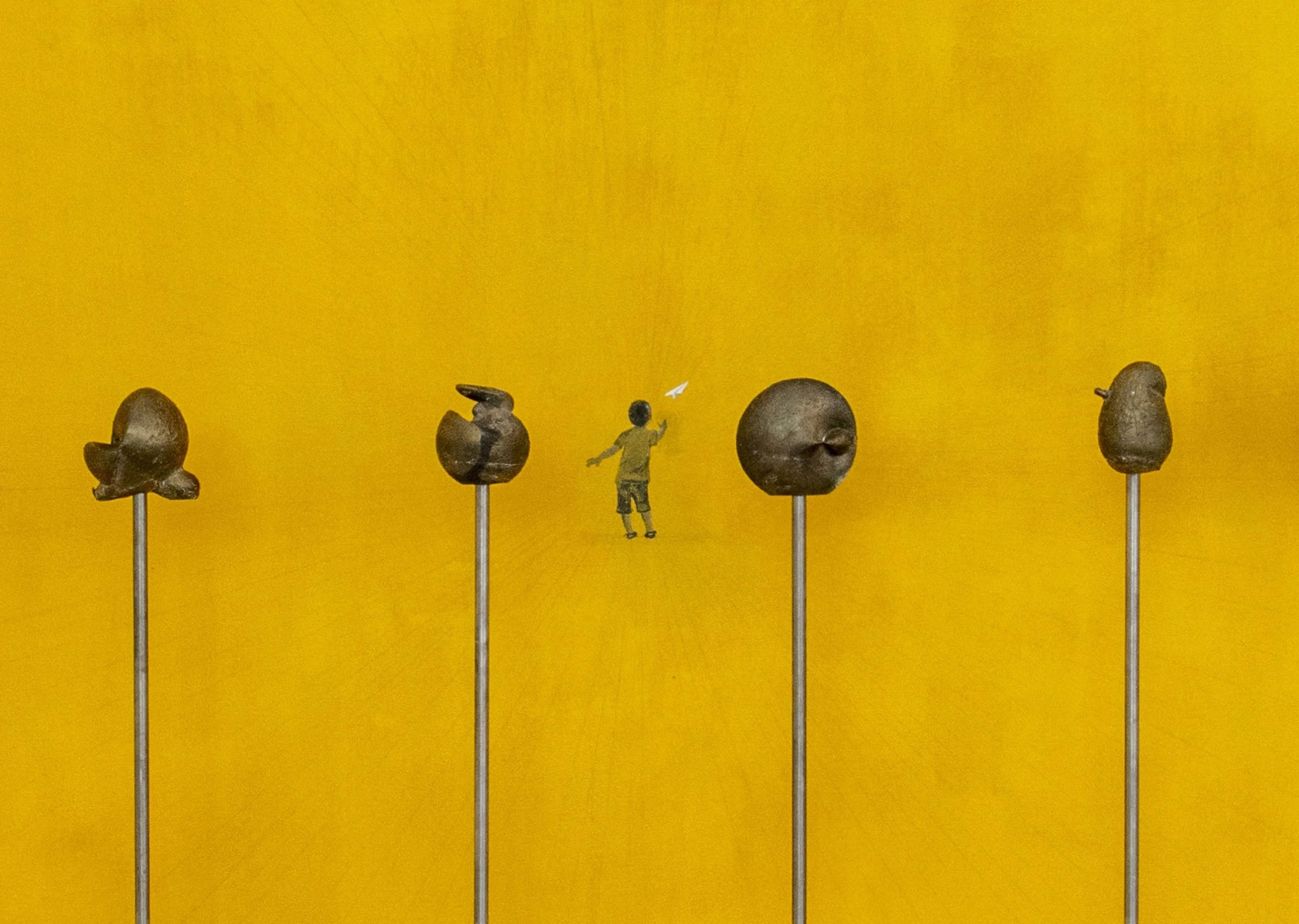
“a boy with a paper plane” by Ravi Modi. Photo: Shalini Polra
Personal Essay by multidisciplinary artist Ravi Modi: ‘Truth, I came to realise, is fluid, shapeshifting, dusty, incomplete. It never arrives whole. It gathers slowly, the way vision does, through fragments and adjustments. Much like my own sight, truth is always in the process of becoming.’
Always, there exists another truth, often overlooked because it does not arrive cleanly or all at once. My work allows me to witness the subtle magic that shimmers beneath the world we take for granted. A realm of unreliability is unjustifiably juxtaposed. In my work, comfort is scarce, but control reigns within the labyrinth, which leads me to walk into the darkest side in a brighter way.
What do you see? The question followed me from the ophthalmologist’s clinic to the world beyond. At the age of nine, I was struck in the left eye by a stone while playing with a paper plane. The accident altered my vision, but more significantly, it altered how reality began to register. What had once felt continuous became fragmented. What had once been assumed now demanded negotiation.
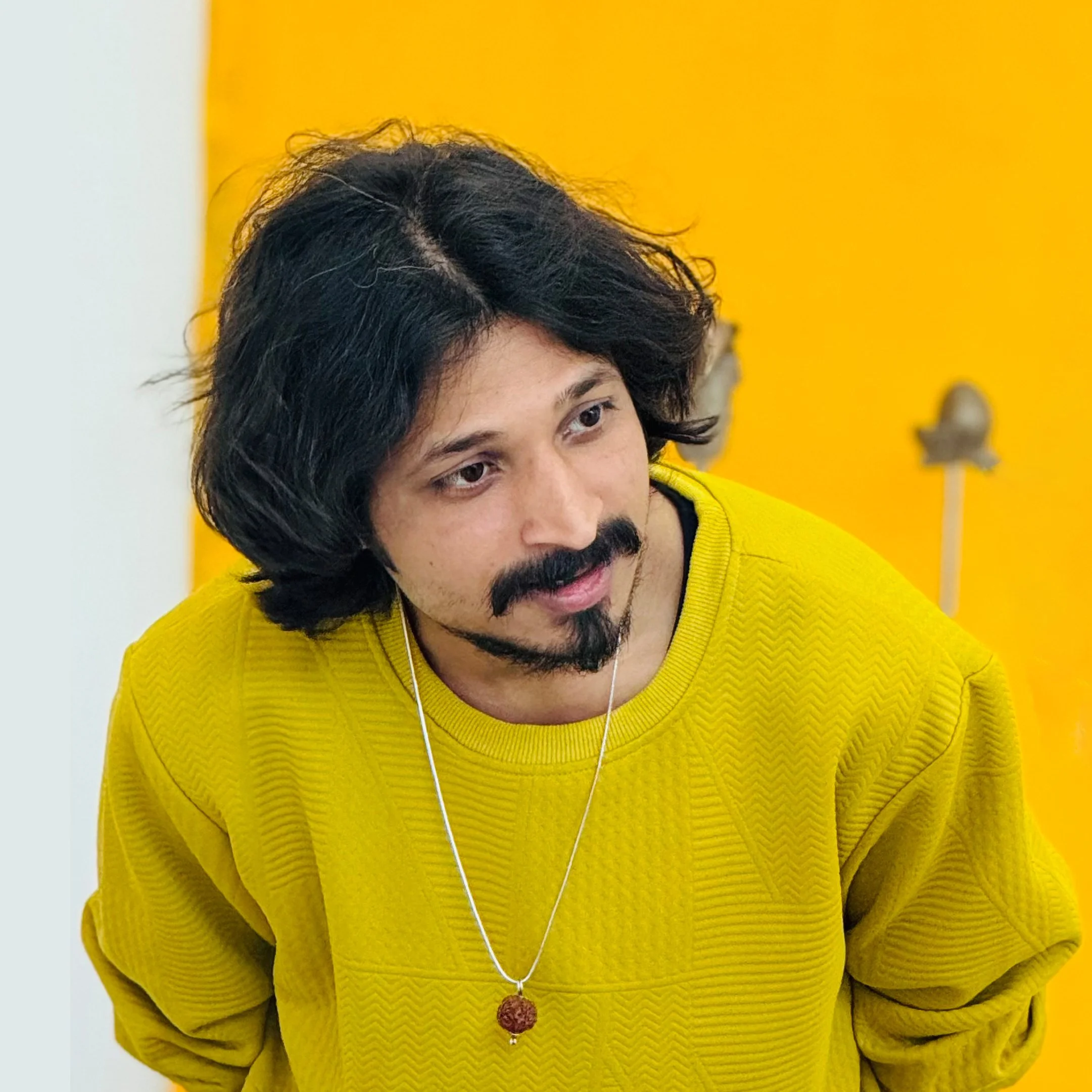
Ravi Modi. Photo: Shalini Polra
I remember my fourth eye surgery clearly. When the ophthalmologist removed the bandage, I was reassured that everything would be fine, that my vision would return. Instead, I saw only blurred fluid, diffused light, and unstable shadows, an indistinct world that refused to come into focus.
I was then asked that simple question: What do you see? It happened without warning, and I did not yet have the words. I was confused, unanswered, and unable to explain what I was seeing. Following further examinations, the ophthalmologist explained that the only remaining option was eye replacement. I turned toward my parents, believing almost instinctively that they would be able to fix everything.
Pain did not arrive all at once. It seeped gradually, slowly, settling into his perception and reshaping his experience of the world. In that space of uncertainty, I found solace in my grandfather, paralysed for fourteen years and confined to a darkened room, The room was dim, but it was not empty. It was filled with stories. Hours were spent listening to retellings of Indian scriptures, the Panchatantra, mythologies, and personal stories drawn from their archaeological hometown, stories shaped by the rupture of the Partition, forming non-linear maps of life, memory, and endurance.
My vision is fluid and ever shifting; it flickers, rearranges, and never fully settles. What might appear as a visual limitation has become a guiding methodology for my work. Magical realism entered not as an aesthetic choice, but as a lived necessity.
During this period, I felt uneasy about stepping outside, and after my grandfather’s death, the sense of discomfort deepened. I began to dream. These dreams did not offer consolation; they unsettled me. They arrived with confusion and unease, carrying a quiet disquiet that lingered into waking life, blurring the boundaries between memory, imagination, and fear.
It took decades, but after countless encounters with fragility and wonder, I began to question the very unfolding of his life: Was this given to me for a purpose, as it happens in stories? How might I shape it, and how might I tell it? How can I share what I see, and the way I truly see it? How does the mind perceive these shifting realities?
These questions carried me forward, curiosity layering itself like dust and light, shaping the way I moved, observed, and created. They did not resolve themselves; they multiplied. Each inquiry unfolded into another, until questioning itself became a mode of evolution, an ongoing becoming rather than a search for conclusion.
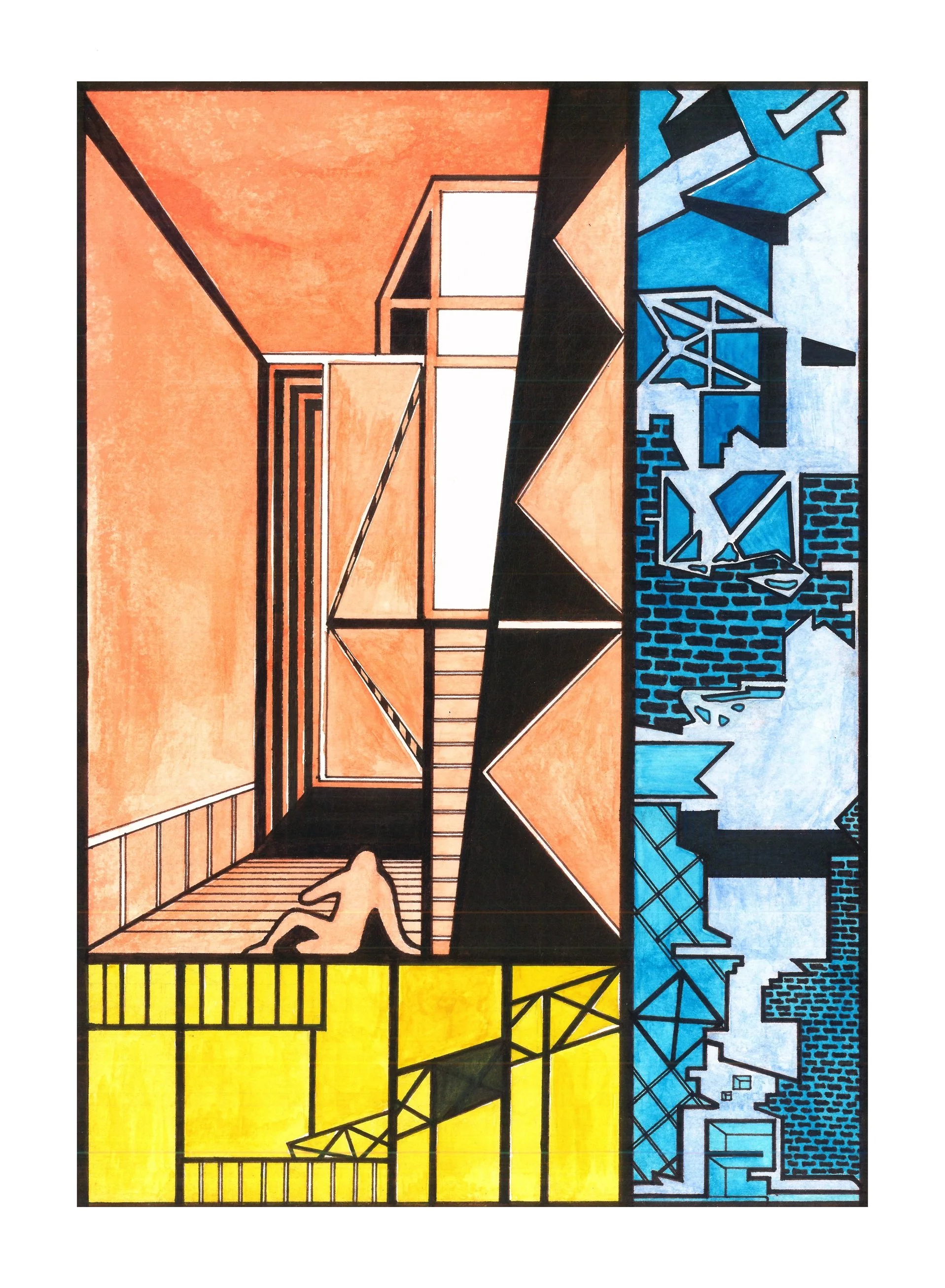
Artwork by Ravi Modi. Photo: Shalini Polra
It was within this persistent inquiry, with the birth of both confusion and wonder, that I joined architectural studies at Maharaja Sayaji Rao University of Baroda. The rich educational and creative environment sparked a deeper curiosity in me: why certain things resonate so profoundly, why some spaces bring comfort while others unsettle, and how memory weaves itself into our experience of the world. I began to explore how objects can embody stories, carrying time, memory, and lived experience through their material, texture, form, and finish. It taught me to perceive rhythm in movement, narrative in objects, context in site, and ethics in creation, transforming the techniques of building into a refined way of seeing, feeling, and truth in making.
I graduated in 2020, receiving two gold medals in artistic design and the Prof. Mayur Gupta Art Award for Creative Student of the Year. Later, my artistic drawings were specially recognised by The Golden Trezzini Awards in Russia in 2021 and one of my paintings was exhibited at the Maldives National Art Gallery in early 2022.
Over time, I learned to look slowly. My vision is fluid and ever shifting; it flickers, rearranges, and never fully settles. What might appear as a visual limitation has become a guiding methodology for my work. I have shaped my pursuits across reading, painting, sculpture, poetry, and filmmaking, often intersecting and interrupting one another. Magical realism entered not as an aesthetic choice, but as a lived necessity.
Through my lived experience and observation of the quiet architectures of everyday life, I was learning to see the stillness in which truth takes root and observed that it does not reside in things themselves, but in the frameworks that hold them. The world is taught to divide, to measure, to standardise, to name what fits and ignore or correct what does not. In this grammar of order, difference is translated into error, and the body becomes something to be adjusted rather than understood.
For a long time, I inhabited this misalignment, believing myself to be the fracture. Yet slowly, another recognition emerged: the fracture belongs to the system. What calls itself whole survives by narrowing perception; what claims normality depends on exclusion. Compliance is mistaken for completeness.
Truth, I came to realise, is fluid, shapeshifting, dusty, incomplete. It never arrives whole. It gathers slowly, the way vision does, through fragments and adjustments. Much like my own sight, truth is always in the process of becoming. Our differences are not an exception but a shared condition. Disability does not live only in the body, but in the ways that we refuse to make room for complexity.
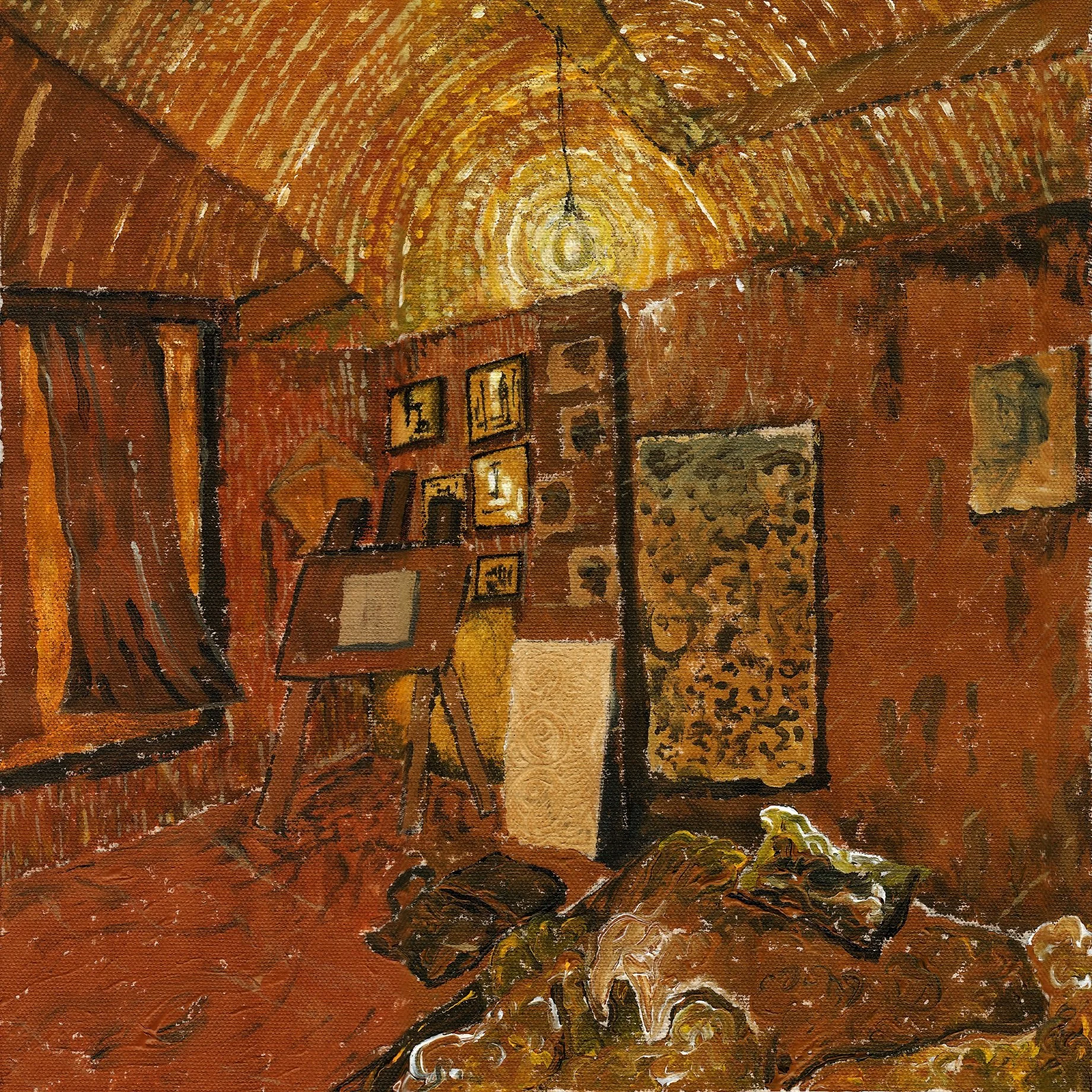
Artwork by Ravi Modi. Photo: Shalini Polra
From this understanding, my practice began to form. Not as a search for answers, but as a way of staying with uncertainty. A way of looking longer, paying attention to what resists definition, and allowing meaning to remain unfinished.
The bronze is sourced from my archaeological hometown, carrying with it the accumulated weight of history. Its broken and unfinished artefacts shaped my understanding of memory, not as something that survives through wholeness or completion, but through fragments: through what persists, what remains, and what endures despite fracture.
This approach finds one of its clearest expressions in “Snellen Chart,” a work that took over a year to complete, which revisits the 1862 diagnostic tool founded on principles of standardisation and the notion of a “normal” body. Rather than asking what one sees, the work interrogates how closely one is expected to conform. Each fractured cubic frame records a fleeting moment of vision and memory, capturing the instant in which the eye reshapes perception before it fully registers what is seen. In translating this fluid, unstable vision into the unusual solidity of bronze, the work renders perception both material and resistant.
Through the making of bronze sculpture, I seek to give form to the fluidity of truth within a material often associated with permanence. The bronze itself is sourced from my archaeological hometown, carrying with it the accumulated weight of history. Its broken and unfinished artefacts shaped my understanding of memory, not as something that survives through wholeness or completion, but through fragments: through what persists, what remains, and what endures despite fracture.
In my work, bronze does not fix meaning; it unsettles it. What appears solid carries distortion, incompleteness, and hesitation. Forms remain tentative, unresolved, as if still in the act of becoming. In this, the material mirrors my own experience of truth, not complete, not final, but slowly revealed through fragments, perception, and lived memory.
Bronze resists time, yet it records it. It carries weight, but also vulnerability. From a distance, it appears stable; up close, it trembles with uncertainty. The sculptures do not provide answers. They invite the viewer to pause, to look again, and to consider how even what seems enduring can remain fluid, fragile, and alive, reflecting the ever-shifting, imperfect, and luminous nature of perception itself.
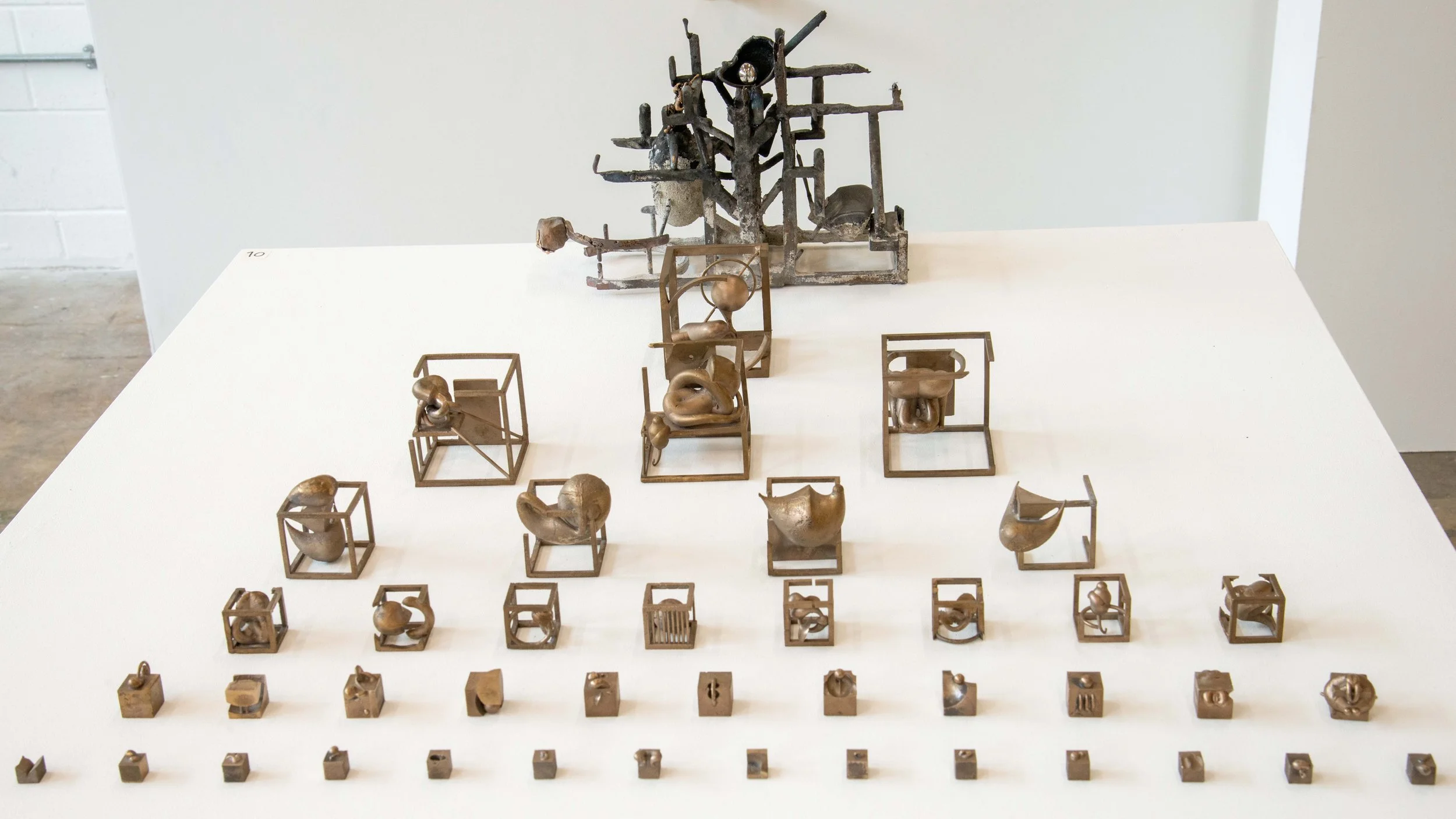
“Snellen Chart” by Ravi Modi. Photo: Shalini Polra
The artwork “Snellen Chart,” recently selected for the John Ruskin Prize, was chosen from nearly 4,000 entries. The prize looks beyond technical polish, rewarding work grounded in deep observation. Selection hinges on sincerity and social purpose: the work must reject superficiality in favour of a meaningful engagement with the world’s environmental or moral challenges, embodying Ruskin’s belief that true art should improve the soul of both the maker and the viewer.
In my multidisciplinary practice, each medium informs the other, creating a flow of ideas that sustains daily exploration and keeps my curiosity alive. Inspiration moves across painting, sculpture, writing, and filmmaking, each practice feeding the other, forming a continuum of observation, reflection, and making.
I maintain a surreal diary to document my dreams. Each morning, I discover some written or illustrated notes on my bedside, which I then paint on paper with ink. Afterwards, I elevated the lines of the drawing and cast them in bronze, and these are the “Dream Coins.” In this way, ephemeral visions are given material presence, capturing the instability and magic of experience in a form that endures yet remains fluid.
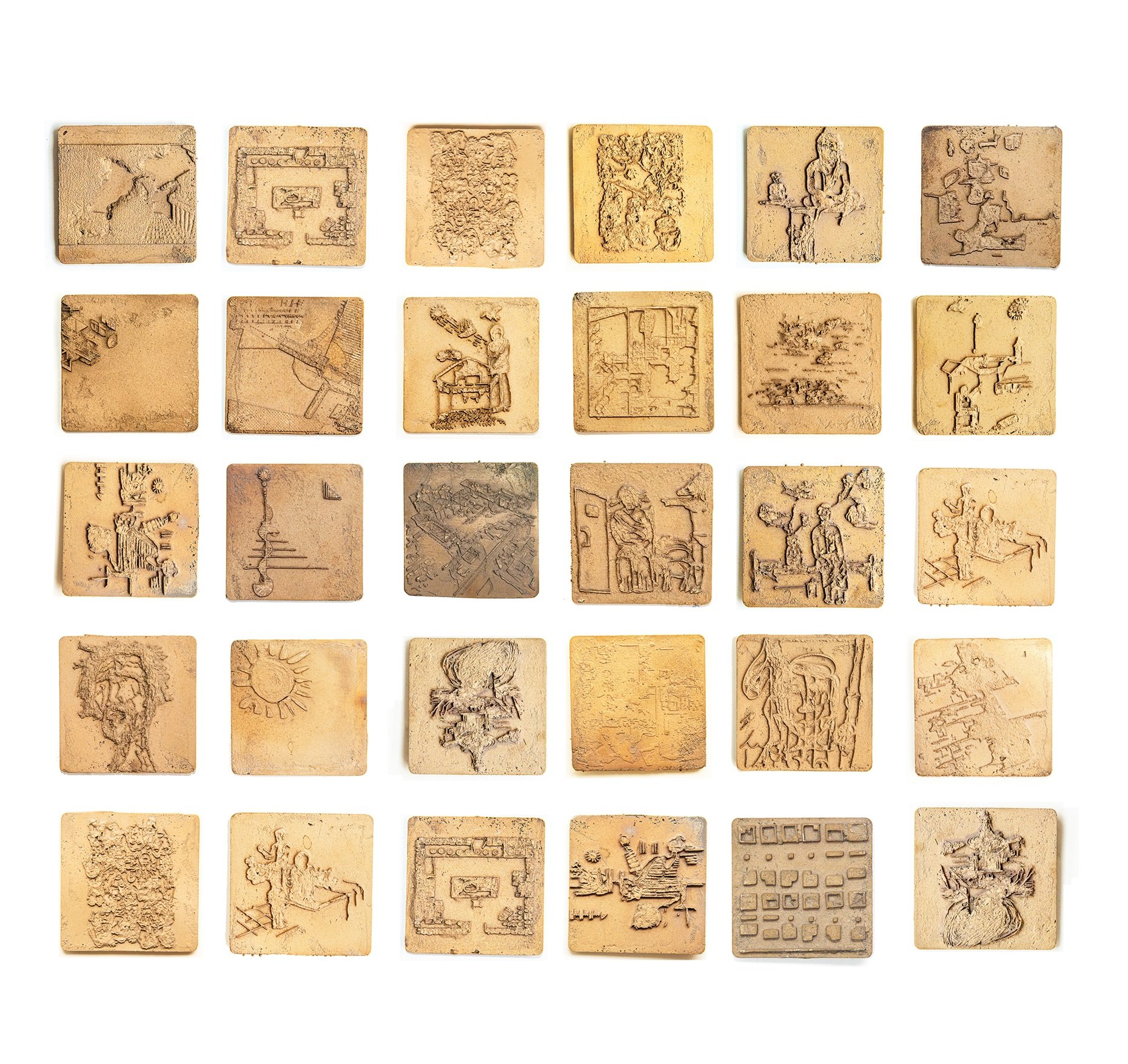
“Dream Coin” by Ravi Modi. Photo: Shalini Polra
Currently, I am working on a novel, an extension of this exploration. Writing the novel allows me to delve into the deep philosophy behind the fluidity of truth, with magical realism at its core, tracing threads of perception, memory, and imagination across narrative. Writing, however, is not my primary practice, so this project will unfold more slowly than my visual work, allowing ideas to settle and transform over time. Through this patient inquiry, I continue to explore the same questions that guide my art: How do we witness the unseen? How do we hold fragments of reality and transform them into meaning? How does truth shimmer at the boundaries of what we can know?
*
Two Poems
A boy who lost his eye
the sun is in one eye,
the moon in the other,
i see the dazzling sun with the moon’s eye
with others, I see the lunar mare
before the solar eclipse,
i aspire to grow a third eye
a boy who lost an eye.
ટોળું બાજુ ના મહેલ્લા માં જામ્યું હતું અને
શું શું ચાલતું હતું એ કહું તને?
બુશકોટ નો કોલર ઝાલી ને
મમ્મી એ કહ્યું, ત્યાં જતો નાઈ
મને અંદર મોકલ્યો
ને હું ધાબે ચડ્યો
ટોળું બાજુ ના મહેલ્લા માં જામ્યું હતું અને
શું શું ચાલતું હતું એ કહું તને?
ના રે ના, એમ કઈ સાપ કે વાંદરા નો ખેલ નહોતો,
ના તો કોઈ ઉપાધિ ભરેલી વ્યક્તિ નું આગમન હતું
ધાબા ની પાળી ગરમ ને માથે સુરજ
ધગઘગતો તડકો અને ગામ આખું
બપોર ની ઉંગ માં નિરાંત
આજુ કે બાજુ ના ધાબા માં કોઈક તો હોઉંવું જોઈએ,
જેના ઉપર ચઢી ને જોઈ શકાય કે
ટોળું બાજુ ના મહેલ્લા માં જામ્યું હતું અને
શું શું ચાલતું હતું એ કહું તને?
બાજુ ના ધાબા માં તો બિલાડી, તાકી ને બેઠેલી અને,
સામે ના ધાબે મોર દૂર થી આવતા વાદળ ને તાકતો
વાદળ કાળા ને જાણે પાણી થી ભરેલા
મોર એટલો જ તરસ્યો ને બિલાડી એટલી જ ભૂખી,
ટોળું બાજુ ના મહેલ્લા માં જામ્યું હતું અને
શું શું ચાલતું હતું એ કહું તને?
અને ત્યારે જ,
બુશકોટ નો કોલર ઝાલી ને
મમ્મી એ કહ્યું, ના પડી ને તને અંદર બેસ.
***
Ravi Modi is a UK-based multidisciplinary artist driven by the belief that “there always exists another truth,” often overlooked, because it does not arrive all at once. After losing an eye in a childhood accident, Ravi transformed a fragmented visual reality into a guiding methodology, utilising magical realism to explore the boundaries between memory and perception. A double gold medalist in architecture from Maharaja Sayaji Rao University of Baroda, his practice materialises ephemeral experience across sculpture, painting, and film. Notably featuring the John Ruskin Prize-selected and New Art Exchange (NAE) exhibition, selected "Snellen Chart", a bronze interrogation of standardised sight. You can find him on Instagram: @ravianartist.