Photo Essay: The Old Shop of Wazirganj
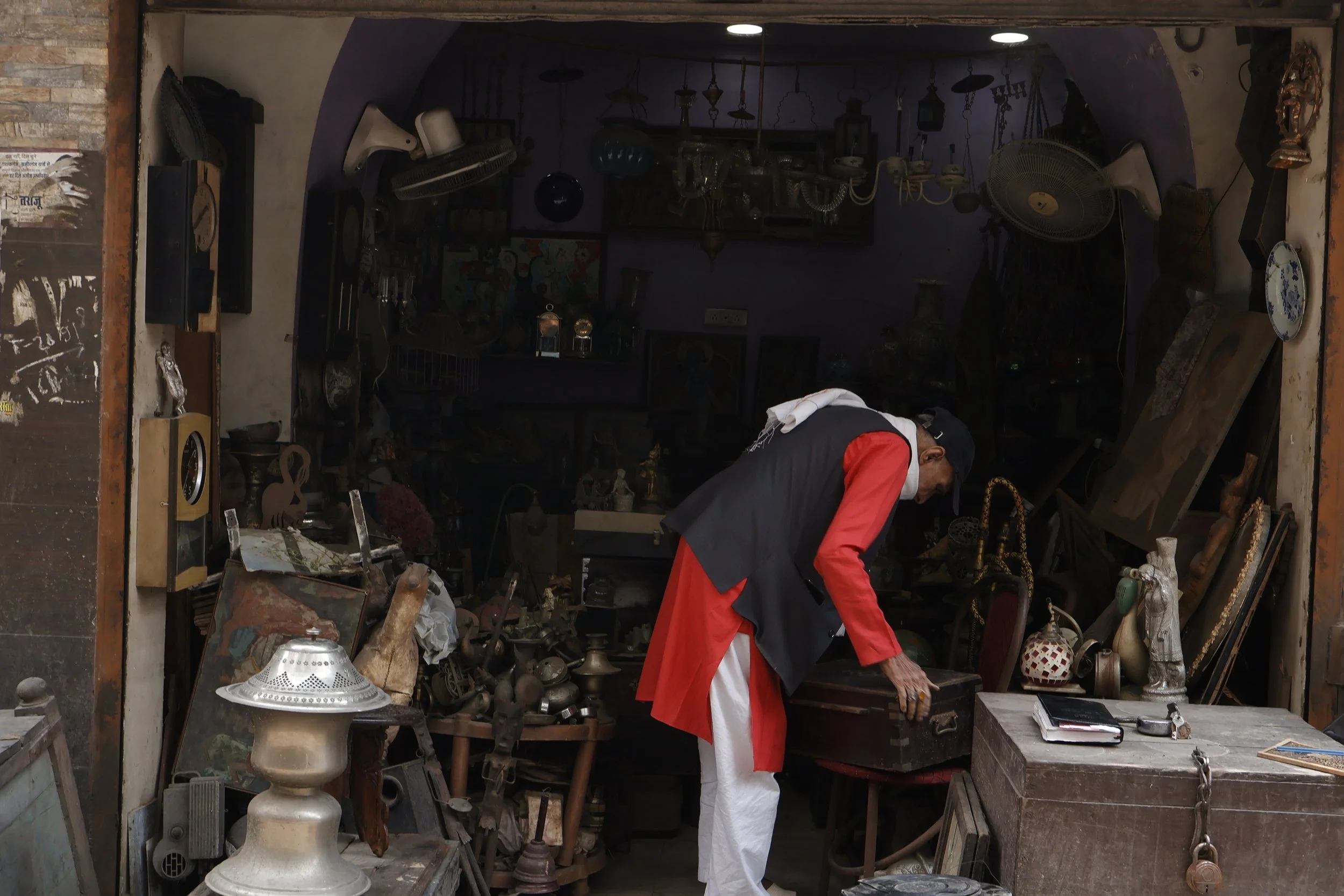
Hamid Rizwi opening his shop in the afternoon. Photo: Ishita Yadav
Seated among old paintings, clocks, clothing, trinkets, and valuables, 76-year-old Hamiz Rizwi maintains a kaleidoscopic antique shop in Lucknow, revealing new stories with every glance.
The shutter opens in the afternoon with Hamid Rizwi, 76, placing multiple items outside on a metal trunk box, each object rusted brown with time. One by one he places a hookah, a naqqashi work kettle, an old globe. He sets the time on an old German clock, before going inside to dust around and sit in his chair. In the narrow alleys of space here, one finds a menagerie of antiques, from age old porcelain plates from China to a record player emanating soft music at the drop of a needle.
Finally, the shop is open. Rizwi sits in his humble space amongst stereos, chandeliers, cameras, paintings of the 19th century Husainabad Ghanta Ghar, and prints of Raja Ravi Verma’s Woman Holding a Fruit, while soaking in the afternoon sun.
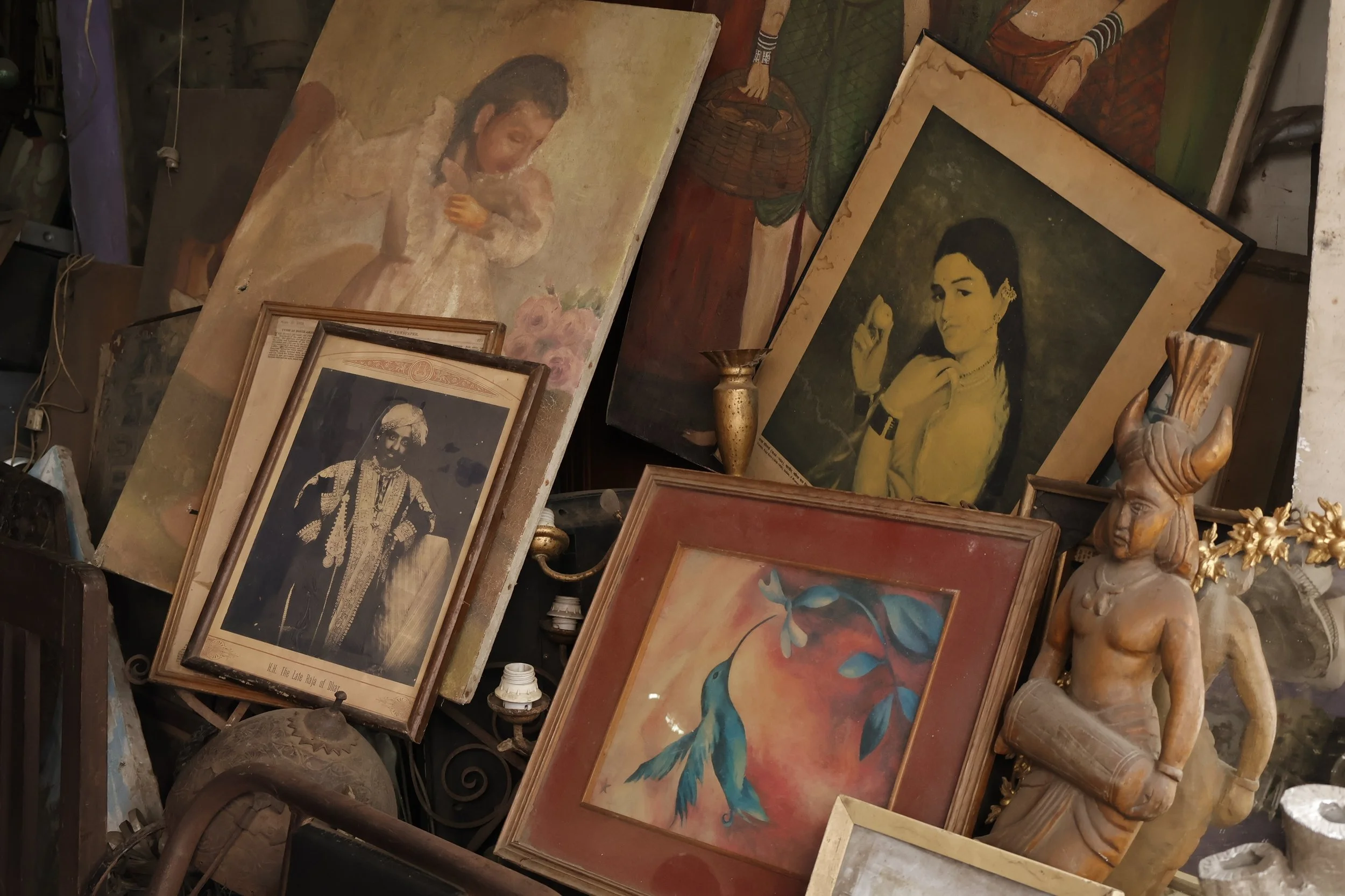
Photo: Ishita Yadav
In Wazirganj, a neighbourhood in old Lucknow that retains Nawabi, Mughal and Colonial influences, narrow lanes are sandwiched between the large lattice of houses. Tucked away in one such small lane is the kaleidoscopic shop, which reveals new stories with every glance.
Rizwi has been a collector for 50 years. What started as a personal collection, has now turned into a local buzz called ‘Old Shop.’ Spread across his shop are possessions from all around the world. His collection grew, adapting with time.
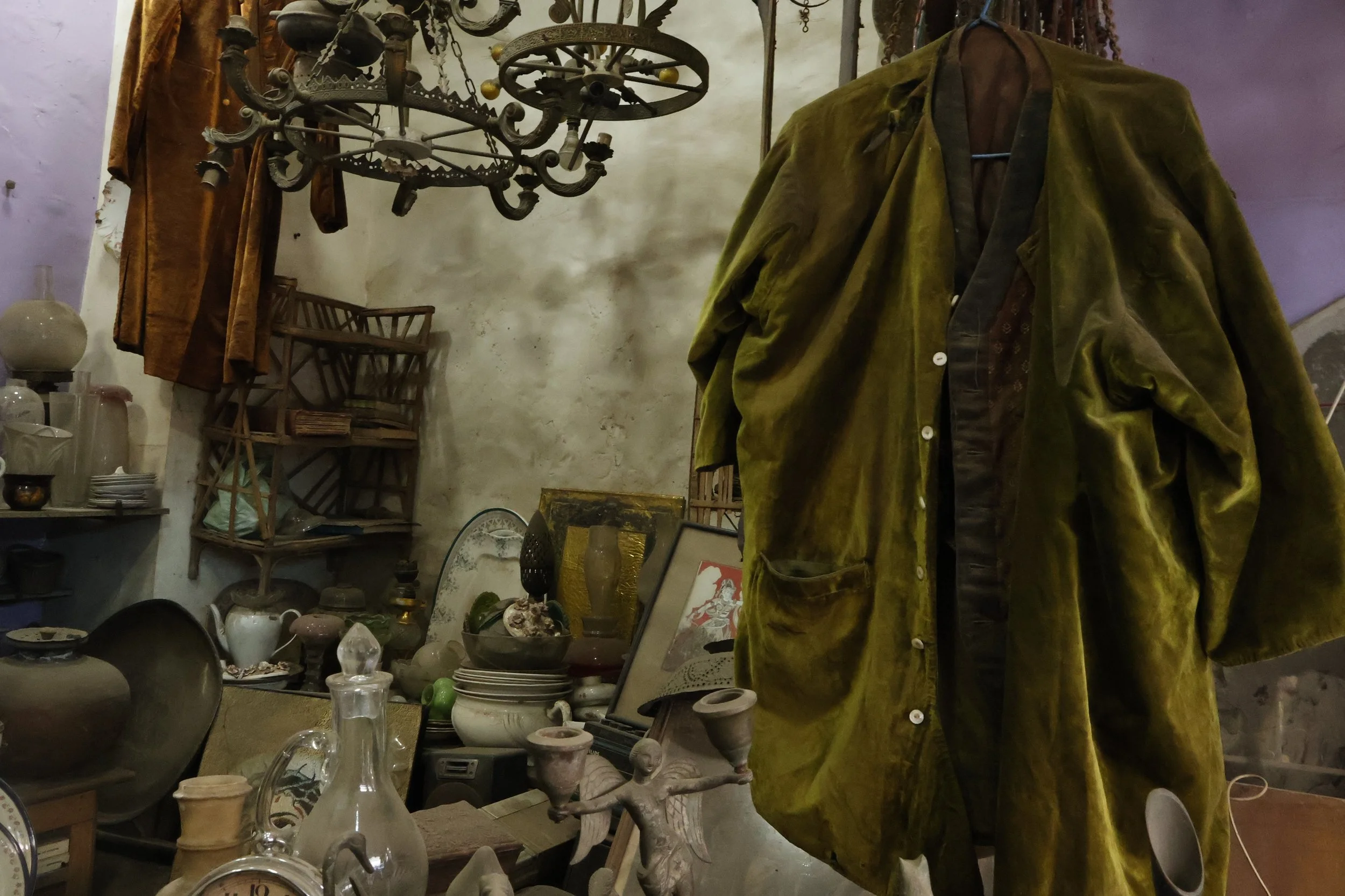
Old clothes of a Nawab rest on a hanger. Photo: Ishita Yadav
The ‘Old Shop’ doesn’t have a board hanging outside, but the word got around, making it a stop for many passersby. One customer tells me, “I don’t always buy something from him, but I do stop by to say hello and ask how he is doing.” Another says that this is his go-to gift shop.
The first antique Rizwi ever bought was an 18-inch Chinese ceramic called caledon. He was intrigued by the belief in Ancient China that caledon plates possessed the quality of splitting or breaking upon coming into contact with poisoned food.
“Some people come here to sell their old things to me,” says Rizwi, “others come to buy. There are also some filmmakers that rent items to use as props for their shoot.”
Starting in 1982, Rizwi spent 34 years as secretary to the first non-titular Nawab of Rampur, Muhammad Murad Ali Khan Bahadur. Rizwi would often oscillate between Rampur and Lucknow, only to stay a few hours. With his family being residents of Lucknow, Rizwi would travel between the cities, sometimes only able to stay home for a few hours before returning to Rampur again, which is about 350 kilometres away.
Rizwi’s duties for the Nawab generated his interest in antique collections. The Nawab would place orders to buy valuable collectibles, and Rizwi developed the knowledge required to identify and date the materials. Today, Rizwi still keeps some of the books once owned by the Nawab.
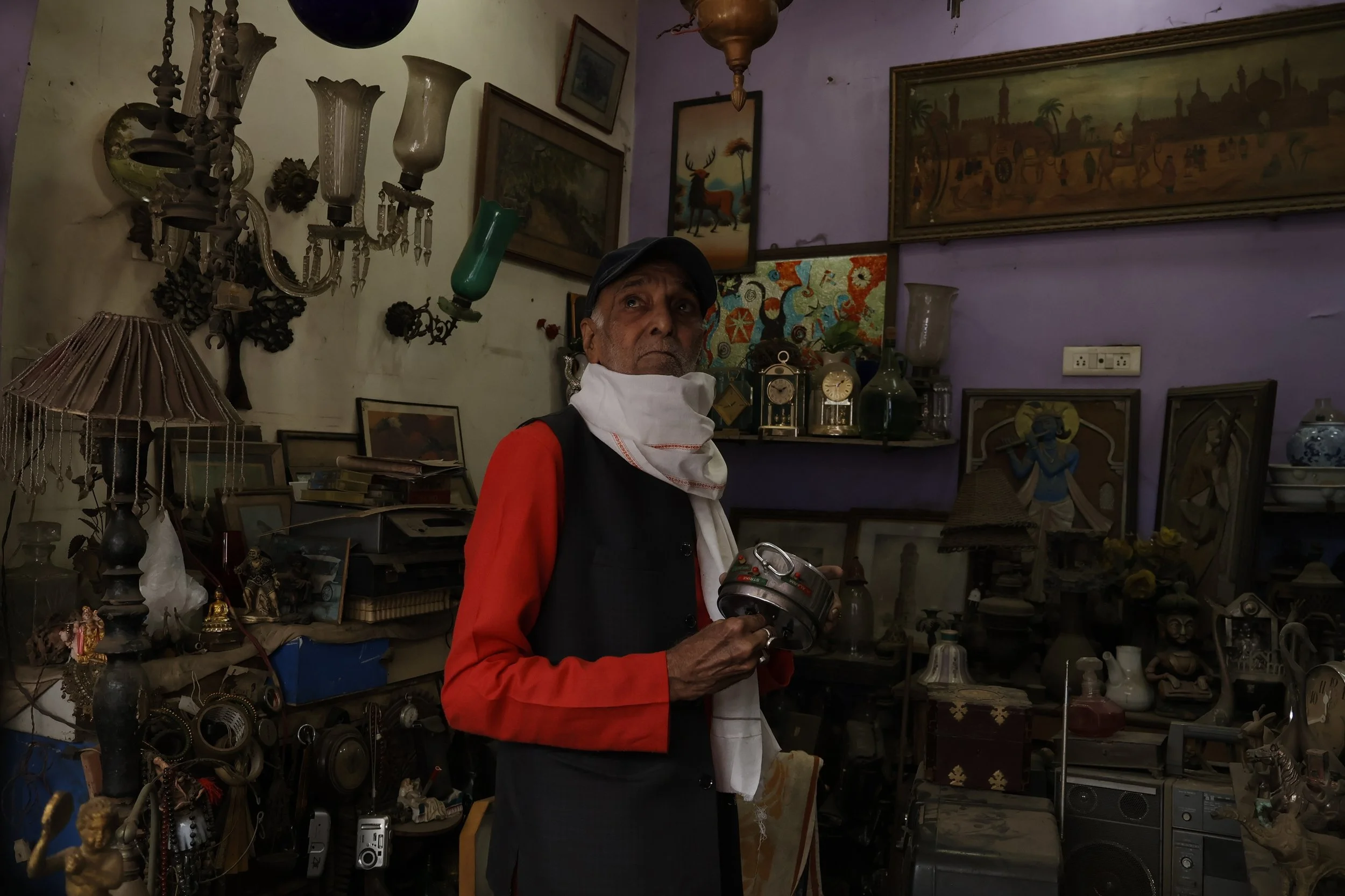
Hamid Rizwi. Photo: Ishita Yadav
His connection to Nawabs doesn’t end here, the building that is home to ‘Old Shop’ is also owned by a Nawabi family, with multiple other royals living in the same lane.
Rizwi says that his interest in selling valuables around his neighbourhood ignited as early as 1975. He contemplated an early retirement in 2004 from his service to the Nawab in 2004, but the royal family’s fondness for him urged him to stick around. Finally relieved of his duties a dozen years later, Rizwi had the time to realise his dream of opening his own antique shop.
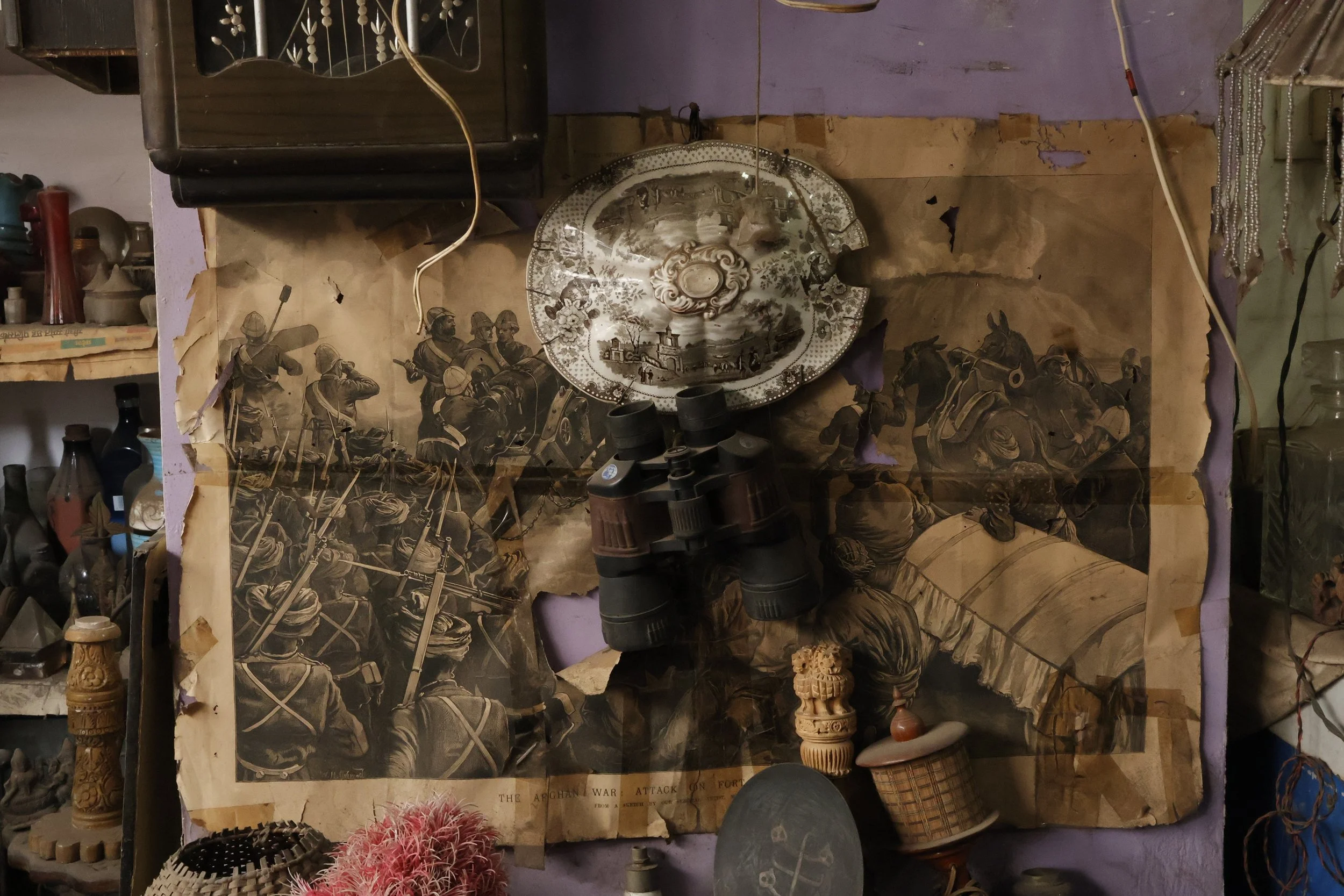
Lithographic print of the 1897 Afghan War. Photo: Ishita Yadav
This is where he has spent the past decade, in the confines of space between his collections. Next to the chair where he spends his afternoons hangs the daily wear clothes, like the velvet chapkan and choga, once belonging to another Nawab whom Rizwi didn’t wish to name. He holds up century-old Chinese terracotta figurines, of a fisherman with a stick and a hat on his back. He shows me clocks from Germany and a porcelain chillum (smoking pipe). He shares vivid tales of each purchase, as if he bought them just yesterday. On the opposite side of his seat is a lithographic print of the 1840 attack on Kahun Fort during the Afghan war. While behind his chair are two framed stone carved Krishna and Mirabai, resembling the styles of Kalighat paintings.
These items might seem ordinary at first glance, but Rizwi’s memory and expertise assures me that the worth of some of these materials could range up to lakhs. When a customer seems unconvinced about the antiquity that he was surrounded by, Rizwi responds, “Waqt batayega, hum batayenge kaunse period ka hai. Jo jaan ne wala hai wo poochega.” Time will tell, I will tell. Whoever wants to know, will ask.
Rizwi’s statement is backed up by the personal stories he has to tell with each item in the shop. He talks about how his interest made him travel to different states and cities, either buying or selling. The first antique he ever bought was an 18-inch Chinese ceramic called caledon. He was intrigued by the belief in Ancient China that caledon plates possessed the quality of splitting or breaking upon coming into contact with poisoned food. There are antique wooden jewellery boxes, coins from different currencies, Lucknowi Paan Daans, and radios from different eras are all amongst his purchases. “Then, I started going around multiple showrooms which sold antiques to learn about the kind of materials people collected,” says Rizwi.
He believes that there are requirements to keeping up ‘Old Shop’, “Age, money and expertise are the three things one requires for such a passion.” Rizwi points to a circular wooden board with leaves and flowers carved only around the corner, and adds, “This is walnut wood, no one is going to make these today. You might say that this is mango’s wood. But you only get to know these things when you see and understand. Things themselves tell you how old and valuable they are.”
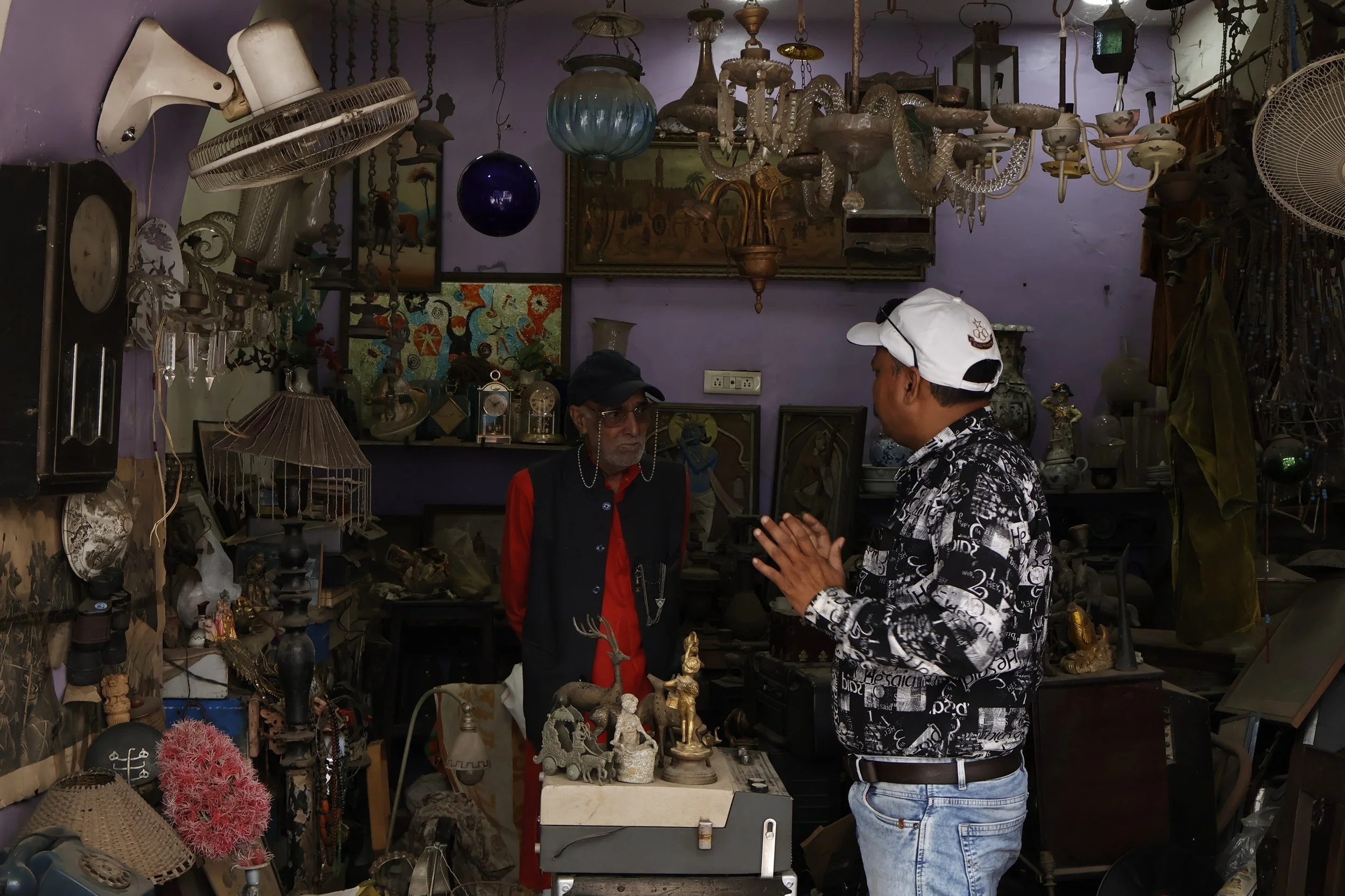
Rizwi with a customer. Photo: Ishita Yadav
For a man who has spent much of the past decade in the mementos of time, the passage of time presents a new hurdle: health. “I am a heart patient. My children don’t have much interest in all this, so I sell it here,” says Rizwi. He talks about how at some point a lot of these materials used to be at his own house. “But now the time has passed, I am old. I can sell all of this.” His visits to the hospital have become more frequent. In his absence, more of the shop has now been caked under layers of dust. But whenever he’s back in his space, Rizwi continues to invite conversations from passersby and customers, talking about the history stored in this small space.
In the pocket of his Nehru coat, worn even in the warm weather, he keeps a multi-strand, silver Albert pocket watch, which stopped working decades ago. Rizwi’s afternoons are spent on his chair in the middle of his modest shop, a journey through time and space, far and wide.
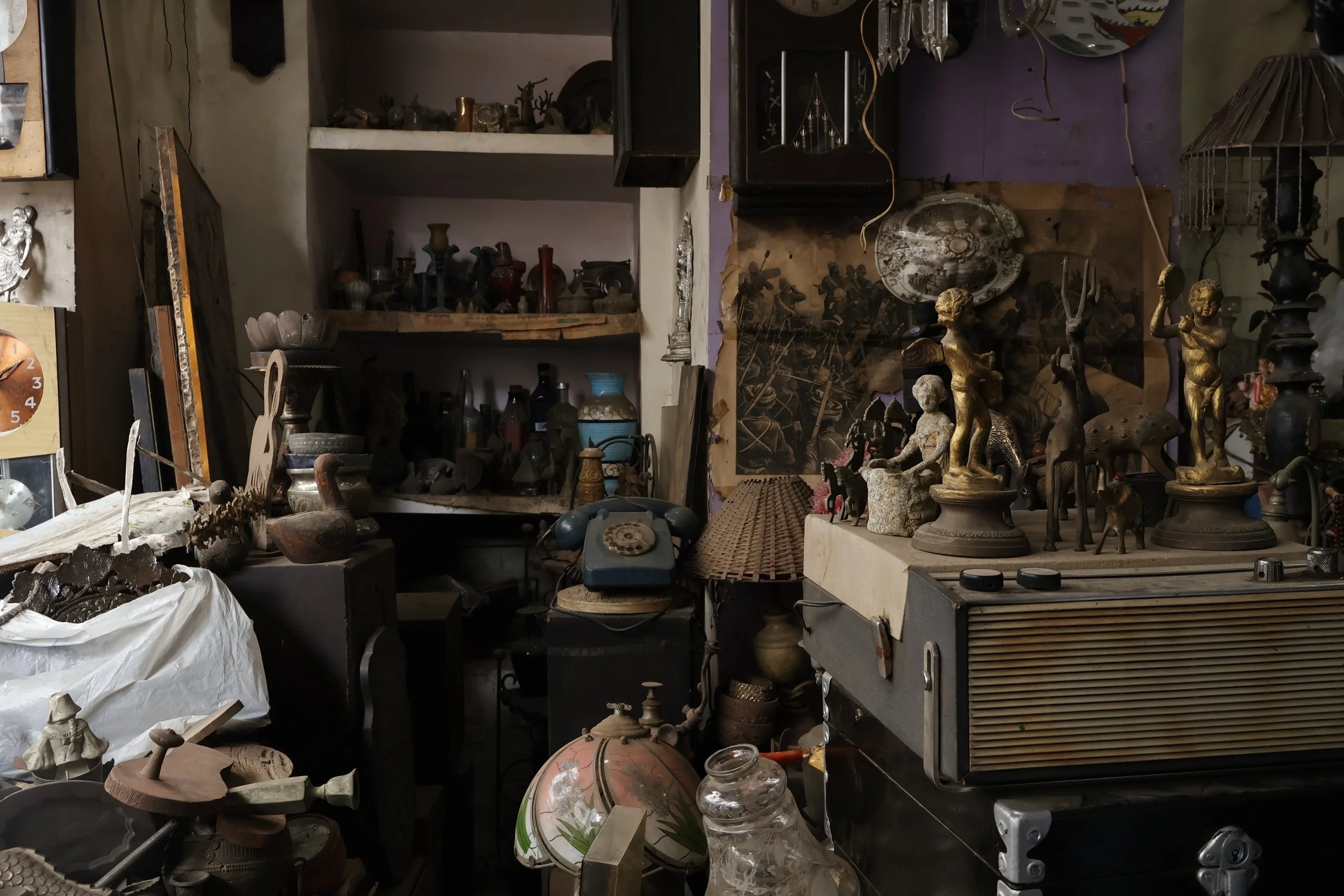
Photo: Ishita Yadav
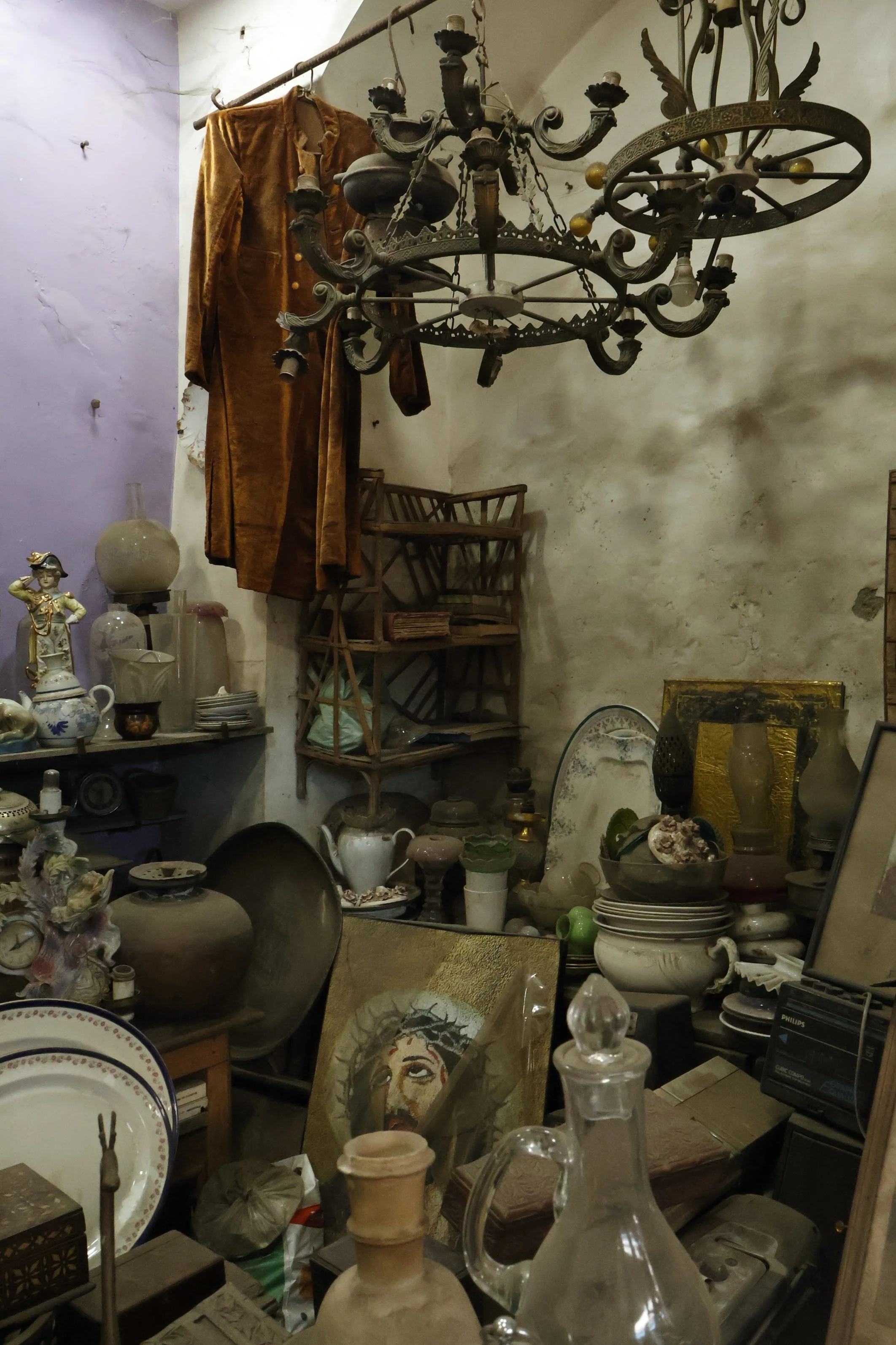
Photo: Ishita Yadav
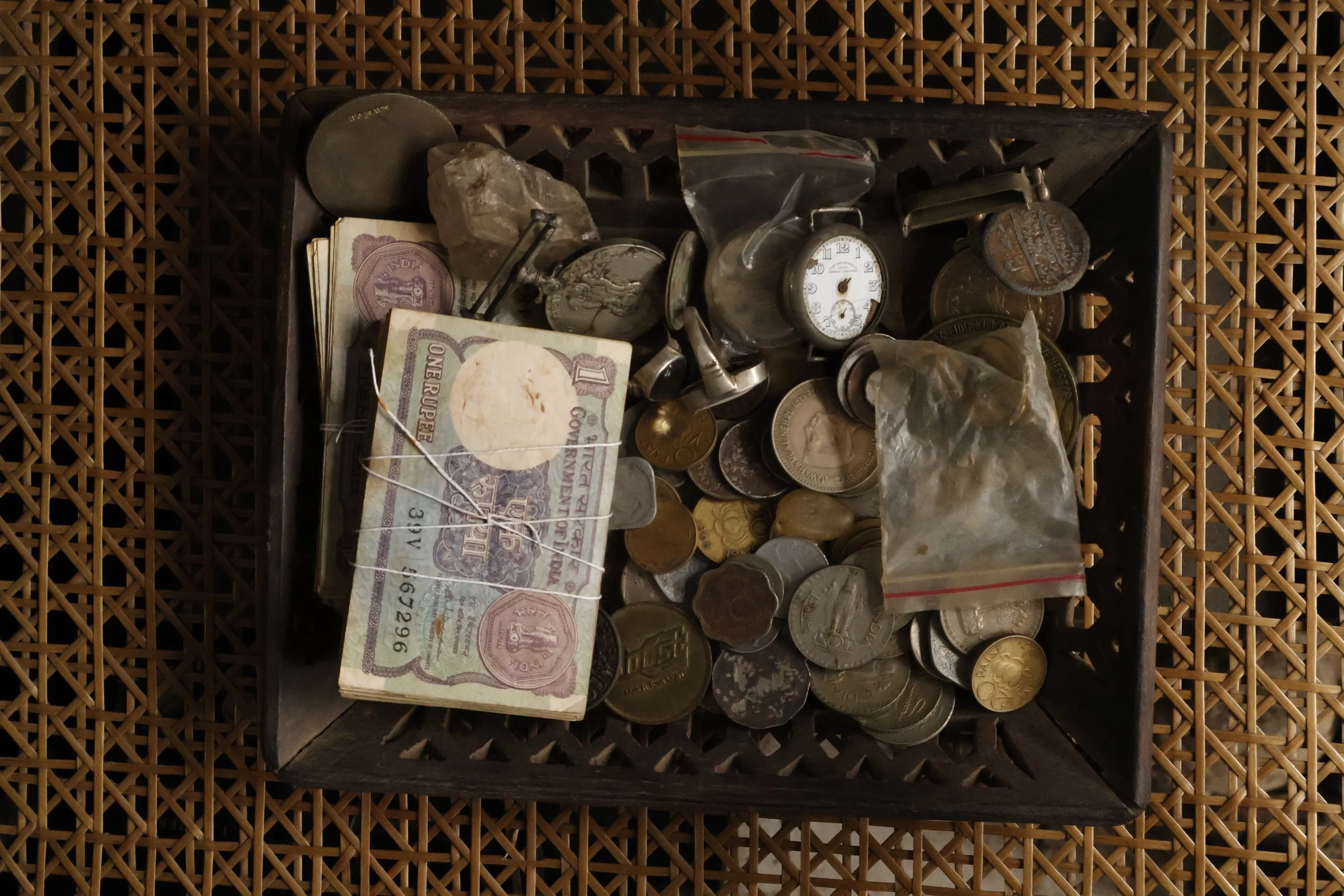
Photo: Ishita Yadav
***
Ishita Yadav is a freelance journalist and photographer based in Delhi. You can find her on Instagram: @ishi.tea.