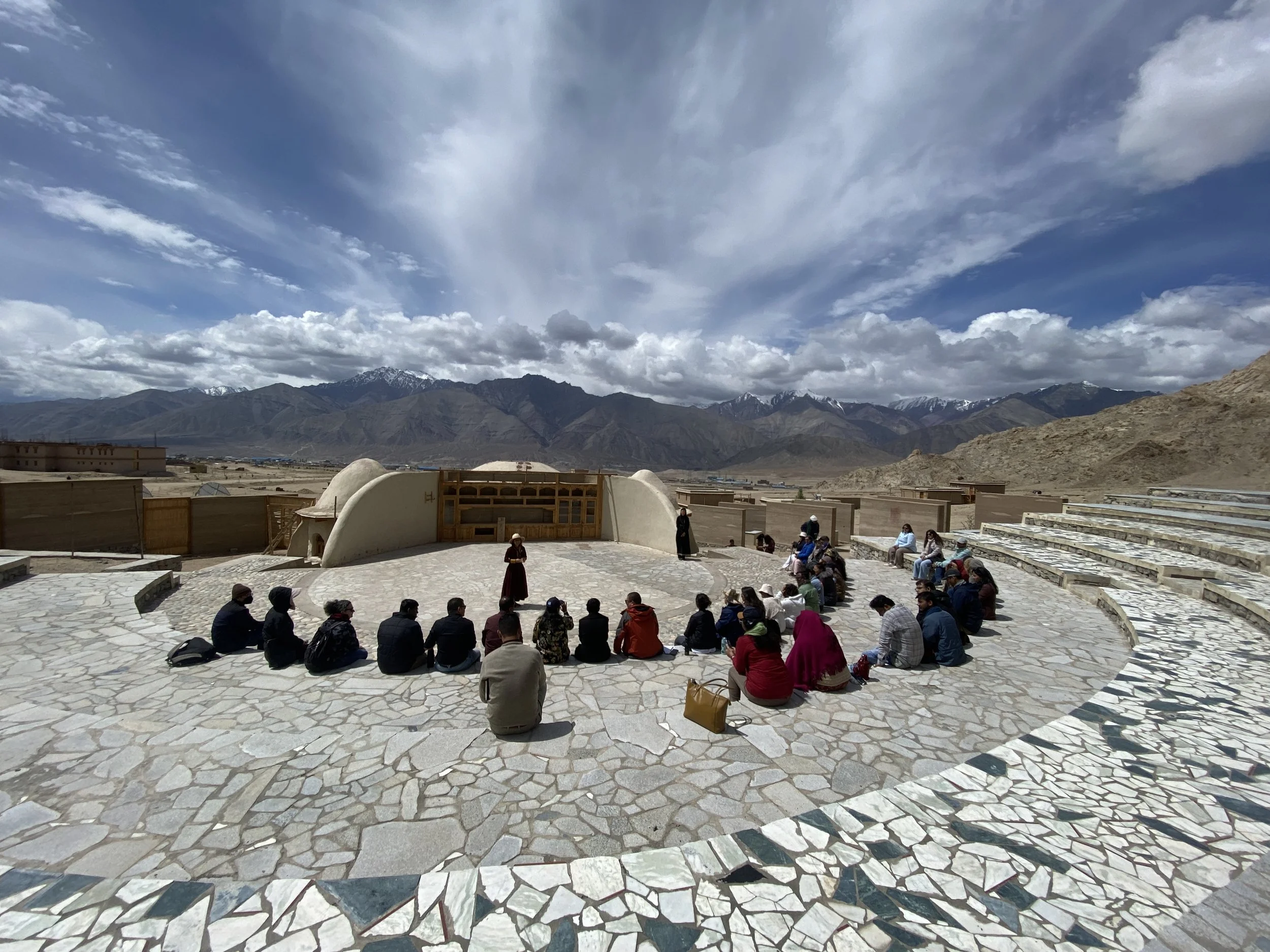
Open air auditorium at HIAL, Phyang. Photo: Navjot Khosla
In a recent visit to Ladakh, Navjot Khosla aims for a gaze beyond the touristy cliches, to be transformed instead by the sustainable models of growth, natural preservation, and the cultural heritage of the bioregion.
In her 2023 The New Yorker essay “The Case Against Travel”, Agnes Callard argues against the futility of ‘touristy’ travelling, stating that if visiting a particular place does not transform one at a certain level, it is mere locomoting. “If you are going to see something you neither value nor aspire to value, you are not doing much of anything besides locomoting,” Callard writes.
I experienced more than mere locomoting in a recent visit to Ladakh, a trip that dispelled the idyllic impression about the region held in popular imagination. The place invariably brings one out of these three images to mind: Phunsukh Wangdu on the banks of Pangong Lake in 3 Idiots; a gorgeous woman finally professing her love to a gallant and valiant soldier; or a leather-clad motorbike enthusiast cruising along the high-altitude terrain. (We have much to thank the Indian Film Industry for!)
Of late, however, the region has been in the news for different reasons. Slogans of “Save Ladakh, Save Fragile Ecosystem” have reverberated across various media platforms, followed by the arrest—and subsequent release—of Ladakh-based climate activist Sonam Wangchuk (the alleged inspiration for Phunsukh), all prompted me to dive deeper into the subject.
In a 2017 interview with Rajat Ghai of Down to Earth, the French architect Didier Prost emphasised the need to create a new pattern for development, one built on the concept of a ‘bioregion,’ as climate change becomes reality. In other words, it is a call for locals to learn about the uniqueness of their ecology and their relationship with the native flora and fauna.
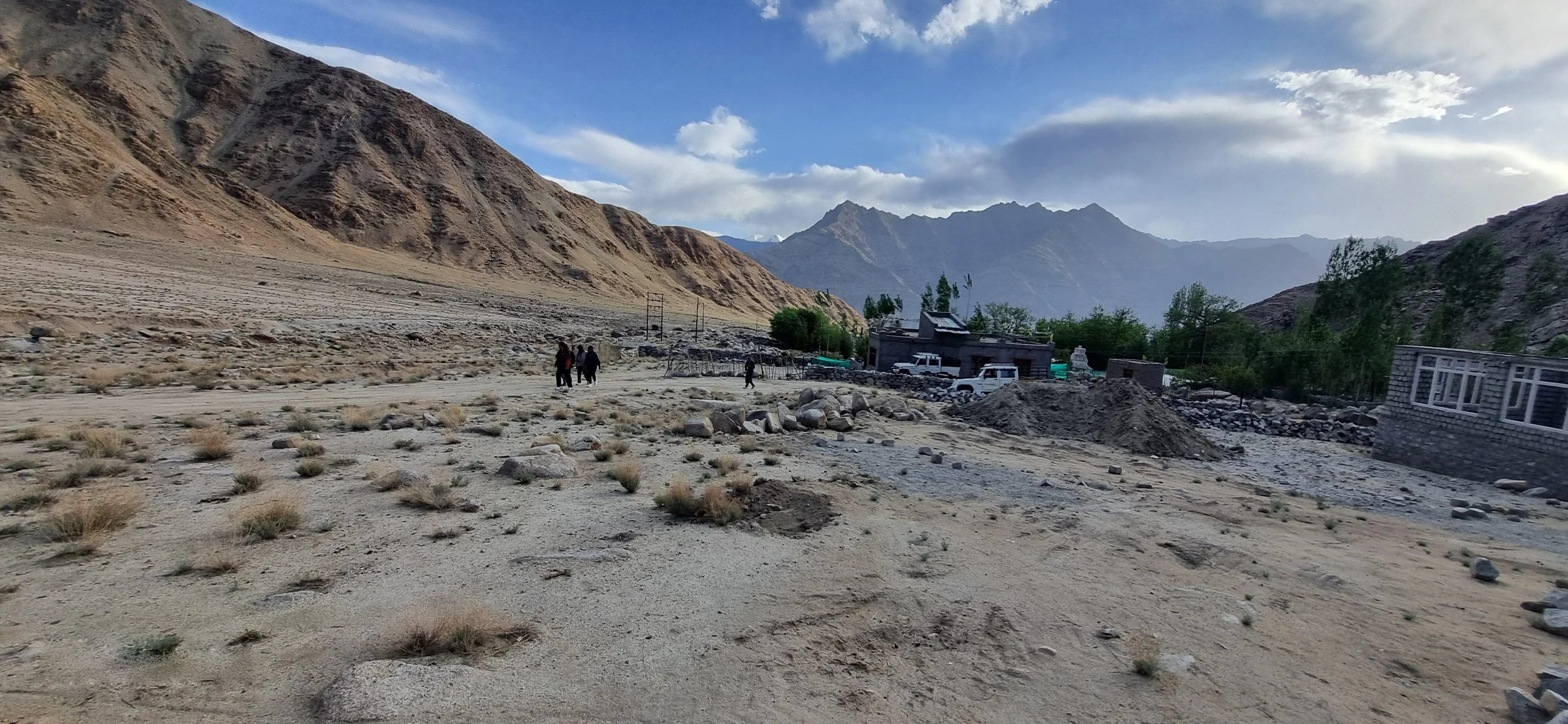
Kulum. Photo: Navjot Khosla
A bioregion, defined by one of its early supporters Peter Berg, is “a geographic area defined by natural characteristics, including watersheds, landforms, soils, geological qualities, native plants and animals, climate, and weather” (“Bioregionalism Comes to Japan” 139). When these characteristics begin to change, it is an indication that one is moving from one bioregion to another. Berg adds that a “bioregion is a ‘life-place,’ the natural place around you that’s alive and contains your life as well as the lives of other species” (139). It is suggested that borders should also factor in culture and ecology, rather than on mere language and politics, so that its people connect with their history and habitat. “This,” Prost reiterated, “can be done by eliciting the participation of people from all spheres of society—academia, polity, grassroots communities, non-profits and workers” (Ghai). The insights thus gained would be used “to develop a plan for that area that will be different from other regular economic development process,” seeing as the present model of development being followed seldom takes into account the vulnerability and the distinctiveness of each (bio)region (Ghai).
The indiscriminate development in hill states such as Himachal Pradesh and Uttarakhand would be cases in point. The city of Joshimath in Uttarakhand, for instance, has expanded exponentially in the wake of the influx of tourists/pilgrims travelling to the Sikh holy shrine of Shri Hemkund Sahib, the Valley of Flowers, or the revered Hindu pilgrimage site of Badrinath. The city is spread along a mountain slope over layers of landslide debris and glacial moraine. Unbridled development, without a care for the environment has, over time, resulted in a city whose very foundation is now sinking. In Punjab, as if last year’s devastation caused by floods was not enough, the ongoing loss of huge tracts of arable land as rivers changed their course is an alarming cause for concern.
To continue, bioregionalism subsumes a habitat comprising flora, fauna, organisms, soil, water, landforms and the climate. Jenny Odell, in her book How to Do Nothing: Resisting the Attention Economy (2019) foregrounds how small and big businesses make money by capturing and manipulating our attention. In response, she advocates intentional inaction as a means of resistance to the attention economy. It means stepping back from the constant engagement with technology and stepping into a meaningful engagement with oneself and one’s well-being.
The French architect Didier Prost emphasised the need to create a new pattern for development, one built on the concept of a ‘bioregion,’ as climate change becomes reality. In other words, it is a call for locals to learn about the uniqueness of their ecology and their relationship with the native flora and fauna.
As attention being a valuable and exhaustible resource, Odell roots for it to be cultivated and utilised mindfully. One of the ways in which this can be carried out is through bioregionalism—a reconnection with the natural world at the local, community level. Odell simplifies this further when she states that bioregionalism comprises more than mere restoration of habitat. It includes a cultural angle as well since native inhabitants are expected to be familiar with their ecology along with an unwavering responsibility towards sustainable living practices.
The tenets of regionalism of this kind are based more on cooperative humanism than on provincialism. To check the deteriorating global climate change, it seems advisable then to focus on the type of development that centres the geography, geology, ecology, and the demographics of a region, rather than mere economics. After all, the challenges faced by the people of the Andamans are very different from those of Ladakh.
Humanity, at present, stands at a precipice, struggling for its very survival. There are many who are, or have been, raising their voice against climate change for decades. In India, environmentalists such as Bhagat Puran Singh, Saalumarada Thimmakka, Kinkri Devi, Sunderlal Bahuguna, Chandi Prasad Bhatt, Kallen Pokkudan, Vandana Shiva, Medha Patkar, Rajendra Singh, Jadav Payeng, Marimuthu Yoganathan, and many more have striven for forest, water and soil conservation, dared to stand up against the mining and sand mafia, and still more have devoted their lives to reforestation. In recent years, however, most activists who have rallied as a collective against environmental damage are those who are truly sensitive towards their habitats, such as the tribals and other native people of Ladakh. For the rest, it appears as if consumerism has steeped in much too deep. Neither those living in urban spaces nor in hill states make enough noise to shake the government out of its stupor.
There are sporadic cases where people do come together to save their local habitation, like Mumbaikars gathering together to stop the felling of trees in the Aarey forest or Delhiites gathering to save the Aravallis. Such instances, however, are unfortunately few and far between. How else can the deafening silence be explained? Each year the rains leave a trail of destruction in the hill states owing largely to three factors: one, building of highways and commercial establishments along the river banks leaving little room for safety when the rivers overflow; secondly, using concrete for construction rather than switching to readily available local, environment-friendly alternatives, that in turn, increase temperatures and intensify cloud bursts; and finally, boring tunnels into a mountain range that is still growing, rupturing the inner rock formations and making the Himalayan range even more unstable and prone to landslides.
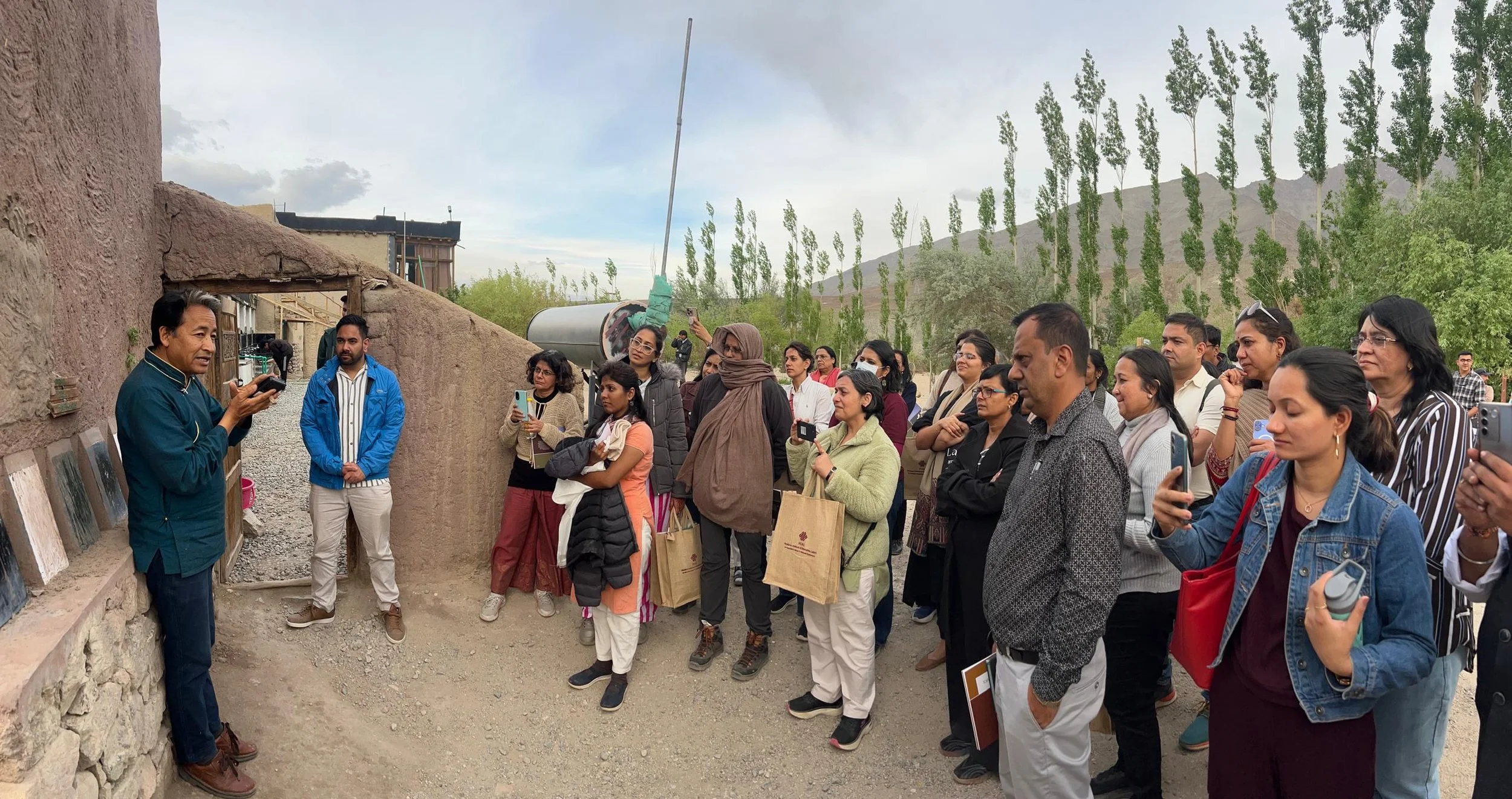
Sonam Wangchuk speaks to guests at SECMOL. Photo: Navjot Khosla
For tribals or Adivasis, indigenous environmental practices have long been more than a way of life. Sustainable living for them emanates from an-almost sacred and reverential coexistence with the four ‘Js’: Jal (water), Jungle (forest), Jameen (land), and Janwar (animals). There is a constant battle as the chasm widens between the state sponsored capitalist mode of development and the eco-centric mode of development advocated by the tribals. Though the Adivasis wish to live in symbiotic harmony with nature, they are unable to provide alternatives to the world that desires to mine their lands, cut their forests, and dam the rivers.
To that end, Wangchuk has not only been crusading against the pillaging of the fragile ecosystem of Ladakh but is also providing alternatives for a carbon neutral sustainable future.
A chance visit to attend an education confluence at his Himalayan Institute of Alternatives, Ladakh [HIAL] at Phyang, twenty kilometres from Leh, helped me get better acquainted with the work Wangchuk has been doing at the institute as well as at the Students’ Educational and Cultural Movement of Ladakh [SECMOL] Alternative School. My visit to Ladakh made me realize that there is more to the region than the romanticized image created by Bollywood. As one flies above the Trans-Himalayan Mountain range, one is humbled not only by the majestic beauty of the landscape, but also by the indefatigable spirit of human endeavour. To create oases in a cold desert can only be regarded as a testimony to human endurance.
There is a constant battle, as the chasm widens between the state sponsored capitalist mode of development and the eco-centric mode of development advocated by the tribals. Though the Adivasis wish to live in symbiotic harmony with nature, they are unable to provide alternatives to the world that desires to mine their lands, cut their forests, and dam the rivers.
*
In Phyang, our group were accommodated by families of the village, many of whom helped us learn their local customs and traditions. With development taking place at a rapid pace in the region, their concerns primarily centred round protecting and preserving their culture, heritage, and their unique identity. The stay also allowed a glimpse into their lives: the hardships they bear, especially during the harsh winter months, and, the small joys of a short and hectic summer. Their warm hospitality included cosy chats and hearty meals lovingly prepared by the farmstay owners.
The visit to SECMOL proved extremely inspiring as its inception is rooted in the commitment of the local educated youth to improving the standard of education in the region. Since 1947, the Matric pass percentage of Ladakhi students varied only between zero to five percent. Reasons for such abysmal results were clear enough: Ladakhi children grew up speaking Ladakhi at home but the medium of instruction in the government schools of Jammu and Kashmir was Urdu. This situation took a turn for the worse when students entered high school where the medium of instruction was English. These repeated changes in mediums of instruction proved particularly challenging for young students. Thus, a need was felt to give special attention to children doing matriculation.
Over a period of time, however, SECMOL shifted its focus to reforms in primary education to create a lasting impact. Around 1991, they collaborated with the local government to work on government schools in select villages. As the experiment began to show positive results, similar reforms were introduced in schools all across the district and ‘Operation New Hope’ came into being. With the collaboration of the Ladakh Hill Council (formed in 1995), things began to be revised on a larger scale. Teachers were re-trained and text books were re-written, adapting them to the regional or Ladakhi context. The medium of instruction was changed from Urdu to English. More importantly, villagers were trained to take ownership of their village schools by forming Village Education Committees (VEC).
With these efforts, school results gradually got better, so much so, that people emoving their wards from private schools to enrol them in local schools in their villages. Notable alumni of SECMOL include Thinlas Chorol, Stanzin Dorjai Gya, and Tewang Rigzen. Chorol is a well-known Ladakhi writer who founded a travel company in 2009 exclusively for women. In 2014, she co-founded a women’s welfare society in the region. Gya is an internationally acclaimed filmmaker, and Rigzen is a journalist and education reformist who became the youngest member of the Executive Council for the Ladakh Autonomous Hill Council in 2005.
Spread over a vast tract of land, with River Indus flowing below, the school boasts of mud buildings, patches of green and a small farm where local fruits and vegetables are grown. The mud buildings are passive solar buildings that trap sunlight using glazed windows and a Trombe wall.
SECMOL runs on the philosophy that if adolescents are given their share of responsibilities, they more than measure up to expectations. A batch of 40-45 students is divided into teams, each responsible for different chores around the school. These teams manage waste material, the kitchen garden, the green house, the cow shed, the kitchen cellar and so on. Every two months, there is a parliament session where each team is required to share their findings through a presentation. Students learn responsibility along with interpersonal skills. The hallmark of the teaching-learning process is experiential learning. For instance, when students are taught about profit and loss in class, they experience it first-hand while running the kitchen cellar as the older vegetables are sold to the kitchen at a discounted price.
Through such chores students learn the importance of collaboration and teamwork along with aspects of geography, geology, arithmetic, geometry, botany, and zoology. When they plant trees native to the soil, they gain bioregional knowledge about the local flora; while managing the kitchen garden, they learn about optimal soil and weather conditions; taking care of the greenhouse teaches them about composting and drip irrigation; farming familiarises them with the use of area and volume. Once a year, there is a picnic where the faculty and students come together to pluck apricots from the fruit trees on campus. A team of students prepares apricot jam which is then placed for sale. Such experiences boost confidence among students, promote entrepreneurial and social skills and, most importantly, help in raising responsible citizens of tomorrow.
Upon first glance, the vast swathes of rocky land at HIAL reminded me of the barren and dusty landscape of Mordor. In a region with sub-zero temperatures, clusters of passive solar buildings constructed using the rammed earth technique maintain temperatures at a comfortable 15-16°C throughout the year.
As I walked the campus, alight with curiosity, the words of Peter Berg on the school system came to mind: “Isn’t it amazing that... we’ve gotten to this point in environmental awareness and ecological destruction, and we’re not teaching children the bioregional characteristics of where they live, or their connectedness with them, or the activities that are appropriate for living in a specific life-place?” (“The Post-Environmentalist” 69). Come to think of it, how many of our children can name the native trees that grow in their respective states? Teaching students about redwood trees and mangrove forests can be crucial to acquaint them with the geological, geographical, pedological and, natural makeup of their habitat. Children remaining unfamiliar with their bioregional roots could lead to catastrophic ecological disasters.
*
Upon first glance, the vast swathes of rocky land at HIAL reminded me of the barren and dusty landscape of Mordor. In a region with sub-zero temperatures, clusters of passive solar buildings constructed using the rammed earth technique maintain temperatures at a comfortable 15-16°C throughout the year.
The vision behind the establishment of HIAL is to build a university that specifically caters to the challenges faced by people living in the mountainous regions of the world: the Himalayas, the Alps, the Andes, the Rockies, the Urals and so on. Global warming, melting ice caps, uneven weather patterns, rapid deforestation, and increased influx of tourists are some of the hardships that locals living in the mountains cope with.
The institute comprises different schools/departments that collaborate to bring about a change in the community. For instance, the School of Responsible Tourism promotes responsible rural tourism via farmstays/homestays in Phyang and its surrounding villages so as to generate livelihood for the local village women. HIAL’s School of Energy Studies (SENSe School) is currently experimenting with the possibility of growing select vegetables under partial shade inside a greenhouse, even during winters. If successful, this could resolve the problem of food scarcity in Ladakh to a large extent. In addition, it can save Pashmina goats from succumbing to the harsh winters in the high altitude Changthang region of Ladakh where land gets frozen and there is little or no fodder for animals.
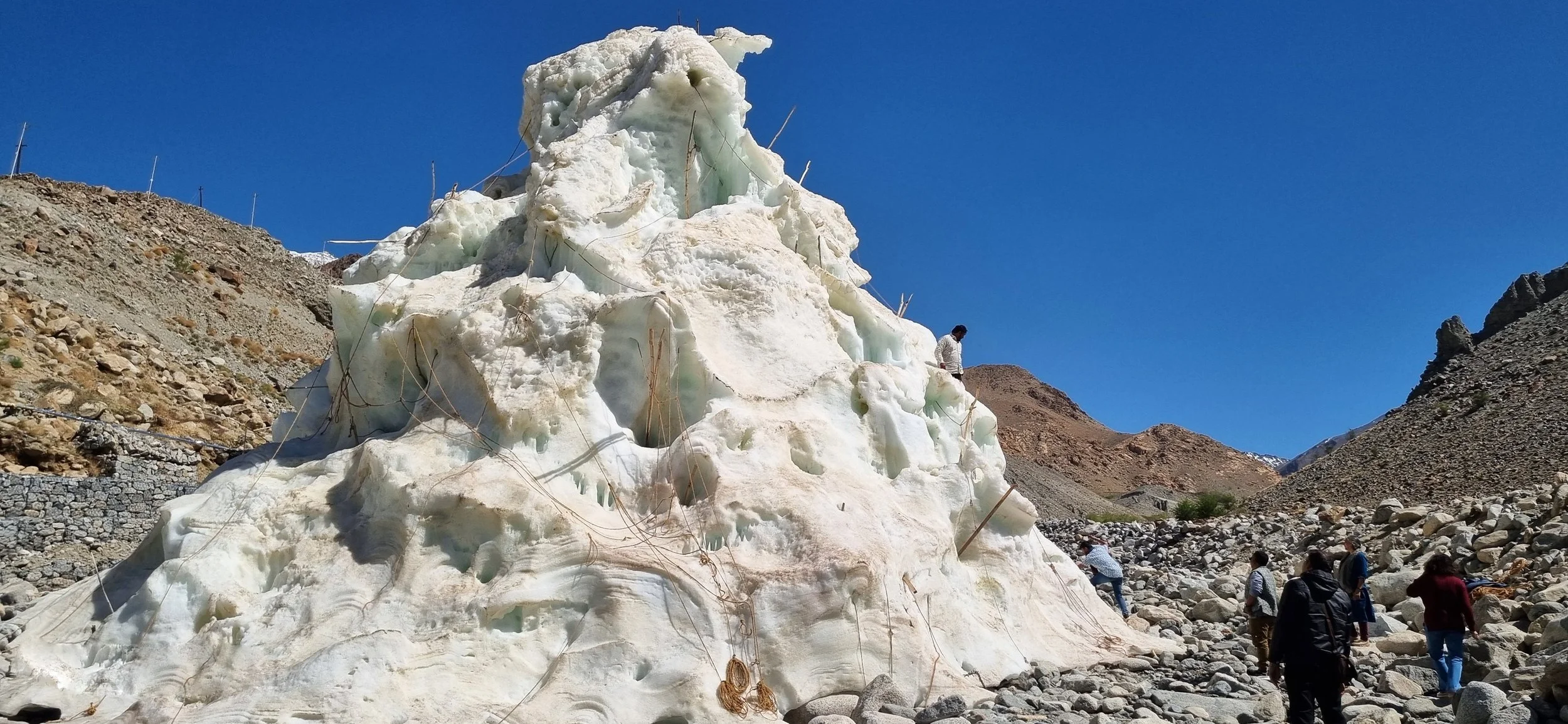
Ice Stupa. Photo: Navjot Khosla
A trip to explore the local ice stupa (scientifically called artificial ice reservoirs) at Phyang turned out to be a lesson in culture and history. Legend has it that artificial glaciers, or concepts similar to it, go as far back as the 10th century CE. Taking advantage of the cold of this region, ice is used in freezing winters to create structures resembling stupas that work like water tanks. Interest in these artificial glaciers revived once again in the late twentieth century, especially after 1987, when a local civil engineer, Chewang Norphel, came up with horizontal artificial glaciers in the valleys of Ladakh. Called the Ice Man of India, Norphel was honoured with the Padma Shri by the Government of India in 2015.
Climate change has adversely affected weather patterns in mountainous regions across the world. Until a few decades ago, these mountains received a lot of snow. The permanent natural glacier behind Phyang, for instance, would provide sufficient water—for agriculture as well as animals. The glacier would melt from early spring till late June. Unfortunately, the amount of snow now being received between the elevation of the natural glacier and the village is on the decline, making life even more difficult for its inhabitants. The idea of creating artificial glaciers on select elevations, then, is to ensure adequate water supply for people downstream from late spring to mid-June when the region endures drought-like conditions.
The cost of building the ice stupa at Phyang was around ₹2 lakh, including the pipes, valves, solar panels and the battery. The first such ice stupa was made at SECMOL in the winter of 2013 by Wangchuk. From 2013 onwards, after intensive research and development, Wangchuk’s team has been able to create hundreds of such ice stupas between 2018 and 2024 not only in the region but also outside of India in countries like Switzerland, Mongolia, Nepal, Baltistan, Kyrgyzstan and Chile. The idea is that any country with comparable climatic conditions and terrain that suffers from issues like water scarcity can collaborate with HIAL to address these concerns.
There was still the issue of gaining the trust of the locals to initiate these ambitious projects. Wangchuk is of the firm belief that once set up, these artificial glaciers would belong to the villagers, who should be adept at handling their day-to-day operations, instead of relying on a team of experts.
Setting up this ice stupa in Phyang was not without its share of challenges. Pipes would freeze in the dead of the winters, especially at night when temperatures were as low as -25°C. The ice stupa also tended to melt during the day. To counter these issues, the R&D Team came up with the concept of an automated system with a four-way valve which could detect extreme temperature fluctuations, and accordingly, divert the flow of the water.
There was still the issue of gaining the trust of the locals to initiate these ambitious projects. Wangchuk is of the firm belief that once set up, these artificial glaciers would belong to the villagers, who should be adept at handling their day-to-day operations, instead of relying on a team of experts. To this day, it is the locals who take care of this ice stupa. The HIAL team arrives only to either set up or to dismantle/collect those skeletal parts of the ice stupa that are to be re-used the following year.
We also had the chance to visit Kulum, a remote village around sixty kilometres from Leh, off the Leh-Manali Highway. The village is located at an altitude of 3850 metres above sea level, where the primary means of livelihood had been agriculture and livestock. What was intriguing about the village was that in 2010, the nearby natural glaciers disappeared, and the melting of permanent icefields led to water scarcity. Decreasing snowfall and erratic weather conditions further made traditional means of livelihood untenable. Consequently, Kulum witnessed a near-complete exodus, as villagers were forced to abandon their ancestral lands and take up menial jobs along the highway. The visit helped provide a glimpse into the psyches of a populace that had not only been displaced due to climate change but had also lost its sense of self-respect by being forced to accept jobs below their supposed social standing.
Our guides told us about HIAL’s Rehabilitation Model Project, launched in 2020, for the revival of this abandoned village. The project’s initial step was water conservation to restore the sources of water. An ice stupa was built to ensure regular water supply to the village. As the supply of water was re-established, efforts began towards developing agriculture through sustainable practices customised to the region’s changing climate. Berg, in this context, mentions in an interview the three goals of a bioregional model: restoration and maintenance of local habitat; exploring ecological modes of living; and supporting “the work of reinhabitation” where people become “native to the places where they live” (“City People” 111). The final phase under the project included diversification of livelihood so that locals no longer needed to depend upon only one source for income.
Once again, rather than operating the project directly, HIAL provided guidance and support while ensuring that the community retained complete ownership and control over the process. Among other efforts, HIAL’s School of Responsible Tourism (SoRT) is boosting rural tourism there by encouraging travellers to sample a taste of local life by living in a remote Ladakhi village. Thanks to institutional support from the Ministry of Tribal Affairs and the Agriculture Department at Leh, Kulum today boasts of agricultural fields, livestock, greenhouses, and farmstays. It is set to grow as a responsible edu-tourism destination, offering immersive experiences rooted in ecological learning and cultural heritage.
Here, it is essential to highlight that Wangchuk is not only peacefully protesting to save the frangible ecosystem of Ladakh, he has also been providing the world with alternatives in the fight against climate change. Whether it is portable solar-powered heated tents for the Indian army that save on burning fossil fuel, ice stupas that promote sustainable living for people of the region, or the construction of passive solar buildings that capture the sun’s rays through glazed windows and a Trombe wall, he has come up with innovate ways to deal with issues that laypeople grapple with every day.
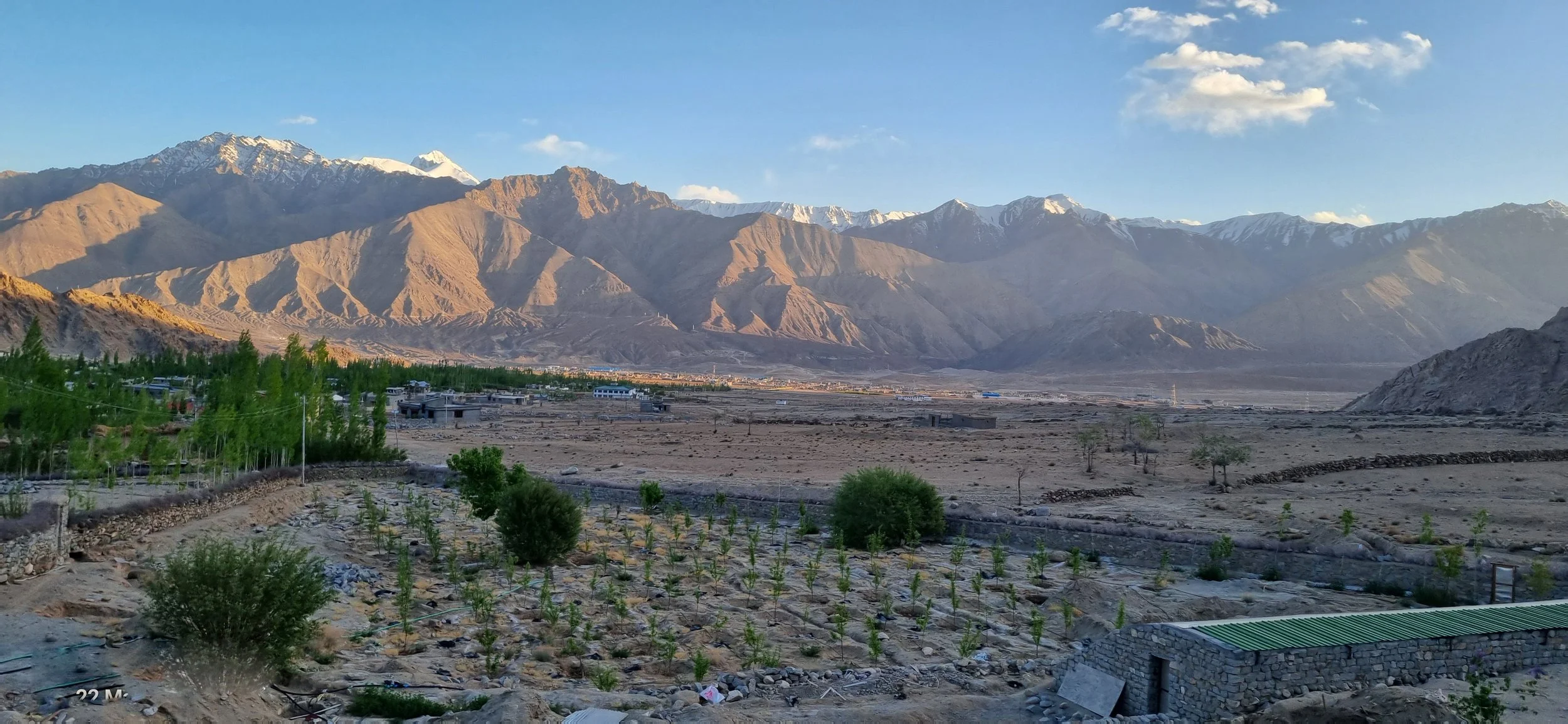
Photo: Navjot Khosla
I discovered the deep respect that Wangchuk has earned among many locals in the region for his efforts. In fact, the youth lovingly address him as ‘Kaa’, meaning ‘Elder Brother’ in Ladakhi. Irrespective of political differences, Wangchuk has steadfastly been working towards a more sustainable future for posterity.
Leaving Ladakh at the end of the confluence was harder than I had imagined. I came to the realisation that while travel vlogs beautifully showcase the rugged landscape of the region, they seldom capture the everyday challenges of its people. In this context, I consider myself extremely fortunate to have glimpsed the quieter and more intimate side of Ladakh, one that is beyond the usual touristy trails. The genuine warmth and generosity of the locals makes me long to return soon.
*
In August-September of 2025, Punjab endured one of the worst floods in recent history. The devastation hit all 23 districts, wrecking almost two thousand villages and destroying around 1.76 lakh hectares of crops, amounting to losses estimated at ₹13,289 crores. Monsoon rains coupled with the almost-simultaneous release of water from dams in Pong, Bhakhra, and Ranjit Sagar led to increase in water levels in the Beas, Sutlej, and Ravi. The rivers overflowed their banks and added to the woes of people already struggling to keep their homes and herds above the rising waters.
Unfortunately, this is not the first time that major floods have occurred in India’s ‘food basket’. The recurrent floods in the state are the result of natural forces as well as manmade actions. Climate change has made weather patterns highly irregular. Cloud bursts, flash floods, intense short spurts of rain that lead rivers to spill their embankments have become commonplace. Punjab continually bears the brunt of a lack of Centre-State coordination between dam releases, leading to floods. Moreover, embankments are further weakened when the political machinery turns a blind eye towards rampant illegal sand mining and large-scale encroachments on floodplains.
The answer to our conundrum lies at the intersections of Western science and indigenous ways of knowing to make sustainability practices even better. To prevent future environmental catastrophes, we should consider indigenous wisdom and bioregions as models of development.
With landslides and flash floods becoming a common occurrence, we are already witnessing the outcomes of unchecked development in the fragile ecosystem of the Himalaya. When rivers overflow their banks in the hills, it leads to loss of life and property downstream in Punjab as well.
Governments all over the world need to wake up and take serious cognizance of the looming climate calamity. Appropriate steps must be urgently taken that promote eco-conscious living so that the future of the planet is relatively more secure.
Noted scholar of ecocritical studies Cheryll Glotfelty urges us to give credence to the way natives have been coexisting in harmony with their habitat for centuries. She further suggests that perhaps “people could learn to reinhabit Earth by learning about the natural conditions of the particular place where they live and evolving ways to fit into the ecology of that place” (Glotfelty “Introduction” 2). In this context, commenting on the Global Assessment Report on Biodiversity and Ecosystem Services of the Intergovernmental Science-Policy Platform on Biodiversity and Ecosystem Services of 2019 (IPBES), Robin Wall Kimmerer insightfully adds that despite the devastation caused by the loss of biodiversity all across the globe, the report also points to indigenous homelands where biodiversity is thriving owing to the care of the indigenous people [Museum of Science 00:26:17-27:09]. She considers this an indication of the fact that a “mutually sustainable relationship” is certainly possible [Museum of Science 00:27:41-28:10]. It would be a meeting of the scientific community and native way of life.
The answer to our conundrum perhaps lies at the intersections of Western science and indigenous ways of knowing to make sustainability practices even better. It is high time to seriously reflect on the ramifications of unrestrained development. To prevent future environmental catastrophes, we should consider indigenous wisdom and bioregions as models of development. One of the ways this could be made possible is by sensitising and educating children in schools about the distinguishing features of their bioregion, its native knowledge systems and their inter-connectedness with the natural world.
The transformative experience in Ladakh has made me a more conscious traveller. I now try to go beyond mere ‘locomoting’. Instead, I find myself nudged towards what Odell would term as ‘slow travelling’: interacting with locals, hearing their stories and coming to appreciate their history, culture, and unique habitat. There is no bucket list to follow, no rush to create reels or streaks, no mad dash to reach the next ‘touristy’ destination—just a mindful engagement with the self and the surroundings.
***
Navjot Khosla is an Assistant Professor at the Department of English, Punjabi University, Patiala. She has been fortunate enough to have had the best of both worlds – education in India as well as the United States. Navjot has authored a book, A Song of Freedom: Journeying from Slavery to Love in Maya Angelou’s Poetry (2015), paying homage to one of her favourite poets. Her areas of interest include children’s literature, American literature, African American literature, Shakespeare Studies and Indian classical literature. You can find her on Instagram: @1412n_k.