
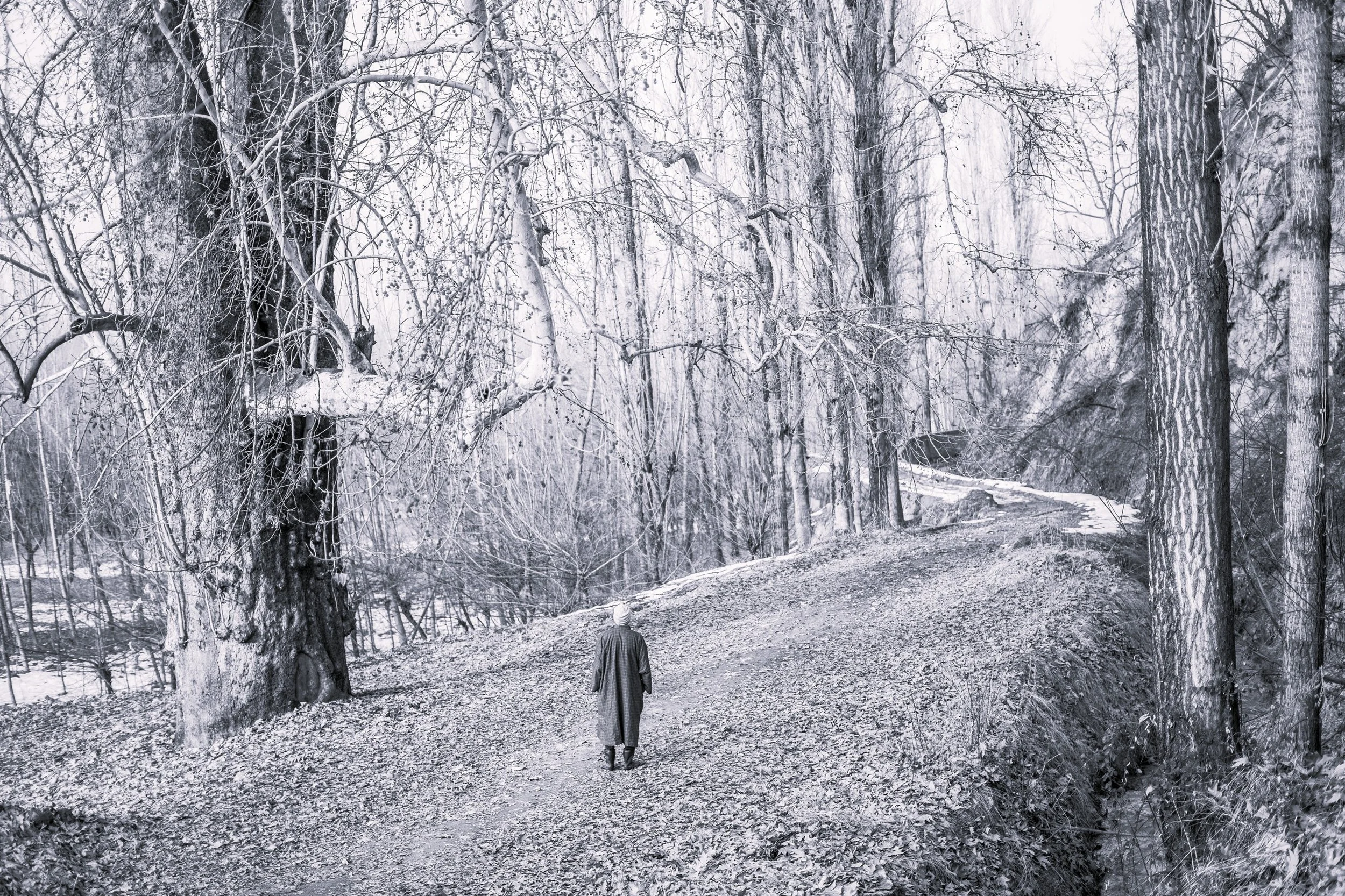


Mightier than the Bullet: The Writings of Julio Riberio
In Hope for Sanity, a collection of columns filled with nuggets of wisdom, empathy, and advice, decorated former policeman Julio Riberio emerges as a “conscience keeper” for our nation. By Karan Madhok

Arundhati Roy: A Troublemaker Needed for our Troubled Times
Arundhati Roy’s storytelling illuminates the desires to split open the human grids that characterize our world, and fulfil her yearning for a particular kind of homeland: a gentler, stiller, less hypocritical, and less transactional place. By Saba Karim Khan

Revolution on the Airwaves: An Account of India’s Tumultuous Radio History
In Radio for the Millions: Hindi-Urdu Broadcasting Across Borders, Isabel Huacuja Alonso demonstrates how radio created transnational communities of listeners and broadcasters, who defied colonial and postcolonial governments’ stranglehold over the medium and maneuvered it for their own purposes. By Sohel Sarkar

Comings and Goings: On the beauty of Amitabha Bagchi’s HALF THE NIGHT IS GONE
Sakshi Nadkarni on Amitabha Bagchi’s Half the Night is Gone (2018), a tale of stories withing stories, both dense and sparse, a glimpse across many Delhis, a meditation on sorrow, fatherhood, self-reflection, and literature itself.
A Compassionate Dissent: The poetry of Madhu Raghavendra
Madhu Raghavendra’s poetry confronts issues of contemporary Indian politics and culture, verses that hold a mirror to our faces to witness our responses to our reflections. By Satarupa Bhattacharya

THE MENDICANT PRINCE: A Women-centric retelling of the Bhawal Sannyasi Case
In her latest work, Aruna Chakravarti revisits the early 20th century ‘mejo kumar’ story, now allowing all its characters—particularly its females—to speak in their own voices. By Saurabh Sharma

A Civilization and its Stories: Salman Rushdie’s VICTORY CITY
In his latest work, Salman Rushdie expertly flirts with the line between fact and fiction, declaring all living beings—including those reading his book—may be ‘characters’ in a grander historical fiction. When nothing is real, stories are the only reality. By Karan Madhok

An Entwined Trajectory of Bombay and a Boy
Jerry Pinto’s The Education of Yuri (2022) is an atmospherically saturated, layered accordion, sounding an adventure in scale that simultaneously encompasses the chronicle of a young boy’s coming of age, and a time capsule of Bombay of a bygone era. By Paromita Patranobish

SHADOW CITY and ORIENTING: On the Road with Two Indian Women Across Asia
Two recent travel books by Indian women—Taran N. Khan’s Shadow City and Pallavi Aiyar’s Orienting—bring a unique, gendered perspective to the social and cultural complexities of expat life in Afghanistan and Japan. By Nileena Sunil

“Translation Is a Continuum” – An Interview with Daisy Rockwell
Shooting to fame after the critical success of Geetanjali Shree’s Tomb of Sand, Daisy Rockwell speaks about the iconic Indian authors she has translated, Partition-themed narratives, and interpreting language from a visual eye. By Saurabh Sharma

An Interview with ‘The Guysexual’—Aniruddha Mahale Gets Out
Aniruddha Mahale—author of Get Out: The Gay Man’s Guide to Coming Out and Going Out—discusses his crush on Rahul Khanna, lying to his dates, sending nudes, and the socio-economic aspects of gay dating in India. By Chintan Girish Modi

The Undying Muse: Nivedita Dey’s LARKSPUR LANE
Whimsical and wise, reflective and poignant, Nivedita Dey poems are a contrast to the gloomy poetry of our age, even while delving into the darkest recesses. She passionately declares space for poetry’s possibilities and promises. By Dustin Pickering