
![Welcome to… The 2nd Landour Literature and Arts Festival [LLAF]](https://images.squarespace-cdn.com/content/v1/5d7fa27ac591f01062106a9f/1788439157377-RERG0W36805OFV0LH1QC/Main+Poster.png)

Nothing Impure: Why misogynist taboos around menstruation continue to plague India
In religion, politics, and mainstream pop culture, there is inexplicable hypocrisy and stinging prejudice surrounding the subject of menstruation in India. It begs for more proactive activism around the same. By Nivedita Dey

Smooth Operators: Meet Cauvery’s Elusive Apex Predator in MY OTTER DIARY
The team behind the documentary My Otter Diary (2025) speak about filming the enigmatic species, conflict between fisherman and wildlife, and their hopes for otter conservation. By Sravasti Datta

Mother Supreme
With the recent restoration and re-release of Umrao Jaan (1981), Himanshi Aggarwal revisits the film from a queer lens, as Rekha’s titular character serves as an allegory for anyone forced to perform respectability in a world that denies them legitimacy.

Aurangzeb, Sambhaji, and Other Misremembered Lessons from History
Films like Chhaava have highlighted the valour of Sambhaji and the tyranny of Aurangzeb; the final word in that film, however, is less concerned with history and more with the ideology of the country’s current rulers. By Mozid Mahmud

How to Cook up a Cartel
Even with its feminist gaze, Dabba Cartel’s biggest win is how it resists baking its narrative with one-note markers of gender and social identity. The result is a batch of hungry women out to hunt—sinking their teeth in this world to devour it to their heart’s content. By Sneha Bengani

The Imitators
Bollywood has had a long history of finding “inspiration”—or barefaced plagiarism. Nivedita Dey recounts the many films, songs, and creators who imitated from the West (and more) and muses on the value of artistic originality.

‘Bandi’; Or the Words that Redefine a Woman
When a young man calls a woman a ‘bandi’ in Made in Heaven, he casts the burden of decency upon her shoulders. Kavya Maheshwari explores how the intersection of language, power, and gender in contemporary Indian society reinforces patriarchal norms.

‘Mrs.’, ‘The Great Indian Kitchen’, and the Women Who Couldn’t Choose to Walk Away
Films like Mrs., The Great Indian Kitchen, Thappad, Dor, and more sparked widespread discussion about the value our society assigns to women’s labour and agency. Sarthak Parashar writes about how the impossible choices faced under patriarchal social obligations—in reel and real life.

The Trap of the Comfort Watch
In times of stress and anxiety, why do many of us choose the familiarity of a ‘comfort watch’—of familiar shows, plotlines, and characters? Raj Darji explores a sense of loss among abundance.

The Man Who Remembers
Jaideep Ahlawat again portrays Hathi Ram Chaudhary in the second season of Paatal Lok, the haggard cop whose memory serves both as a crime-solving device and as moral code to leave no life unforgotten. By Karan Madhok

Darna Zaroori Hai: The Evolution of Horror in Bollywood
From the fantastical to socio-psychological, comedic to gory, Nivedita Dey traces the diverse trends and the masters who shaped the genre since its appearance in the late-1940s.
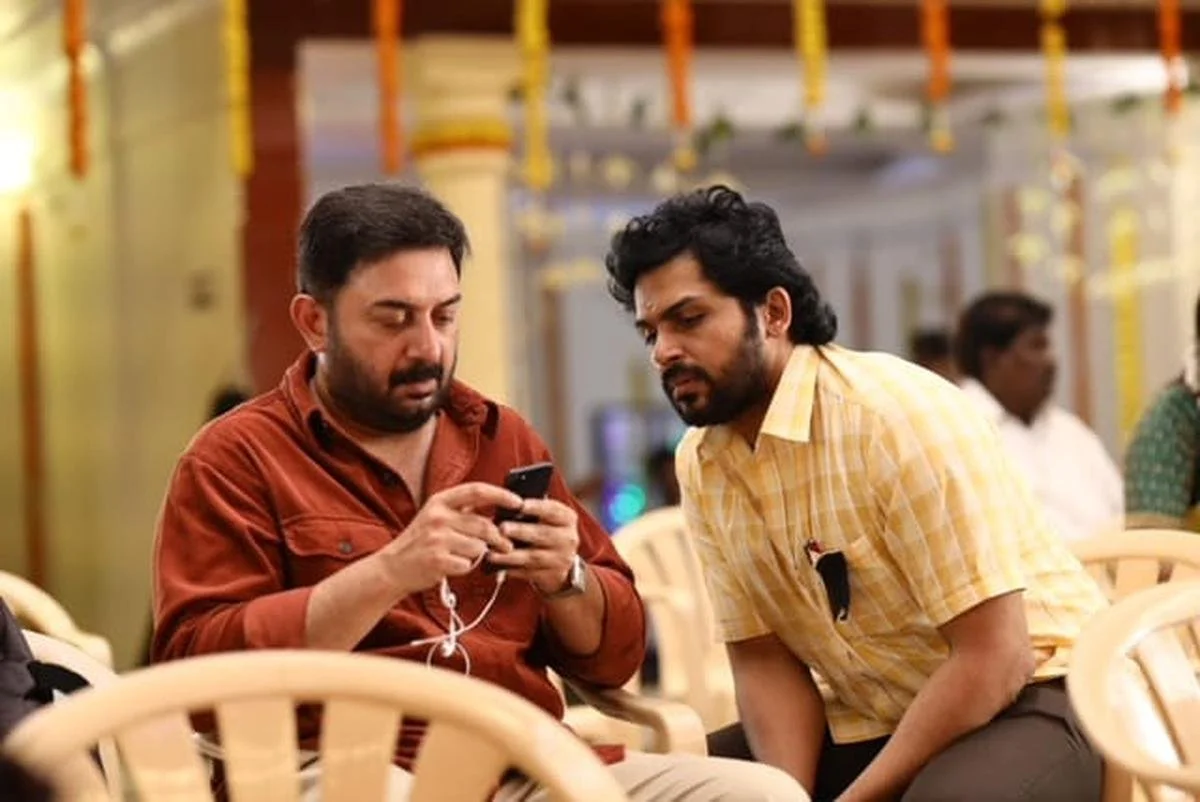
Talking the Talk: MEIYAZHAGAN and the Therapeutic Effect of Conversation
C. Prem Kumar’s Meiyazhagan reminds viewers of the beauty of pausing for a while, reflecting, and reconnecting. It shows that deep down, we are all broken souls, yearning for a companion to listen, to open our hearts without the fear of judgements. By Deepthi Mary Alex
What’s in a name? India has a long history of rebranding cities, streets, and buildings to reflect the political influence of the time. Instead of this empty tokenism, Vipin Labroo argues for the country to shift priorities towards its more pressing concerns.