The Cost of Jamun
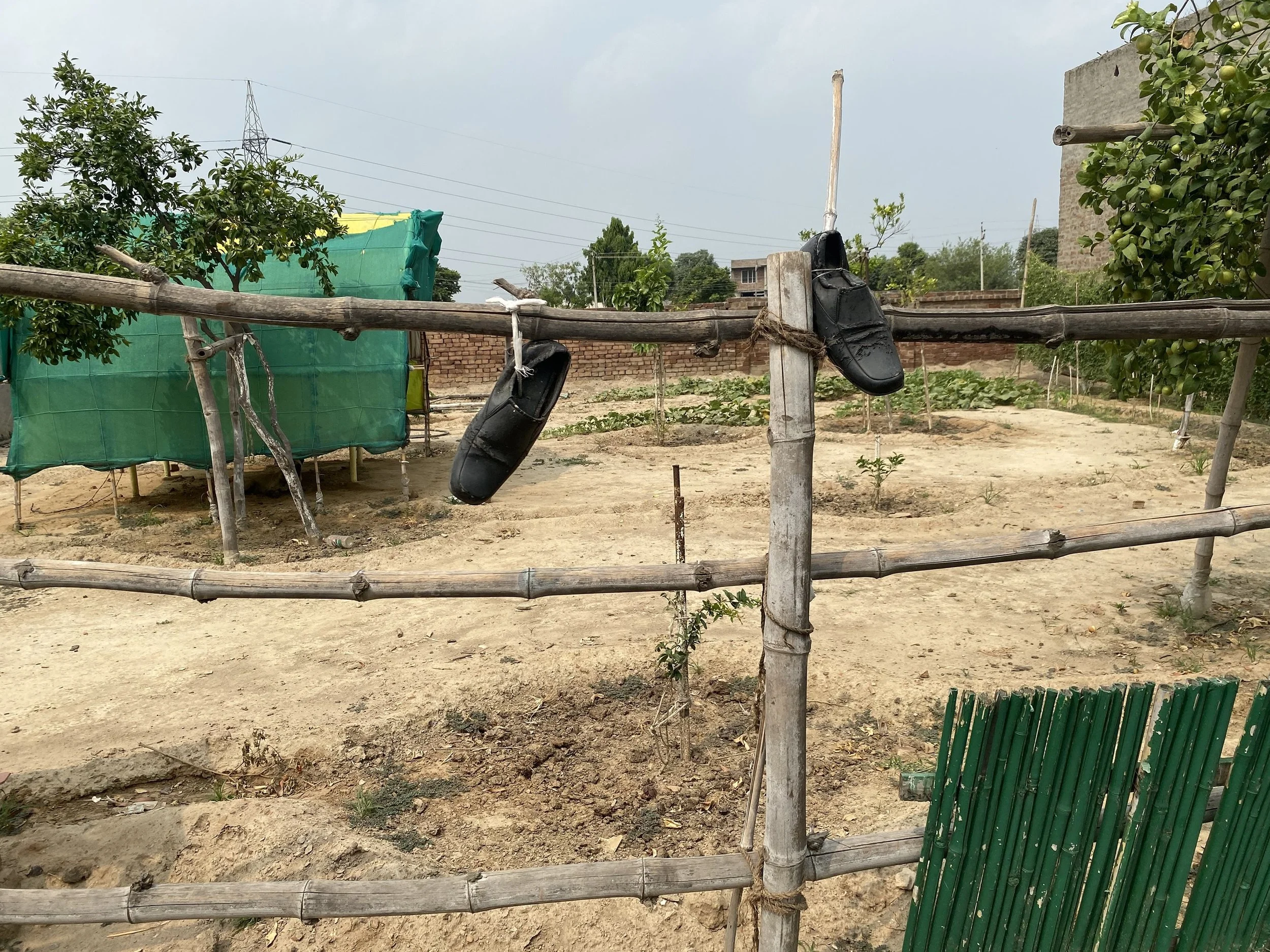
Photo: Karan Madhok
Fiction: ‘Hira stands near the edge of the clearing and watches the light change. The village does not arrange itself around their return. It continues, with the same economy of movement he has learned elsewhere.’
By the time Hira reaches the main road, the sky has already thinned from dark to grey. Buses run half-full this early. He walks instead, keeping to the edge where the dust settles back quickly after each vehicle passes. Around him, others walk with the same practiced pace, lunch tins swinging lightly, eyes forward. No one greets anyone else.
At the turn near Tatibandh, a group of children wait for a school van. Their uniforms are new. One boy is tying a ribbon into his sister’s hair. Hira notices the shoes and remembers Raju had been going to school with torn shoes for a while.
He does not look for long. The van arrives. The children climb in. The road empties again.
At the site in Urla, helmets are handed out from a crate. Hira takes one without checking the strap. A supervisor reads out names from a folded sheet, his finger moving down the page. Instructions follow. No one asks questions. Work begins.
The day settles into its sequence. Mixing. Carrying. Waiting for the hoist to return. The sound of metal-on-metal repeats without variation. Hira learns the rhythm early and lets his body keep it. When the whistle blows for tea, he drinks from his bottle and eats the first roti. He does not sit. Sitting makes it harder to start again.
At lunch, men gather in the shade of a half-built wall. Someone talks about a new liquor shop near the highway. Another man laughs and says he went there twice last week, that money comes and goes. His voice is loud, careless. Someone else mentions a man who now supplies labour to three sites. He has a brand-new mobile phone. He doesn’t lift anything himself. The talk stays indirect. No names are mentioned.
Hira finishes eating and folds the paper carefully, brushing away crumbs. He counts the days left in the month before he would earn a sum amount. Then he adds overtime hours to see how much would be left after paying the debt instalments.
By late afternoon, the sun presses down. The wall grows higher. Hands move slower. When the whistle blows again, helmets are returned to the crate. Hira signs his name on a sheet already smudged with sweat.
He walks back the same way. Near the road, a shop has put out vegetables in plastic trays. Prices are written in chalk. Hira does not stop. He knows Sukri will have managed something. She has learned how to do that.
He reaches their room before dark. The door sticks and opens with a sound he no longer hears. Inside, the day loosens its grip.
*
By the time Hira washes his hands at the tap outside, the water has slowed to a thin, uneven stream. He waits without irritation, adjusting the bucket so what falls is not lost. Inside, the room is already dim. A single bulb hangs from the ceiling, its light pooling on the floor.
The day settles into its sequence. Mixing. Carrying. Waiting for the hoist to return. The sound of metal-on-metal repeats without variation. Hira learns the rhythm early and lets his body keep it. He does not sit. Sitting makes it harder to start again.
Sukri sits on a low stool near the stove. Her hair is still tied the way she wears it to work, tight at the back of her head. She has changed out of her sari but not rested. The lid of the pressure cooker rattles, then settles. She lifts it, peers inside and adds salt.
From the window comes the sound of a neighbour arguing, the words rising and dropping without shape. Someone drags a plastic chair across the floor. Sukri reaches for the water can and tilts it, measuring by weight how much remains. She nods to herself.
She takes out the tin of oil and pours, then stops. A moment later she reaches instead for a smaller jar, its label torn away. The spoon moves more slowly. Hira watches her hands. When she glances up, their eyes meet and hold. Nothing passes between them except acknowledgement. She goes on.
Dinner is ready quickly. Rice. Dal. A vegetable curry, thinner than usual. They eat without speaking. Their son, Raju, pushes grains around the plate, then eats when Sukri touches his shoulder. Hira notices the taste at the back of his mouth: familiar but altered. The spice has been cut with something else. It reminds him, briefly, of how it once was, richer, holding longer on the tongue. The thought does not finish. He swallows.
Sukri rinses the plates afterwards, wiping each with her thumb before stacking them. She sits again, massaging her wrist once, then stills her hand. The marks from cleaning powder remain along her nails. Hira pours water into the kettle and sets it aside for morning tea.
They sit together on the floor, the child between them, leaning into her side. Outside, someone laughs. The sound of scooter starting and fading away. Sukri adjusts the cloth over Raju’s legs, smoothing it down. Hira reaches for the calendar pinned to the wall and tears off the day, folding the page small before setting it near the stove.
*
The meeting is held in the back room of a printing shop, after closing hours. Plastic chairs are set in a loose circle. A register book lies open on a table, held down by two stones. Someone has written Jani Shikar on the top of the page, underlined once, then added the date for the wedding planned for the same day.
Hira arrives late and takes a chair near the door. He recognises most faces without knowing when he last spoke to them. Names surface, then fail to attach.
The discussion is already underway and moves between the festival and the wedding without pause. A man in a checked shirt reads dates aloud. Another says the hall near the railway line is available but needs permission if the drums go on past ten. Most of them agree on combining the festival and the wedding, since people will be taking leaves. Someone half-heartedly suggests avoiding overlap with the wedding so the celebrations can go on a little longer like they used to be. He stops mid-sentence.
Food is discussed briefly and deferred. No one argues about the rituals. There is disagreement about what can be borrowed and from whom. The question of who will bring what from where takes longer. Someone asks about the quantity of fruits and leaves, then shakes his head. No one encourages him to mention the long list of required items.
At the far end, Doman sits slightly apart, his chair angled away from the circle. He listens without looking at anyone. When he is asked for his opinion, a few people glance toward him, waiting. He shrugs and does not speak. The discussion moves on.
Hira is asked if the timing works for him. He nods. His name is ticked off. Another man volunteers to collect money. The amount is stated once, then repeated, adjusted, and stated again. Joga is assigned to pass on the message to ones who couldn’t attend. A woman steps in briefly with tea in paper cups. The cups are taken, thanked, placed carefully on the floor. Someone spills a little and wipes it with his foot.
By the time the meeting breaks, decisions have been made and written down. Chairs are stacked. The register is closed and slipped into a bag. People leave in pairs or alone, already talking about other things. Hira stands up, waits for the doorway to clear, and then steps out.
The room is left as it was before, except for the marks on the floor where the chairs had been.
*
For Jani Shikhar, the day was compressed, starting late and ending early, not by beginning at first light and celebrations till late. The practical choice was shaped by hall timings and return buses finishing before the lights were switched off. As agreed earlier, there was to be no hadia serving.
Plates have been returned. Shoes have been found. Money has been counted once too often and the payment handed over.
Hira and Sukri decide to walk back after the wedding. Raju is half-asleep, then suddenly alert again, tugged awake by movement. Hira is still thinking about the contribution that he made and the shortfall it caused in his debt repayment.
Near the crossing, a man sits behind a cart, the fruits heaped loosely in shallow baskets. Jamun, dark and matte, some ripe enough to be split at the seam. Raju stops walking. He points. His voice lifts, clear and unguarded.
Hira keeps moving past the baskets, as if the sound has not reached him. Then he stops. He looks down at Raju’s face, already bright with the expectation of agreement. He shakes his head once. He does not check the price. He says it will stain clothes, that it is late, that they have eaten enough for lunch.
Raju’s mouth opens. A sound escapes and breaks off. Tears gather and do not fall. The crying is brief, surprised by its own abrupt end. Sukri takes Raju’s hand again. They walk on.
At home, the room smells faintly of smoke and sweat. At dinner, Raju sits cross-legged and eats slowly, pushing rice into small heaps, then leaving them untouched. He chews, stops, chews again. Hira watches without comment. The plate is taken away before it is finished.
Later, when the light has been switched off and the room has found its night shape, Hira lies still and counts again. The days left, and the overtime available. Money settles into categories and stays there.
Something else intrudes, uninvited. The taste of jamun without sweetness, only the cool pull at the back of the mouth. The ease of it. How there was never a pause before the hand reached out to the trees. How it did not require asking. The thought is abrupt and incomplete. He turns his face toward the wall.
Raju’s breathing evens out. The word is not spoken again. In the dark, Hira understands, not as a conclusion, not as a loss, but as a fact now fixed: there are things he has learned to refuse that once did not need permission. He does not linger there. He lets the day close over it, the way he does with everything that cannot be adjusted.
*
Something else intrudes, uninvited. The taste of jamun without sweetness, only the cool pull at the back of the mouth. The ease of it. How there was never a pause before the hand reached out to the trees. How it did not require asking.
The image does not arrive whole. It comes in pieces, without warning, and leaves before it can be examined. Jamun on the side of the road. Jamun on a cart. Jamun split open, the seed exposed. Each time, Hira feels the same brief tightening, followed by irritation at himself for noticing.
At work, a man eats a packet of sweets and drops the wrapper near the wall. Hira steps around it. The day proceeds as it always does. By evening, the thought has thinned, but it does not disappear.
On his way back, he sees Doman standing near a tea stall. He looks unchanged, as if the years have moved around him instead of through him.
Hira slows. He had heard that Doman had gone back. He cursorily asks Doman how things were back home. “Going back doesn’t fix much,” Doman says, not looking at Hira. His voice is flat, neither warning nor comfort. He lifts his glass, drains it, and sets it down. “Villages appear better from cities.”
Hira waits for something else. It does not come. Doman steps away, absorbed in his own direction.
At home, Raju has fallen asleep. Hira sits with Sukri near the door. The air is heavy, holding the day’s heat. He says, without preface, that they could go to the village for a few days. Later, maybe. When there isn’t enough work here. The words sound provisional even to him.
Sukri does not answer immediately. She asks how many days he is thinking. If it is long, should they pay the rent while they are away or leave their belongings with Sugu next door. She suggests they should move to a different house when they return. If it is only for a few days, then they would need a proper lock. Her voice stays even.
He nods. None of it feels settled. The return exists only as a loose edge, something that could be folded in if needed. Outside, someone calls out for water. A tap is turned, then shut off.
When they lie down, the city presses close, unchanged. Hira understands that nothing here has loosened its hold. If they go, it will not be because staying has ended, but because there are other distances that have begun to show themselves.
*
They deboard from the train at Ranchi and change to another one. The compartment smells of sleep and damp cloth. Outside, the land passes in fragments: fields broken by embankments, clusters of houses set back from the tracks.
They get down at a small station where the platform is uneven and the nameboard is missing a letter. People disperse quickly, as if practiced at leaving no trace. A shared auto waits at the exit. Hira lifts Raju in, settles him between bags. The road narrows soon after. The driver swerves around potholes without comment.
The driver slows down, and Hira notices the trees thin abruptly. The ground dips, opens out. A long stretch of bare earth lies exposed, edged by fencing and machinery at rest. Then, the car speeds up again, and they continue in silence.
The journey ends. This space they have reached does not gather them in, nor does it turn them back. It sits where it always has, altered just enough to make their presence unavoidable.
By the time they reach the village, the afternoon has flattened into heat. The road ends without announcement. Houses stand where they always did, but altered, with patched roofs and walls washed a different colour. A few faces turn, register them, and turn away again.
They stop outside a house set slightly apart. An aunt comes to the door and looks at them for a moment before calling out to others inside. Hira explains, briefly, that they will stay a few days. The aunt nods, steps aside, and points to a corner of the room. Bags are set down without ceremony.
Inside, there is movement but no gathering. Someone asks how long the train journey takes from Raipur. A younger man mentions he is leaving again the following week, this time farther to Nagpur. Another says that a cousin of theirs migrated to Surat two months ago but hasn’t yet sent any money.
The house is clean enough. Raju drinks water and sits on the floor, already restless. A neighbour asks where they are coming from now. When Hira answers, she says her son is also in Bhilai, working in a hotel. Another man mentions a daughter in Jabalpur who left last week and hasn’t called yet.
Hira walks through the village without purpose. Paths have shifted slightly. A shop has opened where there was none before. It sells biscuits, sachets of oil. Hira buys nothing. He exchanges greetings that do not extend into conversation.
No one talks about crops. No one points out what stands or what has fallen. The conversation remains about people: those who are away, those who might leave, those who have returned, and for how long. Each answer opens a new question instead of providing a resolution.
As evening descends, smoke rises from a few kitchens. The smell is thin, quickly carried off. Hira stands near the edge of the clearing and watches the light change. The village does not arrange itself around their return. It continues, with the same economy of movement he has learned elsewhere.
Back inside, they are provided some space. And nothing more. The journey ends. This space they have reached does not gather them in, nor does it turn them back. It sits where it always has, altered just enough to make their presence unavoidable.
*
In the morning, Hira takes Raju along, as if to fulfil a promise he made to his son. The path bends away from the houses. They walk without hurry. The ground is dry, compacted by many feet. A few trees stand at a distance, their shade narrow and already claimed.
They stop where the path opens out. There are only one or two barren jamun trees left, set far apart, their branches thin. Nothing marks the place. Raju looks up, then down again, uninterested. Hira does not say anything.
On the way back, they cross the haat and see jamun being sold in sacks. Hira doesn’t need to ask the price, knowing that they would be a fraction of their cost in Raipur. But the fruits are small, and some are bruised, their skins dulled by heat. He buys a handful. The man weighs them quickly and pours them into a paper cone. Hira pays and hands it over to Raju, relishing the moment.
Raju takes one, bites, and makes a face. He chews a few, then spits the skins into the dust. He hands the rest back without asking. His attention has already shifted. A few steps away, a shop has set out its goods, bright fruit tetra-packs arranged in a row. The child moves toward them, drawn by colour and familiarity.
Hira stays where he is. Around him, people bargain, pass, call out names. Someone laughs. Someone lifts a sack and moves on. The village carries on, neither watching nor waiting. He stands with the paper cone folded in his hand, until the fruit inside stains through.
***
Zeyaur Rahman is an India-based writer working across fiction and literary criticism. His writing engages with migration, labour, memory, and everyday life in contemporary India. His work has appeared on Indian Express and India.com. You can find him on Substack: @zeyaurrahmanshah, X: @rahman_zeyaur, and Facebook: @rahman.zeyaur.