


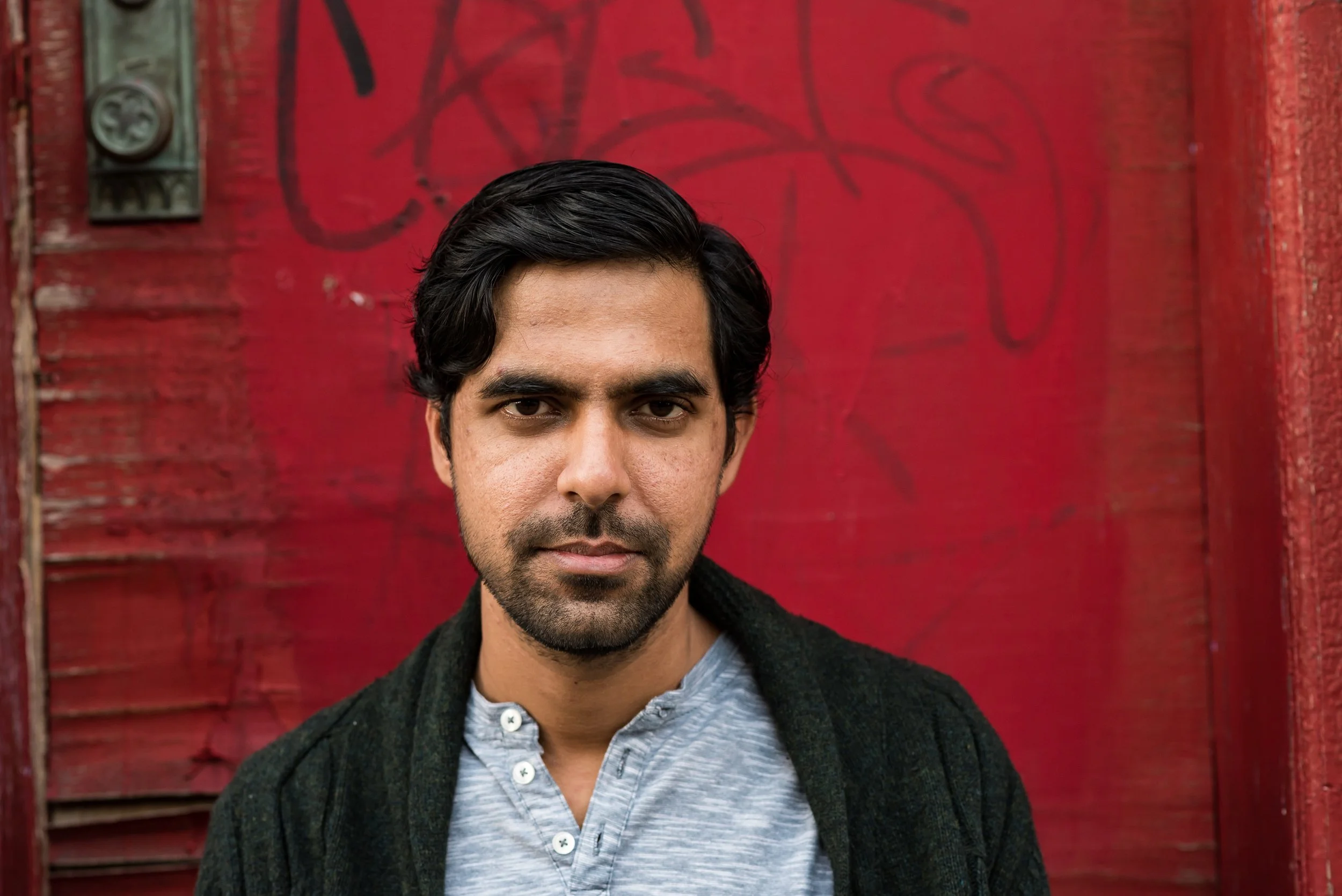
Diagrams of the Soul: A conversation with Karan Mahajan
In a detailed interview, Karan Mahajan spoke about exploring the uneven spaces between love and lust in the characters of The Complex, the prism-like perspectives of an extended Indian family, and how Delhi inspires his literary work. By Karan Madhok
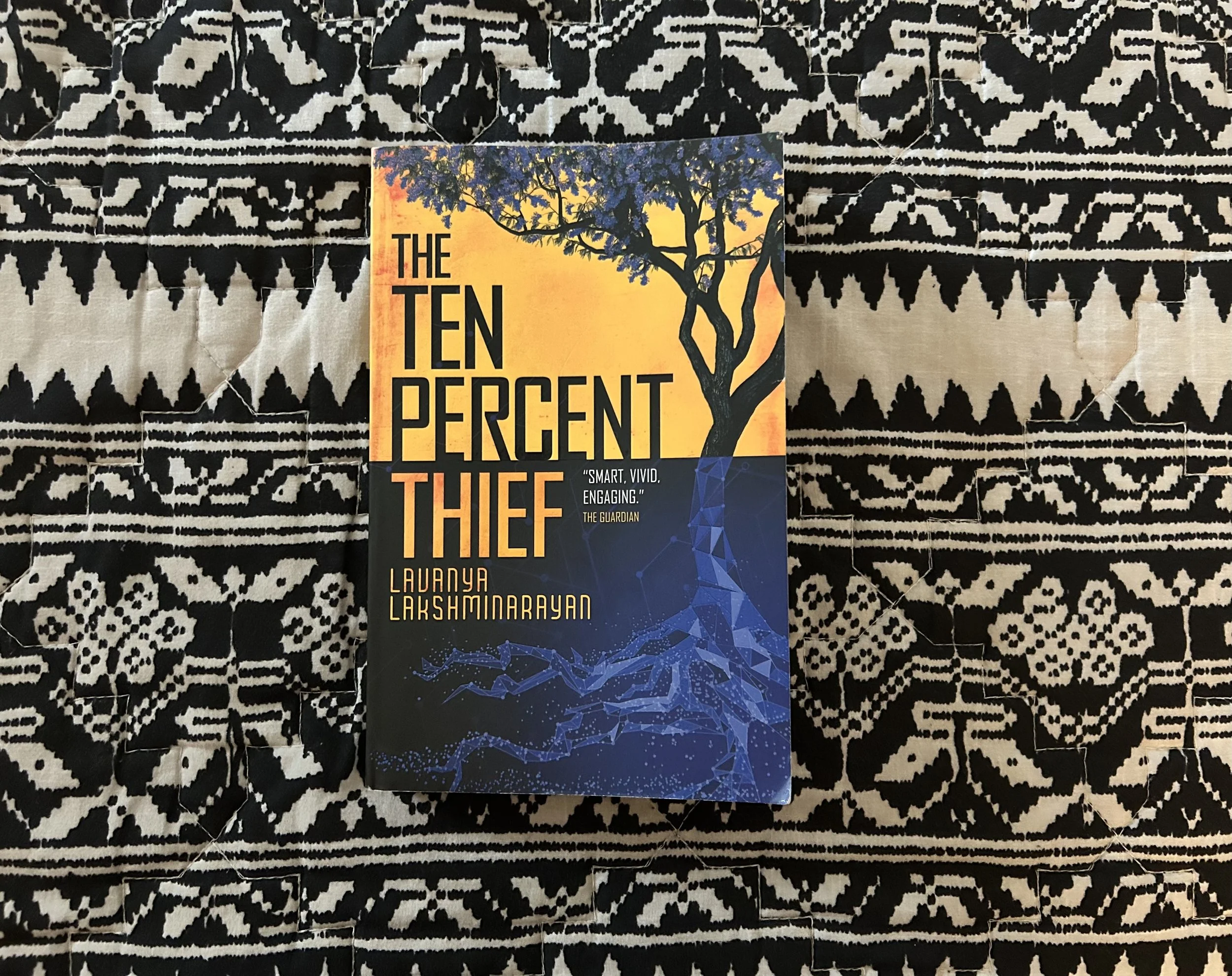
Rage, Rebellion, and the Beautiful Asymmetry of Human Imperfection
In Lavanya Lakshminaryan’s The Ten Percent Thief, a dystopic Indian future serves as the setting to explore existential dilemmas of human creativity in the face of an authoritarian technocracy. By Karan Madhok

Knowledge Without Consent
The Ministry of Science & Technology has partnered with SARAL AI to convert research publications into ‘user-friendly’ social media content. But without clear parameters in scope, the initiative leaves ambiguity for the rights of researchers, academics, writers, publishers and more. By Madhuri Kankipati
India’s AI Governance Guidelines are here—But what of the Publishing Sector?
Without clear regulatory mechanism against AI data mining, Indian publishers have begun adapting voluntary frameworks. Madhuri Kankipati argues for the urgent need for the AI governance guidelines to set legislation and protect creative workers in a multilingual, digitally expanding nation.
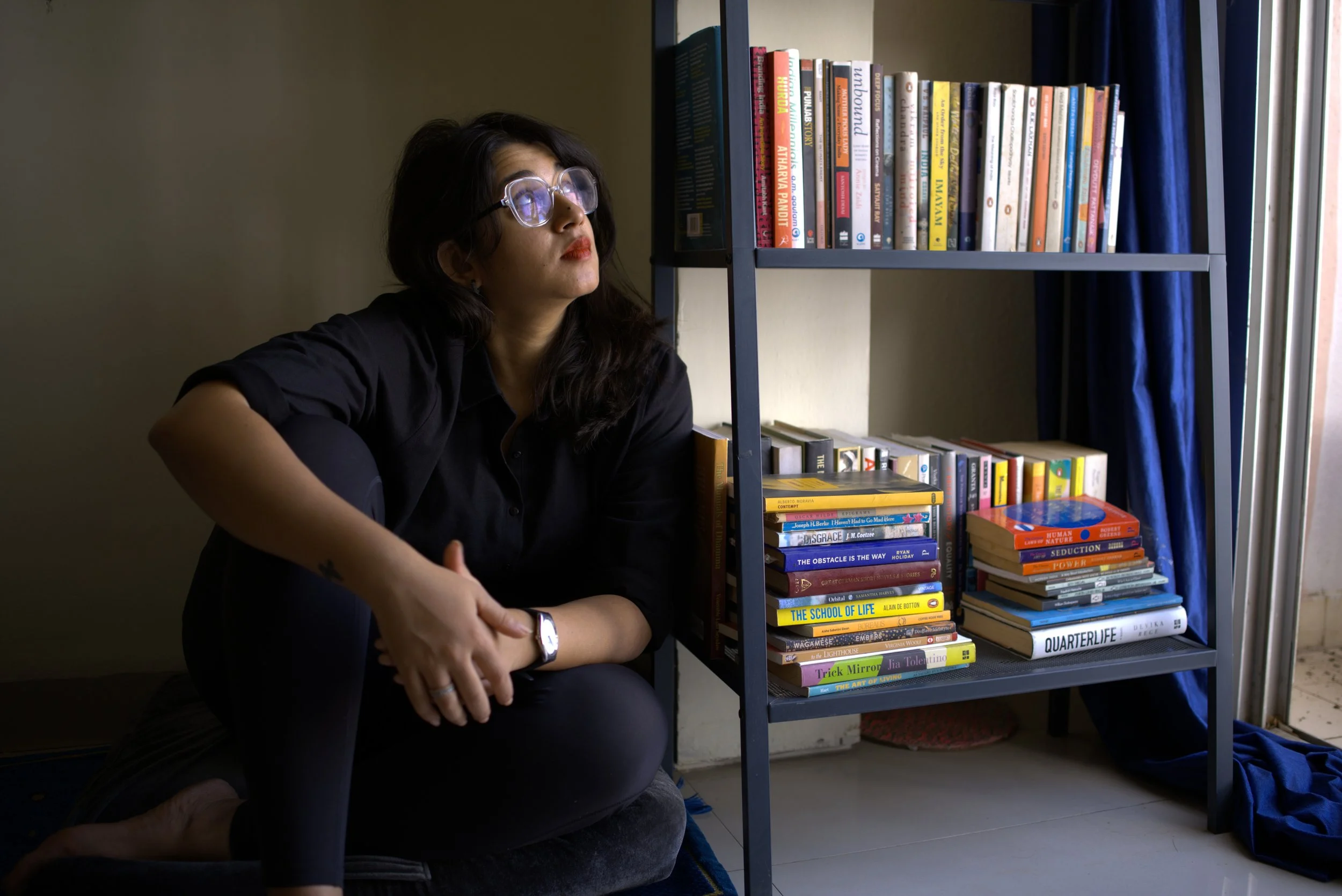
“Storytelling Saves My Life Every Day” – An Interview with Sanjana Ramachandran
Sanjana Ramachandran’s debut Famous Last Questions investigates the clash of the personal with the sociopolitical. The author speaks about masking and unmasking herself, finding comfort in contradictions, and the flawed institutions of marriage, relationships, and work. By Karan Madhok

Girl, Untethered
Despite a lack of narrative focus, Anisha Lalvani’s Girls Who Stray (2025) is a welcome, urgent entry to contemporary Indian literature, a poetic voice echoing the angsts of a generation of Indians, and specifically, of Indian women who refuse to be assigned to their roles. By Karan Madhok

A Completely Human AI-Generated Reading List for the Indian Summer
Satire: The solution to AI mimicking humans is to have humans mimic the AI that mimics the human. From Vikram Chandra and Salman Rushdie to mythological adventures and a popcorny topsy-turvy romance, here is our preview of the 15 hottest and thoroughly fraudulent Indian books for the 2025 summer. By Karan Madhok

The Revolution Will Be Commodified: Gyan Chaturvedi’s THE MADHOUSE
In a world filled with abstractions, the greatest clarity in Gyan Chaturvedi’s The Madhouse (Pagalkhana) comes from the protagonist’s never-ending pursuit for escape: an escape from the Bazaar, from the dependence on commodification, from being commodified themselves. By Karan Madhok

The Mathematical Values of Feeling Adrift
Nishant Injam’s debut story collection The Best Possible Experience (2024) features a cast of characters between India and the United States who are often homesick for another world: a world that could be a physical or a metaphorical distance away, a world they aspire to with the burdens of a life unfulfilled. By Karan Madhok

Voices of a Generation: An Interview with A.M. Gautam on INDIAN MILLENNIALS
In a lengthy conversation, A.M. Gautam, the author of Indian Millennials: Who Are They, Really? (2024), speaks about the many anxieties and opportunities of the Indian millennial, themes of romance, employment, politics, and commerce, and discovering his own self while exploring the larger generation. By Karan Madhok

Dispossession and Discomfort in Vivek Shanbhag’s SAKINA’S KISS
Vivek Shanbag’s novel Sakina’s Kiss (2013) features a protagonist obsessed with possession, uncomfortable in the evolving role of his masculinity, searching for meaning in a life where every answer presents a series of more confounding questions. By Karan Madhok
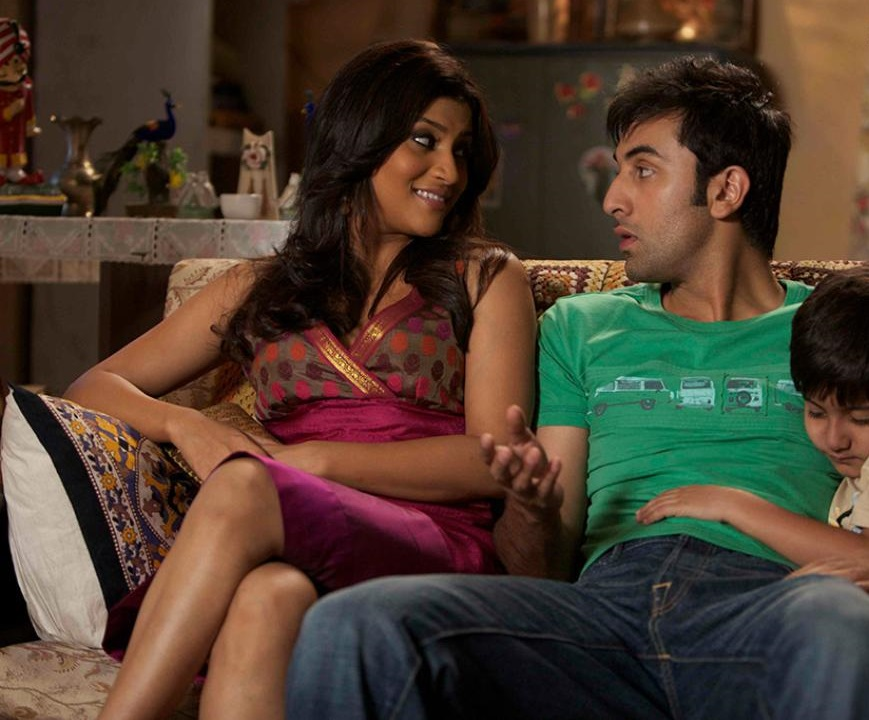
The Rockstar Catalysts
From Wake Up Sid and Rockstar to Yeh Jawaani Hai Deewani and Tamasha, Ranbir Kapoor became the poster boy of young men coming-of-age into his identity. Ananya argues, however, that the the true catalysts of these metamorphoses were always his female leads.
The problematic representation of women in many recent Telugu blockbusters like Peddi and the Pushpa films have stoked controversy. When mainstream commercial cinema consistently turns the sexualisation of women into entertainment, who should be responsible for the world these images help create? By Sumithra Prasanna