Heat / Action
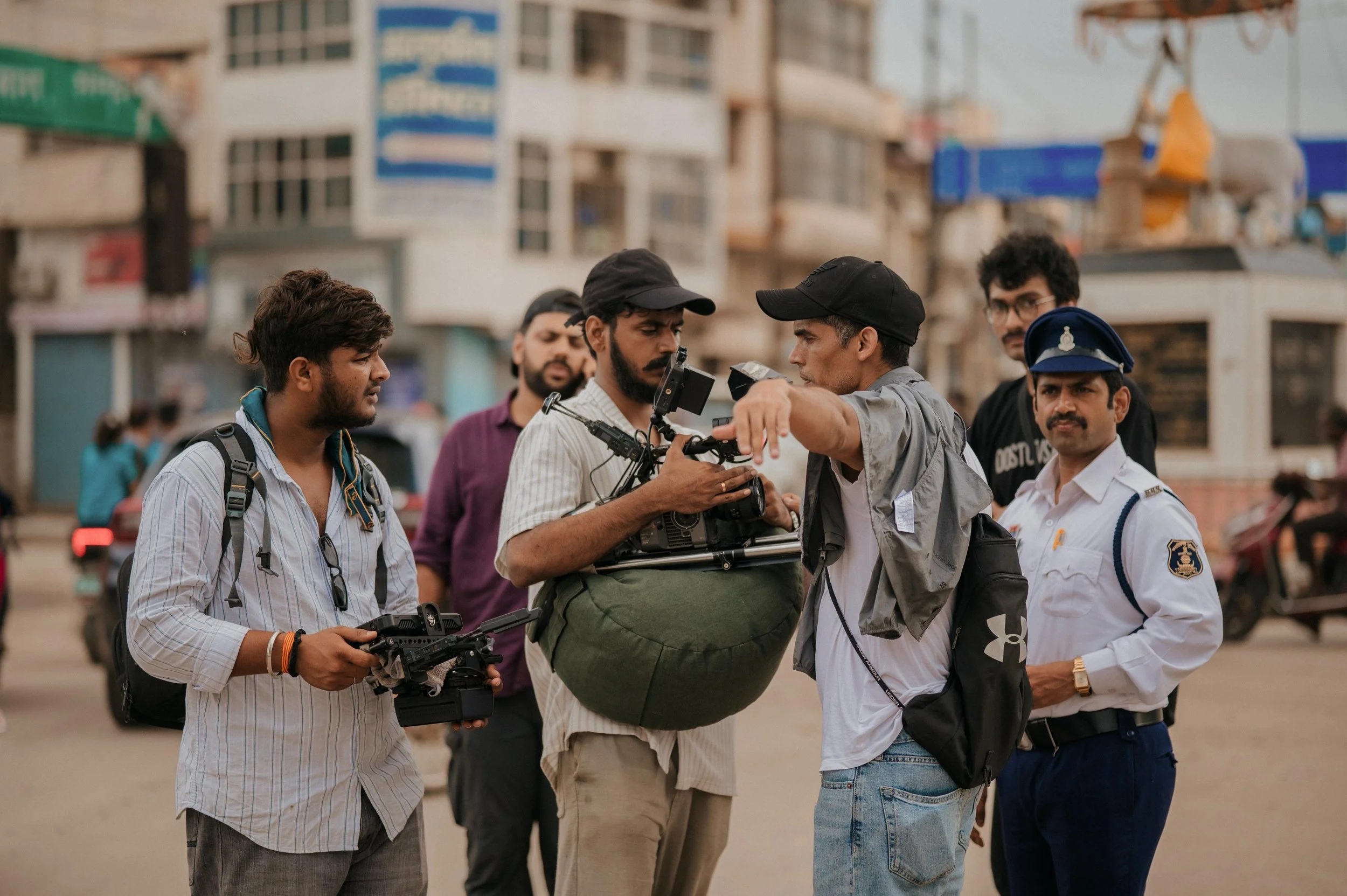
Photo: Umesh Suryavanshi
Tej Sisodia’s short film It’s Only 47° C highlights the dangers faced by India’s most vulnerable populations at the face of climate change. Sravasti Datta goes behind the scenes with the filmmakers to learn more.
Heat Action Plans look good on paper, but in everyday reality, it is the vulnerable population that has to bear the brunt. Tej Sisodia’s short film, It’s Only 47° C (2026) highlights just this predicament. The film—produced by Civic Studios and screened at the Mumbai Climate Week in February—centres on traffic constable Laxman Chaubey (Sharib Hashmi) who braves sweltering conditions to perform his duty.
The film was shot live at a traffic junction in Raipur, Chhattisgarh, chosen because it is a city increasingly exposed to heatwaves. It’s Only 47° C features four other equally important characters, including the constable’s wife, a farmer, a rickshaw puller, and a food vendor. The film also includes a poem by Swanand Kirkere voiced from the perspective of the most powerless overlooked souls in our changing climate.
It’s Only 47° C emerged from Sisodia’s lived observations of growing up in North India, witnessing how changing weather patterns affected the common man. He chose a traffic constable as the main character since people usually don’t notice their labour. “I want to tell the story of people we pass by every day in our cities that are often ignored,” says Sisodia. “They keep our chaotic systems moving even at peak-heat, quietly enduring while the more privileged are able to afford insulation behind their air conditioners. This film is about the silent suffering of people in the face of global warming, policy neglect and systemic inequities.” It is the traffic constable’s wife whom Sisodia feels he most connected. “She too suffers from heat as she cooks in the kitchen.”
“I want to tell the story of people we pass by every day in our cities that are often ignored. They keep our chaotic systems moving even at peak-heat, quietly enduring while the more privileged are able to afford insulation behind their air conditioners.”
For It’s Only 47° C, Sisodia collaborated with Harish Borah, a subject expert in Climate Mitigation primarily focussing on cost/carbon studies within the building industry. He also collaborates widely across government, corporate, and civil bodies to advance public discourse on the crisis and its solutions. He has taught in universities, researched and worked with journalists to bring attention to climate-action gaps in the system, and more. He has founded the ‘OnePointFive Collective’, a climate action initiative aimed at nurturing talent in India, centered around the global target of limiting average global temperature rise to 1.5°C above pre-industrial levels.
In 2020-21, Borah met with veteran actor Naseeruddin Shah in 2020-21 while preparing for his 2041 ClimateForce Antarctic expedition led by Robert Swan, a global leadership mission on climate resilience and intergenerational responsibility of land that is endangered to climate impact. Friends for over four years, when Sisodia approached Borah with the story, Borah decided to pitch the film to Shah. “He immediately agreed to produce the film,” says Sisodia.
Shah complimented the film for its honest concern and conviction. Later, Civic Studios came onboard to produce the film. “As we came onboard to produce this film because of its stark reminder that heat doesn't affect the rich and the poor equally. The film is part of our larger slate of climate change stories to help galvanise climate action urgently,” says Anushka Shah, CEO/Founder of Civic Studios.
Sisodia intends to take It’s Only 47° C across a wide audience. “We had a screening for Navi Mumbai Municipality and college students too and wish to take this forward.”
Borah says he hopes the film will pique the curiosity of audiences to engage on climate action through necessary systemic change such as “Inclusive Heat Action Plans,” as in this case.
The film is embedded in climate research to reveal the awareness that already exists among the most underprivileged (through their lived experiences, away from the universe of climate-jargons) of the quiet inequalities of climate change on their class, humanity’s role as its primary driver, the myth of endless economic growth, and reflections on humanity’s attempt to play god with the climate.
The film prompts also audiences to know for themselves if their cities have a ‘Heat Action Plans’. “We wanted to help the audience find a definite starting point for climate-engagement, once they left the film,” says Borah. He notes that city-level Heat Action Plans in India began to be formally developed in the early 2010s. The first city-level plan was introduced in Ahmedabad in 2013. “Only a few cities (such as Delhi, Bhubaneshwar, Jodhpur, Surat, Thane, and others) have published them as such, and they remain non-inclusive with no systematic mapping of many vulnerable populations. There needs to be more push for them, and this film builds on that.”
Several pilot projects exist to assist the poorest during a heat-wave, but systematic implementation across the country remains an issue, according to Borah. “Heat related policies often sit on a department’s desk as an added administrative burden. We need single agency with assigned clear authority to implement the plans to avoid the risk of leaving responsibilities divided across departments that can rarely coordinate effectively if left to their own devices. The departments are also often constrained by limited resources.” Ultimately, Borah advocates for scaling up inclusive Heat Action Plans that do not forget the most at risk population in a city as well.
Borah says the concrete/steel-based rapid urbanisation, both as infrastructure and as buildings coupled with widespread destruction of green covers within and in the periphery of “modern Indian city-limits,” has further added to global warming to drive the urban heat-island effect. More sustainable buildings (also called green buildings) are proven as a solution to mitigate climate impacts including heat waves.
“The construction and building sector consumes carbon-intensive materials and energy, much of which is derived from fossil fuels. The ‘green’ solutions are not necessarily hi-tech; they often involve returning to traditional architectural designs and materials that are naturally adapted to local climates,” says Borah.
Sisodia’s journey from theatre to filmmaking is one of vision and determination. He belongs to a farmer’s family from a village near Mathura in Uttar Pradesh. He left his village in 2008, and came to Delhi for work and a better life. “While doing multiple odd jobs to make a living, I found work at ‘Kingdom of Dreams’ in Gurgaon,” says Sisodia. “That’s where I met thespian Dilip Shankar. A few months later, I started working under Dilip Sir’s guidance and discovered my love for theatre.”
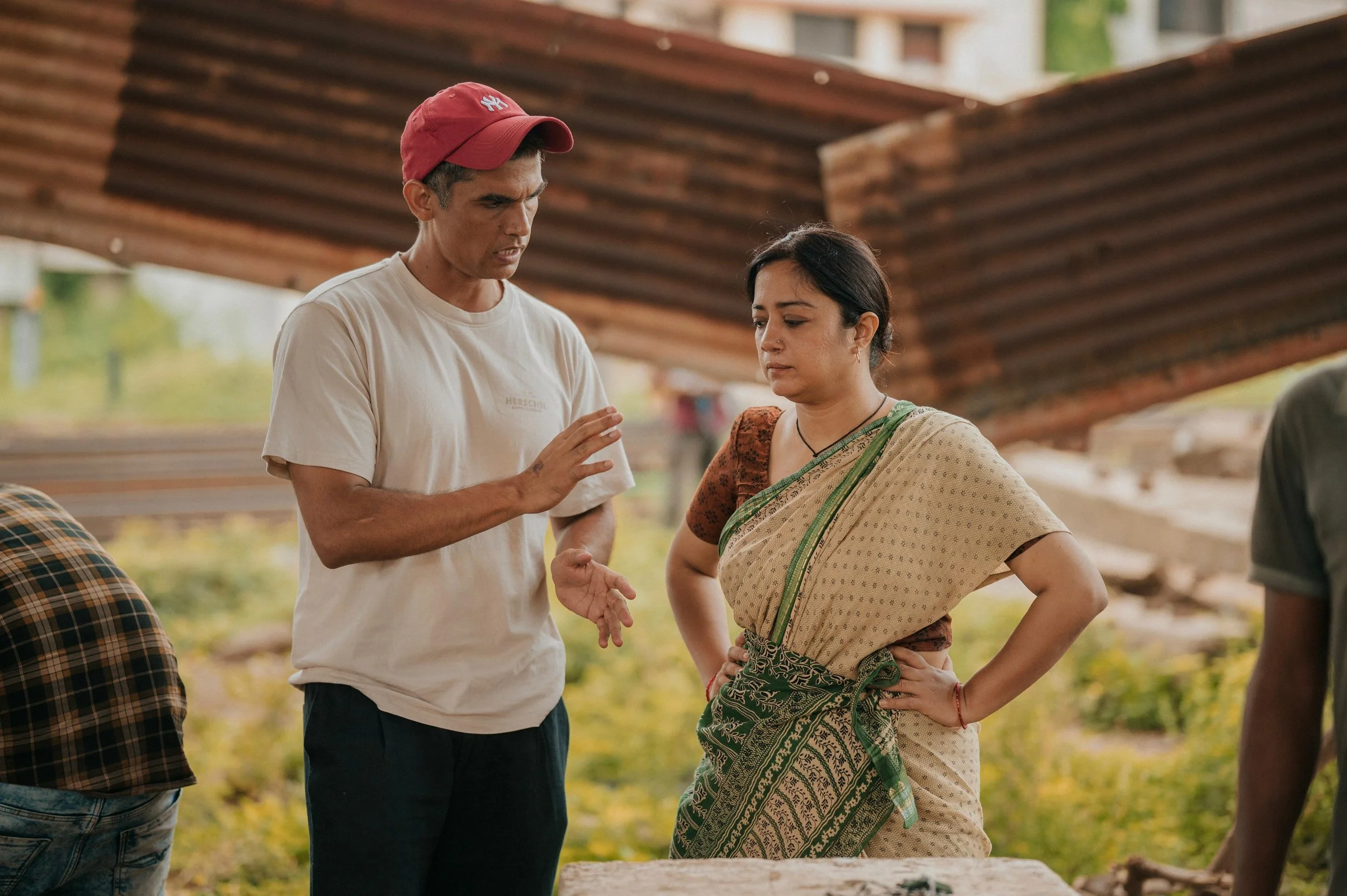
Photo: Umesh Suryavanshi
Sisodia moved to Mumbai in 2015 to pursue theatre. “For three years, I tried everything, but nothing worked out. And then in 2018, I wrote a small story about my childhood bond with my grandfather. I shared it with Dilip ji, who encouraged me to turn it into a film.” Sisodia wrote and made his first film, Raakh, about an 8-year-old girl who sees death for the first time. “I shot it in my village home.” Made with sheer hard work and honesty without any filmmaking experience, the film was accepted at international festivals worldwide.
“Traveling to these festivals changed me as a storyteller. After years of searching, I found my true love in writing. For me, writing is a daily practice since, and my greatest satisfaction.”
That penchant for writing has produced It’s Only 47° C, with a title that is not just grimly ironic, but also shows the urgency of the heat crisis. For instance, the city of Akola in the Vidarbha region of Maharashtra has already recorded the highest temperature at 46.9° C in April this year. With all the rhetoric and distractions in our country, there has been little importance given to the impact of heatwaves.
“The underprivileged experience climate change and heat waves firsthand, but may not always have the language or access to information to identify them as such,” Sisodia says. “They attribute divine forces for extreme weather events, yet they are most affected by it… That is why the film is told in a simple and relatable way.”
***
Sravasti Datta is an independent journalist. She has a Master's in History from Calcutta University and a diploma in broadcast journalism from the Asian College of Journalism, Chennai. Her writings have been published in The Hindu, 30 Stades, Deccan Herald, The News Minute, among other publications. She can be found on Twitter: @sravastid and Instagram: @sravastid_journo.